 Birch Bay Siding
 Homeowners in Birch Bay who shop more than one siding bid eventually run into Allura. It's not an unusual product to see on an estimate, and it's not junk — Allura is a real fiber cement manufacturer, not a vinyl or engineered-wood substitute dressed up to look like something sturdier. That's exactly why the question deserves a real answer instead of a brush-off. We install James Hardie fiber cement exclusively, and Allura is close enough in category that the reasons we pass on it are worth spelling out plainly, rather than lumping it in with the wood and vinyl products we also decline to install.
Allura Is Fiber Cement — So the Comparison Is Different
When we explain why we don't install LP SmartSide or cedar, the conversation is largely about material category: wood-based products absorb moisture, feed organic growth, and demand more upkeep than a cement-based board ever will. Allura doesn't have that problem. It's manufactured from the same core recipe as James Hardie — portland cement, sand, and cellulose fiber, autoclaved into a dense, non-combustible board. So this isn't a "cement versus wood" argument. It's a narrower comparison between two companies making the same kind of product, and it comes down to the system built around the board, not the board itself.
That distinction matters, because it means the case against Allura has to rest on specifics — installed system depth, finish infrastructure, regional support — rather than a blanket claim that the material is inferior. It isn't. What differs is everything that surrounds it once it's on a wall in Whatcom County.
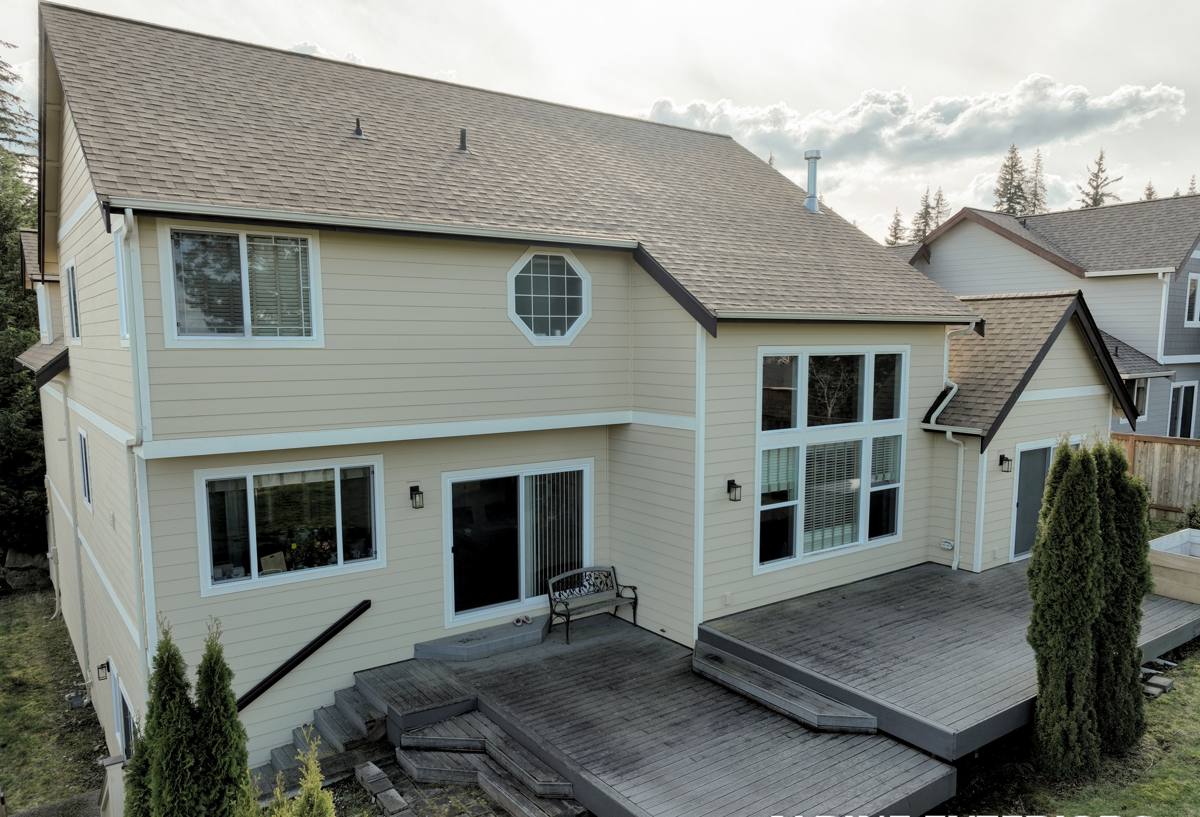
What Allura Gets Right
Fair is fair: Allura's boards are non-combustible, resist the swelling and rot that plague wood siding, and hold a factory finish better than anything organic. Its lap and panel profiles are dimensionally similar to Hardie's, it's distributed through channels that reach the Pacific Northwest, and plenty of contractors around the country install it without issue. At the material level, it's also frequently priced a step below Hardie, which is a legitimate reason it shows up on competing bids. None of what follows is a claim that Allura fails on a wall — it's an explanation of why we don't put it on one.
The System Gap: Trim, Finish, and Touch-Up
Fiber cement siding is never really just a board. A finished wall depends on the lap siding, corner and window trim, soffit material, caulk, and touch-up paint all aging together at the same rate for two or three decades. James Hardie engineers all of those pieces as one coordinated system with a single factory-baked ColorPlus finish and a matched caulk and touch-up kit sold specifically to make field repairs disappear. Allura sells siding and complementary trim too, but the depth of a fully matched system — and the network of distributors and installers built around it in the Pacific Northwest specifically — is thinner.
In practice, that gap shows up in small ways: a crew pairing an Allura board with trim from whatever the local supply house has in stock, or a touch-up paint that's close to the factory color but not an exact match after a repair. Nothing about that is a manufacturing defect in Allura's product. It's a byproduct of a smaller regional footprint than the market leader, and it's precisely the kind of mismatch that becomes visible on a house after enough Birch Bay winters go by.
Factory Finish Depth
ColorPlus is more than a color — it's a baked-on acrylic finish backed by its own warranty and a dedicated repair system stocked by dealers who work with it daily. Allura offers factory-finished lines as well, but the bench of installers and suppliers around here who handle that finish system day in and day out is smaller. A finish is only as durable as the repair ecosystem standing behind it, and that ecosystem simply has fewer reps built up locally for Allura than for Hardie.
Why Birch Bay's Climate Raises the Stakes
Birch Bay sits directly on the water, and that changes what "good enough" means for a siding system. Salt air off the bay works on fasteners, caulk lines, and finish coatings faster than an inland exposure would. Storms rolling off the Strait of Georgia drive rain sideways into wall assemblies instead of letting it run off cleanly, putting sustained pressure on every seam and trim joint on the house. And the shaded, tree-lined lots common through this part of Whatcom County support a moss season that runs most of the year on north- and west-facing walls, feeding on anything that traps moisture or organic debris.
None of that argues against fiber cement — it argues for it, over wood or vinyl. But it raises the bar on the details that separate one fiber cement manufacturer's installed system from another: how tightly the trim and siding expansion rates are matched, how dependable the regional supply chain is for an exact-match repair five or ten years out, and how many local crews have real, repeated experience with a given spec sheet. In a climate that gives a house very little dry season to shed moisture, we don't want those details resting on a thinner track record.
Allura vs. James Hardie: Side by Side
| Factor | Allura Fiber Cement | James Hardie Fiber Cement |
|---|---|---|
| Core material | Cement, sand, cellulose fiber | Cement, sand, cellulose fiber |
| Combustibility | Non-combustible | Non-combustible |
| Climate-specific engineering | General product line | Climate-engineered HZ lines built for moisture-heavy regions |
| Factory finish | Factory-finish options; smaller local repair network | ColorPlus finish with widely stocked color-matched caulk and touch-up |
| Trim and accessory match | Not always sourced as one coordinated system locally | Siding, trim, and soffit engineered and marketed together |
| Local installer base | Fewer crews with deep repeated experience in this region | Well-established base of experienced regional installers |
| Warranty recognition | Manufacturer-backed, less commonly referenced locally | Strong transferable warranty, widely recognized by inspectors and lenders |
| Typical material cost | Generally lower | Generally higher |
Both rows start from the same material science. The difference is in the depth of the system, the finish infrastructure, and the regional track record standing behind the board once it's actually installed.
Warranty Is Only as Good as What Backs It Up
Allura's manufacturer warranty is real, and we're not disputing it. What we weigh differently is how that warranty plays out over the life of the siding: how many certified local installers could perform a warranty-compliant repair a decade from now, how easily an exact-match plank or trim piece can be sourced if something gets damaged, and how familiar local inspectors and appraisers are with the brand when the house eventually sells. Hardie's warranty and finish system have a long, documented history in this specific market, which makes each of those future moments — repairs, resale, insurance questions — more predictable for the homeowner holding the paperwork.
Why We Standardized on One System
We chose to install a single fiber cement line rather than quoting whatever brand happens to be cheapest that month. James Hardie builds climate-specific HZ products engineered for regions dealing with sustained moisture and salt exposure, rather than a single generic formulation sold everywhere. The ColorPlus factory finish, the matched trim and caulk system, and a deep local bench of installers who work with the product every week all cut down on the small mismatches that surface after a few real Pacific Northwest wet seasons. Paired with a transferable warranty that's widely recognized in this market, it's the system we're comfortable putting on a Birch Bay home facing salt air, driving rain, and a long moss season — not because Allura's board is defective, but because Hardie's full system has the deepest, most locally proven track record we've found.
Questions Worth Asking Before You Pick a Fiber Cement Brand
If a bid you're reviewing is built around a fiber cement brand other than Hardie, these questions tell you more than the sales sheet:
- Are the trim, soffit, and touch-up paint from the same manufacturer as the siding, or is the crew mixing brands to match what's in stock?
- How many jobs has this contractor completed with this specific brand, and can they describe how it's held up through a full wet season here?
- What does the manufacturer's warranty require of the installation to stay valid, and is that spelled out in writing?
- If a board is damaged five years from now, how easily can an exact color and profile match be sourced locally?
- Is the color factory-baked, or does it depend on field-applied paint over time?
- How recognizable is this brand to local home inspectors and appraisers if you sell the house later?
A Standard, Not a Verdict
We're not telling Birch Bay homeowners that Allura is destined to fail on a house — it's a legitimate fiber cement product, and a crew that knows it well can install it competently. What we're telling you is that after weighing the depth of the matched system, the local installer base, the finish and repair infrastructure, and the warranty track record specific to this marine climate, we landed on one fully coordinated system as the most predictable choice over 20 to 30 years of salt air, sideways rain, and moss pressure. That's a standard we built from what actually holds up here, not a claim about any single Allura job.
If you're weighing siding options for a home in Birch Bay or elsewhere in Whatcom County, we're happy to take a look at your property and give you a straight, no-pressure answer about what we'd recommend. Reach out for a free estimate.