 Birch Bay Siding
 An Honest Look at the Most Popular Siding in America
Vinyl siding covers more homes in this country than any other exterior product, and there are real reasons for that. It's inexpensive to buy and quick to install, it never needs painting, and a competent crew can wrap an average home in a few days. If you've gotten quotes for a Birch Bay remodel and vinyl came in thousands less than fiber cement, that's not a sales trick — it's genuinely a cheaper material and a faster install.
We don't install it anyway. Not because it's a bad product in general, but because after years of working on homes along the Whatcom County coastline, we've seen how it holds up specifically here — and we'd rather explain our reasoning than just say "we don't do that."
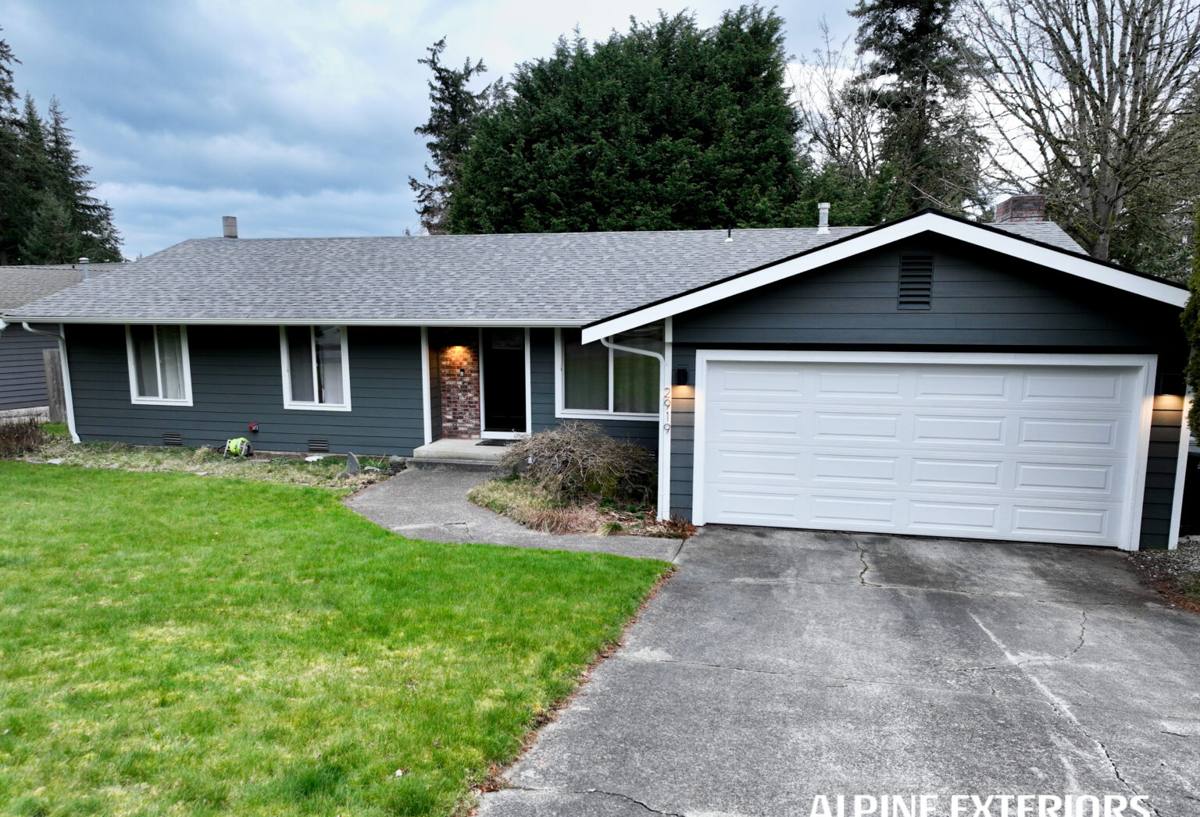
What Vinyl Siding Actually Gets Right
Credit where it's due. Vinyl siding:
- Costs less upfront than almost any other siding material
- Never needs repainting — the color is through the material, not a surface coating
- Installs quickly, which keeps labor costs down
- Comes in a wide range of colors and profiles
- Performs perfectly well in a lot of climates around the country
In a dry, moderate climate with limited wind exposure, vinyl can be a perfectly reasonable choice for decades. Birch Bay just isn't that climate.
Why Our Local Climate Changes the Math
Salt Air
Birch Bay sits directly on the water, and homes here take on salt-laden air almost year-round. Salt doesn't just affect metal fasteners and hardware — it accelerates the breakdown of caulking, seals, and the plastic itself over time, and it settles into every seam and lap joint on a vinyl-clad wall. Vinyl doesn't corrode the way metal does, but the fastener flanges, trim pieces, and J-channels around it often do, and salt residue trapped behind panels doesn't drain or dry the way it does on a smoother, denser material.
Driving Rain
Storms coming off the Strait of Georgia don't fall straight down — they come in sideways, and vinyl siding is a lapped, non-adhered system by design. It's meant to move with temperature changes, which means the panels are never fully sealed to each other or to the wall behind them. In calm rain that's not an issue. In wind-driven rain, water gets pushed up and under the laps, and how much of that ends up inside the wall assembly depends entirely on the quality of the water-resistive barrier and flashing behind the panels — factors that have nothing to do with the vinyl itself and everything to do with installation.
Moss Season
Western Washington's moss season runs long — realistically most of the year in shaded, north-facing areas near the water. Moss and algae need sustained moisture and organic debris to take hold, and vinyl's overlapping panel design creates hundreds of small horizontal ledges and channels where windblown debris collects and stays damp. Vinyl itself won't rot from moss growth, but the buildup holds moisture against the wall assembly longer than a flatter, tighter-fitting surface would, and it's a recurring maintenance chore for homeowners who want their siding to look clean.
Installation Sensitivity — the Part Nobody Talks About
Vinyl siding's biggest vulnerability isn't the material — it's how forgiving (or unforgiving) it is of installation shortcuts. Vinyl panels are designed to hang loosely on their nailing flange and expand and contract with temperature. Nail it too tight, and panels can't move, leading to buckling and warping in temperature swings. Nail it too loose, and wind can rack panels loose or let water infiltrate more easily. Get the starter strip, J-channel, and flashing details wrong around windows and doors, and there's no forgiving overlap to hide it — water finds the gap.
This matters more in a place with real wind events and real driving rain than it does somewhere calm and dry. A marginal vinyl install in a mild climate might never show a problem. The same install in a Birch Bay winter storm often does.
Heat, Cold, and Physical Movement
Vinyl is a plastic, and plastics expand and contract with temperature more than fiber cement or wood. On a home that gets direct afternoon sun on one wall and shade on another — common around Birch Bay's mix of open shoreline lots and tree-covered inland parcels — you can get visible waviness or buckling on the sun-exposed side over time, especially if the original install didn't leave enough room for movement. It's rarely a safety issue, but it's a cosmetic one, and once a panel is warped, the fix is replacement, not a repair.
What's Actually Happening Behind the Panels
Vinyl siding is not a waterproof wall system by itself — it was never designed to be. It's a rain screen that's supposed to shed the bulk of the water while a separate water-resistive barrier underneath handles anything that gets through. That's a sound system on paper, but it puts almost all the real weatherproofing responsibility on a layer most homeowners never see and can't inspect once the siding is up. If that barrier is installed well, vinyl can perform fine for a long time. If it's not — and we've opened up enough old walls to know installation quality varies a lot — the vinyl on the outside can look perfectly fine while the sheathing behind it is quietly taking on moisture, especially in a wet coastal climate where that barrier gets tested constantly.
Vinyl vs. Fiber Cement, Side by Side
| Factor | Vinyl Siding | James Hardie Fiber Cement |
|---|---|---|
| Upfront cost | Lowest of common siding options | Higher material and labor cost |
| Coastal wind performance | Impact and wind ratings vary widely by product grade | Engineered HZ product lines rated for high-wind, wet climates |
| Moisture behavior | Relies entirely on the barrier behind it | Dense, moisture-resistant material with a factory-sealed finish |
| Fire resistance | Combustible plastic | Non-combustible, fiber cement core |
| Color longevity | Color runs through the material but can fade unevenly with UV and salt exposure | ColorPlus factory finish backed by a dedicated finish warranty |
| Movement in heat | Expands/contracts noticeably; can warp if installed too tight | Minimal expansion and contraction |
| Typical service life | 15–30 years, install and climate dependent | 30+ years when installed to spec |
| Repair approach | Damaged panels usually fully replaced; color matching older stock can be difficult | Individual boards can be replaced and refinished |
None of this means vinyl is a scam or that every vinyl-sided home in Whatcom County is in trouble. It means the trade-offs line up differently once you factor in salt air, driving rain, and a long moss season, and we'd rather build to the climate we actually work in.
Why We Standardized on James Hardie Instead
We made a decision as a company to install only James Hardie fiber cement siding — not LP SmartSide, not vinyl, not Cemplank, not Allura, not primed spruce or cedar. That's a narrower offering than most siding contractors run, and we did it on purpose. Fiber cement is non-combustible, dense enough to resist the moisture cycling that coastal weather causes, and Hardie's HZ5 product line is specifically engineered for climates like ours — harsh weather exposure with a lot of moisture and temperature swings. The ColorPlus factory finish is baked on under controlled conditions rather than applied on site, which matters in a region where a lot of the year isn't ideal painting weather anyway. And Hardie backs the product with a strong, transferable warranty, which carries real value if you sell the home down the road.
Standardizing on one product also means our crews install it constantly — the same flashing details, the same fastening patterns, the same joint treatment, home after home. Installation quality is the single biggest variable in how any siding performs, vinyl included, and we'd rather get very good at one system than average at five.
Questions Worth Asking Before You Choose Any Siding
- Is the product rated for wind and wet-climate exposure, or just general use?
- What's actually happening behind the panels — what water-resistive barrier and flashing details are being used?
- How is the warranty structured, and does it transfer to a future buyer?
- What does routine maintenance look like — painting, moss cleaning, caulking?
- How many of this specific product has the crew installed, and can they speak to it in detail?
- What happens if one section is damaged — can it be repaired, or does it require full panel replacement?
What This Means for Your Project
If you're planning a siding replacement in Birch Bay or anywhere along this stretch of Whatcom County coastline, we'd rather tell you upfront that we won't be quoting vinyl than have that conversation halfway through a bid. We'll walk your home, talk through what we're seeing in your existing siding and wall assembly, and explain exactly why we'd install Hardie in your specific situation — not just recite a company line.
If you'd like a straightforward, no-pressure estimate, use the form below and we'll get out to take a look.