 Birch Bay Siding
 Sandy Point Is a Different Kind of Exterior Job
Sandy Point sits right up against the water in Birch Bay, and that proximity changes what a home's exterior has to deal with year-round. Homes a mile inland in Whatcom County get wind and rain like everywhere else in this part of Washington. Homes in Sandy Point get all of that plus salt-laden air coming straight off the bay, more direct wind exposure with fewer trees to break it up, and the kind of persistent dampness that comes from being this close to open water. We've worked on enough exteriors along this stretch of coastline to know that what holds up in a sheltered neighborhood a few miles away doesn't always hold up here.
This page is about what that means practically for siding, and for the roof, windows, and decking that make up the rest of a home's exterior envelope.
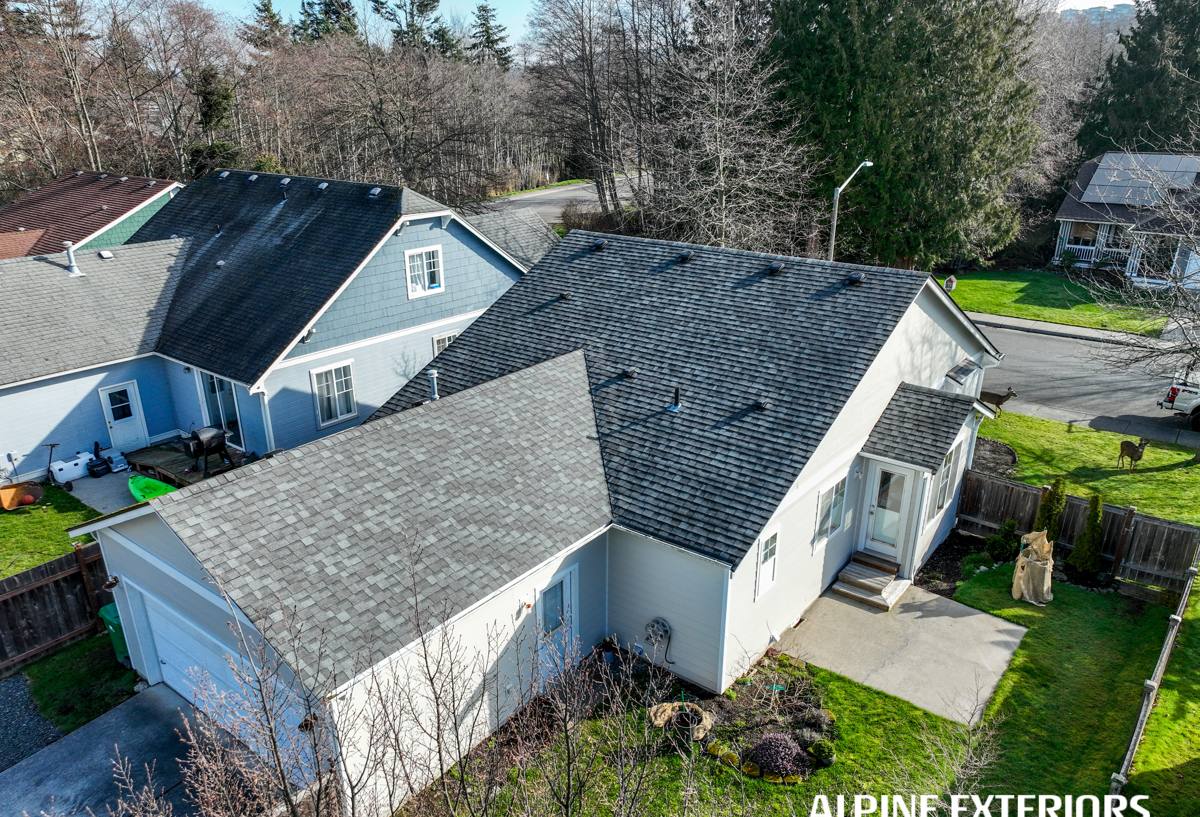
What Salt Air and Coastal Exposure Actually Do to a House
Salt Air
Airborne salt doesn't just sit on a surface — it works its way into seams, fastener heads, and any spot where two materials meet. Over years, it accelerates corrosion on metal components (flashing, nails, hardware) and it can degrade certain paints and coatings faster than the manufacturer's stated service life would suggest, especially on the ocean-facing side of a structure.
Driving Rain
Birch Bay gets plenty of rain, but Sandy Point's more open exposure means that rain often arrives at an angle, driven by wind straight off the water. Wind-driven rain finds weak points that a straight-down rain never would — lap joints, butt seams, window and door trim, and any siding product that isn't dimensionally stable enough to keep those joints tight over time.
Moss and Sustained Moisture
The long stretch of gray, wet months in Whatcom County means siding, trim, and roofing surfaces stay damp for extended periods. That's exactly the environment moss and algae need to establish. Once moss gets a foothold on a siding surface or roof edge, it holds moisture against the material even longer, which compounds whatever damage the moisture was already causing.
Why the Siding Material Choice Matters More Here Than Elsewhere
Inland, a homeowner has more room for error with siding material — less wind, less salt, less sustained dampness means less stress on the material and its finish. In Sandy Point, the margin for error is smaller. A product that's marginal in moisture performance, prone to swelling at cut edges, or dependent on a field-applied paint job to keep water out is going to show problems here faster than it would elsewhere. That's a big part of why we've standardized on one product system rather than offering several options.
Why We Install Only James Hardie Fiber Cement
We don't install LP SmartSide, vinyl, Cemplank, Allura, primed spruce, or cedar. That's not a marketing position — it's a decision we made after years of doing repair and replacement work on all of those products in coastal and near-coastal conditions similar to Sandy Point.
- It's non-combustible. Fiber cement doesn't contribute fuel to a fire the way wood-based products do, which matters in any home but is a straightforward, no-downside advantage.
- ColorPlus factory finish. The color is baked on at the factory under controlled conditions, not applied on a ladder in variable Birch Bay weather. That finish holds up better against salt exposure and UV than a field-applied coat, and it carries its own finish warranty.
- Climate-engineered HZ product lines. Hardie makes region-specific formulations (HZ5 for our zone) engineered for moisture and freeze-thaw cycling relevant to the Pacific Northwest, rather than a one-size-fits-all product.
- Dimensional stability. Fiber cement doesn't swell, cup, or delaminate at cut edges and joints the way wood-based composite products can when they take on repeated moisture — which is exactly the failure pattern we see most in wind-driven-rain exposures like Sandy Point.
- Strong transferable warranty. A warranty that survives a change of ownership matters in a market where waterfront and near-waterfront homes change hands.
We want to be fair about the products we don't install: LP SmartSide and cedar both have real strengths, and plenty of houses are sided in them without major problems in gentler climates. Our decision is about the specific combination of salt exposure, wind-driven rain, and long wet seasons that a place like Sandy Point sees, and about wanting to install one product system correctly rather than several products adequately.
What a Local Birch Bay Crew Brings to a Sandy Point Job
A crew that's worked this stretch of coastline knows things that don't show up in a spec sheet: which sides of a house take the worst of the wind off the bay, where moss tends to establish first, how flashing details need to be handled a little differently than they would on a sheltered inland lot. That local knowledge shows up in small decisions during installation — extra attention at butt joints facing the water, flashing choices around windows and doors, fastener selection that accounts for salt exposure — that add up to a longer-lasting result.
It also means faster response if something needs a look after a big windstorm, and a crew that's answerable locally rather than a name from an out-of-town outfit that won't be back next season.
Our Process on a Sandy Point Home
- On-site assessment. We look at existing siding, trim, flashing, and the condition of the sheathing underneath where accessible, and we note which elevations take the most weather.
- Moisture check. Coastal homes more often have hidden moisture issues behind old siding than inland homes do. We check for this before quoting, not after tearing into a wall.
- Prep and removal. Old siding comes off, damaged sheathing or trim gets addressed, and a proper weather-resistive barrier and flashing system goes on before any new siding is installed.
- Hardie installation to spec. Correct fastener spacing, joint treatment, and clearances (especially ground clearance and gaps at trim) matter everywhere, but they matter more where wind-driven rain is a regular occurrence.
- Final walkthrough. We go over the finished work with the homeowner before considering the job done.
Roofing, Windows, and Decks — the Rest of the Envelope
Siding is only part of what protects a Sandy Point home. We also handle roofing, windows, and decks, and in a salt-air, high-wind location these systems all interact:
- Roofing: Roof edges and flashing take a lot of the same wind and moisture stress as siding does, and a failing roof detail will eventually show up as a siding or trim problem below it.
- Windows: Window flashing and trim are common entry points for wind-driven rain. When we replace siding around existing windows, we pay close attention to how they're integrated so we're not sealing new siding around an old leak point.
- Decks: Exposed decking and structural framing take direct salt and moisture exposure with no siding or roof to shield them, which usually means more frequent maintenance attention than the rest of the house.
Handling these as one exterior system, rather than four separate trades, means fewer gaps where water can get in between one contractor's work and the next.
Cost Factors for a Sandy Point Siding Project
Every home is different, but these are the main factors that move the price on a siding job in this area:
| Factor | Why It Matters Here |
|---|---|
| Home size and elevation count | More square footage and more distinct wall planes mean more material and labor |
| Existing siding removal | Tear-off adds labor, and coastal homes more often reveal moisture damage once old siding comes off |
| Sheathing or framing repair | Salt-air and wind-driven-rain exposure raises the odds of hidden water damage needing repair before new siding goes on |
| Trim and detail work | Homes with more window/door trim and architectural detail take more time to flash and finish correctly |
| Access and site conditions | Waterfront lots can have tighter access, slopes, or limited staging area that affect labor time |
| Hardie product line and color | Panel profile, plank exposure, and factory color selection affect material cost |
We give a written, itemized estimate after an on-site look — not a phone-quote guess — so a homeowner knows what's driving the number.
Signs a Sandy Point Home's Exterior Needs Attention
- Moss or dark streaking building up on siding or roof edges, especially on shaded or north-facing sides
- Soft or spongy spots when you press on siding or trim near ground level or window sills
- Paint or finish that's chalking, peeling, or noticeably faded compared to the rest of the house
- Visible gaps opening up at siding seams, butt joints, or trim corners
- Rust staining running down from fasteners or metal flashing
- Musty smell or discoloration on interior walls near exterior corners, which can point to moisture getting in behind the siding
Any one of these on its own isn't necessarily an emergency, but in a Sandy Point exposure they tend to compound faster than they would on a more sheltered lot, so it's worth having them looked at sooner rather than later.
Let's Take a Look at Your Home
If you're in Sandy Point and dealing with aging siding, moss buildup, or you're just planning ahead for a home this close to the water, we're happy to come take a look. There's no pressure and no cost to get our honest read on where your exterior stands — fill out the form below and we'll set up a time.