 Birch Bay Siding
 Why Color Decisions Matter More on the Washington Coast
Picking a siding color is usually treated as the fun part of a project — swatches on a table, a few opinions from family, done. On the Whatcom County coastline, it deserves more thought than that. Birch Bay sits right on the water, which means every wall on the west and south faces takes on salt-laden air, wind-driven rain, and long stretches of gray, low-angle light for much of the year. Add in the moss and algae that thrive in our wet winters, and a color that looked great on a sample chip in a showroom can behave very differently nailed to a house two blocks from the beach.
This guide covers how James Hardie's ColorPlus factory-finish system actually works, how the color families are organized, what holds up best in this specific climate, and what questions to ask before you commit to a color you'll be looking at for the next 15-plus years.
What ColorPlus Technology Actually Is
The single biggest difference between Hardie's ColorPlus finish and a can of exterior house paint is where and how the color is applied. ColorPlus colors are baked onto the fiber cement board in a factory, in multiple coats, under controlled temperature and cure conditions, before the boards ever reach a job site. Field-applied paint — the kind used on primed fiber cement, wood, or most other siding after installation — cures outdoors, at whatever temperature and humidity happens to exist that week, and typically goes on as a single finish coat over primer.
Why the Application Method Matters
- Factory baking creates a harder, more uniform finish than air-cured field paint
- Multiple factory coats mean better film build and more even color from board to board
- Controlled cure conditions avoid the adhesion problems that come from painting in cold or damp weather — a real risk during a Birch Bay install season
- Color consistency across an entire elevation, since every board came from the same finishing line rather than being brushed or sprayed on site
This is also the core reason our company installs exclusively primed-for-ColorPlus or factory-finished Hardie boards rather than field-painting fiber cement or installing primed wood products that require a full paint job after the crew leaves. A factory finish removes an entire category of installation-day variables — weather at time of painting, applicator skill with a sprayer, coat thickness — that otherwise directly determine how long the color lasts.
How the Color Palette Is Organized
Hardie groups its ColorPlus colors into curated collections rather than an open-ended chart, which keeps combinations looking intentional rather than random. Some of the more commonly specified colors in this region include neutrals like Arctic White, Cobblestone, and Pearl Gray; deeper tones like Iron Gray, Aged Pewter, and Rich Espresso; and a handful of character colors such as Boothbay Blue, Mountain Sage, and Countrylane Red for homes that want more presence.
Field, Trim, and Accent Roles
Most exteriors read best when colors are assigned a job rather than picked in isolation:
- Field color — the main body of the house, usually the largest area and the one most exposed to weather
- Trim color — window and door trim, corner boards, fascia; typically a contrasting neutral
- Accent color — shutters, entry doors, or a gable feature; where a bolder color choice is lowest-risk
A common mistake is choosing a bold accent color for the main field of the house. It's the surface that gets the most sun and salt exposure, and the one that's most expensive to redo later if the color doesn't age the way you expected.
Matching Color to Birch Bay's Light and Weather
Whatcom County's coastal light is different from inland Washington — more overcast days, more diffuse gray light bouncing off the Strait, and a marine haze that can mute strong colors. A few practical patterns show up again and again on homes along this stretch of coast:
Lighter and Mid-Tone Colors
Whites, warm grays, and soft greens tend to read well under our typical cloud cover and don't show dust and pollen streaking as obviously between rains. They also show moss and algae growth more visibly on north-facing walls and under eaves — not a defect in the color, just a maintenance reality of a wet, shaded climate.
Darker Colors
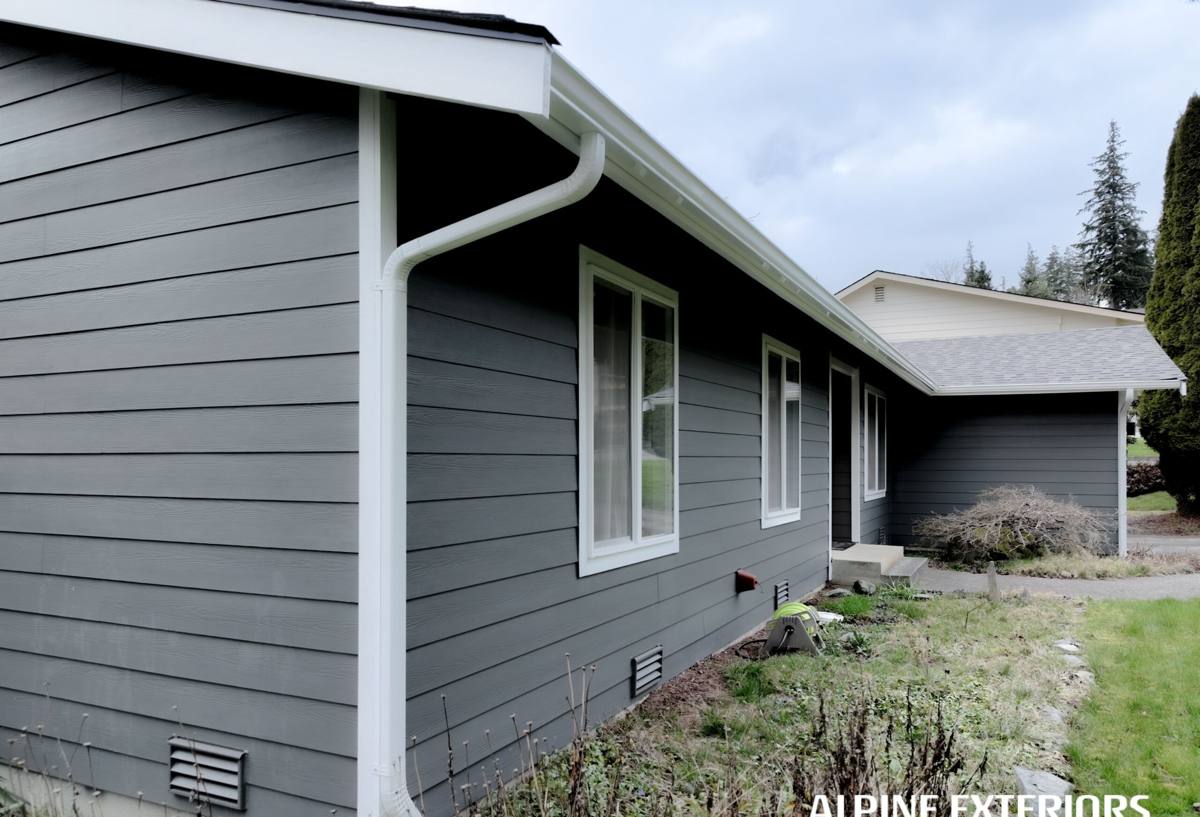
Deep grays, espresso, and near-black tones look sharp and hide surface dirt well, but they absorb more heat on the rare sunny days and can make the underlying material work harder through freeze-thaw cycles in winter. They also make chalking or fading, if it ever occurs at the tail end of the warranty period, more visually noticeable than it would be on a lighter shade.
Salt Air Considerations
Salt air itself doesn't harm the ColorPlus finish the way it corrodes bare metal fasteners or untreated wood trim, but salt residue combined with driving rain can leave mineral deposits on any exterior surface. Homes closer to the water benefit from an occasional rinse-down as routine maintenance, regardless of color choice.
Color, Line, and Climate Table
| Consideration | Lighter Colors | Darker Colors |
|---|---|---|
| Visibility of moss/algae on shaded walls | More noticeable | Less noticeable |
| Heat absorption on sun-exposed walls | Lower | Higher |
| Streak/dirt visibility between rains | Lower to moderate | Higher |
| Best paired product line for this region | HZ5 climate-engineered panels, either tone | HZ5 climate-engineered panels, either tone |
| Recommended maintenance rinse frequency | 1–2x per year | 1–2x per year |
Note that HZ5 is Hardie's engineered product line built for wet, freeze-prone climates like ours — it's about the substrate's moisture and durability performance, not the color itself. Color choice and product line are separate decisions, and we'll only install the HZ line appropriate for this climate zone regardless of which color you land on.
The ColorPlus Warranty, In Plain Terms
ColorPlus finishes carry their own warranty coverage separate from the substrate (the fiber cement board itself), which is unusual in the siding world — most products either don't warranty the finish at all or bundle a shorter finish warranty into the base product warranty. In broad terms, ColorPlus coverage addresses issues like peeling, cracking, and fading of the factory finish for a defined multi-year term, and it's transferable to a subsequent homeowner if you sell the house, which matters for resale value on the coast where buyers are aware of what salt air can do to lesser finishes.
Always ask your installer to walk you through the actual current warranty document rather than relying on secondhand summaries — terms and conditions matter, and coverage can depend on installation being done to Hardie's published specifications.
Practical Steps for Choosing a Color
- View physical color samples outdoors, in Birch Bay's actual light, not under indoor showroom lighting
- Look at samples at different times of day — morning haze and late afternoon light change how a color reads
- Hold trim and accent samples next to the field color sample together, not separately
- Ask to see the color on a home in the area if your contractor has done nearby work
- Consider your roof color and any stone, brick, or existing hardscape you're not replacing
- Think about resale neutrality if you plan to sell within the next several years
Maintenance That Protects Your Color Investment
A ColorPlus finish is low-maintenance, not no-maintenance. A yearly rinse with a garden hose or low-pressure setting removes salt residue, pollen, and the start of moss growth before it takes hold. Avoid high-pressure washing directed straight at the boards or joints — it's harder on caulking and trim than it is on the finish itself, but it's still not something Hardie recommends as routine cleaning. If a board is ever damaged, factory touch-up and color-match products exist specifically so a repair doesn't stand out as an obvious patch, which is a real advantage over trying to hand-match a field-mixed paint years after the original job.
Why We Only Install James Hardie
We don't offer LP SmartSide, vinyl, Cemplank, Allura, or primed wood siding, and color is one real part of why. A factory-baked finish, backed by its own warranty, gives homeowners in a punishing coastal climate a predictable outcome — we know how the product performs here because we install one system, to spec, on every job. That consistency is worth more to us than offering a wider menu of products we'd have less confidence standing behind twenty years from now.
If you're weighing colors for a new install or a full re-side, we're happy to bring physical ColorPlus samples out to your property and walk the exterior with you at no cost and no pressure — reach out for a free estimate and we'll help you find a color that'll still look right a decade from now.