 Birch Bay Siding
 Exterior Work for Custer, Washington Homes
Custer sits inland from the water compared to the beach homes right along Birch Bay, but it's still squarely inside Whatcom County's marine climate, and that matters more to a house than most homeowners realize until they're dealing with the consequences. The Salish Sea keeps this whole corridor damp for a big chunk of the year, temperatures moderate, and moisture the constant background condition your siding, roof, and windows have to manage. Rural and semi-rural properties around Custer often carry a mix of older farmhouses, manufactured homes, and newer construction, and each of those brings different exterior priorities. We work throughout this corridor, from the shoreline in Birch Bay inland through Custer and up toward Blaine, and we've seen what this climate does to every siding material sold in the Pacific Northwest.
This page covers what Custer homes tend to face from the weather, how our services apply here, and why hiring a crew that actually works this area regularly is worth something you can't get from a big regional outfit that treats every job the same regardless of climate zone.
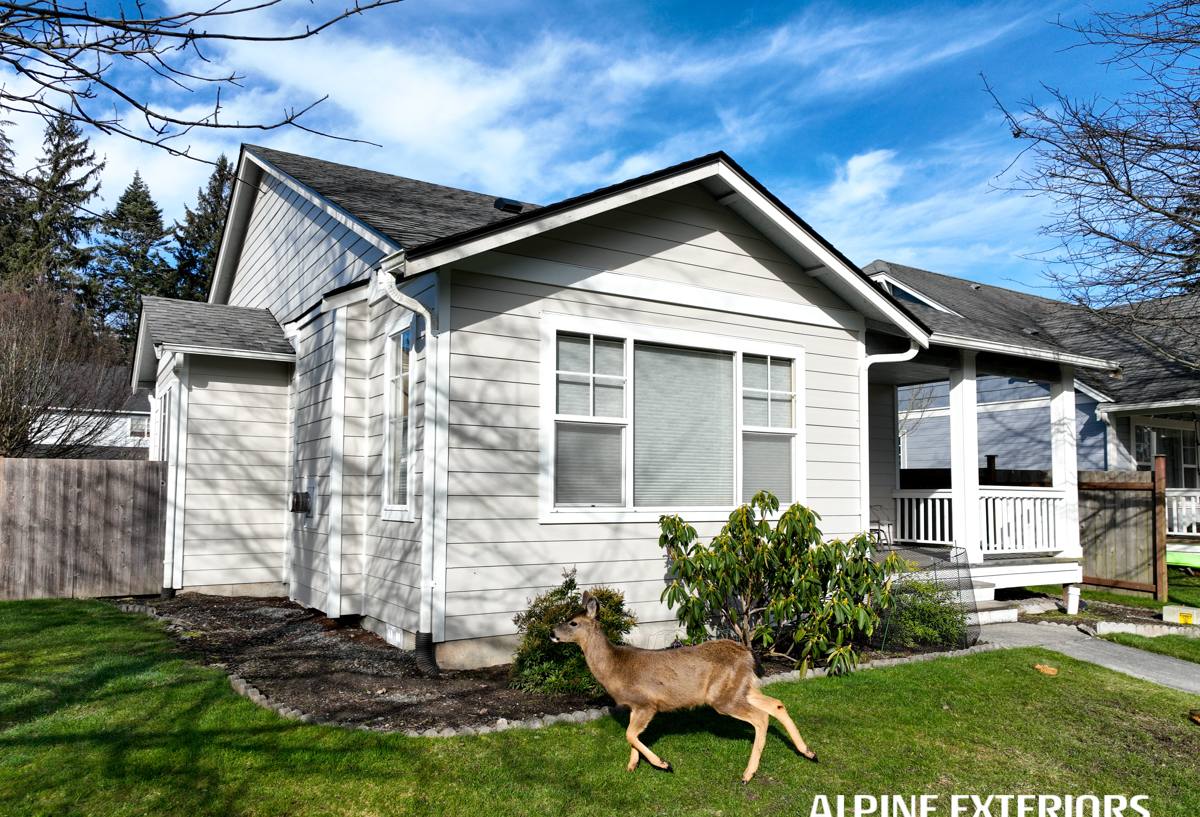
What Custer's Climate Does to a House
Rain and Moisture Load
Whatcom County gets a long wet season, and inland communities like Custer aren't spared just because they're not beachfront. Driving rain, especially with wind out of the south and west, pushes moisture into every gap, seam, and fastener penetration on the exterior of a house. Over years, that moisture load is what breaks down materials that aren't built to handle it — not one big storm, but the cumulative effect of month after month of dampness that never fully dries out between rain events.
Salt Air and Corrosion
Custer is close enough to Birch Bay and the broader Salish Sea coastline that salt-laden air still reaches inland on windier days, even if it's less concentrated than right on the water. Salt air accelerates corrosion on fasteners, flashing, and any metal components on a roof or siding system. It's a slower, quieter problem than a leak, but it's one reason material choice and installation detail matter more here than in a dry inland climate.
Moss, Mold, and the Long Wet Season
Between the rain and the moderate temperatures, this region grows moss and algae on roofs and siding almost year-round. It's not just cosmetic — moss holds moisture against a surface, works into seams and under shingles, and can shorten the life of roofing material if it's never addressed. Siding with a poor moisture-shedding profile, or wood-based products that need consistent repainting, tend to show this the worst.
Siding for Custer Homes: Why We Only Install James Hardie
We install James Hardie fiber cement siding exclusively. We don't install vinyl, LP SmartSide, Cemplank, Allura, primed spruce, or cedar, and that's a deliberate standard, not a limitation of what we're capable of installing. Here's the honest reasoning behind it, specific to a climate like this one.
Vinyl
Vinyl siding is inexpensive and low-maintenance in a dry climate, but in a wet, wind-exposed region it has real limits. It expands and contracts with temperature swings, which stresses seams and fastener points over time, and it can warp or crack in sustained wind-driven rain and cold snaps. It also doesn't hold up well against long-term moisture intrusion behind the panel if the water-resistive barrier underneath isn't perfect — and vinyl's snap-lock installation leaves more room for that kind of hidden problem than a fiber cement system installed to spec.
LP SmartSide, Cemplank, and Allura
LP SmartSide is an engineered wood product — it performs reasonably well when installed and maintained correctly, but wood-based siding is inherently more vulnerable to moisture absorption at cut edges and seams than fiber cement, and in a climate this wet, that's a maintenance burden we don't want to hand a homeowner. Cemplank and Allura are also fiber cement, and they're not bad products, but we've standardized on one manufacturer so we know exactly how the product behaves, exactly how the warranty is structured, and exactly what correct installation requires — rather than juggling multiple systems with different specs and different weak points.
Primed Spruce and Cedar
Solid wood siding, primed or cedar, looks great and has real heritage appeal, but it demands a repainting and recaulking cycle that most homeowners underestimate, especially in a climate that barely gives paint time to fully cure between rain events. Cedar is naturally rot-resistant compared to other woods, but it's not immune to moisture damage, and the maintenance cost over a 20-30 year window is significantly higher than fiber cement.
Why Hardie
James Hardie fiber cement is non-combustible, dimensionally stable across temperature and moisture swings, and available in HZ product lines engineered specifically for climate zones like ours. The ColorPlus factory finish is baked on and warranted separately from the substrate, which means it holds color and resists fading and peeling far longer than field-applied paint. The transferable warranty is also one of the strongest in the category, which matters if you sell the house before the siding's functional life is up. Installed to Hardie's spec — proper clearances, correct fastening, flashing detail done right — it's the product we're comfortable standing behind on every job.
| Material | Moisture Behavior | Maintenance | Typical Lifespan |
|---|---|---|---|
| Vinyl | Can warp/crack under stress; seams vulnerable | Low, but limited repair options when damaged | 15-25 years |
| LP SmartSide | Vulnerable at cut edges/seams if not sealed well | Moderate — coating maintenance over time | 20-30 years |
| Cedar / Primed Wood | Absorbs moisture; needs consistent sealing | High — regular repainting/caulking | 20-30 years with upkeep |
| James Hardie Fiber Cement | Dimensionally stable, engineered for wet climates | Low — factory finish, occasional wash | 30-50 years |
Roofing in Custer's Wet, Mossy Climate
A roof in this part of Whatcom County works harder than the same roof would somewhere dry. Constant moisture, moss growth, and the occasional windstorm all shorten a roof's usable life if it isn't installed and maintained with that in mind. We handle roof installation and repair with attention to the details that matter most here: proper underlayment for a long wet season, flashing at every penetration and valley done correctly the first time, and ventilation that lets a roof deck actually dry out between rain events instead of holding moisture against the sheathing. Moss prevention starts with material choice and roof design, not just chemical treatments after the fact.
Windows and Doors
Older homes around Custer often still have original single-pane or early dual-pane windows that have long since lost their seal — you can usually tell by fogging between the panes or drafts you can feel on a windy day. Replacing those with properly flashed, well-sealed modern windows does two things: it cuts heating costs in a region that runs its heat for a good chunk of the year, and it closes off one of the more common paths for wind-driven rain to get behind exterior walls. Window and door replacement is also a natural pairing with a siding project, since both trades need the same flashing and moisture-barrier work done correctly around the same openings.
Decks in a Wet Climate
A deck in this climate spends most of the year damp, which makes material choice and proper drainage detail more important than they'd be in a dry region. We build and repair decks with attention to ledger board flashing, proper spacing for drainage and airflow underneath, and hardware rated for the moisture and mild corrosion exposure this area sees. A poorly built deck in a climate like this will show rot and hardware failure years before it should — the fix is in the details during construction, not in maintenance afterward.
Why a Local Crew Matters in Custer
A contractor who works this specific stretch of Whatcom County day in and day out knows things a crew from outside the region doesn't — how the wind typically drives rain on a given property's exposure, which roof and siding details actually hold up through a full wet season here, and how to sequence exterior work around the weather instead of fighting it. We're not learning this climate on your house. We show up knowing what Custer, Birch Bay, and the surrounding area demand from an exterior, and we build to that standard rather than a generic one.
What to Expect from an Estimate
- An on-site inspection of your current siding, roofing, windows, or deck condition
- An honest assessment of what's actually needed versus what can wait
- A clear explanation of material options and why we recommend what we recommend
- A written estimate with no pressure to sign on the spot
- Straight answers about timeline, process, and what the work will involve day to day
Get a Free Estimate
If you're dealing with aging siding, a roof that's showing its age, drafty windows, or a deck that's seen better days, we're happy to come take a look. The estimate is free, there's no pressure, and you'll get a straight answer about what your Custer home actually needs.