 Birch Bay Siding
 Exterior Work in Birch Bay Village Starts With the Climate
Birch Bay Village sits close enough to the water that homes here deal with a different set of conditions than a house twenty minutes inland in Whatcom County. Salt-laden air off the bay, wind-driven rain that gets pushed sideways into siding and trim, and a moss season that can stretch from fall through spring all put steady pressure on a home's exterior. None of this is dramatic — it's slow, cumulative wear that shows up as premature paint failure, soft trim boards, streaked roofing, and siding joints that open up years before they should.
We do exterior work — siding, roofing, windows, and decks — for homes throughout this part of Birch Bay, and the approach we take here is shaped by that marine exposure. Materials and installation details that hold up fine in a drier, more sheltered part of the county don't always perform the same way a few hundred yards from saltwater.
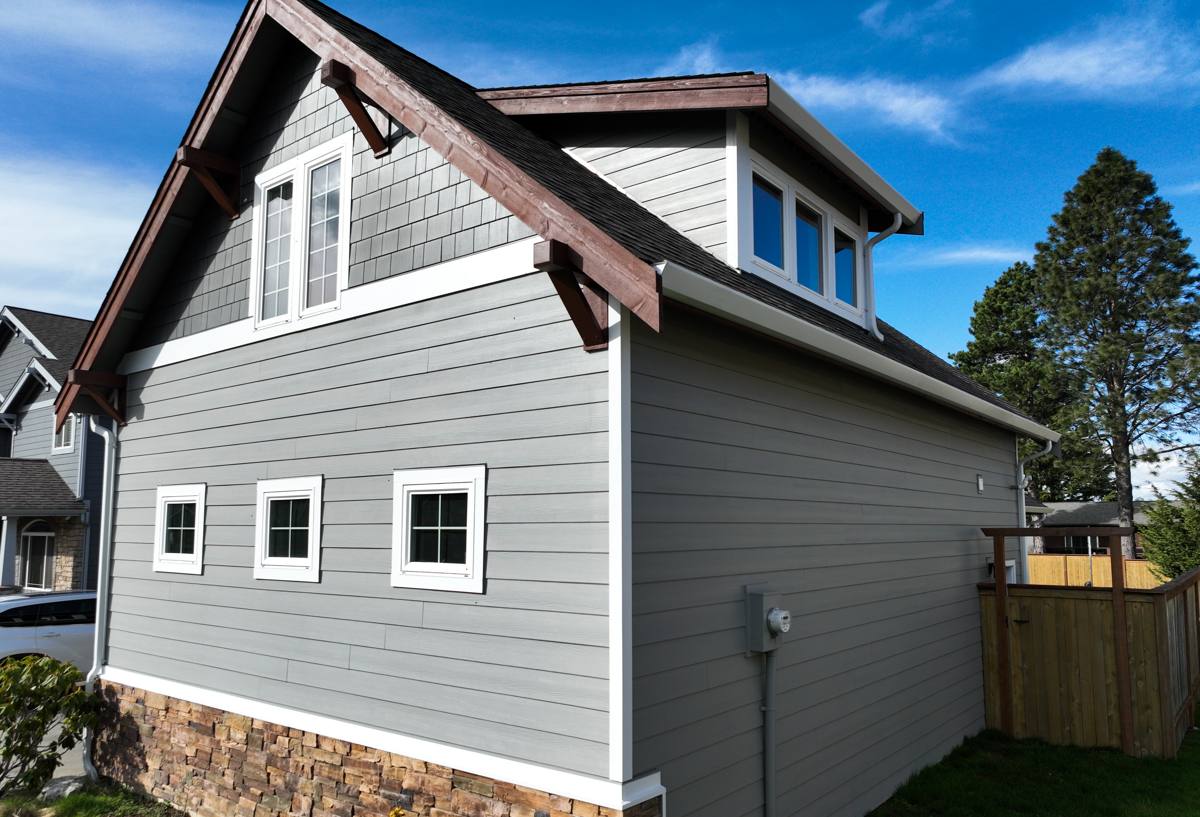
What Salt Air and Driving Rain Actually Do to a House
Salt air is corrosive to exposed metal fasteners and hardware, and it accelerates the breakdown of lower-quality paint films and sealants. Combined with wind-driven rain, it finds every gap in flashing, every under-caulked joint, and every seam where water isn't supposed to sit. Over time, that moisture exposure is the single biggest factor separating exteriors that last thirty-plus years from ones that need major repair in ten.
Where Problems Typically Start
- Butt joints and seams on lower-grade siding products that swell or separate once moisture gets behind the surface
- Fascia, trim, and rake boards facing prevailing wind and rain
- Deck ledger boards and fastener points where water collects against wood
- Roof valleys and low-slope transitions where wind can drive rain uphill under shingles
- Window flashing details that weren't sealed correctly at install
Why We Install Only James Hardie Fiber Cement Siding
We made a deliberate decision to install James Hardie fiber cement exclusively — not vinyl, not LP SmartSide, not Cemplank or Allura, not primed spruce or cedar. That's not a marketing angle; it's a standard we hold to because of what coastal Washington exposure does to exteriors over a full ownership cycle.
Non-Combustible, Moisture-Stable Material
Fiber cement doesn't rot, and it isn't a food source for the mold and moss that thrive in our wet climate. It's also non-combustible, which matters more each year as wildfire smoke and ember exposure become a bigger part of Pacific Northwest summers. Wood-based products, including engineered wood siding, are more vulnerable to moisture intrusion at cut edges and seams — a real concern when a house is regularly hit with sideways rain.
ColorPlus Factory Finish
Hardie's ColorPlus finish is baked on at the factory under controlled conditions, which gives it better adhesion and UV resistance than field-applied paint. In a salt-air environment, where cheaper paint films tend to chalk and fade faster, that factory finish is one of the reasons Hardie siding keeps its look longer between repaints.
HZ5 Climate-Engineered Product Line
James Hardie engineers its siding by climate zone, and Whatcom County falls into their HZ5 designation, built for wetter, more moisture-exposed regions. That's a meaningful distinction — it means the product formulation is matched to conditions like ours rather than a one-size-fits-all approach.
A Warranty That Actually Transfers
Hardie backs its siding with a long-term, transferable limited warranty and a separate warranty on the ColorPlus finish. For homeowners thinking about resale, a warranty that follows the house rather than expiring at sale is a real asset, not just fine print.
Siding, Roofing, Windows, and Decks — How They Work Together
A house is a system. Siding that's installed perfectly but paired with poor roof flashing, or windows that aren't properly integrated into the water-resistive barrier, will still leak. We handle all four trades for that reason — it lets us treat the exterior as one connected system instead of four separate contractors each assuming someone else covered the transitions.
Roofing
In a driving-rain environment, roof underlayment, valley flashing, and ventilation matter as much as the shingle or metal product itself. Poor attic ventilation combined with our damp climate is also a common contributor to moss growth and premature roof aging.
Windows
Window replacement is as much about the flashing and sealing detail as it is about the window unit. A well-installed window integrates into the siding's drainage plane so water is directed out and down, not trapped behind the frame.
Decks
Decks facing the bay take direct weather exposure on every surface — top, bottom, and edge cuts. Ledger board attachment and proper flashing where a deck meets the house are the details that most often get shortcut, and they're the details that cause the most expensive repairs later.
Moss Season and What It Means for Exterior Materials
Whatcom County's moss season is long, often running from early fall through late spring. Moss and algae growth thrives on damp, shaded surfaces, and it's not just cosmetic — sustained moisture retention against a wall or roof surface accelerates material breakdown underneath. Fiber cement siding doesn't feed moss growth the way wood-based products can, and Hardie's factory finish resists the staining that moss and mildew leave behind, so routine cleaning goes further and lasts longer between treatments.
Simple Habits That Reduce Moss and Moisture Damage
- Keep gutters clear so runoff doesn't sheet down siding and trim
- Trim back vegetation and tree cover that keeps north- and west-facing walls shaded and damp
- Check caulking at trim, window, and door joints every year or two
- Rinse siding periodically rather than letting organic growth build up over multiple seasons
- Have roof valleys and low-slope areas inspected before the wet season ramps up
Why a Local Crew Matters Here
Exterior work in a marine-exposed community like Birch Bay Village isn't the same job as exterior work twenty miles inland. Flashing details, fastener choices, and even where extra sealant is warranted change based on how much salt air and wind-driven rain a specific side of a house takes. A crew that works this area regularly knows which walls and rooflines need the closest attention before problems start, rather than treating every house the same way.
Comparing Siding Materials for a Coastal Whatcom County Home
| Factor | James Hardie Fiber Cement | Vinyl | Wood / Engineered Wood |
|---|---|---|---|
| Moisture resistance | Does not rot or absorb water like wood | Won't rot, but can warp and gap over time | Vulnerable at cut edges and seams |
| Fire resistance | Non-combustible | Combustible, can melt/deform | Combustible |
| Finish durability | Factory-baked ColorPlus finish | Color molded in, can fade/chalk | Field-applied paint, needs regular upkeep |
| Moss/algae resistance | Doesn't feed organic growth | Doesn't feed growth, but seams trap debris | Can host moss/mildew on damp surfaces |
| Warranty | Long-term, transferable | Varies widely by manufacturer | Typically limited or none on material |
What to Expect When Planning a Project
Every exterior project starts with an honest look at what's actually driving the need for work — is it cosmetic, is there active moisture damage, or is it simply time given the age of the current siding, roof, windows, or deck? We walk the exterior, check for soft spots, flashing issues, and ventilation problems, and give a straightforward assessment before talking about scope.
Questions Worth Asking Any Contractor
- What siding, roofing, and window products do you install, and why those specifically?
- How do you detail flashing around windows, doors, and deck ledgers?
- What does the manufacturer's warranty actually cover, and does it transfer to a new owner?
- Are you licensed and insured to work in Washington state?
- Can you walk me through how water is meant to drain off this specific wall or roofline?
Cost Factors to Understand Before You Budget
| Factor | Why It Affects Cost |
|---|---|
| Home size and wall complexity | More corners, gables, and trim detail mean more labor and material |
| Current condition | Rot, hidden moisture damage, or failed flashing add repair scope before new material goes on |
| Siding profile and color | Lap width, textures, and ColorPlus color options carry different material costs |
| Access and site conditions | Steep grades, tight lots, or limited equipment access affect labor time |
| Scope combined | Bundling siding with roofing, windows, or a deck can reduce redundant setup and staging costs |
If you're weighing a siding, roofing, window, or deck project for a home in Birch Bay Village, we're glad to take a look and give you a straightforward, no-pressure estimate — use the form below to get started.