 Birch Bay Siding
 Siding for a Peninsula That Takes a Beating
Point Roberts sits in an unusual spot: a small peninsula hanging off the bottom of the Tsawwassen headlands, surrounded on three sides by the Strait of Georgia and connected to the rest of Whatcom County only through Canada. That geography is part of what makes it a special place to live, and it's also exactly why the exterior of a home there works harder than a house twenty miles inland. Salt-laden air off the water, driving rain that comes in sideways during winter storms, and a long stretch of damp, low-sun months that keep everything green with moss add up to a climate that's genuinely tough on building materials.
We're based in Birch Bay and work this stretch of Whatcom County regularly, which means we already understand what a Point Roberts home is up against before we ever step out of the truck. That local familiarity matters more than people expect. A siding product or installation detail that holds up fine in a dry inland climate can fail early here, and a contractor who doesn't work coastal jobs routinely may not catch that until it's too late.
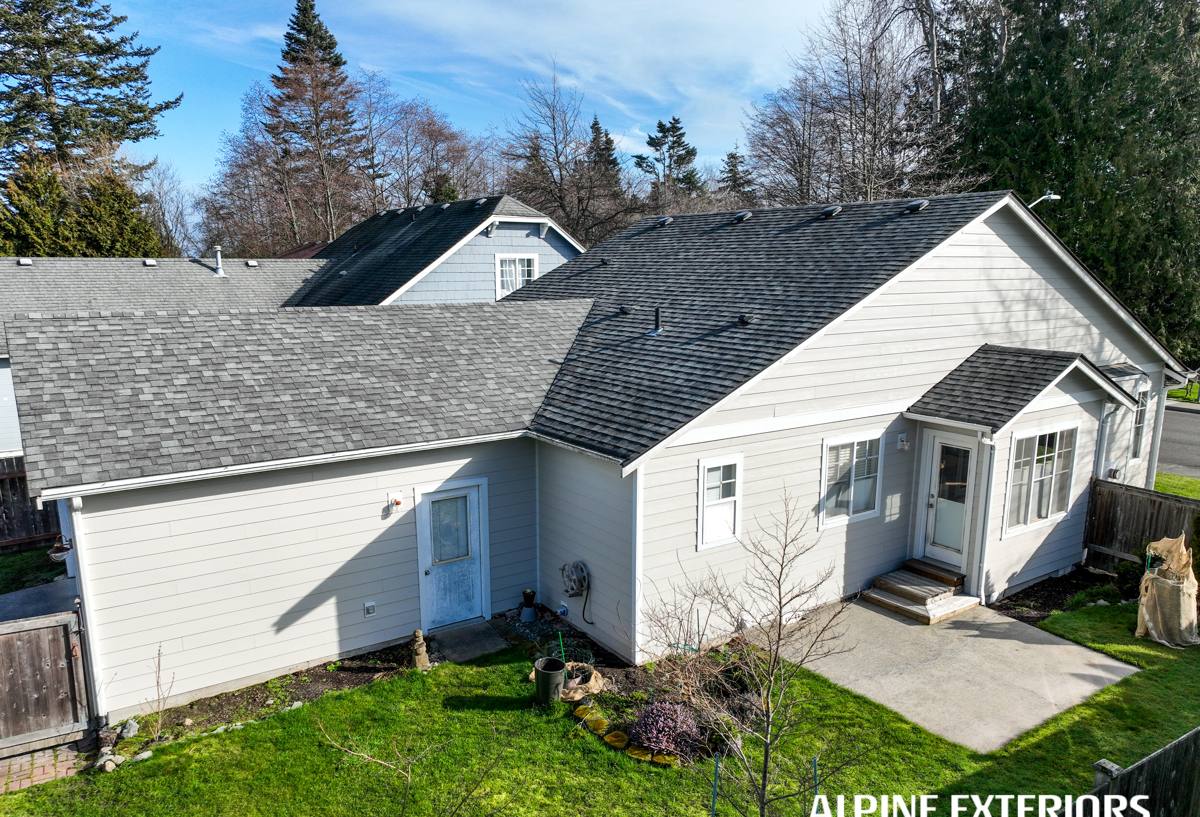
What the Marine Climate Actually Does to a House
Salt Air and Corrosion
Airborne salt from the strait settles on every exterior surface — siding, trim, fasteners, flashing. Over years, it accelerates corrosion in metal components and can degrade certain siding materials faster than manufacturers' general climate ratings suggest. This is one of the reasons fastener choice and flashing detail matter as much as the siding panel itself in a location like this.
Driving Rain and Wind-Driven Moisture
Point Roberts gets exposed to wind off open water with little in the way of a windbreak on some lots. Wind-driven rain doesn't just fall — it gets pushed sideways and upward into laps, seams, and penetrations. Siding systems that rely on tight, forgiving installation tolerances are less margin-for-error in this kind of exposure than they'd be in a sheltered inland yard.
Moss, Algae, and the Long Wet Season
Whatcom County's wet season stretches long, and a shaded, north-facing wall near mature trees can stay damp for weeks at a time. That's the environment moss and algae need. Left unaddressed, sustained moisture against a wall assembly can work its way into seams, fastener holes, and butt joints, which is where real damage — not just cosmetic staining — starts.
Why We Only Install James Hardie Fiber Cement
We made a decision a while back to standardize on James Hardie fiber cement siding and stop installing other materials — no vinyl, no LP SmartSide, no Cemplank, no Allura, no primed spruce or cedar. That's not a marketing position; it's a practical one based on what actually performs on coastal Whatcom County homes over the long run.
Fiber cement is non-combustible, dimensionally stable, and doesn't swell, rot, or delaminate the way wood-based or wood-fiber products can when they take on repeated moisture exposure. James Hardie's HZ5 product line is specifically engineered for climates like this one — cold, wet, freeze-thaw cycles, and salt exposure — rather than a generic all-climate spec. The factory-applied ColorPlus finish is baked on under controlled conditions, which gives it better long-term color retention and adhesion than field-applied paint, and it comes with a real transferable warranty backing it.
None of that means other products are junk. Vinyl is inexpensive and easy to install. Wood has a look some homeowners want and will always want. LP SmartSide and similar engineered wood products have their place. But each of those comes with a trade-off — moisture sensitivity, expansion and contraction, maintenance burden, or a shorter realistic service life in a marine climate — that we're not willing to install and then be responsible for down the road. Hardie is what we put on homes because, installed correctly, it's the product we're confident stands up to what Point Roberts weather actually does.
How We Approach a Point Roberts Job
Every property here is a little different depending on how exposed it is to the water, how much tree cover surrounds it, and which direction the prevailing weather hits from. Before we quote anything, we walk the site and look at the specifics that actually drive the scope of work.
- Wind and rain exposure on each elevation, especially west- and southwest-facing walls
- Existing moisture damage around windows, doors, and any place two materials meet
- Condition of the water-resistive barrier and flashing underneath the current siding
- Shaded or low-airflow areas prone to moss and algae buildup
- Trim, fascia, and any wood elements that may need matching attention
Because access to Point Roberts runs through the border crossing, we plan material deliveries and crew scheduling in advance so a job isn't held up by logistics that have nothing to do with the actual work. We'd rather build that into the schedule up front than surprise a homeowner with delays mid-project.
Beyond Siding: The Full Exterior Envelope
Siding doesn't work in isolation — it's one piece of a home's exterior envelope, and in a climate this wet, the pieces around it matter just as much. We also handle roofing, windows, and decks, and on a lot of Point Roberts homes we look at all four together, because moisture problems rarely respect the boundary between "siding job" and "roofing job."
Roofing
A roof with aging flashing or moss buildup can send water down behind siding at the eaves and rakes, which shows up later as a siding problem even though the root cause is up top. We check roof-to-wall transitions as part of any siding evaluation.
Windows
Old or poorly flashed windows are one of the most common sources of hidden water intrusion behind siding. Replacing siding without addressing failing window flashing just buries the same problem under new material.
Decks
Decks that tie directly into the house wall need the same attention to flashing and water management as any other penetration, especially with the amount of rain this area sees over a typical winter.
Comparing Siding Options for a Coastal Home
| Material | Moisture Behavior in Marine Climate | Maintenance | Realistic Service Life Here |
|---|---|---|---|
| James Hardie Fiber Cement (HZ5) | Stable, non-combustible, engineered for cold/wet coastal exposure | Low — factory ColorPlus finish, periodic cleaning | Long-term with correct installation |
| Vinyl | Can warp or crack under temperature swings; seams are a moisture entry point | Low, but limited repair options | Moderate, shorter than fiber cement in high-exposure spots |
| LP SmartSide / Engineered Wood | More moisture-sensitive at cut edges and seams than fiber cement | Moderate — sealing and edge maintenance matter | Moderate, installation-sensitive |
| Cedar / Primed Spruce | Absorbs moisture, prone to rot without diligent upkeep | High — regular refinishing and inspection | Shortest without consistent maintenance |
What Homeowners Can Do Between Now and a Full Replacement
Not every home needs new siding today, and we'd rather tell a homeowner that honestly than push a job that isn't needed yet. A few things worth keeping an eye on:
- Check for soft spots, bubbling, or dark staining, especially on shaded or water-facing walls
- Keep gutters clear so overflow isn't running down the siding face
- Trim back vegetation that's keeping a wall section shaded and damp
- Look at caulking and trim joints for gaps that have opened up over time
- Watch for moss accumulation at butt joints and lower courses, a common early sign of trapped moisture
If you're seeing more than one of these, it's worth having someone look at it before it turns into a bigger repair.
Working With a Local Crew
A contractor based in Birch Bay who works Whatcom County's coastal properties regularly brings something a national or purely inland outfit won't: familiarity with how this specific stretch of weather behaves and what actually holds up against it. We're not learning the local climate on your project — we've already seen what salt air, wind-driven rain, and a long moss season do to homes near the water, and we build our installation practices around it.
That's worth checking for with any contractor you're considering. Ask directly about coastal or marine-climate experience, ask what siding material they recommend and why, and ask how they handle flashing and moisture detailing — not just the visible siding panel. The answers tell you a lot about whether they've actually done this kind of work before.
Get a Free, No-Pressure Estimate
If you're weighing a siding project — or want an honest look at your roof, windows, or deck while we're there — reach out for a free estimate. We'll walk the property, tell you what we actually see, and give you a straightforward assessment with no pressure to move forward until you're ready.