 Birch Bay Siding
 Exterior Work in Cottonwood Beach
Cottonwood Beach sits right in the thick of what makes Whatcom County's coastline both beautiful and hard on a house. Homes here face the Strait of Georgia's salt-laden air, wind-driven rain that comes in sideways off the water, and a wet season that can stretch from fall clear into spring. Add in the tree cover common through Birch Bay's residential streets, and you get a shade-and-moisture combination that keeps the wrong siding material damp for weeks at a time. We've worked on homes throughout this stretch of coastline, and the pattern is consistent: whatever's on the exterior gets tested constantly, not occasionally.
This page is about how we approach siding, roofing, windows, and decks for houses in this specific microclimate — not generic advice that could apply anywhere in the Pacific Northwest, but what actually matters for a home a few hundred yards from saltwater.
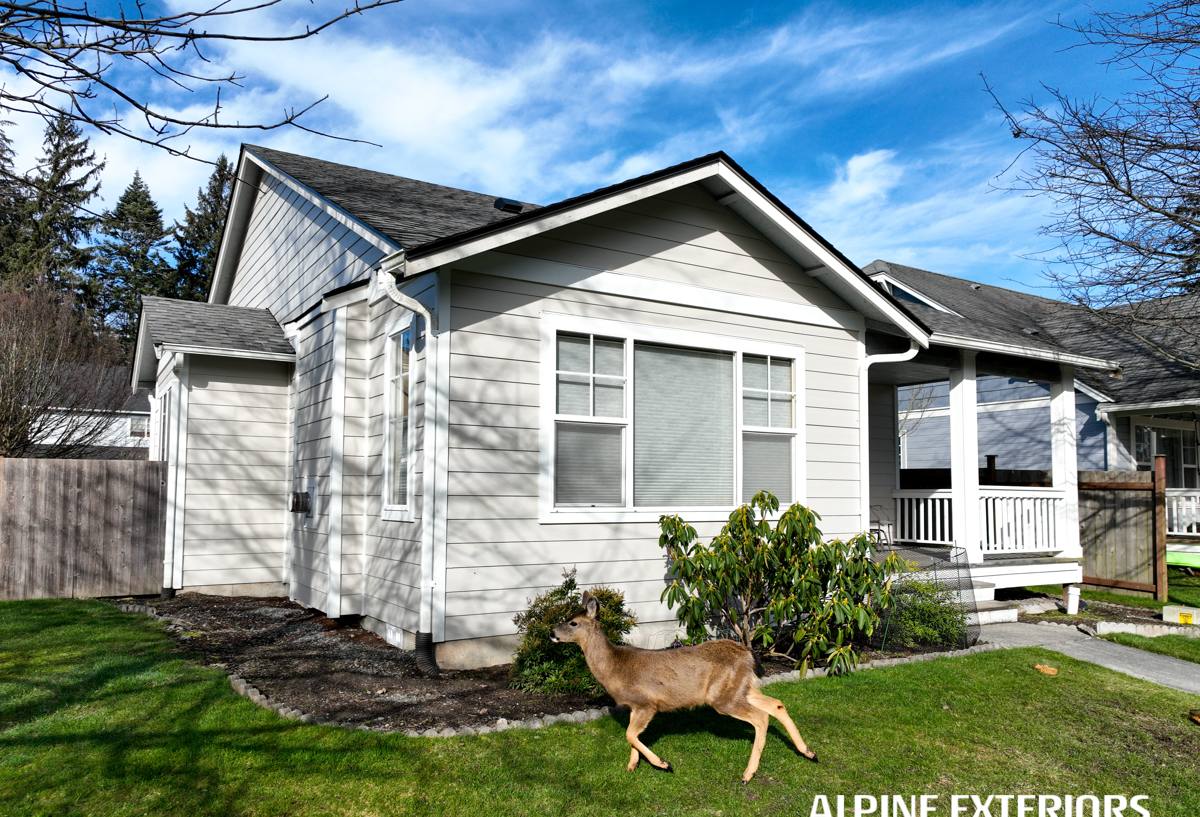
What Salt Air and Moisture Actually Do to a House
Salt air isn't just a nuisance — it's chemically active. Airborne salt accelerates corrosion on fasteners, flashing, and any exposed metal trim. It also settles into porous or fibrous materials and holds moisture against the surface longer than it would inland. Combine that with Birch Bay's rain pattern — frequent, often light but sustained, driven by onshore wind — and you get siding, trim, and roofing that rarely gets a real chance to fully dry out between storms.
Moss Season Isn't a Season Anymore
In a lot of the country, moss is a springtime nuisance. In Cottonwood Beach, with mature tree canopy shading north-facing walls and roofs for much of the year, moss and algae growth can be a near-constant low-grade problem. It's not just cosmetic — moss holds moisture directly against roofing and siding surfaces, and where it takes hold on a wood-based product, it accelerates rot underneath long before it's visible from the ground.
What This Means for Material Choice
Every exterior material handles this combination differently. Wood-based products need consistent paint maintenance and are vulnerable wherever a coating fails or a seam opens. Vinyl doesn't rot, but it can warp with temperature swings and offers little protection against wind-driven debris. The material that holds up best in this specific environment is one engineered specifically to resist moisture intrusion and hold its finish without constant upkeep — which is the core reason we standardized our siding installs on one product line.
Why We Only Install James Hardie Fiber Cement
We get asked fairly often why we don't offer vinyl, LP SmartSide, or the various other fiber cement and composite products on the market. The honest answer is that we've made a professional call: in a marine climate like this one, the trade-offs on other materials aren't ones we're willing to put our name behind.
- Vinyl is affordable and low-maintenance in dry inland climates, but it relies on lap joints and caulking that can loosen with the freeze-thaw and wind cycles common near the water, and it doesn't hold up as well against wind-driven debris off the strait.
- Engineered wood products (like LP SmartSide) use wood strand cores that are more moisture-resistant than raw lumber, but they're still wood at their core — meaning any breach in the factory coating or a poorly sealed cut edge gives moisture a path in, and that's a real risk in a climate where surfaces stay damp for extended stretches.
- Primed spruce and cedar are traditional and attractive, but they demand the most ongoing maintenance of any option — repainting, caulking, and vigilant moisture management — which is a tough ask in a spot that gets this much sustained wet weather.
James Hardie fiber cement is non-combustible, doesn't support the kind of rot that wood-based products can, and comes from the factory with a baked-on ColorPlus finish rather than a field-applied coat of paint. That finish is engineered to resist fading and cracking, and it removes one of the biggest maintenance burdens homeowners near saltwater deal with: repainting on a tight cycle because the coastal environment eats through standard paint faster than it would inland.
The Hardie Product Lines We Use Here
James Hardie makes climate-engineered versions of its siding for different regions, and for a coastal Whatcom County property we typically spec products from the HZ5 line, which is formulated for wetter, harsher climates. The core benefits that matter for a Cottonwood Beach home:
| Feature | Why It Matters Here |
|---|---|
| Engineered moisture resistance | Holds up against sustained rain and humidity without swelling or delaminating |
| ColorPlus factory finish | Reduces repainting frequency in a climate that's hard on field-applied paint |
| Non-combustible core | Adds a layer of fire resistance regardless of proximity to vegetation |
| Resists pest and rot damage | Doesn't feed moss, mildew, or wood-boring insects the way wood-based siding can |
| Transferable warranty | Backed by the manufacturer, which matters if you sell the home down the road |
Hardie offers several siding profiles — lap siding, shingle-style panels, and board-and-batten among them — and a wide ColorPlus palette, so matching a home's style in Cottonwood Beach doesn't mean sacrificing the performance side of the equation.
It's Not Just Siding: Roofing, Windows, and Decks Take the Same Beating
Salt air and moisture don't stop at the siding. Roofing near the water deals with the same moss and algae pressure, plus accelerated wear on flashing and fasteners from salt exposure. Windows in this environment need reliable weatherproofing and flashing details around every opening — a poorly sealed window is one of the most common paths for water intrusion in coastal homes. Decks take a similar hit: constant moisture cycling, UV exposure off the water, and moss buildup on horizontal surfaces that hold water longer than vertical siding does.
We handle all four — siding, roofing, windows, and decks — because on a coastal property they're rarely independent problems. Failing flashing at a window can show up as damage in the siding below it. A roof that's shedding moss debris into a gutter can send water down a wall it was never meant to touch. Treating the exterior as one connected system, rather than four separate trades, is part of why a local crew that understands this specific climate matters.
Roofing Considerations for This Area
Moss treatment and prevention, gutter and flashing condition, and material choice all matter more here than they would somewhere drier. We look at roof-to-wall transitions closely on coastal homes, since that's a common spot for slow leaks to develop unnoticed.
Window Considerations for This Area
Proper flashing integration with whatever siding surrounds the window opening is critical — it's one of the most common failure points we find during siding tear-offs on older coastal homes.
Deck Considerations for This Area
Material selection and proper drainage/spacing between boards matter more here than in a drier climate, since standing moisture on deck surfaces is a near-constant condition for a good part of the year.
What a Siding Project Looks Like in Cottonwood Beach
Every home is different, but the general sequence for a coastal siding replacement in this area usually includes:
- An on-site assessment that looks past the visible siding condition to check for hidden moisture damage, especially around windows, doors, and roof transitions
- Removal of the existing siding and inspection of the sheathing and weather-resistive barrier underneath
- Repair of any water-damaged sheathing or framing found during tear-off
- Installation of a proper weather-resistive barrier and correctly integrated flashing at every penetration
- Installation of James Hardie siding to manufacturer spec, including proper fastening, clearances, and joint treatment
- Final trim, caulking at appropriate joints only, and a walkthrough of the finished work
That third step — checking what's underneath before anything new goes up — is one we won't skip on a coastal property. Covering over hidden rot with new siding just delays a much bigger repair.
Cost Factors for a Cottonwood Beach Home
Pricing depends on the size and shape of the home, how much of the existing exterior needs repair before new siding goes on, and the products and profiles chosen. Rather than quote a number that won't reflect your specific property, here's what actually drives cost on jobs in this area:
| Factor | Why It Affects Cost |
|---|---|
| Home size and complexity | More corners, dormers, and trim details mean more labor and material cuts |
| Condition of sheathing underneath | Hidden moisture damage found during tear-off adds repair scope |
| Siding profile and finish | Lap, shingle, and board-and-batten styles differ in material and labor cost |
| Access and site conditions | Tree cover, slopes, and tight lot lines common near the beach can affect labor time |
| Scope of related work | Bundling roofing, window, or deck work can affect overall project timing and cost |
Choosing a Contractor for Coastal Whatcom County
Not every siding crew has real experience with what a marine climate does to a house over time. Here's what we'd tell any Cottonwood Beach homeowner to check before hiring anyone for exterior work:
- Ask specifically about experience with coastal or marine-climate installations, not just general siding work
- Confirm they're a licensed, insured contractor in Washington State
- Ask how they handle flashing and moisture barrier details — this is where most long-term failures start
- Find out whether they check for hidden moisture damage before installing new siding, not just after
- Ask what siding products they install and why, and whether they stand behind that recommendation with a real explanation
- Get a written scope of work, not just a total price
A crew based in and familiar with this part of Whatcom County will already know what to look for on a coastal home before the first panel comes off — that's not something a contractor unfamiliar with the area picks up quickly.
Get a Free Estimate for Your Cottonwood Beach Property
If your siding, roof, windows, or deck are showing the wear that's typical for this stretch of coastline — moss buildup, chalky or peeling paint, soft spots near ground level, or drafts around windows — it's worth having a local crew take a look before small issues turn into bigger repairs. Fill out the form below for a free, no-pressure estimate, and we'll walk the property with you and talk through what actually makes sense for your home.