 Birch Bay Siding
 Lummi Island's Exterior Challenge: Small Footprint, Big Weather
Lummi Island sits out in the Salish Sea, reachable only by ferry, and that isolation shapes everything about how a home has to be built and maintained out there. It's a small, rural community, but the weather it takes on is anything but gentle. Homes on the island face a steady diet of salt-laden air, wind-driven rain coming off open water, and the kind of persistent dampness that keeps moss and algae in business nearly year-round. That combination is harder on exterior materials than what you'd see a few miles inland, and it's why siding, roofing, and trim decisions out here deserve more thought than they might get on a more sheltered lot.
We're a Birch Bay-based exterior contractor working throughout Whatcom County, and Lummi Island is part of our regular service area. We understand the logistics of getting a crew and materials out to an island job, and we understand the climate demands that come with a marine-exposed property. Both matter when you're picking a contractor and a siding product for a home out there.
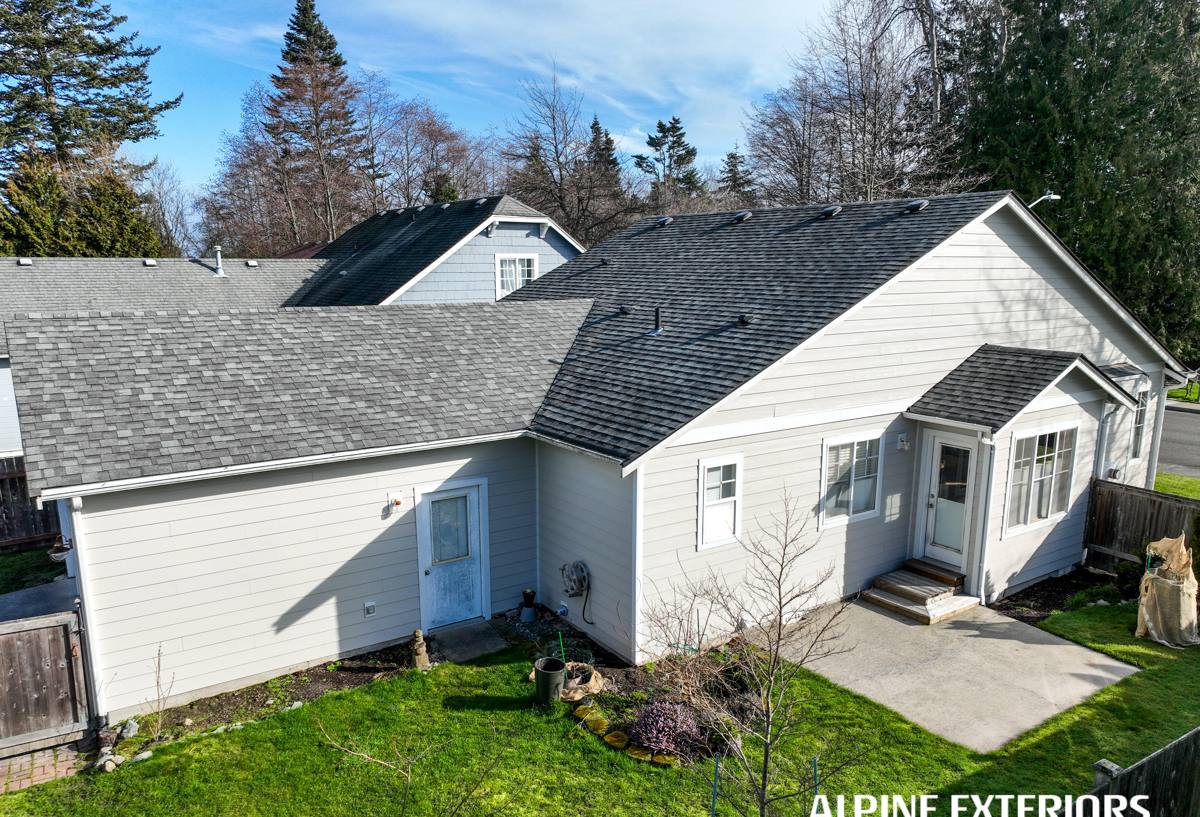
What Salt Air, Driving Rain, and Moss Season Actually Do to a House
Salt Air and Corrosion
Airborne salt doesn't just affect boats and dock hardware. It settles on siding, trim, fasteners, and flashing, and over time it accelerates corrosion in anything metal that isn't properly rated or protected. Cheaper fastener systems and unprotected trim accents can start showing rust streaks and pitting years before they would in a non-coastal setting. This is one of the reasons material and fastener selection matters more on Lummi Island than it does in a typical inland neighborhood.
Driving Rain and Wind Exposure
Open water exposure means wind-driven rain can hit siding at an angle, not just fall straight down. That pushes water into seams, laps, and penetrations that a more sheltered wall assembly might never have to deal with. Weak caulking joints, poorly lapped siding courses, or gaps around windows and doors become real entry points for moisture here, not just theoretical ones.
Moss, Algae, and Prolonged Dampness
Western Washington's long wet season is well known, but island and shoreline properties often stay damp longer than inland homes because of fog, humidity, and shaded tree cover common on Lummi Island lots. Moss and algae growth on north-facing walls and anything close to tree canopy is common. Materials that absorb moisture swell, hold that moss growth against the surface, and break down faster. Materials that resist moisture intrusion in the first place hold up dramatically better over the long run.
Why Ferry Access Changes How We Plan Your Job
Working on Lummi Island isn't the same as working a job in Birch Bay or Bellingham. Everything has to be planned around the ferry schedule — crew arrival, material deliveries, dumpster drop-off and pickup, even something as simple as a forgotten tool run. A contractor who hasn't done island work before can lose whole days to logistics they didn't anticipate.
We plan island jobs differently from the start:
- Materials are staged and confirmed complete before the crew ever loads the ferry, so we're not making emergency runs mid-project
- Crew schedules are built around ferry sailing times to maximize actual working hours on site
- Weather windows get extra weight in scheduling, since a missed ferry due to wind or tide conditions can push a project day entirely
- We coordinate directly with homeowners on any island-specific access, parking, or delivery considerations before the start date
The result is a project that runs on a realistic timeline instead of one that assumes island work behaves like a mainland job.
Why We Install Only James Hardie Fiber Cement Siding
We made a deliberate decision as a company to install James Hardie fiber cement exclusively — not vinyl, not LP SmartSide, not Cemplank or Allura, not primed wood siding. On a marine-exposed property like a Lummi Island home, that decision matters more than it might elsewhere.
Fiber cement is non-combustible, which carries real weight for island and rural properties where wildfire response and defensible space are part of the conversation. It's dimensionally stable, meaning it doesn't expand and contract with moisture swings the way wood-based products do, which is exactly the kind of stress a wet, salt-exposed climate puts on a wall. And it holds a factory-applied finish — Hardie's ColorPlus system — that's baked on under controlled conditions rather than field-applied, which matters a lot in a climate where field-painted surfaces get less curing time between rain events.
James Hardie also engineers specific product lines — HZ5 and similar climate-zone formulations — for regions with heavier moisture exposure. That's not marketing; it's a real material response to the kind of weather Lummi Island sees regularly. Combined with a strong transferable warranty, it's the product we're willing to stand behind on a property that's going to take a beating from salt air and rain for the next several decades.
How Hardie Compares to What We Don't Install
| Factor | James Hardie Fiber Cement | Vinyl / Engineered Wood |
|---|---|---|
| Moisture behavior | Dimensionally stable, engineered for high-moisture zones | Vinyl can warp/gap; engineered wood is moisture-sensitive at edges |
| Finish durability | Factory-baked ColorPlus finish | Field-applied paint (wood) or molded color (vinyl) fades differently |
| Fire rating | Non-combustible | Combustible (both product types) |
| Salt air resistance | Engineered fiber cement composition holds up well | Varies; UV and salt exposure can degrade faster |
| Warranty structure | Strong transferable manufacturer warranty | Varies widely by brand and line |
This isn't a claim that other products can't perform anywhere — it's a statement about our own standard for what we're willing to install on homes in this specific climate, and why we've drawn that line.
Roofing, Windows, and Decks: The Rest of the Envelope
Siding is only part of what protects a Lummi Island home. We also handle roofing, windows, and decks, and all three face the same underlying pressures — salt air, wind-driven rain, and prolonged dampness.
Roofing
A roof out here needs solid flashing details, especially around chimneys, vents, and valleys where wind-driven rain likes to find a way in. Ventilation matters too — poorly ventilated attics trap moisture that has nowhere to go in a climate this humid.
Windows
Window flashing and sealant integrity are critical on a marine-exposed home. A poorly flashed window is one of the most common sources of hidden water intrusion, and it's often invisible until there's already damage behind the wall.
Decks
Outdoor living space on Lummi Island often means facing directly into the weather. Deck materials and fastener hardware need to handle salt exposure and standing moisture without corroding or breaking down prematurely.
Handling all four trades under one roof means fewer handoffs, fewer gaps in accountability, and a crew that understands how the whole exterior envelope works together rather than treating siding, roofing, windows, and decks as unrelated projects.
What Correct Installation Looks Like on a Coastal Property
Fiber cement siding only performs as well as its installation. On a Lummi Island home, a few details matter more than they would inland:
- Proper starter strip and clearance from grade, decks, and roof lines to prevent standing moisture at the base of the wall
- Correct fastener spacing and fastener material rated for coastal, corrosion-prone environments
- Tight, correctly lapped joints and factory-mitered or properly caulked seams to resist wind-driven rain
- Careful flashing and integration around windows, doors, and any wall penetrations
- Adequate gapping and sealant at trim boards to allow for material movement without opening moisture pathways
Skipping or rushing any of these steps is how even a good product underperforms. It's also where a lot of installation-only warranty claims originate — the material held up fine, but the installation didn't account for the local conditions it was going into.
Cost Factors for an Island Siding Project
Pricing for a Lummi Island project depends on more than square footage. A few factors that tend to move the number:
| Factor | Why It Matters |
|---|---|
| Ferry logistics and scheduling | Material delivery and crew transport need to be planned around sailing times |
| Existing siding removal | Tear-off of old wood, vinyl, or damaged material adds labor time |
| Home size and complexity | Roofline detail, dormers, and trim work affect labor hours |
| Moisture damage found during tear-off | Rot repair behind old siding is common on long-exposed coastal homes |
| Product line and finish selection | HZ5 panels and ColorPlus finish options vary by style and color |
We give straightforward, honest estimates rather than lowball numbers that grow once the tear-off starts. Broad ranges depend heavily on the condition of what's already on the house, which is something we can only speak to accurately after a walk-through.
What to Look for in a Contractor for Island Work
- Experience specifically with ferry-access logistics, not just general contracting experience
- Manufacturer training or certification on the specific siding product being installed
- A clear, written estimate that accounts for tear-off, potential rot repair, and material staging
- Willingness to walk you through flashing and moisture-management details, not just color and style
- Local presence in Whatcom County, so warranty and service calls aren't a logistical afterthought
A crew based nearby in Birch Bay, familiar with Whatcom County's marine climate and with the realities of getting to and from Lummi Island, is in a different position than an out-of-area contractor bidding the job sight unseen.
If you're weighing a siding, roofing, window, or deck project on Lummi Island, we're happy to walk the property, look at what the current exterior is dealing with, and put together a straightforward, no-pressure estimate. Use the form below to get started.