 Birch Bay Siding
 Siding Built for California Creek's Weather, Not Against It
California Creek sits close enough to Birch Bay and the Strait of Georgia that homes here deal with a specific combination of stress most inland Whatcom County properties never see: salt-laden air moving in off the water, long stretches of driving rain through fall and winter, and a moss and mildew season that can run eight months or longer on shaded north and west walls. None of that is dramatic on its own. It's the accumulation, year after year, that separates siding that holds up for decades from siding that starts failing in year eight or ten.
We're a Birch Bay-based crew, and California Creek is inside our regular service area, not a stretch job we take once a season. That matters more than it sounds like it should. A crew that works this specific stretch of coastline regularly knows which walls take the worst of the weather off the water, where moss builds up fastest, and how local moisture patterns actually behave against a house over time — not just what a spec sheet says should happen.
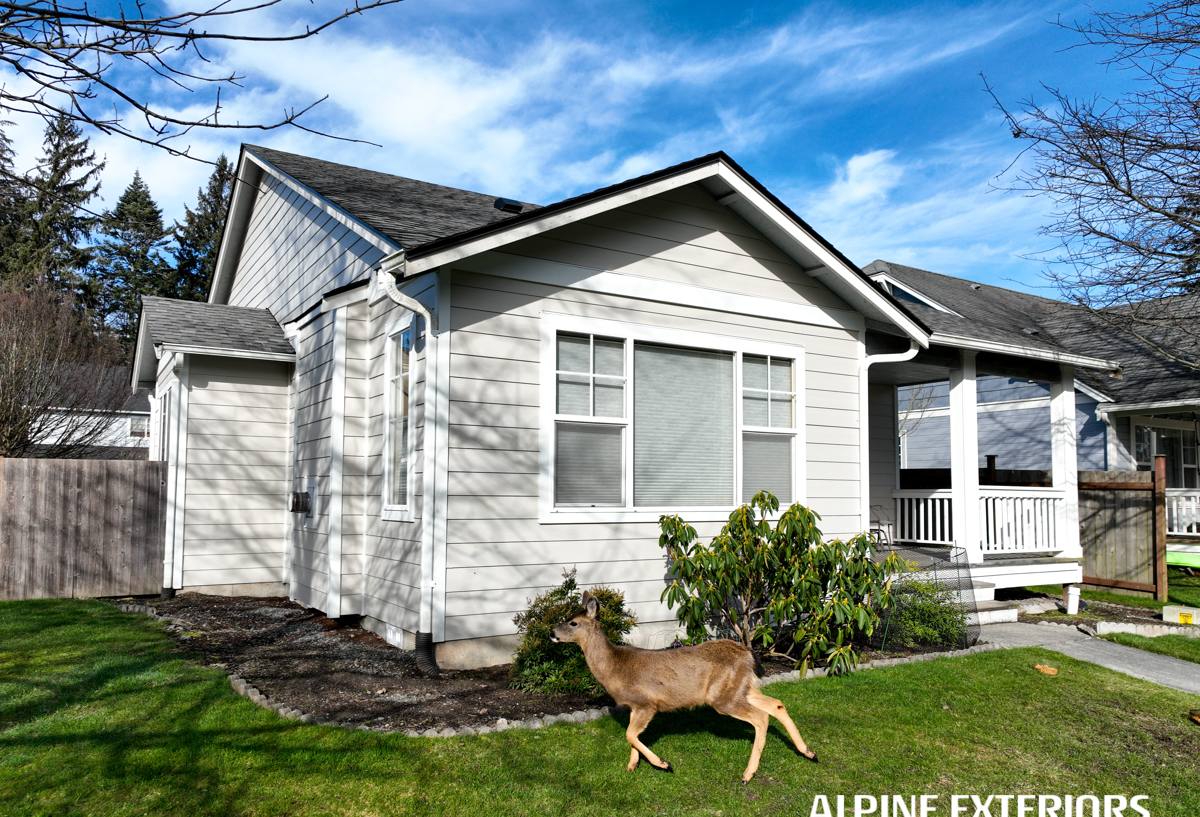
What the Local Climate Actually Does to Siding
Salt Air
Proximity to saltwater doesn't just mean corrosion on metal fixtures and fasteners. Salt in the air accelerates the breakdown of paint film and finish coatings, especially on siding materials that rely on a surface-applied paint job rather than a factory-cured finish. Over time, salt exposure shows up as chalking, fading, and finish failure well before the underlying material itself is due for replacement.
Driving Rain
Wind off the water doesn't just drop rain straight down — it drives it sideways into wall assemblies, which puts real pressure on siding laps, seams, and butt joints. Any weakness in the water-management details behind the siding — flashing, house wrap, gaps at trim — gets found by this kind of weather a lot faster than it would in a calmer inland setting.
Moss and Sustained Moisture
Shaded walls, tree cover, and the general damp of a long Pacific Northwest winter give moss and mildew a long runway to establish themselves. On materials that absorb and hold moisture, that growth isn't just cosmetic — it keeps the wall surface damp longer, which compounds any underlying moisture problem and shortens the service life of both the siding and the wall assembly behind it.
Why We Only Install James Hardie Fiber Cement
We made a deliberate decision to standardize on James Hardie fiber cement siding and not install vinyl, LP SmartSide, Cemplank, Allura, or bare cedar and primed wood products. That's not brand loyalty — it's a judgment call based on how these materials actually perform in exactly the conditions California Creek homes deal with every year.
- Non-combustible: fiber cement doesn't contribute fuel to a fire the way wood-based products can.
- Factory-applied ColorPlus finish: the color and topcoat are baked on at the factory under controlled conditions, which holds up to salt-air fading and chalking far better than field-applied paint.
- Climate-engineered HZ5 formulation: James Hardie's HZ5 product line is specifically engineered for wetter, harsher climate zones like ours, with moisture and freeze-thaw performance in mind.
- Dimensionally stable: fiber cement doesn't swell, warp, or split the way wood-based siding can when it takes on and releases moisture repeatedly through a wet season.
- Strong transferable warranty: a long, transferable manufacturer warranty on both the substrate and the ColorPlus finish, which matters to future buyers if you ever sell.
Vinyl siding is inexpensive and low-maintenance in mild climates, but it can become brittle and crack in sustained cold snaps, and its seams and expansion joints give wind-driven rain more opportunities to find a way behind the cladding. Wood and engineered-wood products like LP SmartSide can perform well when maintained aggressively, but they depend on an intact paint film and consistent upkeep to resist moisture — a maintenance burden that's harder to keep ahead of in a climate with this much sustained dampness. We'd rather install one product correctly and stand behind it than offer several options and let a homeowner discover the trade-offs the hard way.
How a Siding Project Works in California Creek
1. On-Site Assessment
We walk the exterior, check the condition of the existing siding and the wall assembly behind it, and look specifically at the walls that take the worst weather — usually west- and south-facing exposure toward the water, and shaded sides where moss has had time to establish.
2. Water Management First
Before any new siding goes up, we address house wrap, flashing at windows and doors, and any trim details that give water a path in. In a driving-rain environment, the siding is only as good as the water management behind it.
3. Installation to Manufacturer Spec
James Hardie siding has specific installation requirements — proper clearances, fastening patterns, and joint treatment — that directly affect both performance and warranty coverage. We install to spec, not to whatever's fastest.
4. Finish and Trim Detail
Corners, trim, and butt joints get finished in a way that sheds water rather than trapping it, which is one of the more common places we see older installations fail first.
Comparing Siding Materials for a Coastal Whatcom County Home
| Material | Salt Air / Finish Durability | Moisture & Moss Resistance | Maintenance Burden |
|---|---|---|---|
| James Hardie Fiber Cement | Factory-cured ColorPlus finish resists chalking and fading | Engineered HZ5 line for wet climates; won't rot | Low — occasional cleaning |
| Vinyl | Can fade and become brittle over time | Doesn't rot, but seams allow water intrusion behind panels | Low, but limited repairability |
| Wood / Engineered Wood (e.g. LP SmartSide) | Depends entirely on paint film integrity | Vulnerable to swelling, moss growth, and moisture damage if finish fails | High — repainting and sealing on a cycle |
| Primed Cedar | Natural material, requires consistent refinishing | Prone to moisture absorption without diligent upkeep | High |
Roofing, Windows, and Decks — The Rest of the Building Envelope
Siding doesn't work in isolation. A California Creek home with new siding but a roof that's shedding water poorly, windows with failing seals, or a deck that's trapping moisture against the house is still going to have problems. We handle roofing, windows, and decks alongside siding because these systems all interact — flashing at a roofline ties into siding details, window trim ties into the water-management plane behind the cladding, and a deck ledger attached to the wall is a common spot for hidden rot if it's not detailed correctly. Having one crew responsible for how these pieces meet each other, rather than several separate contractors each assuming someone else handled the transition, avoids a lot of the failures we get called out to fix on other people's projects.
Why a Local Crew Matters Here
Birch Bay and the surrounding coastline, including California Creek, isn't generic Pacific Northwest weather — the direct water exposure and prevailing wind direction create wear patterns that differ from what you'd see even a few miles inland in Whatcom County. A crew that works this area regularly has already seen which details fail first on local homes and adjusts for it, rather than applying a one-size-fits-all approach. We're not a national outfit that swings through the region once and moves on — we live and work here, and the homes we sided last year are the ones we drive past on the way to the next job.
Signs Your California Creek Home May Need Siding Attention
- Visible moss or dark streaking that returns quickly after cleaning
- Chalky residue or noticeable fading, especially on walls facing the water
- Soft spots, warping, or bubbling in the siding surface
- Cracked or separated caulking at trim, corners, and butt joints
- Peeling or bubbling paint on wood-based siding
- Rising energy bills that may point to gaps in the wall assembly behind the siding
- Visible rot at the base of walls or near ground contact
Getting Started
Every home in California Creek carries its own combination of sun exposure, tree cover, and wind direction, so the right approach isn't identical from one property to the next — even on the same street. If you're noticing any of the signs above, or you'd simply like an honest read on where your siding stands, we're happy to take a look. We offer free, no-pressure estimates and will tell you plainly what we see, whether that means a full siding replacement, targeted repairs, or simply keeping an eye on it for now.