 Birch Bay Siding
 Exteriors Built for Semiahmoo's Waterfront Climate
Semiahmoo sits right at the edge of the water near Birch Bay, and that location shapes everything about how an exterior ages there. Homes here take a steadier dose of salt-laden marine air than properties even a few miles inland, and that air works on siding, trim, fasteners, and flashing in ways that aren't always obvious until a few years in. Add in wind-driven rain that comes off the water sideways rather than straight down, and a moss season that can stretch across most of the year on shaded or north-facing walls, and you have a climate that's genuinely tougher on a house than the regional averages suggest.
We work across Birch Bay and the surrounding Whatcom County waterfront, and Semiahmoo is one of the areas where we see, consistently, what happens when an exterior isn't matched to that exposure. Siding that would hold up fine forty minutes inland can start showing real problems here in a fraction of the time. That's the reason we install James Hardie fiber cement siding exclusively, and it's also why we handle roofing, windows, and decks as part of the same conversation rather than treating each as a separate trade.
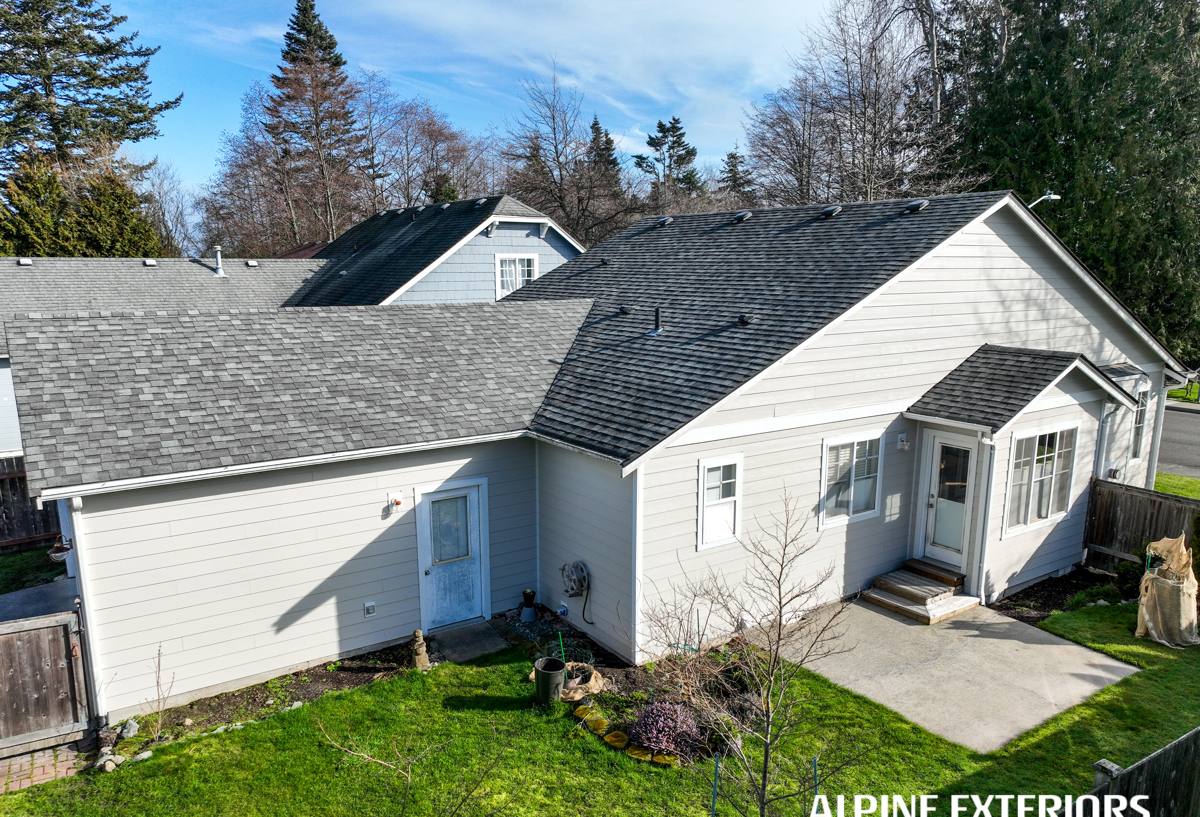
What Salt Air and Water Exposure Do to a House
Corrosion and Finish Breakdown
Salt in the air accelerates corrosion in fasteners, flashing, and any exposed metal trim, and it breaks down lower-grade paint and coatings faster than a drier inland climate would. On a waterfront property like a Semiahmoo home, this isn't an occasional issue, it's a constant, low-level stress that never really lets up. Materials and hardware that aren't specified with that in mind tend to show their weaknesses early, often in the finish and fasteners long before the underlying material itself fails.
Wind-Driven Rain
Being close to open water means wind comes through with less to slow it down, and it carries rain sideways into wall assemblies, window trim, and siding laps instead of letting it run straight off a roofline. That's a harder condition to build against than a simple annual rainfall total implies. A siding system, window unit, or roof detail that would perform fine in a sheltered inland lot can still let water in here specifically because the water is arriving from an angle, not from above.
A Long Moss and Mildew Season
Mild temperatures, consistent moisture, and plenty of shaded exposure add up to a moss and mildew season that runs long across this part of the county, and waterfront humidity only extends it further in Semiahmoo. Any siding or roofing material that holds moisture against itself, even slightly, becomes a growth surface over time. It typically shows up first on north-facing walls, under eaves, and in areas shaded by trees or neighboring structures, well before it's obvious from the street.
Why We Install Only James Hardie Siding
We don't offer a menu of siding brands, and that's a deliberate choice rather than a limitation. After years of tear-offs and service calls in exactly this kind of coastal, high-moisture climate, we settled on one fiber cement system we can stand behind completely, rather than stocking several products and hoping the homeowner picks the right one.
- Non-combustible core: Fiber cement doesn't feed a fire the way wood-based siding products can, which matters for household safety and can matter for insurance underwriting too.
- Factory-applied ColorPlus finish: The color is baked on under controlled factory conditions instead of brushed on in the field, so it resists fading and moisture intrusion far longer than site-applied paint, which matters directly in a salt-air environment.
- Climate-engineered HZ product lines: Hardie's HZ5 formulation is built specifically for regions with sustained moisture exposure and freeze-thaw cycling, which describes waterfront Whatcom County well.
- Dimensional stability: Fiber cement doesn't swell, cup, or warp the way engineered wood products can after repeated wet-season moisture cycles.
- Strong transferable warranty: Hardie backs its products with one of the more robust warranty structures available, provided the installation follows spec.
We won't install LP SmartSide, vinyl siding, Cemplank, Allura, primed spruce, or cedar. Each of those products has a real place in the market and plenty of homeowners are happy with them in the right setting. But on a shoreline property that sees this much sustained salt and moisture exposure, we've made the professional call that one system we trust fully outperforms a lower-cost option that quietly pushes maintenance risk back onto the homeowner a few years down the road.
Correct Installation Matters as Much as the Material
A Hardie installation only performs the way it's designed to when the fastening pattern, clearances from grade and roofline, joint lapping and sealing, and the house wrap and flashing details are all done correctly. Skipping any of those steps is one of the more common reasons a good material ends up with problems that get unfairly blamed on the product itself. We treat the installation detail with the same seriousness as the material choice, especially on a waterfront lot where the margin for error is smaller.
Roofing for a Waterfront Property
A roof near the water deals with more than rain volume, it deals with wind uplift, salt exposure on metal components, and a moss load that can shorten the useful life of a roofing system if it isn't addressed. We look at flashing details around valleys, chimneys, and penetrations closely on Semiahmoo homes, since those are the spots where wind-driven rain most often finds a way in. Regular moss removal and a roof inspection every few years catches small problems while they're still small repairs instead of full replacements.
Windows That Hold Up to Wind and Salt
Older or poorly sealed windows are one of the most common paths water takes into a wall assembly on an exposed waterfront lot. Wind-driven rain pushes against window trim and seals in a way calmer inland locations rarely test, and salt air degrades weatherstripping and hardware faster over time. When we replace windows on a Semiahmoo home, we pay close attention to flashing integration with the surrounding siding, since a window that's sealed well but tied into the wall assembly poorly is still a leak waiting to happen.
Decks Facing the Water
A deck near the water takes UV, salt, and moisture cycling harder than almost any other part of an exterior, since it's horizontal, largely unprotected, and exposed to standing moisture after every rain. Ledger board attachment and flashing where the deck meets the house are worth extra attention here, since that's a common spot for hidden rot to develop unnoticed for years. We build and repair decks with materials and fastening details suited to that exposure rather than treating it as a standard inland build.
Repair vs. Full Replacement
Not every exterior problem in Semiahmoo calls for a full tear-off. Localized siding damage, a section that took wind or debris impact, or trim that's failed around a window can often be repaired and matched into existing Hardie siding, a roof section, or deck framing. But when moisture has been tracking behind a wall or deck for a while, or the existing material is at the end of its service life, patching it usually just delays a larger job. We'll give you a straight answer on which situation you're actually in.
Signs a Semiahmoo Home Needs Exterior Attention
- Moss or dark staining that returns quickly after cleaning, especially on shaded or north-facing walls
- Soft or spongy siding, low on the wall or around window and door trim
- Peeling paint, bubbling, or visible warping on siding boards
- Corroded or discolored fasteners, flashing, or metal trim
- Missing, curling, or moss-covered roof shingles
- Window seals that feel stiff, cracked, or no longer seat tightly
- Soft or discolored decking, especially near the ledger board where the deck meets the house
- Rising energy bills that may point to a wall or window assembly no longer sealing properly
Exterior Cost Factors Near the Water
| Factor | What It Affects | Why It Matters in Semiahmoo |
|---|---|---|
| Home size and wall/roof complexity | Total material and labor | More trim, valleys, and corners mean more joints where wind-driven rain can intrude |
| Tear-off vs. overlay | Labor scope and substrate access | Tear-off reveals hidden moisture damage that's common under older siding near the water |
| Substrate and framing condition | Repair costs before new materials go on | Years of salt and moisture exposure can quietly rot sheathing, trim, and deck framing |
| Material grade (siding, roofing, window) | Long-term durability and maintenance cost | Lower-grade materials tend to show salt and moisture damage years sooner on waterfront lots |
| Site access and lot exposure | Labor time and staging needs | Waterfront lots can add wind considerations and equipment staging time |
Exact costs depend on the specific home and its exposure, which is why we walk the property in person before giving a real number instead of quoting off a generic price sheet.
Why a Local, Whatcom County Crew Matters
A crew that works Birch Bay and the surrounding waterfront regularly sees how salt air, wind-driven rain, and a long moss season actually behave on real houses over a full year, not just how a product performs on a spec sheet. That experience shapes real decisions on install day: where extra flashing attention pays off, which wall and roof orientations stay wet longest, and which details are worth the extra time so a homeowner isn't dealing with a callback a couple of winters later. Semiahmoo's direct waterfront exposure isn't identical to every inland Whatcom County property, and a crew that already knows the difference plans for it instead of applying the same approach everywhere.
If your Semiahmoo home needs new siding, roofing, windows, decking, or an honest second opinion on what's going on behind an aging exterior, we're glad to take a look. Use the form below to schedule a free, no-pressure estimate.