 Birch Bay Siding
 What LP SmartSide Actually Is
LP SmartSide is an engineered wood siding product made from wood strands bonded with resin, treated with LP's proprietary SmartGuard process, and finished with a wood-grain or smooth texture. It's manufactured to resist fungal decay and termites better than untreated OSB or plain wood siding, and it holds paint well. Installers like it because it's lighter than fiber cement, cuts easily with standard woodworking blades, and generally costs less per square foot than a premium fiber cement system.
We want to be upfront about that much: LP SmartSide is a legitimate, engineered product, not a scam material. Plenty of contractors install it well and plenty of homeowners are satisfied with it, especially in drier climates where it doesn't face the kind of sustained moisture load we get here. Our decision not to install it isn't about disputing LP's engineering — it's about matching a product to the specific climate our customers live in.
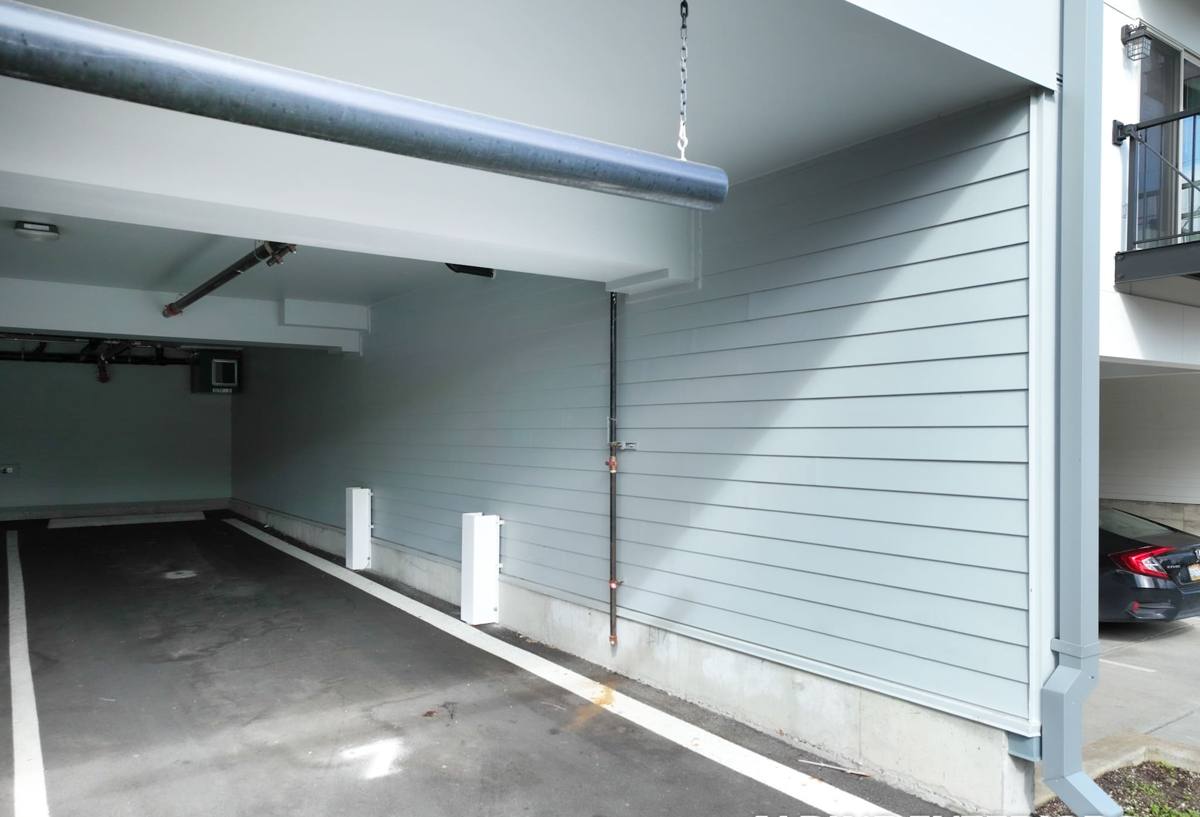
The Core Issue: It's Still a Wood-Based Product
Strip away the branding and SmartGuard treatment, and LP SmartSide is fundamentally a wood composite. Wood-based materials, no matter how well treated, share one trait that fiber cement does not: they can absorb and hold moisture, and once water gets past the surface treatment or a compromised seam, the underlying wood fiber is dealing with the same physics as any other wood product. SmartGuard slows that process considerably compared to older generations of wood composite siding — but it doesn't eliminate the underlying vulnerability, it manages it.
That distinction matters enormously depending on where the house sits. In a low-humidity climate with infrequent, short rain events, a wood-strand product treated and installed correctly can perform for decades with minimal issue. In a climate where the siding is wet more days than it's dry for several months of the year, the margin for error shrinks.
Why Birch Bay's Climate Puts Extra Pressure on Wood-Based Siding
Salt Air
Birch Bay sits directly on the water, and homes here take on a steady dose of salt-laden air off the Strait of Georgia. Salt is hygroscopic — it pulls moisture out of the air and holds it against whatever surface it settles on. On a wood-based siding panel, that means the exterior surface is chronically damp longer than it would be a few miles inland, which stresses paint film, caulk joints, and any cut edge that isn't fully sealed.
Driving Rain
Storms coming off the water don't just fall straight down here — they come in sideways, driven by wind, and get forced into every horizontal seam, panel joint, and trim intersection on a house. Wood-based siding systems rely heavily on factory and field-applied sealants at those joints to keep water out. Wind-driven rain finds the weak points in that sealant system faster than a calm, vertical rain would.
A Long Moss and Mildew Season
Whatcom County's mild, wet winters and shoulder seasons create ideal conditions for moss, algae, and mildew growth on exterior surfaces that stay damp for extended stretches. On wood-based siding, organic growth sitting against the surface for weeks at a time isn't just cosmetic — it holds moisture directly against the substrate and can accelerate breakdown of the surface treatment underneath it.
None of these three factors is exotic or rare — they're just the normal weather pattern for a house sitting near the water in this part of Whatcom County. But stacked together, and repeated year after year, they represent exactly the kind of sustained moisture exposure that wood-based siding products are most vulnerable to.
Installation Sensitivity Raises the Stakes
Every siding product has an installation standard that has to be followed to perform as designed. Fiber cement has one too. But wood-based siding systems tend to be less forgiving of small installation shortcuts specifically because the failure mode is moisture intrusion into a moisture-sensitive material.
- Every field-cut end and edge must be primed or sealed before installation — a step that's easy to skip on a job site and impossible to inspect once the wall is closed up
- Caulk joints at panel seams, trim, and penetrations need to be maintained on a schedule, not installed once and forgotten
- Minimum clearances from grade, decks, and roof lines have to be respected exactly, since standing water or splash-back against the bottom edge is one of the most common failure points
- Nailing patterns and fastener types matter more than they do on more forgiving materials, since improper fastening can create small gaps that let water track behind the panel
These aren't unusual requirements — they're standard good practice for the product. But they put more of the long-term performance in the hands of installation quality than we're comfortable betting a customer's home on, particularly on a property exposed to salt air and driving rain the way most Birch Bay homes are.
What the Warranty Structure Tells You
Warranty language is one of the most honest signals a manufacturer gives about how a product is expected to perform in the field. It's worth reading closely, not just trusting the length of the term.
| Factor | LP SmartSide (engineered wood) | James Hardie (fiber cement) |
|---|---|---|
| Core material | Wood strand composite, resin-bonded, SmartGuard treated | Cement, sand, and cellulose fiber — non-combustible |
| Moisture behavior | Treated to resist decay; can still absorb water if the surface treatment or seams are compromised | Engineered to resist moisture-related swelling and rot by design |
| Factory finish | Primed or pre-finished depending on product line; touch-up and repainting expected over time | ColorPlus baked-on finish with a separate long-term finish warranty on most lines |
| Installation sensitivity | Higher — unsealed cut edges and joint maintenance are common failure points | Moderate — still requires correct install, but the material itself isn't moisture-vulnerable |
| Fire resistance | Combustible wood-based material | Non-combustible |
| Typical warranty structure | Limited warranty, often with maintenance obligations to keep coverage valid | Longer transferable limited warranty, with a separate ColorPlus finish warranty on factory-finished products |
The maintenance obligations built into many wood-based siding warranties are the detail homeowners tend to miss. If a warranty requires the homeowner to recaulk joints, repaint on a schedule, and keep the siding clear of standing water and vegetation contact to stay valid, that's the manufacturer telling you the product needs active upkeep to perform — not a passive "install it and forget it" material.
The Real-World Maintenance Burden
For a homeowner who enjoys exterior maintenance and stays on top of it, wood-based siding can be a reasonable trade for the lower upfront cost. For most homeowners, especially those who want to set siding and not think about it again for twenty-plus years, the ongoing task list is the part that gets skipped — and skipped maintenance is exactly where moisture-related problems start.
- Inspect and refresh caulk at panel joints, trim, and penetrations on a regular schedule
- Repaint or touch up the finish as it weathers, particularly on south- and west-facing walls that take the most sun and rain exposure
- Keep gutters clear and downspouts directed away from siding to prevent repeated wetting at specific spots
- Wash off moss, algae, and mildew buildup before it sits against the surface for an extended period
- Check and maintain proper clearance from grade, decking, and landscaping as plantings mature
- Address any impact damage, cracks, or exposed edges quickly rather than waiting for a larger repair
Every item on that list is manageable in isolation. The issue is that it's a recurring commitment for the life of the siding, and in a climate like ours, falling behind on it has more consequences than it would somewhere drier.
Why We Standardized on James Hardie Fiber Cement
We made the decision several years ago to install exclusively James Hardie fiber cement siding, and this climate is a big part of why. Fiber cement is made from cement, sand, and cellulose fiber rather than wood strands, which means it isn't feeding a moisture-related decay process the way wood-based products can. It's also non-combustible, which matters to a lot of homeowners regardless of climate.
Hardie's HZ5 product line is specifically engineered for climates like ours — regions that see freeze-thaw cycles combined with sustained moisture exposure. The ColorPlus factory finish is baked on under controlled conditions rather than applied and touched up in the field, which reduces the amount of ongoing paint maintenance compared to a field-finished or field-touched-up wood product. And because the core material itself isn't moisture-vulnerable in the way wood is, correct installation matters for weathertightness and longevity, but a small lapse doesn't carry the same risk of substrate breakdown.
We're not installing Hardie because it's the cheapest option — it isn't. We're installing it because, for a house sitting in salt air with driving rain and a long moss season, it's the product we're willing to put our name behind for the long haul.
Cost Perspective
Upfront material and installed cost is a legitimate factor in this decision, and we're not going to pretend otherwise. Engineered wood siding systems generally install for less than fiber cement. The honest way to weigh that is against the full lifecycle cost, not just day one.
| Cost factor | LP SmartSide | James Hardie |
|---|---|---|
| Upfront installed cost | Generally lower | Generally higher |
| Ongoing maintenance cost | Recurring caulk, paint touch-up, and moisture-vulnerable spot repairs | Lower ongoing paint maintenance with a factory-baked finish |
| Expected repaint cycle | Shorter, especially on sun- and rain-exposed elevations | Longer, tied to the ColorPlus finish warranty |
| Resale/appraisal perception | Varies by market and buyer familiarity | Widely recognized as a premium, low-maintenance exterior |
Making the Right Call for Your Home
If you're comparing siding options for a home in Birch Bay or elsewhere in Whatcom County, the right question isn't just "what does it cost to install" — it's "what does this material do when it sits wet for days at a stretch, salt in the air, wind pushing rain sideways into every seam, month after month." That's the test every siding product on a waterfront or near-waterfront property in this county actually has to pass, whether the spec sheet mentions it or not.
We install only James Hardie fiber cement because it's the product we've found holds up to that test with the least ongoing burden on the homeowner. If you'd like to talk through your specific home, its exposure, and what a proper Hardie installation would look like, we're happy to walk the property with you and put together a free, no-pressure estimate.