 Birch Bay Siding
 Siding Built for Bellingham's Coastline and Climate
Bellingham sits where the Salish Sea, the foothills of the Cascades, and a genuinely wet marine climate all meet. That combination is hard on the outside of a house. Homes here deal with salt-laden air moving in off Bellingham Bay, long stretches of driving rain that can come sideways off the water, and a moss and algae season that in some years barely takes a break. Siding that looks fine in a drier part of the state can start showing problems within a few years out here if it wasn't chosen or installed with this climate in mind.
We work throughout Whatcom County, including Bellingham, and the pattern we see on older homes is consistent: paint failing early, soft spots at butt joints and bottom edges, and moss creeping up north-facing walls and anywhere shaded by trees or a neighboring structure. None of that is unusual for this area — it's just what happens when siding wasn't built for it or wasn't put on correctly.
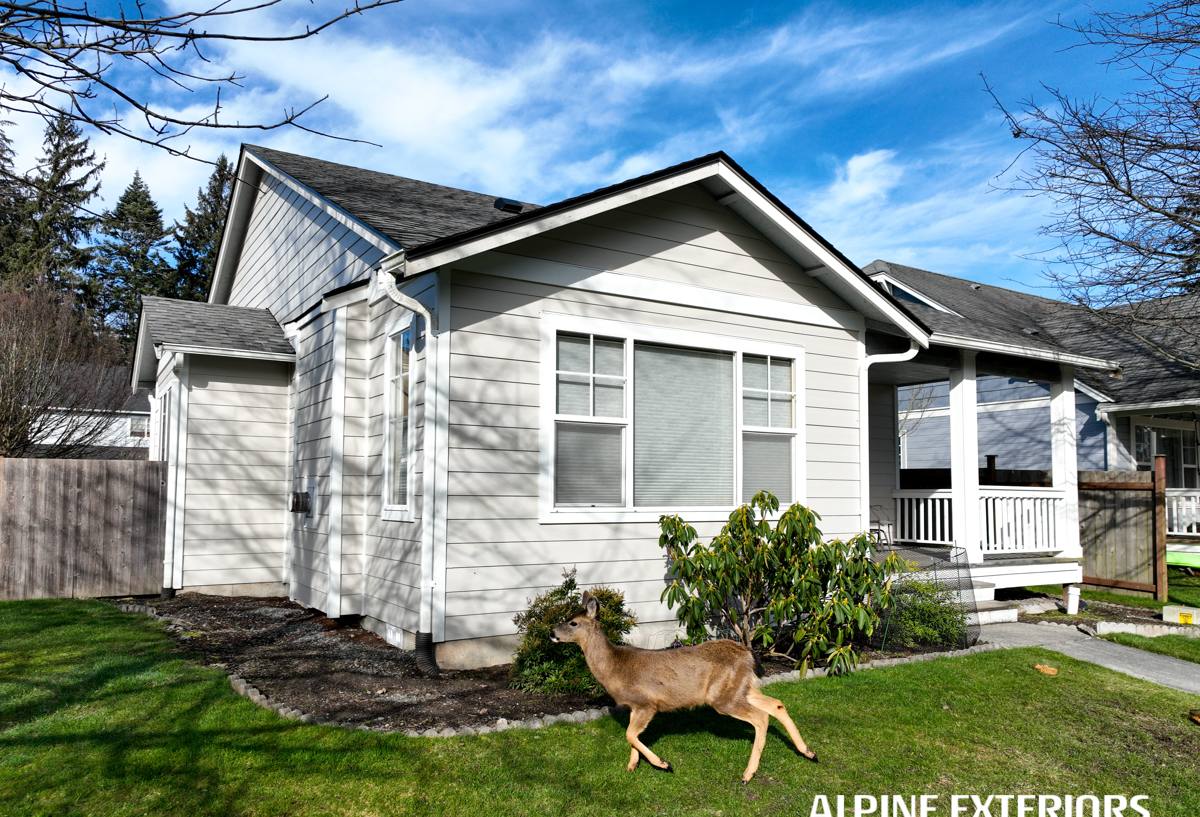
What Bellingham Homes Are Actually Up Against
Salt Air and Moisture
Proximity to saltwater doesn't just affect metal fasteners and hardware — it accelerates the breakdown of paint films and finishes on many siding materials. Combined with the Pacific Northwest's high ambient humidity, this means anything with exposed wood fiber or a factory finish that isn't built to hold up in a marine environment tends to age faster here than it would inland.
Driving, Wind-Driven Rain
Bellingham gets a lot of rain, and a fair amount of it doesn't fall straight down. Wind off the bay pushes rain into wall assemblies at an angle, which puts real pressure on seams, laps, trim joints, and anywhere flashing and siding meet. Poor installation details that would go unnoticed in a calmer climate show up as leaks and rot here within a few seasons.
Moss, Algae, and Shade
Between tree cover and the long stretches of overcast, damp weather, moss and algae growth on siding is a fact of life in this area. It's mostly cosmetic on a well-built wall, but on porous or absorbent materials it can hold moisture against the surface longer than it should, which shortens the life of the siding underneath.
Why We Install James Hardie Fiber Cement, and Nothing Else
We made a deliberate decision as a company to install only James Hardie fiber cement siding. We don't install vinyl, LP SmartSide, Cemplank, Allura, primed spruce, or cedar. That's not a marketing line — it's a standard we hold because of what we've seen these products do, and not do, in exactly this kind of climate.
Vinyl is affordable and low-maintenance in the sense that it doesn't need painting, but it's a thin plastic product that expands and contracts with temperature swings, can crack in impacts, and simply isn't built to be an air or moisture barrier — it relies entirely on what's behind it. In a wind-driven-rain environment like Bellingham's, that's a real limitation.
Engineered wood products like LP SmartSide use treated wood strand material, which performs reasonably well when the finish is intact and water is kept off the cut edges, but wood-based products are inherently more vulnerable to a climate this wet if any detail is missed during installation. Other fiber cement brands, such as Cemplank or Allura, are chemically similar to what we install, but we've standardized on James Hardie specifically for its ColorPlus factory-baked finish, its HZ5 product engineering for wetter climates, and the strength of its transferable warranty — consistency matters more to us than having a second supplier.
Primed spruce and cedar are traditional choices with real visual appeal, but both are solid wood products that require an ongoing paint and maintenance schedule to hold up, and both are more susceptible to moisture absorption, cupping, and rot in a marine climate than a cement-based product. We'd rather turn down that install than put a product on a Bellingham home that we know will need aggressive upkeep to survive here.
James Hardie Fiber Cement: What It Actually Is
James Hardie siding is made from a mixture of cement, sand, and cellulose fiber, cured into dense, rigid boards. It's non-combustible, doesn't support moss and algae growth the way wood fiber can, and resists the freeze-thaw and moisture cycling that this region puts siding through every winter. The ColorPlus finish is baked on in a factory process, not brushed or sprayed on site, which gives it more consistent color retention and resistance to fading and chipping than field-applied paint.
Hardie's HZ5 product line is engineered specifically for regions with more freeze-thaw activity and moisture exposure, which fits Whatcom County's climate well. It comes in lap siding, shingle-style panels, and vertical board-and-batten profiles, so we can match a range of home styles from Craftsman-era Bellingham homes to newer construction, without deviating from the one material system we trust.
Siding Options We Install
| Product Line | Best For | Look |
|---|---|---|
| HardiePlank Lap Siding | Most home styles, most common choice | Traditional horizontal lap |
| HardieShingle | Craftsman, cottage, and accent areas | Staggered or straight-edge shingle |
| HardiePanel Vertical Siding | Modern builds, gable accents, mixed-material facades | Clean vertical board-and-batten |
| HardieTrim | Window, door, and corner trim to match | Smooth or textured finish |
Installation Details That Matter in This Climate
Fiber cement is only as good as the installation behind it. In a climate with this much wind-driven rain, the details most homeowners never think to ask about are the ones that determine whether a wall stays dry for the next 30 years or starts failing in five.
- Correct rain-screen or drainage plane behind the siding so any moisture that gets past the surface has somewhere to go
- Proper flashing at windows, doors, and any horizontal trim or transition
- Manufacturer-specified fastening patterns and clearances, especially at butt joints
- Correct gap and sealant details where siding meets roofing, decks, or foundation lines
- Field-cut edges sealed per manufacturer specification, since exposed edges are the most vulnerable point on any fiber cement board
These aren't optional extras — they're the difference between siding that meets its warranty life and siding that needs early repair. It's also why we don't treat installation as a generic skill that transfers equally to every product; our crews install one system and know its details thoroughly.
Roofing, Windows, and Decks: The Rest of the Exterior
Siding doesn't work in isolation. On most homes we look at, the roof, windows, and any deck or exterior structure share the same exposure to salt air, rain, and moss, and problems in one area often show up as damage in another — a failing roof edge can rot the top course of siding below it, and an old, poorly flashed window can be the actual source of a "siding leak." Because we handle roofing, window replacement, and decks alongside siding, we can look at a home's exterior as one connected system rather than quoting a single component in isolation.
That matters especially on older Bellingham homes, where original windows, aging roofing, and weathered siding often need attention around the same time. Coordinating that work with one crew means fewer gaps between trades and fewer chances for water to find a path in during a transition between contractors.
Why a Local Crew Matters Here
Whatcom County's microclimates vary more than people expect — a few miles inland from the bay can mean noticeably less wind exposure and a different moss pattern than a home closer to the water. A crew that works this area regularly knows to look for those differences and adjust ventilation, flashing, and drainage details accordingly, rather than applying a one-size-fits-all approach pulled from a drier region's playbook.
Local presence also means we're available for questions after the job is done, and we stand behind our installation the same way James Hardie stands behind its product and finish warranties. That combination — a manufacturer warranty backed by a local installer who's still around — is worth more than a lower bid from a crew that won't be nearby if something needs a look.
What to Expect When You Call Us
We start with an on-site look at the current siding, the exposure of each wall, and any signs of moisture damage, moss buildup, or trim failure. From there we walk through product options, realistic cost factors, and a timeline, without pressure to decide on the spot.
Cost Factors Homeowners Should Understand
| Factor | Why It Matters |
|---|---|
| Home size and wall complexity | More corners, gables, and trim details mean more labor and material |
| Existing siding removal | Tear-off and disposal of old material adds time, especially with hidden damage underneath |
| Underlying sheathing or framing repair | Rot found once old siding is removed needs to be addressed before new siding goes on |
| Product line and profile | Lap, shingle, and panel styles differ in material and labor cost |
| Trim and accent work | Matching HardieTrim around windows, corners, and fascia adds scope |
A Few Things to Check Before Hiring Any Siding Contractor
- Confirm they're licensed and insured to work in Washington State
- Ask specifically what siding product they install and why — and whether they install more than one brand or system
- Ask how they handle flashing and drainage details, not just the visible finish
- Get a written scope that includes tear-off, repair contingencies, and warranty terms
- Ask whether the crew doing the work is direct employees or subcontracted out
If you're weighing a siding replacement, or dealing with moss, moisture, or aging trim on a Bellingham home, we're happy to take a look and walk you through what we see. There's no pressure and no obligation — just a straightforward assessment and an honest recommendation, using the form below to get started.