 Birch Bay Siding
 Window Replacement Built for Birch Bay Village Conditions
Birch Bay Village sits close enough to the water that its homes take a different kind of weather beating than houses even a few miles inland in Whatcom County. Salt-laden air works on window hardware and finishes year-round, wind-driven rain gets forced sideways into gaps that would stay dry elsewhere, and the long stretch of damp, low-sun months every fall through spring keeps wood trim and window sills wet longer than they should be. Windows that were fine when the house was built twenty or thirty years ago are often the first thing to fail once age, seal breakdown, and coastal exposure start compounding.
Window replacement in this neighborhood isn't just a cosmetic upgrade. Done correctly, it's one of the more effective ways to stop water intrusion at the wall, cut down on drafts and condensation, and protect the framing and siding around each opening from the moisture that Birch Bay's climate throws at it. Done poorly — wrong flashing sequence, no local calibration for wind-driven rain, hardware that isn't rated for salt exposure — a window job can create new problems that show up as rot and staining a few years later.
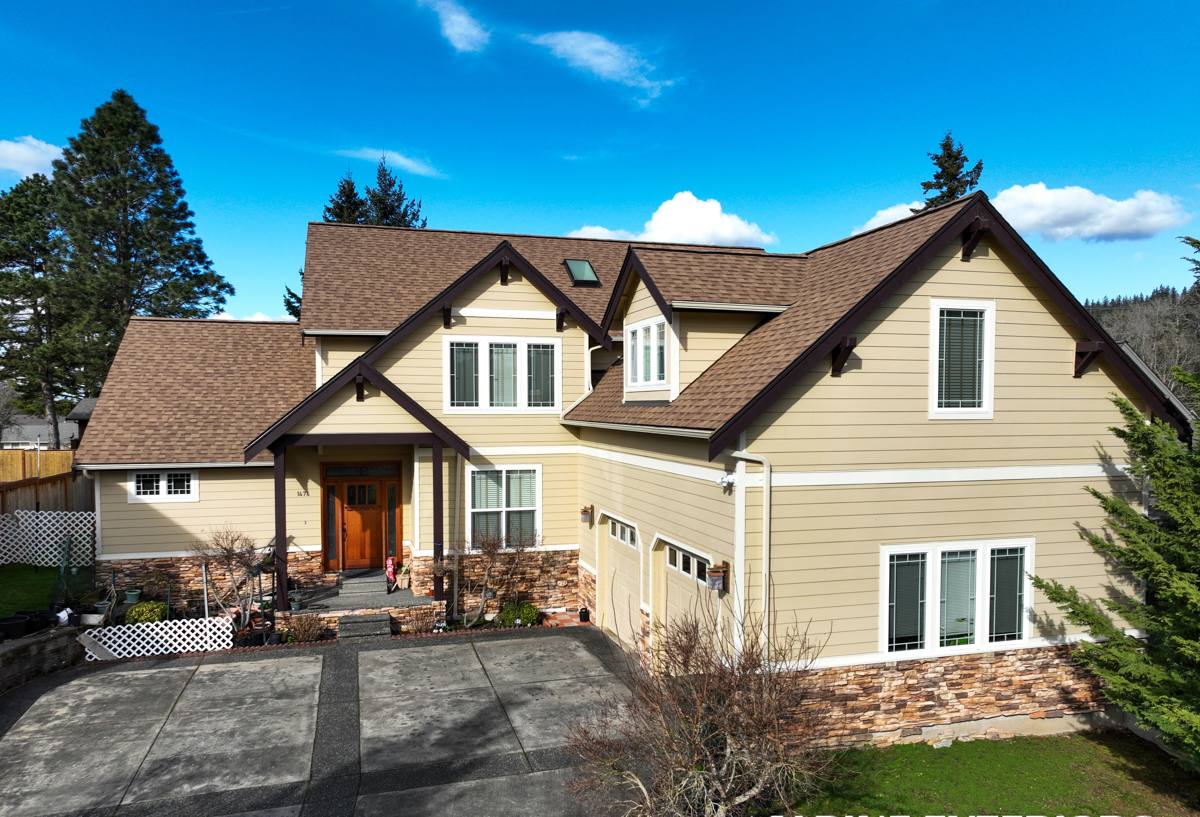
How to Tell Your Windows Are Losing the Fight
Most homeowners don't replace windows because they woke up wanting new ones. They replace them because something is telling them the old ones have stopped doing their job. In Birch Bay Village, the tells are fairly consistent from house to house.
- Fogging or a permanent haze between the panes of a double-pane window — the seal has failed and the gas fill or dead air space is gone
- Visible condensation or frost on the inside of the glass in cold, damp weather, especially on north- and west-facing windows that catch the worst of the weather
- Soft or discolored wood on the sill, jamb, or the siding directly around the window
- A draft you can feel with your hand near the frame on a windy day, or curtains that move slightly even with the window shut
- Hardware — locks, cranks, balances — that's stiff, corroded, or simply stopped working, which is common near the water where salt air accelerates metal fatigue
- Paint or finish that's peeling or bubbling on the interior or exterior trim right at the window opening
- A noticeable jump in heating costs without any other explanation
Any one of these on its own might just need a repair. Several of them together, especially combined with visible wood damage, usually means the window and the assembly around it have been letting moisture in for a while.
What a Correct Window Replacement Actually Involves
It Starts Before the Old Window Comes Out
The most important part of a window replacement happens before a new window ever gets set in the opening. We check the condition of the rough opening, the sheathing, and the framing once the old unit is out. If there's hidden rot or water staining behind the old window — which is common on homes that have taken years of driving rain off the water — that has to be dealt with before anything new goes in. Setting a brand-new window into a wet or compromised opening just seals the existing problem behind new trim.
Flashing and Moisture Management
Window flashing is where most bad installs go wrong, and it's the single biggest reason a window replacement either solves a water problem or quietly creates one. The flashing has to be layered correctly — sill pan first, then side flashing, then the header flashing lapped over the top — so that any water that does get behind the exterior cladding is directed back out, not trapped against the wood. In a wind-driven rain environment like Birch Bay, we don't treat this as optional or skip steps to save time.
Sealing, Insulating, and Trim
Once the window is set, plumb, level, and square, the gap between the window frame and the rough opening gets insulated and air-sealed properly — not just stuffed with fiberglass, which does little to stop air movement. Exterior trim and caulking are the last line of defense against wind-driven moisture, so we use sealants rated for exterior exposure and check the manufacturer's installation instructions for that specific window, since sealing requirements vary by brand and product line.
Choosing the Right Window for a Coastal Whatcom County Home
Not every window product on the market is a good fit for a property this close to salt water. Frame material, glass package, and hardware all matter more here than they would on a drier, inland site.
| Frame Material | How It Handles Birch Bay Conditions | Maintenance Reality |
|---|---|---|
| Vinyl | Won't rot or corrode from salt air; performs consistently in damp climates | Low — occasional cleaning, no repainting |
| Fiberglass | Very stable in temperature swings and moisture; strong long-term option near the water | Low — durable finish, minimal upkeep |
| Wood (unclad) | Handsome, but exposed wood is vulnerable to the region's long wet season without diligent upkeep | High — regular refinishing and moisture monitoring needed |
| Wood with aluminum or vinyl cladding | Exterior face is protected from weather while keeping a wood interior look | Moderate — cladding needs to be intact and properly flashed to work |
| Aluminum | Strong, but conducts cold and can be prone to condensation without a thermal break; hardware needs a coastal-rated finish | Moderate — watch for corrosion on lower-grade hardware |
Glass packages matter too. A double-pane window with a good low-E coating and argon fill is a reasonable baseline for this climate; triple-pane is worth discussing for west- and north-facing exposures that take the brunt of the weather off the water, though it adds cost and weight. Hardware — locks, hinges, cranks — should be rated for coastal or marine environments rather than standard interior-grade finishes, which corrode faster here than in drier parts of the state.
What Drives the Cost of a Window Replacement
Every homeowner asks about price early, and the honest answer is that it depends on a handful of specific factors rather than a single per-window number. Broadly, most full-frame residential replacements run from a modest per-window cost into a noticeably higher range once you factor in larger openings, premium glass, or wood repair discovered during removal.
| Factor | Why It Moves the Price |
|---|---|
| Window size and opening count | Larger or more numerous openings mean more material and labor |
| Frame material chosen | Vinyl is typically the most affordable; fiberglass and clad-wood cost more upfront |
| Full-frame vs. insert replacement | Full-frame replaces the entire unit including flashing; inserts fit into the existing frame and cost less but don't address a damaged frame |
| Hidden rot or framing repair | Discovered once the old window is out; can't always be quoted until removal |
| Glass package and hardware grade | Upgraded low-E coatings, gas fills, and coastal-rated hardware add cost but pay off in durability here |
| Access and site conditions | Second-story or hard-to-reach windows take more labor time |
We give straight numbers during the estimate, including calling out anything we can only confirm once the old window is opened up.
Full-Frame Replacement vs. Insert Replacement
This is one of the more important decisions on a Birch Bay Village job, and it's worth understanding before you get quotes. An insert (or "pocket") replacement fits a new window into the existing frame, leaving the old frame, sill, and exterior trim in place. It's faster and less expensive, and it can be the right call when the existing frame is sound and dry.
A full-frame replacement removes everything down to the rough opening, including the old flashing. It costs more and takes longer, but it's the only way to actually inspect and correct the flashing and framing — which matters a great deal on a home that's been absorbing wind-driven rain for years. We'll tell you honestly which one your house needs rather than defaulting to whichever is easier to sell. If there's any sign of past water intrusion, we lean toward full-frame, because an insert installed over a compromised frame just hides the problem for another few years.
Our Process, Start to Finish
- On-site assessment — we look at each window opening, check for existing moisture damage, and talk through which replacement approach fits your home
- Written estimate — a clear breakdown of window selection, scope, and price, including anything that depends on what we find once removal starts
- Scheduling around the weather — we plan installs for windows of drier weather where possible, since an open wall opening and a Whatcom County rain system don't mix
- Removal and opening inspection — old windows come out, and we inspect sheathing and framing before anything new goes in
- Repair as needed — any soft wood or damaged framing gets replaced before the new window is set
- Installation, flashing, and sealing — new window set plumb and square, flashed in the correct sequence, insulated, and sealed
- Trim and finish work — interior and exterior trim reinstalled or replaced to match the home
- Final walkthrough — we check operation, sealing, and appearance with you before calling the job done
Why a Crew That Already Works Birch Bay Village Matters
Window replacement isn't a generic product install — the right approach shifts depending on how exposed a specific property is to wind and salt air, how the home is oriented relative to the water, and what the existing construction is doing right or wrong. A crew that's worked other homes in this same stretch of Whatcom County has already seen how these houses tend to fail and what actually holds up against the local weather versus what looks fine on paper.
There's also a practical side to hiring local: scheduling around real Pacific Northwest weather windows, being reachable quickly if something needs a follow-up look, and standing behind the work because we're not driving in from out of the area for a one-time job. When you're trusting someone to cut new openings into your exterior walls, that kind of local accountability is worth as much as the product specs.
What to Ask Any Contractor Before You Hire
- Are you licensed and insured to do this work in Washington State?
- Will you inspect the framing once the old window is out, and how do you handle unexpected rot?
- What's your flashing method, and can you explain it in plain terms?
- Do you recommend full-frame or insert replacement for my specific windows, and why?
- What warranty covers the installation itself, separate from the manufacturer's product warranty?
- Can you provide references from other jobs in the Birch Bay area?
Protecting Your Investment After Installation
New windows still need a small amount of ongoing attention, especially in a salt-air, high-moisture climate. None of it is difficult, but skipping it shortens the life of even a well-installed window.
- Rinse frames and hardware periodically to clear salt residue, especially on homes with direct water exposure
- Check exterior caulking annually and touch it up if it's cracked or pulling away
- Keep gutters and drainage clear so water isn't sheeting down across window openings
- Operate locks and cranks a few times through the year so hardware doesn't seize up
- Watch for any new condensation between panes, which signals a seal failure even on a newer window
- Trim back vegetation that holds moisture against the exterior wall near window openings
Permits, Timing, and Planning Around the Season
Window replacement in Whatcom County typically requires a permit, and we handle that process as part of the job rather than leaving it to the homeowner. Timing matters too — we try to avoid opening up walls during the heaviest stretch of the region's wet season when it can be helped, and we plan multi-window jobs so no opening sits exposed longer than necessary. If a project has to run during a wetter part of the year, we adjust scheduling and job-site protection accordingly rather than rushing the work to beat the weather.
If you're noticing drafts, fogged glass, or soft trim around your windows in Birch Bay Village, it's worth having someone take an honest look before the next wet season adds to the damage. We're happy to walk your property, point out what we see, and put together a straightforward, no-pressure estimate — use the form below to get started.