 Birch Bay Siding
 Windows Built for Sumas Weather, Not Just Sumas Style
Sumas sits in a part of Whatcom County where weather doesn't ease up for long. Winters bring long stretches of driving rain, spring and fall carry heavy moisture and moss growth on anything that stays shaded or damp, and homes here take that exposure on every wall, not just the ones facing the water. When we talk about "custom windows" for a Sumas home, we're not just talking about size and trim style — we're talking about units that are specified, flashed, and installed to handle a climate that punishes weak seals and cheap installation work over time, not overnight.
A window that looks fine on day one but wasn't detailed correctly for this climate usually shows its problems in year three to five: fogged glass, soft trim, drafts around the frame, or a sightline of moss creeping up from the sill. Our job on a custom window project is to make sure that never happens, by treating the opening — not just the window unit — as the thing we're actually building.
What "Custom" Actually Means Here
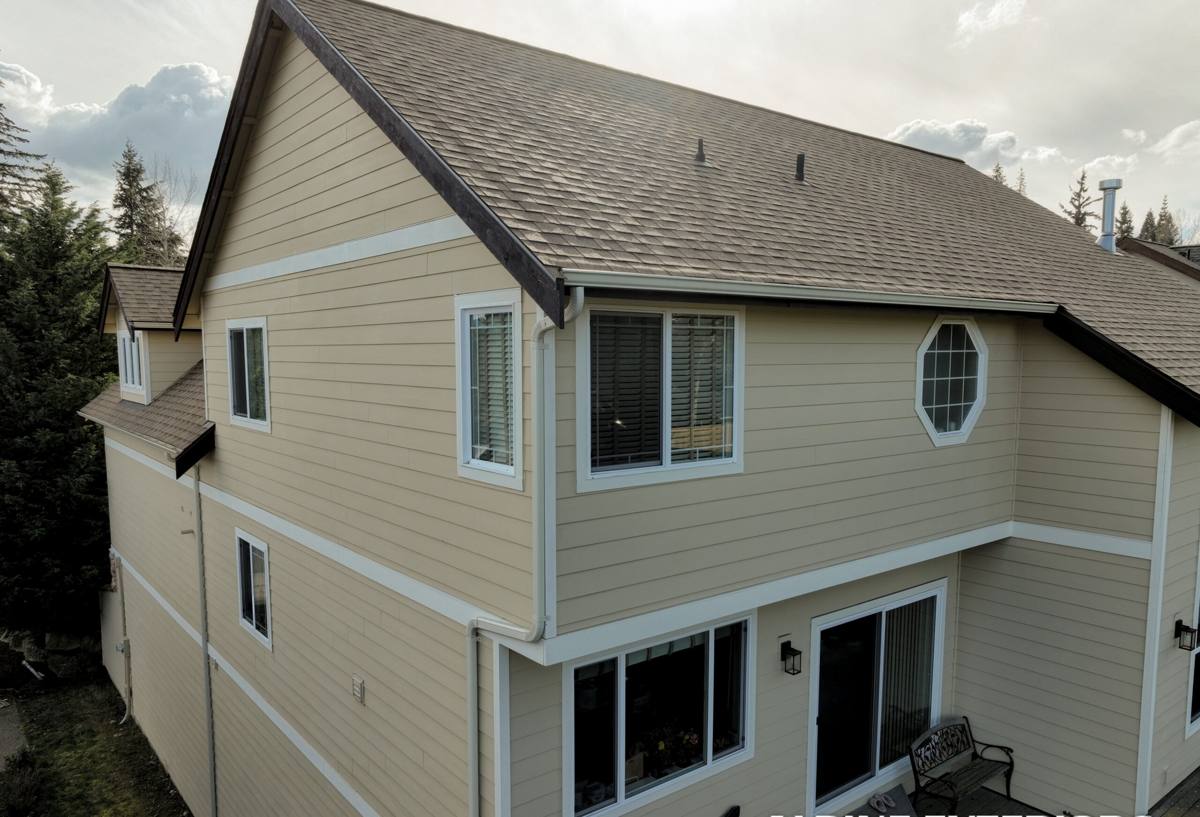
Custom doesn't have to mean exotic. For most Sumas homes it means matching the window to the actual conditions of that specific wall and opening rather than dropping in a stock size and hoping the gaps work out. That includes:
- Sizing to the existing rough opening or a corrected one, instead of forcing a stock size to fit
- Matching sightlines and grille patterns across a home so additions or replacements don't look bolted on
- Choosing frame material and glass package based on which direction that wall faces and how much weather it actually takes
- Detailing flashing and sill pans for a wall assembly that's been holding moisture for years, not a brand-new build
On older Whatcom County homes especially, the opening itself is often part of the problem — settled framing, old flashing that was never installed correctly, or trim that's been absorbing water for decades. A correct custom window job addresses that opening, not just the glass going into it.
Common Reasons Sumas Homeowners Replace Windows
We generally see one of a few situations driving the call: persistent drafts and rising heating bills, visible fog or moisture between the panes on older double-glazed units, wood frames that have started to soften or show rot at the sill, or a homeowner remodeling and wanting the window layout to match a new floor plan or exterior look. Each of these points to a slightly different fix, which is part of why a generic "replacement window" quote from a big-box source often misses the mark.
The Climate Problem, In Plain Terms
Whatcom County's mix of coastal moisture and inland rain means wood and lower-grade vinyl components don't get much of a break to dry out. Add a shaded north or east wall, and you get the conditions moss and mildew like best — steady dampness, low direct sun. Over a long moss season, that grime works its way into any gap or seam that wasn't sealed properly, and once moisture gets behind trim or into a frame joint, it doesn't leave on its own.
This is why we pay close attention to a few things that are easy to skip on a rushed installation:
| Climate Factor | What It Does to a Window | What We Do About It |
|---|---|---|
| Driving, wind-blown rain | Pushes water sideways into gaps around the frame, not just straight down | Proper sill pan flashing and correctly lapped house wrap integration, not just caulk |
| Long moss/shade season | Traps moisture against sills and lower trim, feeding rot and mildew | Durable, low-absorption frame materials and finishes that don't give moss a foothold |
| Temperature swings | Causes materials to expand and contract, stressing seals over years | Quality glass packages and frame systems rated for sustained weather exposure |
| General regional humidity | Slows drying time after any wind-driven rain event | Correct flashing sequencing so water sheds out, not into the wall assembly |
Frame Materials: What We Recommend and Why
Vinyl remains the most practical choice for most Sumas homes — it doesn't absorb moisture, doesn't need repainting, and modern multi-chamber vinyl frames hold up well to the area's rain and temperature swings. Fiberglass is a step up in stiffness and paintability if a homeowner wants a specific custom color that isn't standard vinyl white or tan, and it handles expansion and contraction with less stress on the seals over time.
We're honest about wood-frame windows: they can look excellent, but in this climate they demand real upkeep — repainting, recaulking, and watching the sills for the first signs of softening. If a homeowner wants a wood look, we'll usually recommend a wood-clad option with a durable exterior cladding over solid wood exposed directly to the weather, simply because it holds up with far less maintenance burden long-term. That's a maintenance and moisture-behavior tradeoff, not a knock on wood as a material — it's about what a busy homeowner realistically wants to be doing every couple of years.
Glass Packages Worth the Upgrade
Double-pane, low-E glass with argon fill is the baseline we'd suggest for most Sumas replacements — it's a meaningful step up from older single-pane or early double-pane units in both comfort and condensation resistance. For west- or south-facing walls that get more direct sun, or rooms where street or highway noise is a factor, a higher-performance low-E coating or triple-pane option can be worth discussing, though it's not always necessary for every elevation of a house.
How the Installation Itself Prevents Problems
Most window failures we get called out to inspect aren't a bad window — they're a window that was installed without proper attention to the opening around it. Getting this right consistently comes down to a short list of steps done in the right order:
- Remove the old unit and inspect the rough opening for hidden rot, soft framing, or old flashing failures before anything new goes in
- Repair or rebuild the opening as needed — this is not optional if there's existing water damage
- Install a sloped sill pan so any water that does get past the window sheds outward, not into the wall
- Set the new window plumb, level, and square, then fasten per the manufacturer's specification
- Integrate flashing tape and house wrap in the correct shingle-lap order so water always moves down and out
- Insulate the gap around the frame properly — not overpacked, not left hollow
- Finish interior and exterior trim, and seal with a quality exterior-grade sealant at the right joints only
Skipping or rushing any one of these steps is usually what shows up as a draft, a stain, or soft trim a few years down the road. It's also the part of the job a homeowner can't easily inspect after the trim goes back on — which is exactly why the crew's habits matter more than the window brand.
Why Local Experience in Sumas and the Surrounding Area Matters
A crew that regularly works homes in and around Sumas and the rest of Whatcom County already knows what this region's older housing stock tends to hide — the flashing shortcuts common in certain build eras, the framing quirks in homes that have settled over decades, and which details actually matter once driving rain and a long moss season get to work on a wall. That's knowledge you don't get from a national installer parachuting in for a single job, and it's the difference between a window that's sealed correctly the first time and one that needs revisiting in a few years.
We also know this area's permitting expectations and can flag when a window change affects egress requirements for a bedroom, or when a larger opening needs additional structural support — details that matter for both safety and resale, and that are easy to miss without local experience.
What to Check Before You Hire Anyone for This Work
- Do they inspect the rough opening before quoting, or just measure the existing window?
- Do they explain their flashing and sill pan approach, or just talk about the window brand?
- Are they licensed and insured to do exterior work in Washington, and can they show it?
- Do they offer a real installation warranty, separate from the manufacturer's product warranty?
- Can they explain, in plain terms, why they're recommending one frame material or glass package over another for your specific wall?
If a contractor can't answer the second and fifth questions clearly, that's usually a sign they're selling a product rather than solving your specific window problem.
What a Project Typically Looks Like
Every home is different, but most custom window projects in this area follow a similar shape: an in-person assessment of the openings and current condition, an honest conversation about frame and glass options suited to that wall's exposure, a firm quote before any work starts, and a clean, dust-managed installation that includes removal and disposal of the old units. We'll walk you through what we found once the old window is out — especially if there's hidden moisture damage — before we move forward, so there are no surprises on the invoice.
If you're weighing a window project for a Sumas-area home, we're glad to take a look and give you a straightforward assessment — no pressure, no inflated urgency, just an honest read on what your windows actually need. Use the form below to request a free estimate.