 Birch Bay Siding
 Windows Built for the Nooksack Climate
Homes in the Nooksack area near Birch Bay sit in one of the more demanding window environments in Whatcom County. You've got salt-laden air rolling in off the water, long stretches of driving rain through fall and winter, and a moss season that seems to stretch longer every year. None of that is a problem for a window that's specified and installed correctly. All of it is a problem for a window that isn't. We've installed enough windows in this corridor to know exactly where the failures start, and we build our process around avoiding them.
This page is about one thing: window installation for homes in and around Nooksack. Not a general overview of every siding or exterior service we offer — just what matters when you're replacing or installing windows in this specific stretch of Whatcom County.
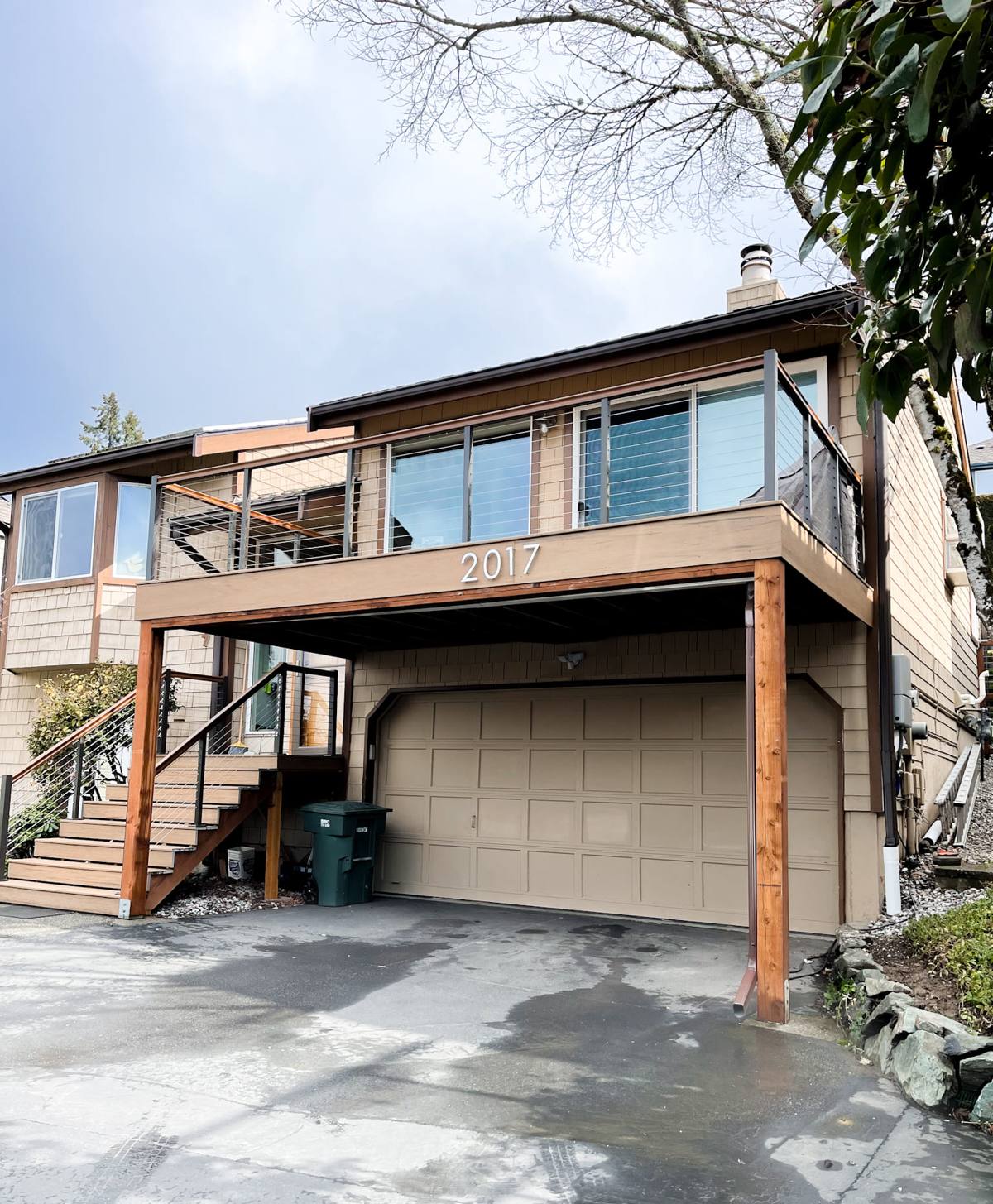
What Salt Air and Moisture Actually Do to a Window
It helps to understand the mechanism, not just the symptom. Salt air carries fine particulate that settles into any exposed metal — hardware, cladding fasteners, unprotected aluminum cladding — and accelerates corrosion over years of exposure. It's slow, but it's relentless, and it doesn't stop at the glass line. It works on hinges, locks, and cranks just as much as it works on the frame.
Driving rain is a different threat. It doesn't just wet the glass — wind-driven rain in this area routinely hits window assemblies at an angle, which means water gets pushed into seams and flashing details that a calm-weather installation might never test. A window that's watertight in a showroom can still leak in a Whatcom County storm if the flashing and sealant details around it weren't done right.
Moss and algae growth is more of an appearance and longevity issue than a structural one, but it matters. Persistent shade, morning dew, and a long damp season give organic growth a foothold on sills, trim, and anywhere water sits instead of draining. Left alone, that moisture retention shortens the life of wood trim and can work its way into caulk joints over time.
Why This Matters More Here Than Inland
A window installed the same way in Spokane or Yakima might perform fine for decades. That same installation near the water in Birch Bay can start showing problems in a fraction of the time if the details weren't adjusted for what this climate actually does. It's not that coastal Whatcom County requires exotic materials — it requires ordinary materials installed with the coastal conditions specifically in mind.
What a Correct Window Installation Involves
A window installation isn't just "remove old window, set new window, caulk the edges." Done right, it's a sequence of steps where each one protects the one before it.
- Assessment of the existing opening — checking the rough opening, sill condition, and any signs of past water intrusion before anything is removed.
- Removal without damaging surrounding materials — careful removal of the old unit and trim so the opening and adjacent siding stay intact.
- Sill and opening prep — repairing or replacing any compromised sheathing or framing found during removal, not just covering it up.
- Flashing installation — proper sill pan flashing and integration with the water-resistive barrier so water is directed out, not trapped in.
- Window setting and shimming — the unit is set level, plumb, and square, with shims placed to manufacturer spec so the frame isn't stressed.
- Sealing and insulating — low-expansion foam or appropriate insulation around the frame, plus exterior sealant at the manufacturer-specified joints — not everywhere, since over-sealing traps moisture as often as it keeps it out.
- Exterior trim and finish — trim reinstalled or replaced with attention to drainage paths so water sheds away from the opening.
- Function and seal check — every window is operated, checked for smooth function, and inspected for a consistent seal before the job is called done.
Skip or rush any one of those steps and you can end up with a window that looks fine for a year or two before a leak shows up in a wall cavity where nobody will see it until there's damage.
Choosing the Right Window for a Coastal-Adjacent Home
There's no single "best" window brand or material for every home — the right choice depends on your home's exposure, your budget, and how much maintenance you want to take on. What we can tell you honestly is how the common frame materials behave in this climate.
| Frame Material | Salt Air / Moisture Behavior | Maintenance |
|---|---|---|
| Vinyl | Doesn't corrode; performs well in coastal air with no special coatings needed | Low — occasional cleaning |
| Fiberglass | Very stable dimensionally and resistant to moisture-driven warping | Low |
| Wood-clad | Cladding protects exterior face, but any breach in the cladding exposes wood to rot risk | Higher — cladding seams need periodic inspection |
| Aluminum | Prone to corrosion over time in salt air unless properly coated and maintained | Moderate to high near the water |
We install products across this range, but for homes closer to the water with direct salt exposure, we generally steer clients toward vinyl or fiberglass unless there's a strong aesthetic reason to go with a clad wood product — and if a client wants clad wood, we make sure they understand the seam inspection routine that goes with it. That's not a knock on any manufacturer; it's just an honest read on how each material holds up out here versus five miles inland.
Glass Packages Worth Considering
For this area, a dual-pane unit with a low-E coating and argon fill is a reasonable baseline — it helps with both energy performance and condensation resistance during the cold, damp months. Triple-pane is worth discussing if a home has heavy west or south wind exposure, but it's a cost-versus-benefit conversation we'll walk through with you rather than push as a default upgrade.
Signs a Nooksack-Area Home Needs New Windows
- Visible condensation or fogging between panes — the seal has failed and the insulating gas is gone
- Drafts you can feel around the frame even when the window is fully latched
- Wood trim that's soft, discolored, or shows active moss/algae growth at the sill
- Difficulty opening, closing, or locking that isn't fixed by cleaning the tracks
- Visible daylight or gaps around the frame from outside
- Noticeably higher heating costs without another clear explanation
- Peeling paint or stained drywall on the interior wall below or beside a window
Any one of these on its own isn't necessarily an emergency. Several together, especially moisture-related signs, are worth having looked at before the next wet season.
Our Process for Nooksack Window Projects
1. On-Site Assessment
We start by walking the exterior and interior of the affected windows, checking exposure direction, existing flashing condition, and any signs of past leaks. This tells us whether it's a straightforward replacement or whether there's underlying sheathing or framing repair to plan for.
2. Honest Scope and Estimate
We'll tell you what we find, including anything that adds to the scope — nobody wants a surprise once walls are opened up. The estimate reflects the actual condition of your opening, not a generic per-window number.
3. Scheduling Around Weather
Given how much wind-driven rain this area sees, we plan installation days with weather in mind and work to keep openings protected and closed up the same day whenever possible, rather than leaving a house exposed overnight.
4. Installation and Cleanup
Our crew follows the same sequence on every job — proper flashing, correct shimming, appropriate sealant, and a final function check on every unit before we consider the job complete.
5. Walkthrough
We walk the finished work with you, operate each window, and answer questions about care and maintenance specific to your home's exposure.
Why a Crew That Knows Nooksack Matters
Window installation isn't identical everywhere, and a crew that mostly works dry inland climates can miss details that matter here. Knowing how far wind-driven rain typically pushes water up a wall, which orientations in Whatcom County take the worst of the weather off the water, and how quickly moss establishes on north-facing trim isn't something you learn from a manual — it's something you learn by doing this work in this area, season after season. That familiarity shows up in the small decisions on a job site: how much flashing overlap is used, where extra sealant is worth it and where it isn't, and which details get extra attention because we've seen what happens when they're skipped.
Maintaining Your Windows After Installation
- Rinse frames and sills periodically to remove salt residue, especially on wind-exposed sides of the home
- Clear debris and moss buildup from sills and tracks before it retains moisture
- Inspect exterior caulk lines annually and have any cracked or separated sealant addressed promptly
- Operate locks and cranks a few times a year to keep hardware from seizing
- Watch for soft spots in exterior trim, which can indicate moisture getting behind the surface
A well-installed window in a well-chosen material shouldn't need much more than that. If it does, that's usually a sign something in the original installation needs a second look.
If you're weighing window replacement for a home in the Nooksack area, we're happy to take a look and give you a straightforward, no-pressure estimate — just fill out the form below and we'll get in touch.