 Birch Bay Siding
 Roofing in Sandy Point Comes With Its Own Set of Problems
Sandy Point sits right up against the water, and that location shapes everything about how a roof ages here. Salt-laden air moves through the neighborhood constantly, driving rain comes in sideways off the Strait during winter storms, and the tree cover combined with damp shoulder seasons keeps moss and algae active for a good chunk of the year. None of that is unique to any one house on the point — it's the baseline every roof in this part of Whatcom County has to deal with. A roof repair that doesn't account for those three factors together tends to fail again within a season or two, which is why a generic patch job often isn't the right answer here.
We work on homes throughout Birch Bay and the surrounding waterfront communities, and Sandy Point roofs show a pretty consistent pattern of wear compared to homes further inland. Understanding that pattern is most of what separates a repair that lasts from one that doesn't.
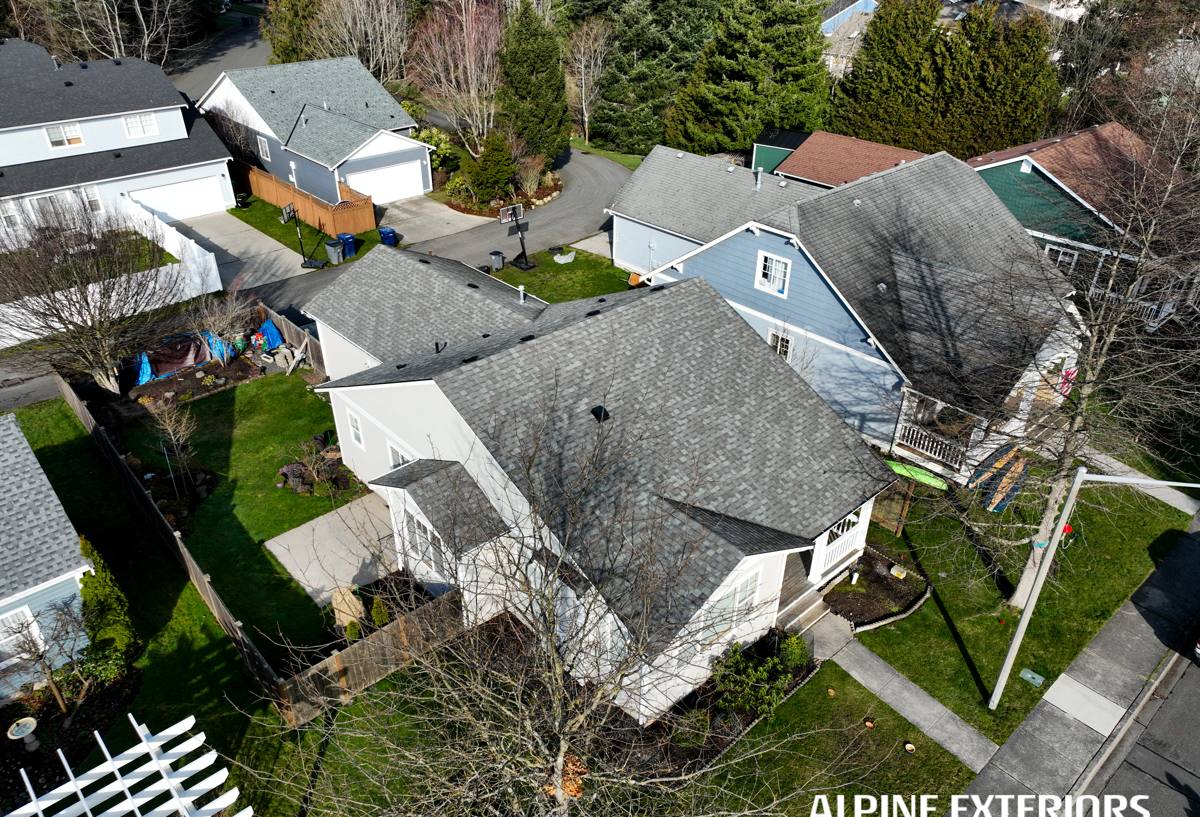
What Salt Air and Coastal Wind Actually Do to a Roof
Salt air accelerates corrosion on anything metal — flashing, fasteners, gutter hangers, exposed nail heads, vent caps. On a lot of roofs we inspect in Sandy Point, the shingles themselves still have useful life left, but the metal components around them are failing early: rusted-through flashing at chimneys and sidewalls, corroded fastener heads that have backed out or lost their grip, and gutter systems that are pitting faster than you'd expect for their age.
Wind off the water adds a second layer of stress. Sustained coastal wind works shingle edges and ridge caps loose gradually, long before there's an obvious storm event to point to. By the time a homeowner notices a lifted shingle or a gap at the ridge, the underlying nailing pattern has often already been compromised in a wider area than what's visible from the ground.
What This Means for a Repair
A correct repair on a Sandy Point roof has to look past the immediate leak or missing shingle and check the metal flashing and fastening system in the surrounding area — not just swap out what's obviously damaged. Replacing a shingle over corroded flashing, or renailing into wood that's already lost grip from years of wind flex, buys you a short-term fix and not much else.
Driving Rain and the Places Water Actually Gets In
Straight-down rain is relatively forgiving on a well-installed roof. Driving, wind-pushed rain — which is common on exposed waterfront lots like the ones in Sandy Point — finds every weakness in a roof system, not just the obvious ones. Water pushed sideways under shingle tabs, up under ridge caps, or behind flashing that's lost its seal can travel a surprising distance before it shows up as a stain on a ceiling.
That's why leak-tracing on a coastal roof takes more care than it does on a typical inland home. The spot where water is entering the roof deck is very often several feet away — sometimes higher up the slope — from where the stain shows up inside. Chasing the visible symptom instead of the actual entry point is one of the most common reasons a "repaired" roof leaks again during the next storm.
Common Driving-Rain Entry Points We Check
- Flashing around chimneys, skylights, and roof-to-wall transitions
- Valleys, where wind-driven water concentrates and runs fastest
- Ridge caps and hip caps that have lifted or lost sealant
- Exposed fastener heads and pipe boot collars
- Gutter and eave lines where backed-up water can work under the first course of shingles
Moss: The Slow-Motion Damage That Adds Up
Birch Bay's damp, shaded conditions mean moss season runs long compared to drier parts of the county. Moss doesn't just look bad — it holds moisture directly against the shingle surface for extended periods, which accelerates granule loss and, over time, lets moisture work its way under shingle edges. On shaded, north-facing slopes in Sandy Point, we regularly see moss doing more cumulative damage than any single storm.
Moss removal on an existing repair needs to be done carefully. Aggressive scraping or pressure-washing can strip granules and shorten the life of shingles that were otherwise fine, so it's a case where the removal method matters as much as the fact that the moss gets removed at all.
Moss-Related Repair vs. Prevention
| Situation | What's Needed |
|---|---|
| Light surface moss, no granule loss | Gentle low-pressure treatment and cleaning, no shingle replacement necessary |
| Established moss with granule loss | Localized shingle repair or replacement in the affected area |
| Moss that has lifted shingle edges | Repair plus a check for moisture intrusion underneath before resealing |
| Recurring moss on shaded slopes | Repair now, plus a conversation about longer-term prevention options for that slope |
What a Correct Roof Repair Actually Involves
A repair that's built for Sandy Point conditions goes through the same core steps regardless of what triggered the call — a visible leak, storm damage, or a routine inspection finding.
1. Full-Area Inspection, Not Just the Trouble Spot
We look at the section where the problem was reported, but also the surrounding roof plane — flashing, fasteners, and shingle condition — since coastal wear tends to cluster rather than show up as one isolated failure.
2. Tracing the Actual Water Path
For leaks, we work back from the interior stain or damp spot to the real entry point on the roof, accounting for how driving rain moves under shingles and flashing on this kind of exposed site.
3. Addressing Metal Components, Not Just Shingles
Given how fast salt air corrodes flashing and fasteners here, a repair usually includes evaluating — and often replacing — the metal flashing and hardware around the damaged area, not just the shingles on top of it.
4. Matching Materials and Sealing Properly
Repairs are done with materials and fastening methods suited to coastal exposure, and all flashing and penetration points are resealed to current standards rather than just tucked back into place.
5. Verifying the Fix
Before we consider a repair done, we check that the surrounding area — decking, underlayment, and adjacent shingles — wasn't compromised by whatever caused the original damage.
Repair or Replace? Honest Factors We Weigh
Not every roof issue in Sandy Point needs a full replacement, and not every repair is a good long-term investment. We walk homeowners through the real trade-offs rather than defaulting to whichever job is bigger.
| Factor | Leans Toward Repair | Leans Toward Replacement |
|---|---|---|
| Age of roof | Under roughly 12-15 years | Approaching or past expected material lifespan |
| Extent of damage | Isolated to one area or slope | Multiple areas showing similar wear |
| Flashing/fastener condition | Localized corrosion | Widespread corrosion across the roof |
| Decking condition | Solid, no rot found | Soft spots or rot discovered during inspection |
| History of repairs | First or second repair on this roof | Repeated repairs to the same areas over time |
We'll always give you our honest read on which side of that table your roof falls on, including the maintenance trade-offs either path involves, so the decision is based on the actual condition of your roof rather than guesswork.
Why Local Experience With Sandy Point Roofs Matters
A crew that's worked roofs across Birch Bay and Whatcom County's coastal communities knows what to expect before the ladder even goes up — which slopes on a waterfront lot typically take the worst wind exposure, where moss tends to establish first, and how far driving rain can travel under a flashing detail on an exposed site. That knowledge shortens the diagnostic process and reduces the chance of a repair that only addresses the symptom.
It also means showing up with the right materials and fastening approach from the start, instead of using methods suited to a drier, more sheltered inland roof. Coastal repair work has different requirements, and treating it the same as any other roof repair is how avoidable callbacks happen.
Simple Maintenance That Extends a Repair's Life
Once a repair is done, a little regular upkeep goes a long way on a Sandy Point roof:
- Keep gutters and downspouts clear so water isn't backing up under the eave line
- Have moss addressed while it's still light, rather than letting it establish
- After major windstorms, do a visual check (from the ground, or have us look) for lifted shingles or ridge caps
- Trim back overhanging branches where practical to reduce shade and debris buildup
- Schedule a periodic inspection rather than waiting for an interior leak to show up
Get an Honest Look at Your Roof
If you're dealing with a leak, storm damage, moss buildup, or just want a second opinion on a repair someone else quoted, we're happy to take a look. We'll give you a straightforward assessment of what's actually going on with your roof and what it would take to fix it right — no pressure, no upsell. Reach out for a free estimate and we'll get you scheduled.