 Birch Bay Siding
 Why Decks Wear Out Faster Near Birch Bay and Bellingham
A deck in this part of Whatcom County works harder than a deck almost anywhere inland. The combination of salt-laden air off Birch Bay and the Strait, long stretches of driving rain, and a moss season that can run from fall through spring means wood and hardware are under near-constant moisture stress for much of the year. Add in freeze-thaw cycles during the occasional cold snap and UV exposure during the drier summer months, and you have a structure that's being tested from every direction.
Most decks in this area don't fail all at once. They fail slowly, at the joints, fasteners, and hidden framing members where water collects and doesn't dry out fast enough between storms. By the time surface problems are obvious, the structural wood underneath has often been compromised for a while. That's the pattern we see most often on deck replacements in Bellingham and the surrounding Birch Bay area.
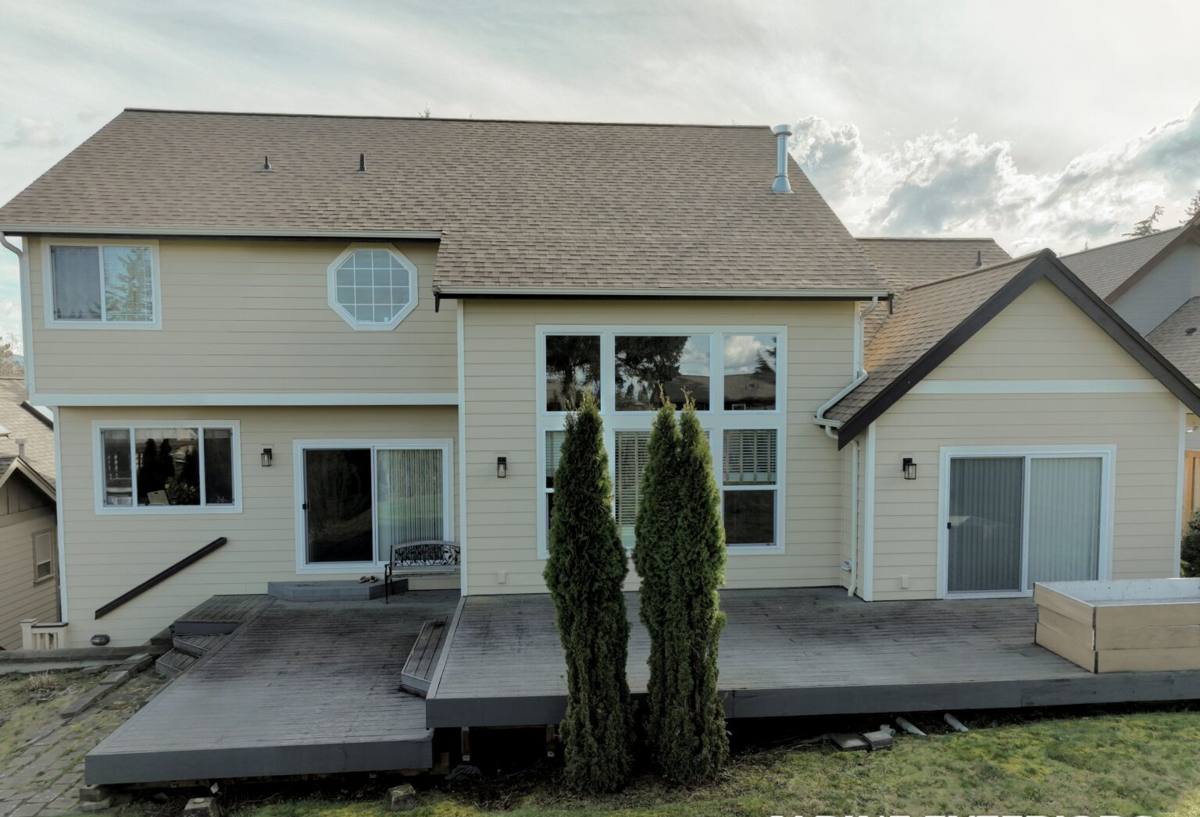
Signs a Deck Needs Replacement, Not Just Repair
Repair makes sense when the problem is isolated. Replacement becomes the right call when the damage is systemic — when the framing, ledger connection, or footings are compromised rather than just the visible decking boards. Here's what tells us which situation we're looking at:
- Soft, spongy, or spring-loaded spots when you walk across the deck
- Visible rot or dark staining at the ledger board where the deck meets the house
- Rust streaking or corrosion around joist hangers and structural fasteners
- Persistent moss or algae growth on the deck surface that returns within weeks of cleaning
- Railings or posts that flex or wiggle under normal pressure
- Gaps opening up between boards, or boards that have cupped or crowned significantly
- A deck more than 20-25 years old that has never had the substructure inspected
If you're only seeing one or two of these and the framing checks out solid, targeted repair may be enough. When several show up together, it usually means water has been getting into the structure for years, and patching the surface won't fix what's underneath.
What a Correct Deck Replacement Actually Involves
Structural Framing and the Ledger Connection
The ledger board — where the deck attaches to the house — is the single most important detail on any deck, and it's the point most likely to fail in a climate like ours. A correct installation uses proper flashing that directs water away from the house rim joist rather than letting it wick in behind the ledger, along with structural screws or through-bolts rated for the load, not just deck screws. We also confirm joist spacing, beam sizing, and footing depth meet current load requirements rather than just matching what was there before — older decks in this area were often built to lighter standards than current code calls for.
Footings and Post Bases
Given how saturated the ground here can get for months at a time, footings need to be set below frost depth and sized for the soil conditions on your lot. Post bases should hold the wood post off the concrete entirely, since ground contact combined with our rainfall is one of the fastest ways to rot a post from the bottom up.
Fasteners and Hardware
Salt air off the bay accelerates corrosion on standard hardware faster than most homeowners expect. We use hot-dip galvanized or stainless connectors and coated structural screws rated for ground contact and coastal exposure, matched to whatever decking and framing material is going in. Mismatched metals — for example, the wrong fastener with certain treated lumber — can cause galvanic corrosion that eats through hardware years before it should fail.
Decking Material Options for This Climate
There's no single "correct" decking material — it depends on your budget, how much maintenance you want to take on, and how long you plan to stay in the home. Here's how the common options compare for a property dealing with regular rain and coastal moisture:
| Material | Moisture & Moss Resistance | Maintenance | Typical Lifespan |
|---|---|---|---|
| Pressure-treated lumber | Good if sealed regularly; absorbs water if neglected | Annual cleaning and re-sealing recommended | 15-20 years with upkeep |
| Cedar | Naturally rot-resistant but still needs sealing here | Regular cleaning, periodic sealing or staining | 15-25 years with upkeep |
| Composite decking | Very good; doesn't absorb water or feed moss the way wood does | Periodic washing, no sealing or staining | 25-30+ years |
| PVC/capped polymer | Excellent; fully moisture-sealed surface | Occasional washing | 30+ years |
We're upfront that composite and PVC decking cost more upfront than wood, but in a climate where moss and moisture are constant pressure, the reduced maintenance burden and longer service life often make up the difference over time. That said, plenty of homeowners are happy with wood as long as they understand the annual upkeep it takes to keep it performing well here.
Our Deck Replacement Process
1. On-Site Assessment
We start by inspecting the existing deck from the ground up — ledger, framing, footings, and surface — so you know exactly what's driving the recommendation to replace rather than repair, and what condition the substructure is really in.
2. Design and Material Selection
We walk through decking, railing, and hardware options based on your budget and how you actually use the space, with honest trade-offs on maintenance and cost for each.
3. Permitting
Most deck replacements involving structural changes, height above a certain threshold, or full rebuilds require a permit locally. We handle that process as part of the job so it's not something you have to chase down yourself.
4. Demolition and Rebuild
We remove the old structure down to (or including) the footings as needed, correct any framing or flashing issues we found in the assessment, and build the new deck to current load and attachment standards.
5. Final Walkthrough
Before we consider the job done, we walk the finished deck with you — checking railings, stairs, fastener finish, and drainage details around the ledger — so there are no surprises later.
Local Building Considerations in Whatcom County
Whether your property sits inside Bellingham city limits or in unincorporated Whatcom County near Birch Bay, permitting requirements and setback rules can differ depending on jurisdiction, lot location, and whether the deck is attached to the house or freestanding. Decks near shoreline areas may also fall under additional review. We check the specifics for your address before work begins rather than assuming one set of rules applies everywhere in the area — it's a detail that gets missed when a crew isn't used to working across these boundaries regularly.
Snow load isn't the driving factor here that it is inland or at higher elevation, but wind exposure off the water and sustained rain loading on framing are real considerations in deck design near the bay, particularly for elevated decks and stair structures.
What Affects the Cost of a Deck Replacement
Every deck is priced based on its own specifics, but these are the factors that move the number most:
| Factor | Why It Matters |
|---|---|
| Size and shape | Larger decks and multi-level or angled layouts require more material and labor |
| Decking material | Composite and PVC cost more upfront than wood but reduce long-term maintenance |
| Height and stairs | Elevated decks need more substantial framing, railings, and stair structures |
| Railing style | Cable, glass, and composite railing systems cost more than standard wood or metal baluster designs |
| Demolition and disposal | Removing an old deck down to the footings adds labor and hauling costs |
| Ledger and framing repairs | Rot found at the ledger or rim joist during teardown may require house-side repairs before rebuilding |
A small, simple deck rebuild sits at the lower end of the range for this kind of project, while a large multi-level deck with premium composite decking and custom railing sits at the higher end. We give you a firm number after the on-site assessment, not a rough guess over the phone.
Why Hire a Crew That Already Works This Area
A crew that regularly builds and replaces decks around Birch Bay and Bellingham already knows which ledger and flashing details hold up against our rain patterns, which fasteners actually resist the salt air off the bay, and which local jurisdictions require what paperwork. That local knowledge shows up in the details that aren't visible until years later — the connection that doesn't rust through, the ledger that doesn't rot, the deck that doesn't need moss treatment every spring. It's the difference between a deck built to a generic standard and one built for the conditions it actually has to survive.
If your deck is showing signs of wear, or you just want an honest opinion on whether repair or replacement makes more sense, we're happy to take a look. Reach out for a free, no-pressure estimate using the form below.