 Birch Bay Siding
 Why Bellingham Siding Wears Differently Than You'd Expect
Bellingham sits right on Bellingham Bay, which means most homes in and around the city catch a steady dose of salt-laden air coming off the water. Combine that with the driving, sideways rain that blows in off the Pacific through the fall and winter, and you've got two of the toughest conditions a siding product can face. Add in a moss season that can run half the year in shaded, north-facing yards common throughout Whatcom County, and it's easy to see why siding here ages faster than the same product would in a drier inland climate.
None of this means Bellingham homes need exotic materials or unusual construction. It means the basics — material selection, moisture management, and installation detail — have to be done right the first time, because this climate does not forgive shortcuts. A siding system that's marginal in a mild climate becomes a real problem here within a few years.
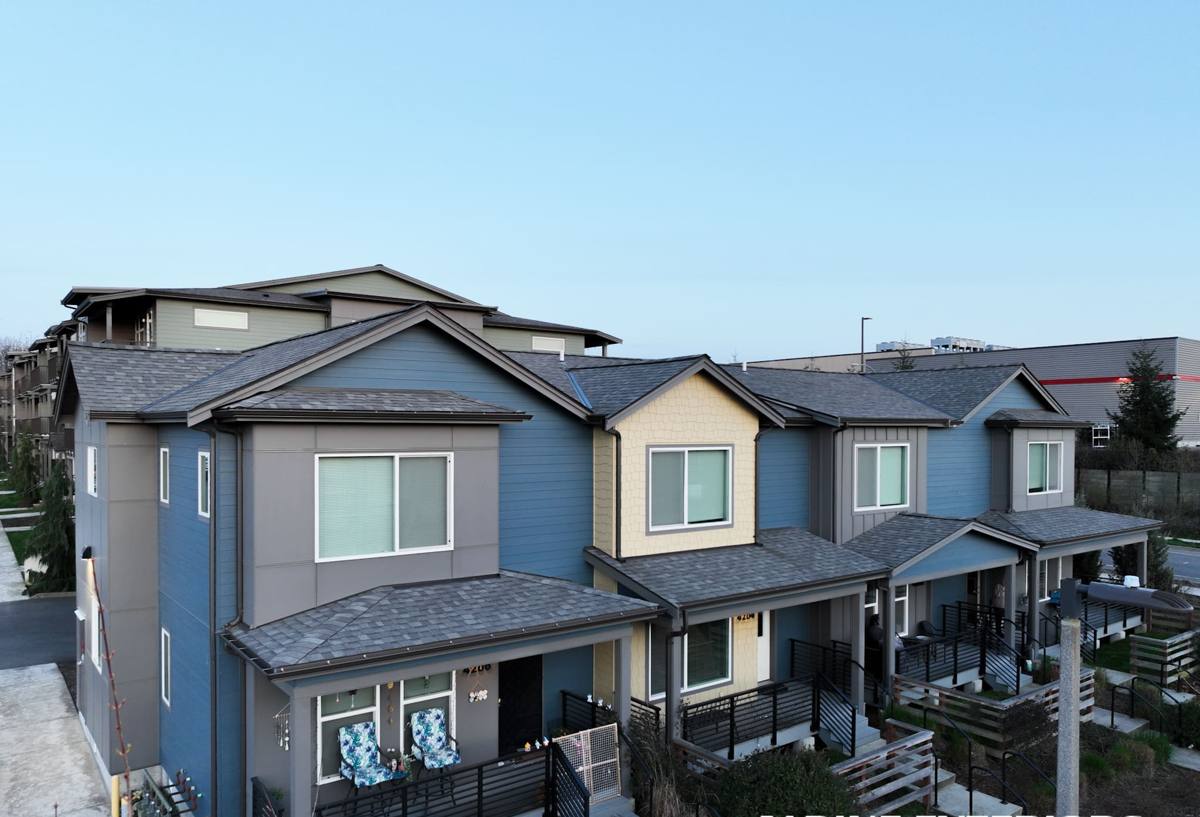
Signs a Bellingham Home Needs Replacement, Not Just Repair
Homeowners often ask whether a problem area can be patched instead of replaced. Sometimes it can. But there's a point where repair stops making sense and full replacement becomes the honest recommendation. Watch for these signs:
- Soft or spongy spots when you press on the siding, especially near the bottom courses or around windows
- Paint that keeps failing within a couple of years no matter how often it's redone
- Visible cupping, warping, or delamination of panels or lap boards
- Persistent moss or algae staining that returns within weeks of cleaning
- Gaps, cracking, or separation at seams and corner trim
- Interior signs — musty smell, peeling interior paint, or soft drywall near exterior walls
One or two of these on an otherwise sound wall might mean a repair. Several of them together, especially on a home with older wood or engineered wood siding, usually means the underlying material has reached the end of its useful life and moisture is already getting behind it.
What's Usually Happening Behind the Siding
By the time siding shows visible failure, there's a good chance the water-resistive barrier or flashing behind it has been compromised for a while. This is the part homeowners can't see and contractors can't skip. A siding replacement that only addresses what's visible on the surface, without checking what's underneath, is not a complete job — it's a cosmetic one.
What a Correct Siding Replacement Involves
A proper replacement is more than pulling off old siding and nailing up new. Done right, it includes:
- Full removal of the existing siding and trim down to the sheathing
- Inspection of the sheathing for rot, soft spots, or delamination, with repair or replacement of any damaged panels
- Installation or renewal of a code-compliant weather-resistive barrier
- Correct flashing at every window, door, deck ledger, and roof-to-wall transition
- Rainscreen or furring detail where called for, to let the wall assembly drain and dry
- Installation of the new siding to the manufacturer's fastening, clearance, and caulking specifications
- Final trim, caulking, and touch-up painting where needed
Steps four and five are where most siding failures in this region actually start. A wall that can't shed water at flashing points or dry out after it gets wet will fail eventually, regardless of what siding is nailed to the outside of it. This is true whether the home is in downtown Bellingham, out toward Lake Whatcom, or along the water in Birch Bay.
Why We Install Only James Hardie Fiber Cement Siding
We made a deliberate decision to install one siding system: James Hardie fiber cement. We don't install vinyl, LP SmartSide, Cemplank, Allura, primed spruce, or cedar. That's not a marketing position — it's a standard we hold because of what we've seen these products do, or fail to do, in exactly this kind of climate.
Vinyl is inexpensive and low-maintenance, but it's a thin plastic product that expands, contracts, and can crack in hard freezes, and it doesn't hold paint if a homeowner ever wants to change the color. Engineered wood products like LP SmartSide perform well when the wood strand core stays sealed and dry, but any breach at a cut edge, fastener hole, or joint can let moisture into the substrate, and once that happens the damage spreads. Primed spruce and cedar are natural wood — beautiful, but they need real upkeep: recoating, caulking, and vigilance against exactly the moss and moisture this area produces in abundance.
James Hardie fiber cement is cement, sand, and cellulose fiber — it doesn't rot, it's non-combustible, and it holds its factory-applied ColorPlus finish for years without the fade and chalking you get from field-applied paint. Hardie also engineers specific product formulations for different climate zones, which matters here.
Comparing Common Siding Materials
| Material | Moisture Behavior | Maintenance | Typical Lifespan Concern |
|---|---|---|---|
| Vinyl | Sheds water but can warp/crack in cold; seams can let water behind panel | Low, but not repaintable | Cracking, fading, wind damage over time |
| LP SmartSide / engineered wood | Good if sealed edges stay intact; vulnerable at cuts and fasteners | Moderate — caulk and paint upkeep | Swelling or decay if moisture reaches the strand core |
| Primed spruce / cedar | Absorbs moisture without diligent sealing | High — regular recoating required | Rot, moss growth, cupping |
| James Hardie fiber cement | Non-combustible, dimensionally stable, doesn't rot | Low — factory finish, occasional wash | Failure typically tied to installation error, not the material |
That last row matters. When Hardie siding fails prematurely, it's almost always an installation problem — wrong fasteners, missed clearances, poor flashing — not a material problem. That's why we treat installation to spec as non-negotiable, not optional.
Our Siding Replacement Process
We keep the process straightforward and don't rush the parts that matter:
- Walkthrough and assessment — we look at your current siding, trim, and any visible trouble spots, and talk through what we expect to find once it's opened up
- Written estimate — a clear scope and price, no vague allowances for "surprises" without explaining what they might be
- Tear-off and inspection — old siding comes off, sheathing gets inspected, and we show you anything that needs attention before covering it back up
- Weather barrier and flashing — this is the step that determines whether the wall performs for the next 30-plus years
- Hardie installation — installed to manufacturer fastening and clearance specs, which also protects your warranty coverage
- Final walkthrough — we go over the finished work with you before calling the job done
Why Hiring a Crew That Works Bellingham Regularly Matters
Siding installation isn't identical everywhere. A crew that mostly works drier inland regions can get away with installation habits that don't hold up here. A crew that works Whatcom County regularly already accounts for the moisture load, the wind-driven rain direction, and the moss risk on shaded elevations — because they've seen what happens when those details get skipped on a house down the street.
Local experience also means familiarity with the permitting and inspection expectations that apply to exterior work in this area, and a realistic sense of scheduling around the wetter months rather than promising a timeline that weather won't allow.
What to Look For in a Contractor
- Manufacturer training or certification specific to fiber cement installation
- A written scope that names the weather barrier, flashing details, and fastening method — not just "siding replacement"
- Proper licensing and insurance, and a willingness to show proof without being asked twice
- Local references or a track record of jobs in this same climate
- A straight answer when you ask what happens if they find rot once the old siding is off
What Drives the Cost of a Bellingham Siding Replacement
Every home is different, but the same factors tend to move the price up or down. We won't quote a number without seeing the house, but here's what typically matters:
| Factor | Why It Matters |
|---|---|
| Amount of hidden damage | Rotten sheathing or framing found during tear-off adds repair scope beyond the siding itself |
| Home size and wall complexity | More corners, gables, and trim detail mean more labor and material |
| Siding profile chosen | Lap width, panel style, and trim detail affect both material cost and install time |
| Story height and access | Multi-story walls and tight lot lines require more scaffolding and time |
| Current condition of flashing and barrier | Full replacement of these components costs more than reusing sound existing detail |
Keeping New Siding Performing for Decades
Fiber cement siding is low-maintenance, not no-maintenance. A few habits go a long way in this climate:
- Rinse siding once or twice a year to clear salt residue and organic buildup before it stains
- Keep gutters clean so overflow doesn't run down the wall face
- Trim back vegetation and tree cover that keeps a wall shaded and damp longer than it needs to be
- Recaulk trim joints if you notice cracking or gaps developing
- Address any impact damage promptly rather than letting a chip sit exposed
None of this is demanding, but skipping it in a climate like Bellingham's lets moss and moisture get a head start that's much harder to undo later.
If your siding is showing its age, or you'd just like an honest read on whether repair or full replacement makes sense for your home, we're happy to take a look. Fill out the form below for a free, no-pressure estimate.