 Birch Bay Siding
 Composite Decking Built for Birch Bay Village's Coastal Climate
Birch Bay Village sits close enough to the water that the air itself becomes part of the maintenance equation. Salt-laden air off Birch Bay drifts through the neighborhood year-round, driving rain comes in sideways during winter storms, and the long, gray stretch of Whatcom County's cool season gives moss and algae months to establish themselves on any outdoor surface that doesn't dry out quickly. A deck here isn't just a place to put furniture — it's an exterior structure that has to shed water, resist corrosion, and stay stable through freeze-thaw cycles and constant humidity. Composite decking, installed correctly, handles that environment better than most other options. Installed poorly, it can develop the same problems as a bad wood deck, just with a higher price tag.
This page is specifically about composite decking projects for homes in and around Birch Bay Village. If you're comparing materials, planning a rebuild, or replacing an aging wood deck, here's what actually matters for a deck in this location, and what a correctly built one looks like.
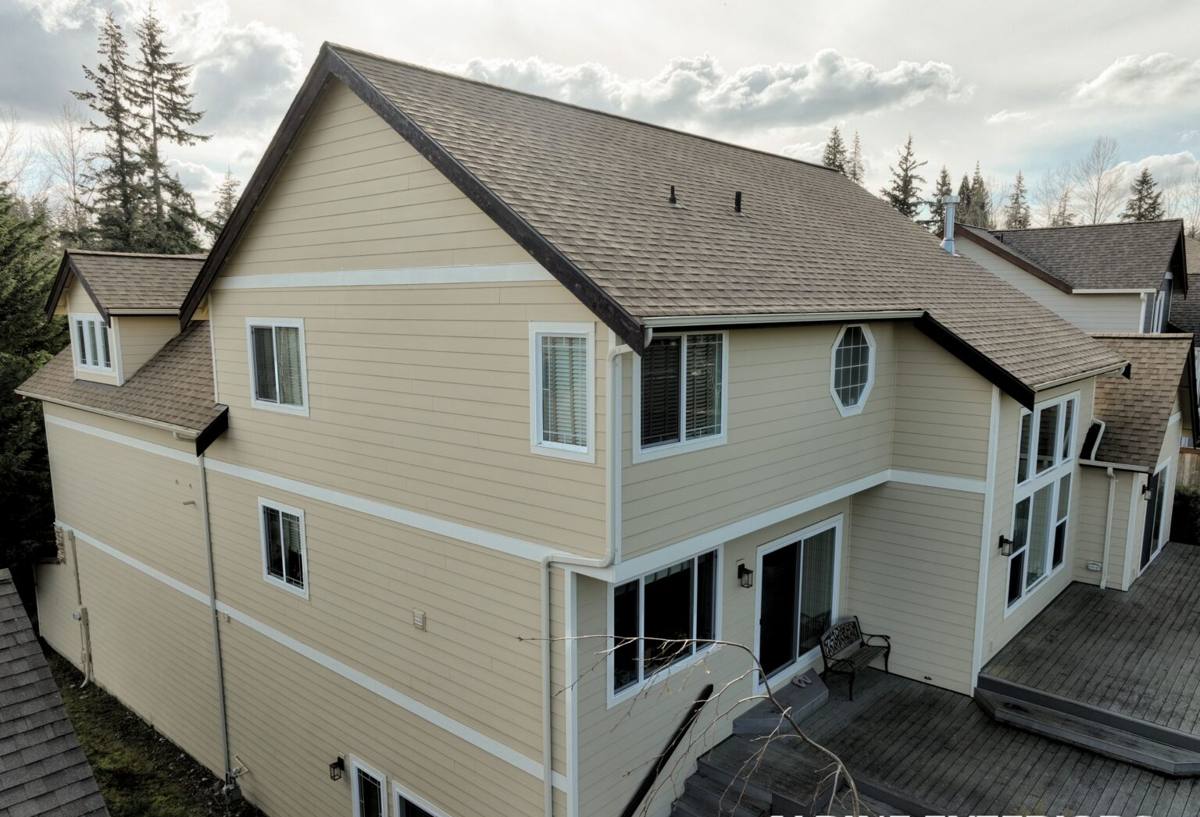
What Coastal Conditions Do to a Deck That Isn't Built Right
Salt Air and Corrosion
Salt in the air settles on every exposed surface, including fasteners, brackets, and structural hardware. Standard fasteners will corrode faster near the coast than they would further inland, and once a fastener starts rusting, it weakens the connection it's supposed to be holding — sometimes long before that failure is visible from the top of the deck. This is one of the most common shortcuts we see on older or budget builds: the boards look fine for years while the hardware underneath is quietly failing.
Driving Rain and Trapped Moisture
Storms coming off the water don't fall straight down — they get pushed sideways into ledger boards, stair stringers, and any gap where water can collect instead of run off. A deck built without proper flashing where it meets the house, or without slope and drainage planned into the frame, will trap moisture in exactly the spots that are hardest to inspect later. Wood rot from trapped moisture at a ledger board connection is a structural problem, not a cosmetic one.
Moss, Algae, and a Long Wet Season
Whatcom County's fall-through-spring stretch gives moss and algae plenty of time to take hold on any deck surface that stays damp and shaded. Composite decking resists moss growth far better than untreated wood, but it isn't immune — boards installed too tight to the ground, without airflow underneath, or in heavily shaded corners of a yard will still collect organic growth over time. Surface care and smart layout both matter.
Why Composite Decking Fits Birch Bay Village Homes
Composite decking is made from a blend of wood fiber and plastic, engineered specifically to resist the things that break down solid wood: moisture absorption, splintering, and rot. For a coastal Whatcom County property, that translates into a few concrete advantages over traditional lumber:
- It doesn't absorb water the way wood does, so it's far less prone to swelling, cupping, or rot from driving rain and humidity
- It resists splintering and surface checking, which matters on a deck that sees salt air and temperature swings
- It holds paint and stain-free color consistently, so it doesn't need to be refinished every couple of years
- Most modern composite boards resist moss and algae better than raw wood, though they still need occasional cleaning in shaded, damp spots
Capped vs. Uncapped Composite
Not all composite decking is built the same way. Capped composite boards have a polymer shell wrapped around the wood-plastic core, which is what actually gives them their stain resistance and moisture protection. Uncapped composite is more exposed to moisture absorption at the surface over time. For a location with this much rain and humidity, we generally recommend capped composite — it's a better match for the conditions, even though it costs more upfront than uncapped or basic pressure-treated lumber.
What a Correctly Built Composite Deck Involves
The boards get most of the attention, but the substructure and installation details are what actually determine whether a deck holds up in this climate. A correct build for a Birch Bay Village home includes:
- Corrosion-resistant fasteners and hardware rated for coastal or high-moisture exposure, not standard interior-grade hardware
- Proper flashing where the deck ledger meets the house, so water is directed away from the structure instead of into it
- Joist protection (tape or a moisture barrier) on the framing, since composite boards themselves resist water but the wood joists underneath still need protecting
- Correct board spacing and airflow underneath the deck to prevent trapped moisture and slow moss growth
- Footings set to the depth required by local code, accounting for our soil and frost conditions
- Hidden fastener systems where appropriate, which reduce the exposed metal points that salt air can attack over time
Skipping any one of these doesn't show up on day one. It shows up two, five, or ten years later — usually as a soft spot near the house, a rusted bracket, or boards that have started to separate from the frame.
Choosing the Right Boards for This Location
Composite decking comes in a range of tiers, and the right choice depends on budget, sun exposure, and how close the home sits to open water. Here's a general breakdown of how the tiers typically compare:
| Tier | Typical Characteristics | Best Fit |
|---|---|---|
| Entry-level composite | Uncapped or lightly capped, solid color options, lower upfront cost | Budget-conscious projects, inland or shaded lots with less direct salt exposure |
| Mid-range capped composite | Full polymer cap, better stain and moisture resistance, wider color range | Most Birch Bay Village homes — a solid balance of durability and cost |
| Premium capped composite | Enhanced fade and scratch resistance, longer warranty terms, realistic wood-grain finishes | Homes closer to the water, full-sun decks, or owners planning to stay long-term |
We walk through these options on-site, based on your deck's sun exposure, proximity to the water, and how the space will actually be used, rather than pushing whichever tier has the best margin.
Our Process for a Birch Bay Village Deck Project
- On-site assessment. We look at the existing structure (if there is one), the home's ledger connection, drainage, sun and shade patterns, and how exposed the site is to prevailing wind and rain.
- Honest scope and options. We walk through board tiers, layout options, and any structural repairs needed before decking goes down — no surprise change orders for problems we could have flagged upfront.
- Permitting and code compliance. Deck projects in Whatcom County typically require permitting depending on size and height; we handle that process rather than leaving it to the homeowner.
- Demolition and frame work. Old decking and any compromised framing come out first. We address rot, undersized joists, or inadequate footings before anything new goes on top.
- Moisture protection and hardware. Joist tape, flashing, and corrosion-resistant fasteners go in before a single composite board is installed.
- Board installation. Boards are installed with correct spacing and, where applicable, hidden fastener systems for a cleaner finish and fewer exposed metal points.
- Final walkthrough. We go over the finished deck together, including basic care guidance specific to your site's sun and moisture exposure.
Maintenance Checklist for Your New Deck
Composite decking is far lower-maintenance than wood, but "low-maintenance" isn't "no-maintenance" — especially this close to the water. A short seasonal routine keeps a composite deck looking and performing the way it should:
- Sweep off debris regularly, especially fallen leaves and needles that trap moisture against the board surface
- Rinse with a hose a few times a year to clear salt residue and light dirt buildup
- Use a soft-bristle brush and a composite-safe cleaner on shaded areas prone to moss or algae — avoid pressure washing at close range, which can damage the board surface
- Check underneath the deck periodically for airflow blockage (stored items, overgrown plants) that can trap moisture
- Inspect visible fasteners and railing hardware once a year for early signs of corrosion
- Trim back vegetation that shades the deck excessively, since shaded, damp areas are where moss takes hold first
Why Hiring a Crew That Already Works in Birch Bay Village Matters
A deck built to a generic spec sheet doesn't account for the fact that a home three blocks from Birch Bay's shoreline faces different conditions than one further inland. Wind exposure, salt drift, drainage patterns, and shade from mature trees all vary block to block in this area, and they all affect what "correct" looks like for a given deck. A crew that regularly works in Birch Bay Village has already seen how local conditions play out over years, not just at the moment of installation — which fastener grades hold up, which board tiers make sense for full-sun versus shaded lots, and where drainage tends to cause problems if it's not planned for upfront.
We're also familiar with Whatcom County's permitting requirements for deck construction, so that part of the project doesn't become a delay or a surprise. And because we're local, follow-up questions or warranty concerns don't mean waiting on a contractor who has to drive in from out of the area.
If you're planning a new composite deck or replacing an aging one in Birch Bay Village, we're happy to take a look at your site and talk through honest options for your budget and conditions. Reach out for a free, no-pressure estimate using the form below.