 Birch Bay Siding
 Windows Built for Terrell Creek's Coastal Climate
Terrell Creek sits close enough to the water that homes here take a different kind of weather beating than houses even a few miles inland. Salt-laden air corrodes hardware and finishes faster than it does elsewhere in Whatcom County. Driving rain off the Strait finds every gap in a tired window frame. And the long stretch of gray, damp months each year gives moss and mildew plenty of time to work into wood trim, caulk lines, and anywhere water is allowed to sit. Windows in this neighborhood aren't just an energy question — they're a weatherproofing question first, and an efficiency question second. Get the weatherproofing wrong and no amount of glass technology will keep a home comfortable or dry.
When we talk about "energy-efficient windows" for a Terrell Creek home, we mean windows selected and installed specifically to handle wind-driven moisture, salt exposure, and temperature swings between damp winters and warmer, drier summers — not a generic upgrade pulled from a catalog.
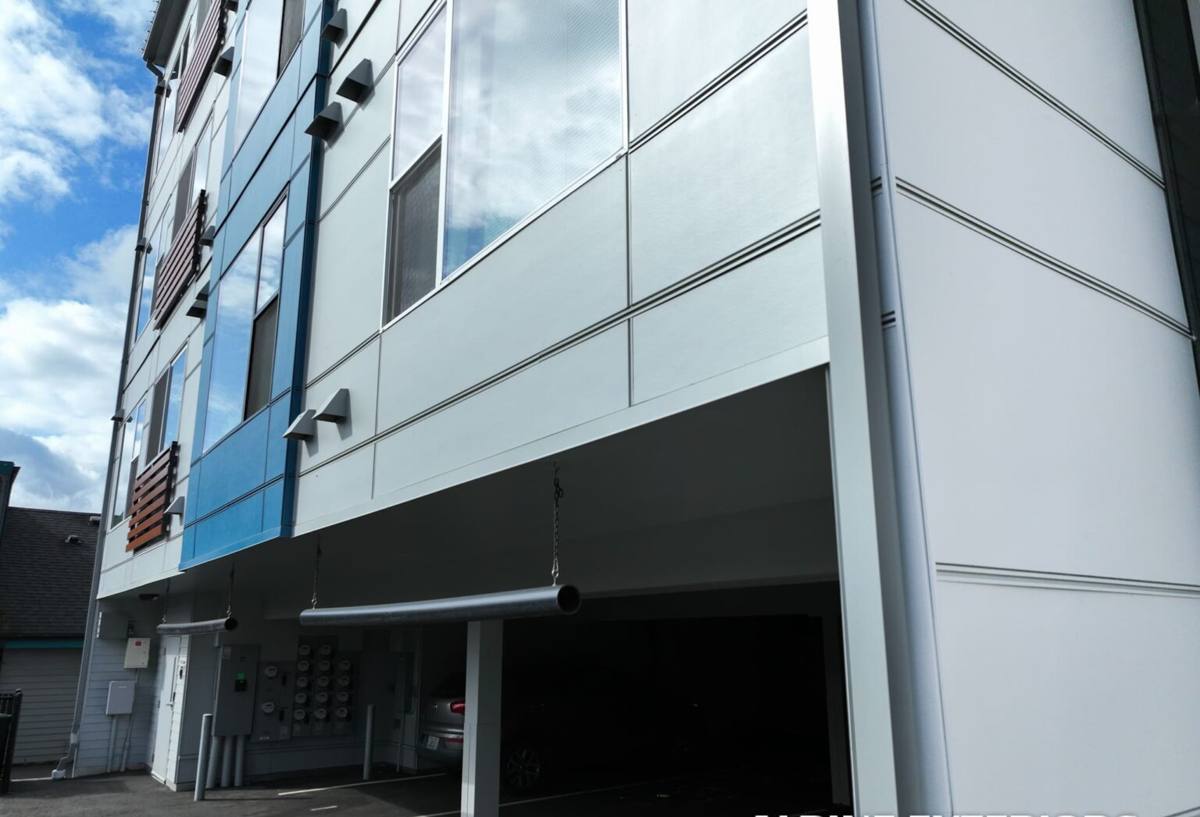
What Energy-Efficient Actually Means in a Window
The term gets used loosely, so it's worth being precise. Three numbers do most of the work:
- U-factor — how much heat escapes through the window. Lower is better; this is the main driver of winter heat loss.
- SHGC (Solar Heat Gain Coefficient) — how much solar heat passes through the glass. In our climate, moderate SHGC keeps homes from feeling like greenhouses on the rare bright day while still allowing some passive warmth in winter.
- Air leakage rating — how much air moves through the assembly itself, independent of glass performance. For a wind-exposed lot near Birch Bay, this number matters as much as U-factor.
A window can have excellent glass and still perform poorly if the frame, weep system, and installation don't manage wind-driven rain correctly. That combination — the right glass package paired with a frame and installation suited to coastal wind and rain — is what we mean by "energy-efficient" on this page.
Signs Your Terrell Creek Home's Windows Are Working Against You
Most homeowners don't replace windows because of a single dramatic failure. It's usually a pattern that builds over a few seasons:
- Cold drafts near the sash even when the window is fully latched
- Condensation collecting between panes, a sign the seal has failed
- Visible pitting, chalking, or corrosion on hardware and frames from salt exposure
- Soft or discolored wood trim around the window, often from trapped moisture rather than obvious leaks
- Green or black growth in the corners of frames or on nearby siding, a sign moisture is lingering instead of draining
- Noticeably higher heating bills compared to similar homes in the area
Any one of these on its own isn't necessarily urgent. Several together, especially on the sides of the house that take the most weather, usually mean the window system as a whole — glass, frame, and flashing — has reached the end of its useful life.
What a Correct Installation Actually Involves
The window unit itself is maybe half the job. The other half is everything around it, and it's the part that determines whether the new window actually performs — or just looks new while leaking the same way the old one did.
Removal and Opening Inspection
Once the old window is out, we check the rough opening for hidden rot, soft sheathing, or prior water damage. In a neighborhood like Terrell Creek, it's not unusual to find some moisture history behind an old frame, even on a home that looked fine from the outside. This gets addressed before anything new goes in — sealing a new window into a compromised opening just delays the same problem.
Flashing and Drainage
Proper flashing directs any water that gets past the exterior cladding back out, rather than into the wall cavity. This is the single most important step for a home exposed to driving rain, and it's also the step that gets skipped most often on rushed installs. We integrate flashing with the home's existing water management (housewrap, siding laps) rather than just caulking around the new frame and calling it sealed.
Fastening and Insulation
The window is shimmed and fastened per manufacturer spec, then the gap between frame and rough opening is insulated — not overpacked, which can bow the frame, and not left hollow, which creates a cold, drafty perimeter.
Sealing and Finish
Exterior sealant is chosen for UV and salt exposure, not just whatever's on the truck. Interior trim is reinstalled or replaced to match, and everything is cleaned up before we walk it with you.
Frame Material: Trade-Offs for a Salt-Air Coastal Setting
There's no single "best" frame material — there's a best fit for your home's exposure, budget, and maintenance appetite. Here's how the common options actually compare in a coastal Whatcom County environment:
| Frame Material | Salt/Moisture Resistance | Maintenance | Typical Fit |
|---|---|---|---|
| Vinyl | Good — won't rot or corrode | Low; occasional cleaning | Most homes; strong value and efficiency |
| Fiberglass | Very good — dimensionally stable in temperature swings | Low | Homes wanting a longer-term investment with minimal upkeep |
| Wood (clad exterior) | Fair — exterior clad protects the wood, but any breach in the cladding invites rot | Higher; requires monitoring at joints and sills | Homes prioritizing an interior wood look |
| Aluminum | Poor in salt air without special coatings — prone to corrosion and is a poor thermal performer | Moderate to high | We generally steer clients away from it for this exposure |
We don't install every product on this list for every home. Where a material's long-term moisture behavior doesn't hold up well to salt air and constant rain — aluminum being the clearest example — we'll say so plainly and explain the trade-off rather than let a homeowner find out the hard way five years in.
Glass Packages Worth Considering
Beyond frame material, the glass package itself makes a real difference:
- Double-pane with Low-E coating — the standard baseline for energy performance today; a solid choice for most Terrell Creek homes.
- Argon or krypton gas fill — the inert gas between panes slows heat transfer further, improving U-factor without adding visible bulk.
- Triple-pane — worth discussing for north- or west-facing walls that take the brunt of wind and cold, though it adds weight and cost that isn't always justified on every elevation.
We'll walk through which combination makes sense per elevation of your home rather than specifying one package for the whole house — a wall that faces prevailing wind and rain doesn't necessarily need the same spec as a sheltered side yard window.
Our Process, Start to Finish
- On-site assessment — we look at existing window condition, exposure per elevation, and any signs of prior moisture intrusion.
- Straightforward quote — options broken down by frame material, glass package, and quantity, with no pressure to upsell beyond what your home needs.
- Scheduling around weather — we plan installs to minimize the number of openings left exposed at once, which matters more here than in drier parts of the state.
- Installation — including the opening inspection, flashing, insulation, and sealing steps described above.
- Final walkthrough — every window operated, checked, and reviewed with you before we consider the job done.
Why It Matters That We Already Work in Terrell Creek
A crew that regularly works this stretch of Birch Bay already knows which elevations tend to take the worst of the wind-driven rain, what kind of moisture history is common behind older siding here, and how quickly salt air degrades unprotected hardware. That's not something you can fully substitute with a manufacturer's spec sheet. It also means scheduling is easier — we're not routing a crew across the county for a single job, and we can usually work around Whatcom County's damp-season weather windows more efficiently because we're already familiar with the local patterns.
It also means accountability. We're not a crew that installs once and disappears; if something needs adjustment after the fact, we're a local call away, not a call center.
Keeping New Windows Performing Long-Term
Even a correctly installed, well-chosen window benefits from basic upkeep in this climate:
- Rinse salt residue off frames and hardware a few times a year, especially after windy weather off the water
- Keep weep holes at the base of the frame clear of debris, moss, and dirt so water can drain as designed
- Check exterior caulking annually and touch up any cracking before the wet season sets in
- Trim back vegetation or moss growth on nearby siding so it doesn't hold moisture against the window frame
- Operate every window a few times each season, even ones you rarely open, to keep seals and hardware from seizing
None of this is complicated, but skipping it is how a good installation slowly turns into a problem one anyway.
Get a Straight Answer for Your Home
Every Terrell Creek home carries its own exposure, age, and history with moisture — there's no one-size answer for windows here. If you're noticing drafts, condensation, or just want an honest read on where your current windows stand, we're happy to take a look. The estimate is free, there's no pressure attached to it, and you'll get a straight assessment either way. Fill out the form below to get started.