 Birch Bay Siding
 Blaine's Coastline Puts Real Demands on Siding
Blaine sits right on the water, close enough to the Strait of Georgia and Semiahmoo Bay that salt-laden air is a daily fact of life, not an occasional weather event. Add in driving rain that comes sideways off the water during winter storms, and a moss season that stretches for most of the year in this part of Whatcom County, and you have a climate that is genuinely hard on exterior building materials. Siding here isn't just a cosmetic choice — it's the first line of defense against a combination of salt, moisture, and shade that will find every weakness in a wall assembly.
We install fiber cement siding throughout Blaine and the surrounding Birch Bay area, and we've built our process around what this specific stretch of coastline actually does to a house over time, not around a generic installation manual.
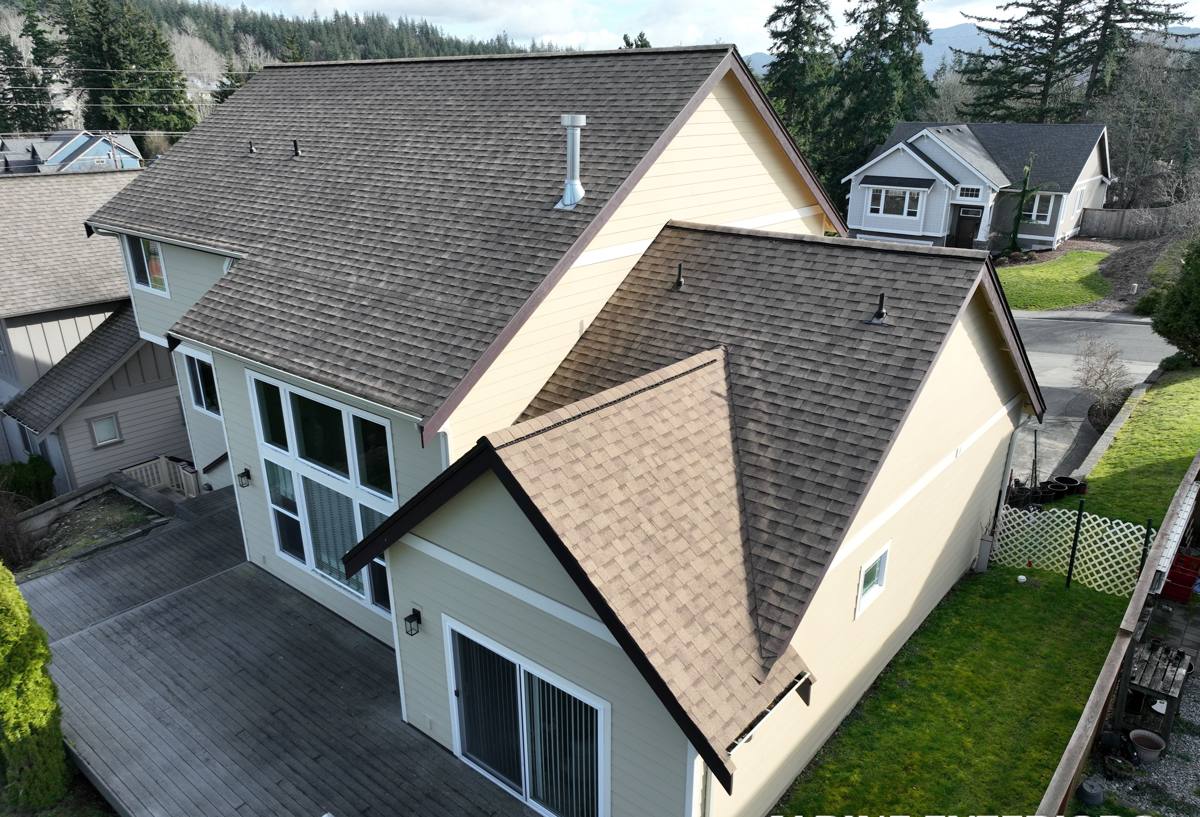
What Salt Air, Driving Rain, and Moss Actually Do to a House
Each of these three conditions attacks a house differently, and understanding the mechanism matters when you're choosing and installing siding.
Salt Air
Airborne salt is corrosive to exposed metal fasteners, flashing, and trim hardware, and it accelerates the breakdown of finishes that aren't formulated to resist it. Over years, salt exposure can leave chalky residue and premature fading on siding that wasn't designed with a durable factory finish.
Driving Rain
Wind-driven rain doesn't just wet the surface of a wall — it pushes water sideways and upward into laps, joints, and fastener penetrations that a calmer climate would never test. A siding system that isn't detailed correctly at these points will eventually let water behind it, and once water is behind the siding, the sheathing and framing pay the price long before anyone notices a problem on the surface.
Moss and Shade
Blaine's tree cover, marine humidity, and long stretches of overcast weather create ideal conditions for moss and algae growth on north-facing and shaded walls. Beyond the appearance issue, moss holds moisture against the siding surface for extended periods, which shortens the life of any finish and keeps the wall assembly damp longer than it should be.
Why We Only Install James Hardie Fiber Cement
We standardized on James Hardie fiber cement siding, and we don't install vinyl, LP SmartSide, or cedar. That's not a marketing position — it's a decision based on what holds up in this exact climate.
- Non-combustible material that doesn't degrade from moisture the way wood-based products can
- ColorPlus factory finish, baked on under controlled conditions, which resists fading and chalking far better than field-applied paint holds up against salt air and UV exposure
- HZ5 climate-engineered formulation, built specifically for the moisture and moderate-freeze conditions common to the Pacific Northwest
- A strong, transferable manufacturer warranty that stays meaningful because the product's failure modes are well understood and rare when installed correctly
Fiber cement doesn't eliminate the need for good detailing — no material does — but it gives us a starting point that's dimensionally stable, resistant to moisture intrusion at the panel level, and proven over decades in coastal Pacific Northwest conditions.
What a Correct Fiber Cement Install Looks Like on a Blaine Home
Most siding failures we see aren't a material problem — they're an installation problem. The panel itself is only as good as the water management system behind it.
Drainage Gap Behind the Siding
A weather-resistant barrier and a drainage plane behind the siding give any water that does get past the surface a path to drain and dry out, rather than sitting against the sheathing. On a coastal property with this much wind-driven rain, skipping or shortcutting this layer is one of the fastest ways to trap moisture.
Fastening and Clearances
Fiber cement has to be fastened at the manufacturer's specified pattern and depth — over-driven or under-driven fasteners are a common cause of cracking and premature wear. Panels also need proper clearance from grade, roofing, decks, and other horizontal surfaces so that splash-back and standing water don't sit against the bottom edge of the siding.
Flashing and Joint Sealing
Every window, door, and penetration is a place water can get behind the wall if it's not flashed correctly. Joints between panels and at trim need the right sealant, applied correctly, and inspected — not just caulked over and left. Corrosion-resistant fasteners and flashing matter more here than in an inland climate, given the salt exposure.
What We Commonly Find on Existing Siding in the Area
When we inspect older siding on Blaine and Birch Bay homes, the same handful of issues show up repeatedly.
| What We See | Likely Cause | What It Means |
|---|---|---|
| Dark moss/algae staining, mostly north side | Shade, humidity, insufficient drying time between rain events | Cosmetic now; left long enough, keeps the wall surface damp longer than it should be |
| Cracked or split panels near corners and openings | Improper fastening or panels installed too tight with no room to move | Entry point for water; usually a localized repair, not a full replacement |
| Peeling or chalky paint on older wood or field-painted siding | Salt exposure breaking down a field-applied finish | Common reason homeowners move to a factory-finished product |
| Soft or discolored trim and sheathing behind siding | Water intrusion at a flashing or joint failure | Indicates the drainage plane or flashing detail failed and needs correction, not just cosmetic patching |
Our Process for a Fiber Cement Siding Project in Blaine
- On-site assessment — we look at exposure (which walls take the most wind-driven rain and shade), existing moisture damage, and current siding condition before recommending anything.
- Tear-off and sheathing check — removing old siding lets us inspect the sheathing underneath for hidden rot or moisture damage before it's covered again.
- Weather barrier and drainage plane installation — this layer goes on correctly the first time, since it's the part of the system you won't see again once siding is up.
- James Hardie panel installation — fastened to spec, with proper clearances from grade, roofing, and decks.
- Flashing, trim, and joint detailing — the step where most long-term failures are prevented or created.
- Final inspection and cleanup — checking every joint, penetration, and clearance before we consider the job done.
Living with Fiber Cement Siding Through a Long Moss Season
Correctly installed fiber cement siding needs very little upkeep compared to wood or vinyl, but a few habits go a long way in this climate:
- Rinse shaded, north-facing walls periodically to slow moss and algae buildup before it sets in
- Keep gutters and downspouts clear so overflow isn't running down the siding face
- Trim back vegetation and tree limbs that keep a wall shaded and damp longer than the rest of the house
- Watch caulked joints and trim over time, and have any cracked sealant addressed before a wet winter
- Have panels inspected after major windstorms, since driving rain finds weak points fastest
What Affects the Cost of a Fiber Cement Siding Project
| Factor | Why It Matters |
|---|---|
| House size and wall complexity | More corners, gables, and trim detail mean more cutting, fitting, and labor time |
| Condition of existing sheathing | Hidden moisture damage found during tear-off may need repair before new siding goes on |
| Siding profile and finish selection | Lap width, texture, and ColorPlus finish options vary in material cost |
| Trim and accessory work | Corner boards, window trim, and fascia detailing add to scope beyond flat wall panels |
| Access and site conditions | Waterfront lots, slopes, and tight setbacks can affect staging and labor time |
We give every homeowner a specific number based on their house, not a broad estimate pulled from an average — the factors above genuinely move the price from one property to the next.
Why It Matters to Hire a Crew That Already Works in Blaine
A crew that installs siding across a wide, varied service area learns generic best practices. A crew that works Blaine and Birch Bay regularly learns which walls on a typical local lot take the worst of the wind-driven rain, how much shade cover changes moss risk from one property to the next, and how salt exposure near the water differs from a few miles inland. That local pattern recognition shows up in where we pay extra attention to flashing, which walls we watch for drainage issues, and how we sequence a job around the weather this area actually gets.
It also means familiarity with the permitting and inspection expectations in Whatcom County, so a project moves without avoidable delays.
If you're considering fiber cement siding for a home in Blaine, we're happy to take a look and give you a straightforward, no-pressure estimate — just fill out the form below.