 Birch Bay Siding
 Roofing in Marietta Takes a Different Kind of Beating
Marietta sits close enough to the water that homes here deal with a roofing environment most inland contractors never really have to think about. Salt-laden air off the bay works its way into fasteners, flashing, and exposed metal year-round. Add Whatcom County's long stretch of driving rain each fall and winter, plus a moss season that can run eight months or more in shaded, north-facing sections of a roof, and you have a combination that ages roofing materials faster than the manufacturer's brochure ever accounts for.
None of this means a Marietta roof is doomed to fail early. It means the maintenance and repair standard has to be higher than what works fine forty miles inland. A fastener that's "good enough" in a dry climate can start weeping rust streaks within a couple of seasons here. A patch that isn't properly tied into the surrounding underlayment can trap moisture instead of shedding it, which is often worse than doing nothing at all.
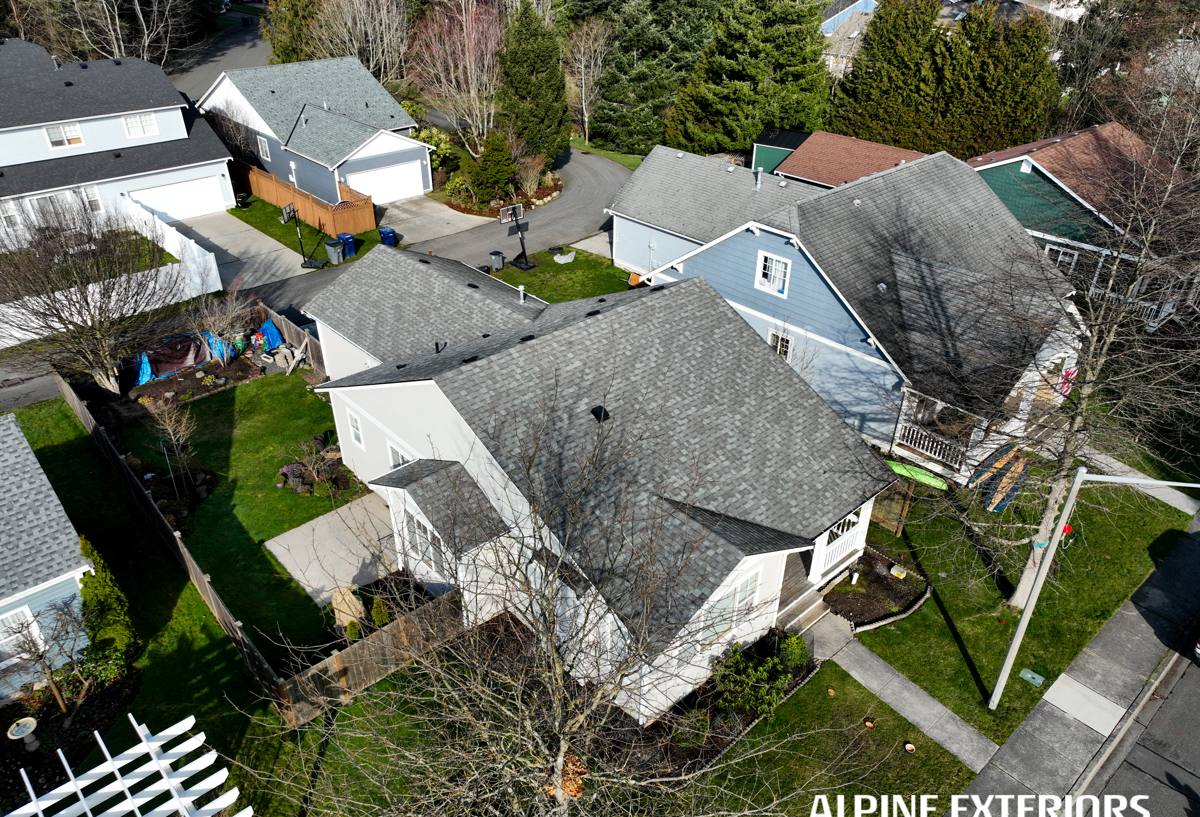
Signs a Marietta Roof Needs Repair — Not Full Replacement
Most roofs don't fail all at once. They fail in one spot first, and if that spot gets addressed correctly and early, the rest of the roof can often run out its full service life. Here's what we look for when a homeowner calls us out to Marietta:
- Granule loss concentrated around valleys, penetrations, or the roof's most wind-exposed slope
- Soft or spongy decking felt underfoot near chimneys, skylights, or vent stacks
- Moss colonies thick enough to hold water against the shingle surface, especially on north and east-facing slopes
- Flashing that's lifted, corroded, or was never properly stepped in around a wall or dormer
- Interior water stains that appear or worsen only during heavy, wind-driven rain events
- Missing, cracked, or curling shingles in isolated areas rather than across the whole field
If the damage is contained to one or two areas and the decking underneath is still sound, repair is usually the right call, both for your budget and for the roof's remaining useful life. We'll tell you plainly when that's not the case — a roof with widespread granule loss, multiple soft spots, or decking rot spreading beyond the repair area is a replacement conversation, not a patch-and-hope situation.
Why "Just Caulk It" Doesn't Hold Up Here
A lot of roof leaks near the water get temporarily silenced with a bead of roofing cement or caulk over the visible symptom. In a drier climate that might buy a few seasons. In Marietta's rain and salt air, sealant-only fixes tend to fail within a year because they're fighting constant moisture cycling and UV breakdown at the same time. We treat sealant as a finishing step on a proper repair, never as the repair itself.
What a Correct Roof Repair Actually Involves
A repair done right isn't just replacing what's visibly broken. It's tracing the problem to its actual source, which is often several feet away from where the leak shows up inside the house. Water travels along the underlayment and decking before it finds a gap to drip through, so a repair that only addresses the drip point often leaves the real entry point untouched.
Our approach on a typical repair call includes:
- Locating the actual water entry point, not just the interior symptom
- Removing damaged shingles, felt, or membrane back to sound material
- Checking the decking underneath for soft spots or rot and replacing any compromised sheathing
- Re-flashing penetrations, valleys, or wall transitions with new step or counter flashing where the old flashing is corroded or improperly lapped
- Installing new underlayment tied correctly into the surrounding roof system, with proper overlap direction for water shedding
- Matching shingles or roofing material as closely as possible to minimize visible patchwork
- Sealing fasteners and edges with materials rated for coastal exposure
Skipping any one of these steps is how a "fixed" roof leaks again in the next big storm. It's also the most common thing we find when we're called out to look at a repair someone else did a year or two earlier.
Common Roofing Materials in the Marietta Area
Most homes we work on in this part of Whatcom County are asphalt composition shingle, with a smaller number of cedar shake, metal, and older wood or tar-and-gravel roofs on some of the area's older homes. Each material behaves differently when it's damaged, and that changes how a repair should be handled.
| Material | Typical Repair Challenge Near the Water | What a Proper Repair Requires |
|---|---|---|
| Asphalt composition shingle | Granule loss and brittleness from wind and UV, moss lifting tabs | Matching shingle profile/color, proper nail placement, moss removal without tearing the mat |
| Cedar shake/shingle | Moisture retention, moss and fungal growth in shaded areas | Selective shake replacement, improved airflow, avoiding trapped moisture under patches |
| Standing seam / metal | Fastener corrosion, sealant breakdown at seams and penetrations | Corrosion-resistant fasteners, proper seam sealant, careful panel matching |
| Older built-up/tar roofs | Ponding water, cracked or alligatored surface, aged flashing | Full assessment of remaining membrane life before deciding repair vs. overlay |
If you're not sure what's on your roof or how it's holding up, that's a normal thing to not know — most homeowners don't get up there. That's exactly what the first visit is for.
Our Roof Repair Process
1. Inspection and Honest Assessment
We get on the roof, not just in the attic, before we tell you anything. We look at the whole roof system — not only the spot where the leak shows up — because isolated repairs on a roof that's failing broadly are a poor use of your money.
2. Clear Explanation, No Pressure
We explain what we found, what's causing it, and what your realistic options are, including doing nothing right now if the issue is cosmetic and not urgent. If repair is the right call, we'll say so. If it isn't, we'll tell you why.
3. The Repair Itself
Work is done to the standard described above — source-first, decking checked, flashing addressed, materials matched. We don't leave a job "mostly done" and hope the next storm doesn't test it.
4. Cleanup and Walkthrough
We clear debris, walk you through what was done, and let you know what to watch for going forward, including how long the repair should reasonably last given the rest of your roof's age and condition.
Why a Crew That Already Works in Marietta Matters
Roofing crews that mostly work inland or in drier regions sometimes underestimate how aggressively coastal Whatcom County weather works against shortcuts. A fastener spec, a flashing detail, or a moss-treatment schedule that's fine forty miles east can be inadequate here. Working this specific stretch of coastline regularly means we've already seen how different materials and repair methods actually hold up under Birch Bay and Marietta's combination of salt air, wind-driven rain, and shade-driven moss growth — not just how they're supposed to perform on paper.
There's also a practical side to hiring local: response time matters when a roof is actively leaking during a storm. A crew based nearby can get a tarp on a damaged section same-day or next-day, which limits how much interior damage a roof problem turns into.
Repair vs. Replacement: What Actually Drives the Decision
Homeowners often ask us to just give a number before we've looked at anything, but roof repair costs vary enough based on the specifics that a real number only comes after inspection. What we can tell you is what factors move the price and the decision one way or the other:
| Factor | Leans Toward Repair | Leans Toward Replacement |
|---|---|---|
| Roof age relative to expected lifespan | Under 60-70% of expected service life | Near or past expected service life |
| Extent of damage | Isolated to one or two areas | Spread across multiple slopes or the whole field |
| Decking condition | Sound, dry, no widespread soft spots | Rot or soft decking in multiple locations |
| Shingle/material availability | Discontinued match not critical to the look | Discontinued material makes patches visually obvious |
| History of prior leaks/repairs | First significant issue | Repeated leaks in different spots over recent years |
We'll walk you through where your roof lands on this before recommending a direction, and we're not going to talk you into a full replacement when a proper repair will genuinely hold.
Between-Repair Maintenance That Actually Extends Roof Life
A lot of what determines whether a repair lasts five years or fifteen happens between service calls, not during them. For homes in the Marietta and Birch Bay area, we recommend:
- Keeping gutters and valleys clear of debris, especially heading into the fall rain season
- Treating or removing moss before it thickens enough to hold standing moisture against the roof surface
- Trimming back overhanging branches to reduce shade and debris buildup on north-facing slopes
- Doing a visual check after any major windstorm for lifted or missing shingles
- Having flashing around chimneys, skylights, and vent stacks checked every few years, since these are the most common leak origin points
- Addressing small issues promptly rather than waiting for an active leak, since water damage to decking and framing compounds the eventual repair cost
Get a Free, No-Pressure Estimate
If you're dealing with a leak, noticed missing shingles after a storm, or just want an honest read on where your roof stands, we're glad to come take a look. There's no pressure and no obligation — just a straight assessment from a crew that knows what Marietta and Birch Bay roofs are actually up against. Use the form below to request your free estimate.