 Birch Bay Siding
 Roof Repair Built for Blaine's Coastal Climate
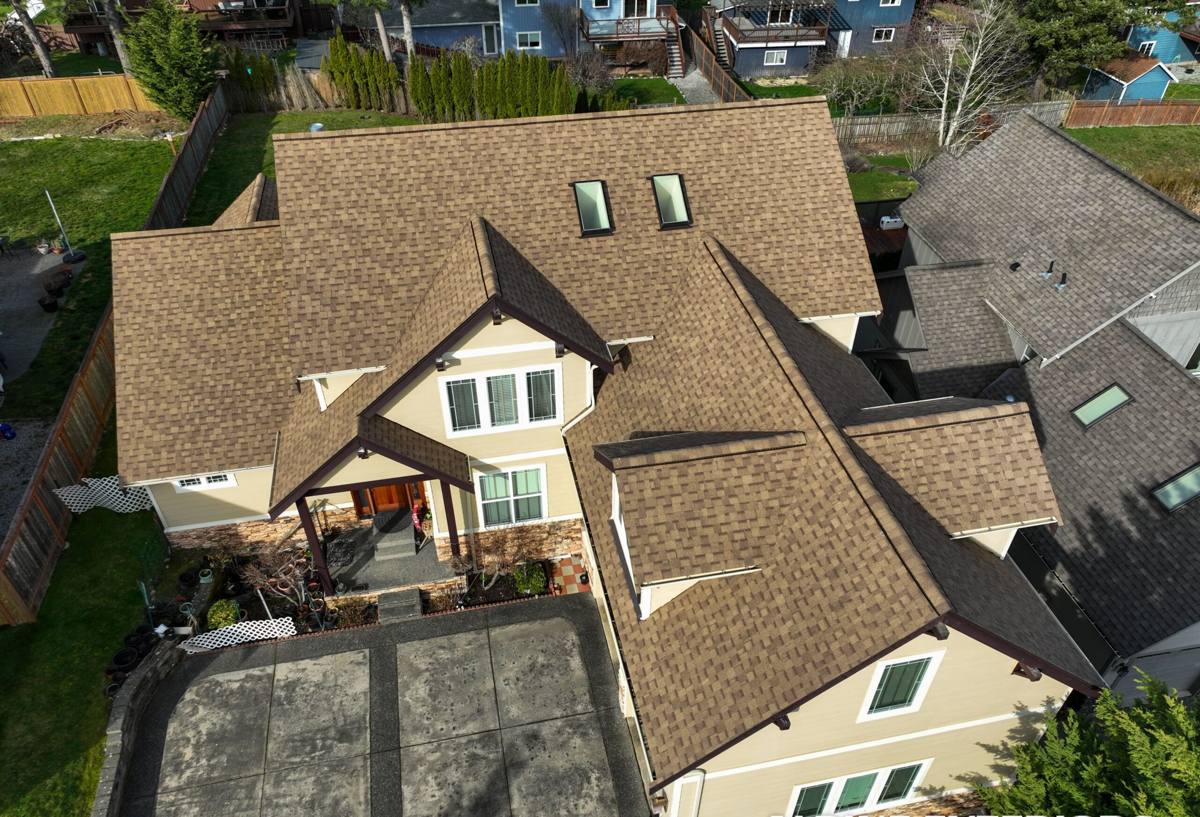
Blaine sits right up against the water in the northwest corner of Whatcom County, and that location shapes everything about how a roof ages here. Salt-laden air off the Strait of Georgia works its way into fasteners, flashing, and exposed metal year-round. Add in long stretches of driving, wind-blown rain and a moss season that can run from fall through spring, and you have a climate that is genuinely harder on roofing than what most of the country deals with. A roof repair in Blaine isn't just patching a leak — it's addressing the specific combination of salt, moisture, and organic growth that causes that leak in the first place.
We work on homes throughout this part of Whatcom County, and the repair calls we get from Blaine tend to follow a pattern: moss-related shingle damage, corroded or failed flashing, and leaks that show up at transitions — valleys, chimneys, and the places where the roofline meets a wall or dormer. Understanding that pattern is what separates a repair that lasts from one that reappears in two years.
Why Local Homes Take This Kind of Damage
Salt Air and Metal Fatigue
Coastal salt air accelerates corrosion on anything metal — nails, flashing, gutter fasteners, and vent boots. A roof a few miles inland might get another five to ten years out of the same flashing that's already failing on a Blaine roof exposed to onshore wind. Corroded flashing doesn't always look dramatic from the ground; it just quietly stops sealing, and water finds the gap.
Driving Rain and Wind-Driven Water
Storms coming off the water don't just fall straight down — they push rain sideways under shingle edges, into vents, and up under flashing laps that were only ever designed to shed water moving downward. This is why so many "mystery leaks" in this area trace back to wind-driven rain finding a small gap rather than an obvious hole.
Moss, Shade, and Slow Drainage
The long, damp season here gives moss and algae plenty of time to establish themselves, especially on north-facing slopes and roof sections shaded by trees. Moss holds moisture against the shingle surface far longer than open air would, which speeds up granule loss and can lift shingle edges enough to let water underneath. Left long enough, moss growth changes how water drains off a roof entirely, redirecting it toward seams and fasteners it was never meant to sit against.
Signs a Blaine Roof Needs Repair, Not Just Watching
- Interior water stains on ceilings or upper walls, especially after a windy rainstorm
- Moss buildup thick enough to see from the ground, particularly on shaded or north-facing slopes
- Shingles that look cupped, curled, or are missing granules in patches
- Rust streaks or visibly corroded flashing around chimneys, vents, or skylights
- Daylight visible through the attic roof deck, or damp insulation below the roofline
- Sagging or soft spots when walked, which usually means the deck underneath has already taken on moisture
- Gutters consistently full of granules, which signals accelerated shingle wear
Any one of these on its own might not mean much. Two or three together, especially combined with the roof's age, usually means it's worth having someone look before the next big storm season.
What a Correct Roof Repair Actually Involves
A lot of roof "repairs" amount to caulking a visible gap and calling it done. That approach doesn't hold up in a climate like this one, because it treats the symptom without addressing why water got there. A repair done right starts with figuring out the actual path water is taking — which is often not directly above the stain you see inside.
Diagnosis Before Anything Else
We start on the roof itself, not just in the attic. That means checking flashing at every penetration and transition, examining shingle condition slope by slope, and tracing how water moves across the surface during a real rain rather than guessing from ground level. Moss coverage, granule loss, and fastener condition all get checked together, because they're usually connected.
Matching the Fix to the Cause
Once we know the actual cause, the repair addresses that — not just the spot where water happened to show up inside the house. A leak that traces back to failed valley flashing needs new flashing, not more sealant on top of old metal. A leak caused by moss lifting shingle edges needs the moss removed and the shingles reset or replaced, not just a cleaning.
Our Repair Process, Step by Step
- Initial inspection. We walk the roof (weather permitting) and check the attic from inside, looking for the actual water path rather than just the visible symptom.
- Honest assessment. We tell you what we found, what's causing it, and whether it's a repair situation or something bigger — including if replacement makes more sense than continuing to patch.
- Written scope and price. You get a clear description of the work and a price before anything starts, not a surprise invoice after.
- The repair itself. This may include removing and replacing damaged shingles, installing new flashing, resealing penetrations with appropriate materials, and clearing moss or debris that contributed to the problem.
- Verification. We check the work holds under water testing where practical, and confirm the surrounding area — not just the immediate patch — is sound.
- Follow-up guidance. If moss or drainage was part of the problem, we'll tell you what to watch for and what upkeep will keep it from coming back.
Repair or Replace? A Straight Answer
Not every roof problem in Blaine needs a full replacement, and not every leak can be permanently solved with a patch. The honest answer depends on the roof's age, how widespread the damage is, and whether the underlying deck has taken on moisture damage.
| Situation | Repair usually makes sense | Replacement is usually the better call |
|---|---|---|
| Roof age | Under 15-18 years, asphalt shingle | Approaching or past manufacturer's rated lifespan |
| Damage extent | Isolated to one slope, valley, or penetration | Spread across multiple slopes or the whole roof |
| Decking condition | Solid, no soft spots or rot found | Soft, spongy, or visibly water-damaged deck |
| Moss history | First real moss issue, caught early | Chronic moss damage over multiple seasons |
| Flashing condition | Localized corrosion at one point | Widespread corrosion across most flashing |
We'll tell you honestly which column your roof falls into. If a repair genuinely solves the problem, that's what we'll recommend — replacing a roof that only needs a repair doesn't do you any favors, and it doesn't build the kind of long-term relationship we want with homeowners in this area.
Where Roofing Meets Siding — Our Angle on This
As a siding contractor, we spend a lot of time at the exact spots where a roofline meets a wall — step flashing along dormers, kickout flashing where a roof edge drains onto siding, and counterflashing at chimneys and sidewalls. These transition points are some of the most common failure spots on coastal homes, because they combine two different materials, two different expansion rates, and the exact wind-driven rain pattern this area gets. Understanding siding and wall assemblies as well as roofing gives us a clearer picture of these transitions than a roofer who only ever looks at the shingles themselves. If a leak is happening where your roof meets a wall, dormer, or chimney, that's precisely the kind of repair where this dual perspective matters most.
Materials and Methods We Use
Flashing
Given the corrosion this area's salt air causes, we use flashing materials and fastener types selected for coastal exposure rather than whatever is cheapest at the yard. Step flashing, valley flashing, and counterflashing all get replaced as full pieces where corrosion is present — not spot-patched with sealant, which fails faster in this climate than almost anywhere else.
Underlayment and Moisture Barriers
Where shingles come off for a repair, we check the underlayment underneath. In a climate with this much wind-driven rain, self-adhered moisture barriers at valleys, eaves, and penetrations matter more than they would in a drier region, and we won't reuse compromised underlayment just to save a step.
Moss Treatment
Removing moss is only half the job — we also address what's letting it establish in the first place, whether that's shade, poor drainage, or a lack of airflow across the roof surface. Physical removal done carefully, without gouging the shingle surface, matters more here than aggressive chemical treatments that can shorten shingle life.
What Repairs Typically Cost — And What Changes the Number
Roof repair pricing varies enough between properties that a single flat number isn't honest. What we can tell you is what actually drives the cost up or down.
| Factor | Tends to lower cost | Tends to raise cost |
|---|---|---|
| Roof pitch and access | Low-pitch, easy ladder access | Steep pitch, multiple stories, difficult access |
| Scope | Single localized leak or flashing point | Multiple problem areas or deck repair needed |
| Material match | Common shingle type, readily available | Discontinued or specialty shingle requiring a color/style compromise |
| Moss condition | Light, recent growth | Heavy, long-established moss with granule loss underneath |
| Underlying deck | Solid decking, no rot | Soft decking requiring plywood replacement |
We'll never quote a repair over the phone without seeing the roof — the range is too wide, and a fair price depends on actually knowing what's wrong.
Maintenance That Keeps Repairs From Repeating
- Have moss removed before it spreads across a full slope, not after
- Keep gutters clear so water isn't backing up under the roof edge
- Trim back tree limbs that keep a section of roof shaded and damp longer than the rest
- After major windstorms, a quick visual check for lifted or missing shingles catches small problems early
- Have flashing checked every few years given how much faster salt air corrodes it here compared to inland homes
Why a Crew That Already Works in Blaine Makes a Difference
A contractor who mainly works inland doesn't run into salt-accelerated flashing corrosion or wind-driven rain patterns as often, and it shows in how repairs are diagnosed and priced. Working regularly in Blaine and the surrounding Whatcom County coastline means we're not guessing at how this specific climate treats a roof — we're seeing the same patterns repeat across different properties and adjusting the repair approach accordingly. That familiarity also means straightforward scheduling and pricing that reflects local realities, not a generic estimate written for an average national climate that doesn't really apply here.
If you're dealing with a leak, visible moss damage, or just want an honest read on a roof's condition before the next storm season, we're glad to take a look. Reach out through the form below for a free, no-pressure estimate — we'll tell you exactly what we find and what it would take to fix it right.