 Birch Bay Siding
 Siding Repair in Blaine: Fixing What Salt Air and Storms Break Down
Blaine sits about as close to open saltwater and the Canadian border as a Whatcom County home can get, and that location shows up in the repair calls we run out here more than almost anywhere else we work. A house near Semiahmoo Bay or Drayton Harbor takes a steadier dose of salt-laden air, harder wind-driven rain, and a longer moss season than homes set back from the water, and siding that would hold up fine for decades in a sheltered inland spot can start showing real problems years ahead of schedule here. Most of the repair work we see in Blaine traces back to one of those three things — corrosion, wind-driven moisture, or persistent organic growth — working on a wall a little at a time until it finally shows up as a visible problem.
This page is specifically about siding repair for Blaine homes, not full replacement. A lot of siding damage doesn't need a whole new exterior — it needs an accurate diagnosis, a properly executed patch or section replacement, and the flashing and sealing details corrected so the same failure doesn't come back. We handle repair work on existing siding of various materials, and when a section is too far gone to patch and needs new material, we install James Hardie fiber cement — the one product we've settled on as our professional standard for this climate. This page covers what actually goes wrong with siding out here, how we decide between repairing and replacing, and what a repair job should include if it's going to hold.
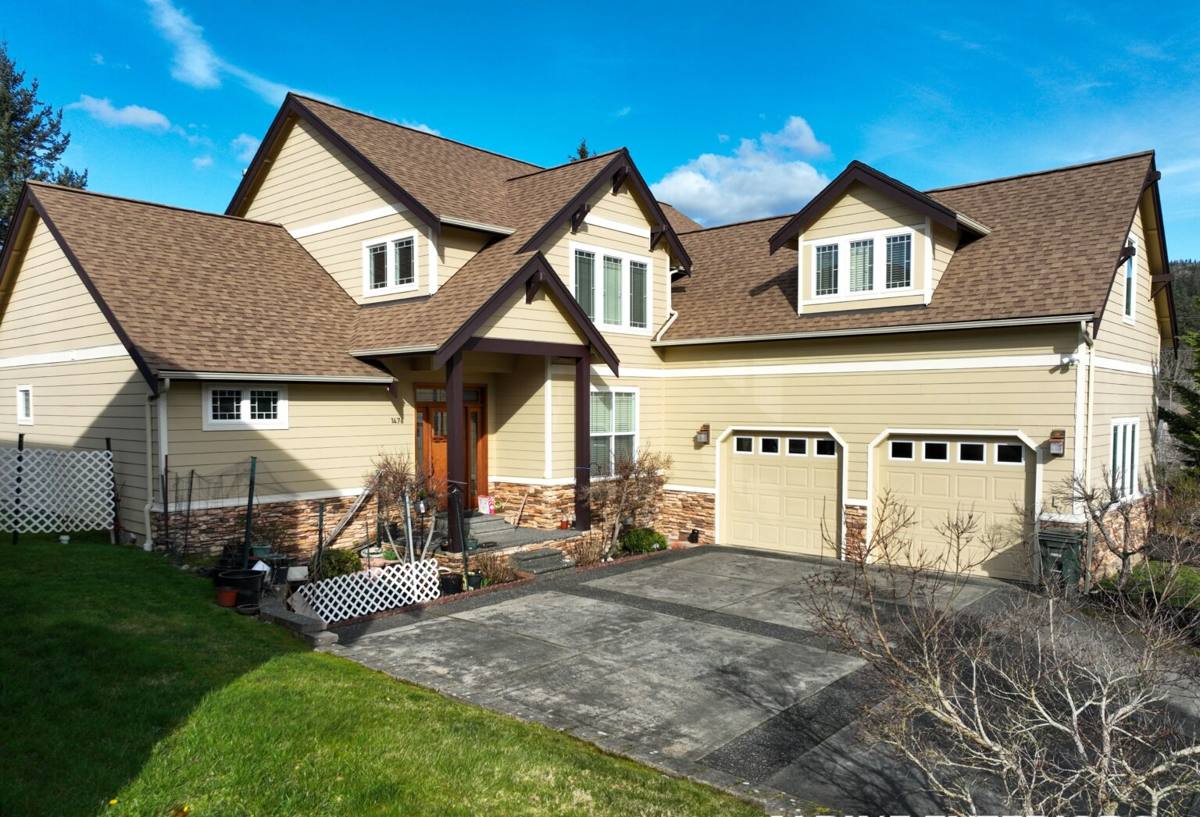
Why Blaine Siding Fails Faster Than It Should
Salt Air Working on Fasteners and Finishes
Homes close to the bay or harbor deal with salt exposure that inland Whatcom County towns simply don't see at the same intensity. Salt accelerates corrosion on nails, staples, and metal trim, and it breaks down lower-grade paint and factory finishes faster than a dry climate would. A lot of the "mystery" staining and loosening we find during repair calls traces back to a corroded fastener or a piece of trim hardware that gave out years before the siding around it did.
Wind-Driven Rain Finding the Gaps
Storms coming off the water rarely drop rain straight down on a Blaine wall — wind pushes it sideways, into siding joints, window flashing, and the transitions where a roof meets a wall. That sideways load finds any gap a rushed installation left behind, and it's the reason a lot of repair calls involve moisture damage in spots that look fine from the ground but are soft or stained once you get close. Repair work that only patches the visible surface without addressing how water got in behind it tends to fail again within a season or two.
A Moss Season That Never Fully Lets Up
Mild temperatures and near-constant humidity give moss and mildew a growing season that can run most of the year on shaded or north-facing walls around Blaine, especially on tree-covered lots. Moss holds moisture against the siding surface long after a storm has passed, and that sustained dampness is what turns a small finish problem into rot or substrate damage if it isn't caught and cleared. A repair plan that ignores the moss itself is only addressing half the problem.
Repair or Replace? How We Make the Call
Not every damaged section of siding needs a full re-side, and we're not going to tell a Blaine homeowner they need a whole new exterior when a targeted repair will genuinely hold. The call comes down to how contained the damage is and what's happening behind the surface, which is why we inspect before we ever quote a repair.
- Repair usually makes sense when: the damage is isolated to a small number of boards or a single wall section, the sheathing underneath is dry and sound once exposed, and matching material or an acceptable close match is available.
- Repair usually isn't enough when: moisture has tracked behind multiple courses of siding, the sheathing is soft or delaminating over a wide area, or the damage keeps recurring in the same spot after a prior patch.
- A gray area worth a second look: siding that's structurally fine but so faded, chalked, or mismatched in color from age that a patch would stand out — sometimes a cosmetic call as much as a structural one.
We'd rather walk a homeowner through that reasoning honestly than default to the bigger job, and we'd rather say plainly when a section really has passed the point where a patch is worth doing.
What a Correct Repair Involves
A siding repair that only addresses what's visible from the ground is a cosmetic fix, not a real one. On a Blaine home, where wind-driven rain and salt air are doing most of the damage, the parts you can't see once the repair is finished usually matter more than the parts you can.
- Diagnosing past the visible damage: checking adjacent boards, the house wrap, and the sheathing behind the failed section, not just the piece that looks obviously bad.
- Correcting the water path, not just the symptom: if flashing or a house wrap lap let moisture in, that gets fixed as part of the repair — otherwise the same spot fails again.
- Matching material and reveal: patched boards need to match the existing siding's width, texture, and reveal closely enough that the repair doesn't stand out as an obvious patch.
- Fastener and sealant choices suited to salt air: corrosion-resistant fasteners and sealants rated for sustained moisture exposure, not whatever happens to be on the truck.
- Finish matching where color continuity matters: on painted or field-finished siding, that means color-matching the touch-up; on factory-finished material, it means sourcing a genuine color match rather than guessing.
Repairing Different Types of Existing Siding
Blaine has a real mix of siding on the ground — older cedar and primed wood, vinyl, engineered wood products, and a growing amount of fiber cement. We work with whatever's actually on the house for repair calls, but each material behaves differently once it's been damaged, and that affects both how well it patches and what we recommend when a patch isn't realistic.
| Existing Siding | Repairability | Common Failure Point Locally |
|---|---|---|
| James Hardie fiber cement | Patches well with matching board stock; factory finish can be color-matched | Usually fastener or flashing issues rather than the material itself |
| Vinyl | Individual panels can often be swapped; older panels may be faded or discontinued | Cracking or warping at seams from UV and wind stress off the water |
| Engineered wood (e.g. LP-style products) | Patchable if the core hasn't absorbed moisture; edge and cut-end damage is harder to repair cleanly | Swelling or delamination at cut edges and butt joints |
| Cedar or primed wood | Individual boards can be replaced, but color and grain matching takes more work | Rot at low wall sections and around trim, especially on shaded walls |
When a repair calls for new material and matching stock isn't a realistic option — or when the damaged section is large enough that a patch would be a false economy — we install James Hardie fiber cement for the replacement section or wall. That's a professional standard we hold to on new installation work, for the same climate reasons covered in more depth on our full siding pages: fiber cement's dimensional stability, factory-applied finish, and climate-engineered HZ formulation hold up better than the alternatives in Blaine's salt air and driving rain. We're not going to install LP SmartSide, vinyl, Cemplank, Allura, primed spruce, or cedar as new material, even as a patch — but we'll always repair what's already on your house when a repair is the honest answer.
Our Siding Repair Process
- On-site inspection: we look at the damaged area and the surrounding wall, checking for moisture behind adjacent boards, not just the obvious spot.
- Sheathing check: where damage is significant, we open up the section enough to confirm the sheathing underneath is dry and sound before closing anything back up.
- Repair plan and honest estimate: we explain what we found, whether a patch will hold, and what it costs — including telling you plainly if we think replacement is the better call.
- Flashing and moisture-path correction: any house wrap, flashing, or lapping issue that let water in gets fixed as part of the repair, not left for next time.
- Material match and installation: matching boards go in with corrosion-resistant fasteners and sealants suited to sustained salt air exposure.
- Final walkthrough: we review the repair with you, including what to watch for going forward on that section of wall.
Signs a Blaine Home Needs Siding Repair Now
- Soft or spongy siding when pressed, especially low on the wall or around window and door trim
- Moss or dark staining that keeps returning quickly after cleaning on the same wall section
- Cracked, split, or buckled boards, particularly after a windstorm off the water
- Rust streaking running down from fasteners, trim, or flashing
- Paint peeling or finish visibly failing in one localized area rather than across the whole wall
- A musty smell or faint staining on an interior wall that backs up to the affected exterior section
- A prior patch or repair in the same spot that's already showing problems again
Any one of these is worth a look before the next wet season adds to it. In Blaine's climate, a small area of trapped moisture rarely stays small for long.
What Affects Siding Repair Cost
| Factor | Why It Matters | Blaine-Specific Consideration |
|---|---|---|
| Extent of damage | A few boards versus a full wall section changes labor and material scope significantly | Wind-driven rain often spreads moisture damage wider than the visible symptom suggests |
| Sheathing condition | Rotted or soft sheathing has to be addressed before new siding goes back up | More common on shaded, north-facing, or water-exposed walls |
| Material match | Matching an existing product, profile, or discontinued color affects sourcing time and cost | Older siding on Blaine homes is often past the point of an exact match |
| Access and wall height | Second-story or hard-to-reach sections take more time and equipment | No unique local factor, but common on Blaine's older two-story homes |
These are general drivers, not a quote. Every repair is different once we're actually up close to the damage, which is why we walk the wall in person before giving a real number.
Why Hiring a Crew That Already Works Blaine Matters for Repair Calls
Repair work rewards experience with a specific place more than new installation does, because diagnosing a problem correctly depends on knowing what typically causes it in that exact environment. A crew that works Blaine regularly has already seen how salt air targets fasteners before the siding itself, which walls take the worst of the wind-driven rain, and where moss holds moisture longest on a shaded lot near the water. That pattern recognition is what separates a repair that actually solves the problem from one that just covers it up until the next storm off the bay finds the same gap again.
If you've got a section of damaged, soft, or moss-covered siding on your Blaine home, we're happy to take a look and give you a straightforward read on whether it needs a repair or something more. Reach out using the form below for a free, no-pressure estimate.