 Birch Bay Siding
 Why Siding Fails Faster Near Blaine and Birch Bay
Homes along this stretch of Whatcom County sit right where Puget Sound weather meets the open water near the Canadian border. That combination is harder on exterior siding than most inland Washington neighborhoods ever see. Salt-laden air off the water accelerates corrosion on fasteners and trim metal. Wind-driven rain pushes moisture sideways into seams and laps that were never designed to take water head-on. And the long, gray moss season here, often stretching from fall through spring, keeps north-facing walls damp for months at a stretch. Siding that would last two or three decades in a drier climate can start failing in half that time when it's up against this kind of exposure without the right material or installation behind it.
If you're planning a siding replacement for a home in the Blaine area, the goal isn't just to make the house look new. It's to put a system on the walls that's actually built for salt, wind, and sustained moisture, and to install it the way the manufacturer specifies so it performs for the long haul.
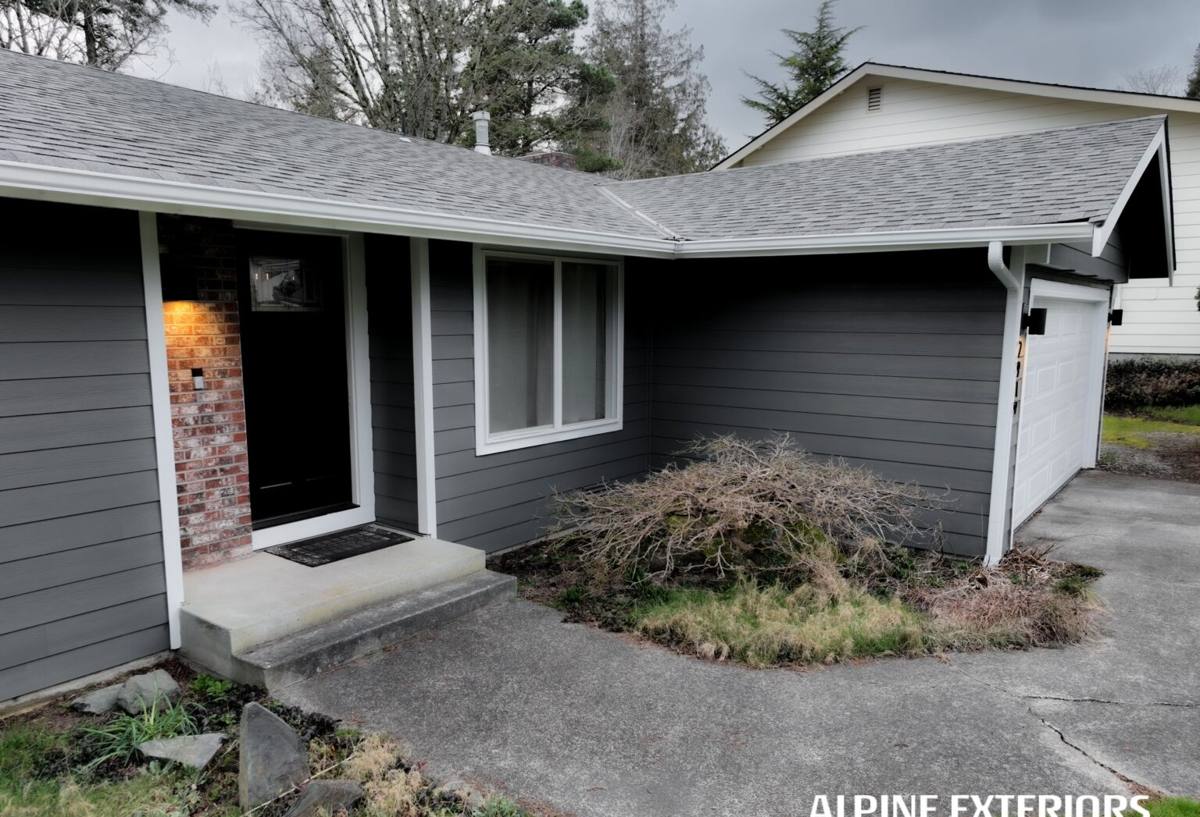
What Blaine-Area Homes Need From Their Siding
Resistance to Moisture, Not Just Shedding It
A lot of siding products are designed to shed rain that falls straight down. That's not really the problem here. Wind off the water drives rain at an angle, which means it gets forced into lap joints, corner trim, and butt seams that face the weather. Siding that swells, warps, or delaminates when it stays wet for days at a time is a poor match for this stretch of coastline.
Standing Up to Salt Air
Salt air corrodes exposed metal fasteners and accelerates wear on paint and caulk. Over years, that shows up as rust streaking, loosened trim, and premature paint failure, especially on the sides of a house that face the water or take the brunt of the prevailing wind.
Fighting Moss and Mildew Instead of Feeding It
North and west-facing walls in Birch Bay and Blaine can stay shaded and damp for long stretches during the wetter months. Wood-based and wood-adjacent siding products give moss and mildew something to grip and feed on. A dense, factory-finished fiber cement surface gives them far less to work with.
What a Correct Siding Replacement Involves
Tearing off old siding and nailing up new panels is the easy part. What actually determines whether a replacement lasts is everything underneath and around it. A correct job in this climate includes:
- Full tear-off and inspection of the wall sheathing for rot, soft spots, or prior water damage before anything new goes up
- A properly lapped weather-resistive barrier installed so water is directed out and down, not trapped behind the siding
- A drainage plane or rainscreen gap where conditions call for it, so any incidental moisture can dry out instead of sitting against the wall
- Correct flashing at every window, door, and roofline intersection — this is where the majority of hidden leaks originate
- Fastener spacing and clearances that match the manufacturer's specifications, not a generalized rule of thumb
- Proper caulking and sealant at seams and penetrations, using products rated for the exposure
Skipping any one of these steps doesn't necessarily show up right away. It shows up in three, five, or ten years as bubbling paint, soft trim, or a wall cavity that's been quietly rotting behind siding that still looks fine from the curb.
Why We Install Only James Hardie Fiber Cement
We standardized on James Hardie for every replacement job we do, including homes in Blaine and Birch Bay, and we don't install vinyl, LP SmartSide, cedar, primed spruce, Cemplank, or Allura. That's a deliberate call, not a default.
Vinyl is inexpensive and easy to install, but it's a thin plastic product that can warp in direct sun, crack in cold snaps, and rarely survives close contact with salt air and wind without visible wear. Wood-based products, including cedar and primed spruce, look great new but require ongoing paint and sealant maintenance to keep moisture out, and in a climate with this much sustained dampness, that maintenance window closes fast. Engineered wood products like LP SmartSide hold up better than raw wood but are still wood-based at their core, meaning they depend on an intact factory coating and careful field sealing at every cut edge to resist moisture long-term.
James Hardie fiber cement is cement, sand, and cellulose fiber, engineered to be non-combustible and dimensionally stable across temperature and humidity swings. It doesn't rot, and it isn't a food source for moss or mildew the way wood-based siding can be. Hardie's HZ5 product line is specifically engineered for cold, wet climates, which fits Whatcom County's weather profile better than a general-purpose siding line. The factory-applied ColorPlus finish is baked on under controlled conditions, which holds color and resists fading far longer than field-applied paint, and it comes backed by a substantial transferable warranty that follows the house if it's sold.
None of this means other products are junk. It means that after years of installing and repairing exterior siding on homes exposed to this specific coastline, we settled on the one material that consistently performs here with the least long-term maintenance burden for the homeowner.
Comparing the Common Siding Options for This Climate
| Material | Moisture Behavior in Salt Air | Maintenance Needs | Typical Lifespan Here |
|---|---|---|---|
| Vinyl | Can warp, crack, or fade under sun and cold cycling; seams vulnerable to wind-driven rain | Low upfront, but limited repair options once damaged | 15-25 years, often less near open water |
| Cedar / Primed Spruce | Absorbs moisture; prone to rot and moss growth without diligent upkeep | High — regular repainting and sealing required | 10-20 years depending on maintenance |
| LP SmartSide | Better than raw wood but still wood-based; cut edges need careful sealing | Moderate — coating and caulk maintenance over time | 20-30 years with consistent upkeep |
| James Hardie Fiber Cement | Dimensionally stable, non-combustible, resists moss and rot | Low — occasional cleaning and caulk checks | 30-50+ years when installed to spec |
Our Process for a Blaine-Area Siding Replacement
1. On-Site Assessment
We walk the exterior with you, looking at current siding condition, trim, flashing, and any signs of past moisture intrusion, especially on walls that face the water or prevailing wind.
2. Written Estimate and Product Selection
You get a clear scope of work and a walk-through of Hardie plank profiles, textures, and ColorPlus color options that fit the home and the neighborhood.
3. Tear-Off and Sheathing Inspection
Old siding comes off and we inspect the wall sheathing before anything new goes up. Any rot or damage gets addressed before the weather barrier goes on, not covered over.
4. Weather Barrier, Flashing, and Installation
We install the weather-resistive barrier, flashing, and Hardie siding according to manufacturer specifications for fastener pattern, clearances, and joint treatment, all details that matter more in this climate than in drier parts of the state.
5. Final Walkthrough
We go over the finished work with you and confirm everything from caulking to trim details meets the standard we hold ourselves to.
Why It Matters That We Already Work in Blaine
A crew that's replaced siding on homes throughout Birch Bay and Blaine has already seen how this specific stretch of coastline treats a house — which walls take the worst of the wind, how moss builds up on shaded siding through the wet months, and where salt air tends to do the most damage to trim and fasteners. That's not something you learn from a manual. It shapes small decisions on every job: where extra flashing attention pays off, which wall orientations need closer sealing at seams, and what fastener spacing actually holds up here over time. Hiring locally isn't just about convenience. It's about working with a crew that already understands the conditions your specific home is up against.
What to Check Before Hiring Anyone for Siding Work Here
- Are they licensed and insured to do exterior work in Washington State?
- Do they have experience with James Hardie fiber cement specifically, not just siding in general?
- Will they inspect and address sheathing and moisture issues before installing new siding, not just cover them?
- Do they follow manufacturer-specified fastener spacing, flashing details, and clearances?
- Can they explain how their approach accounts for wind-driven rain and salt exposure specific to this area?
- Is the warranty on both materials and labor spelled out in writing?
If your siding is showing moss buildup, soft spots, or paint failure, or if you're just planning ahead for a home in the Blaine or Birch Bay area, we're happy to take a look and walk you through what a proper James Hardie replacement would involve for your specific house. Reach out for a free, no-pressure estimate using the form below.