 Birch Bay Siding
 Board & Batten Siding for Bellingham Homes
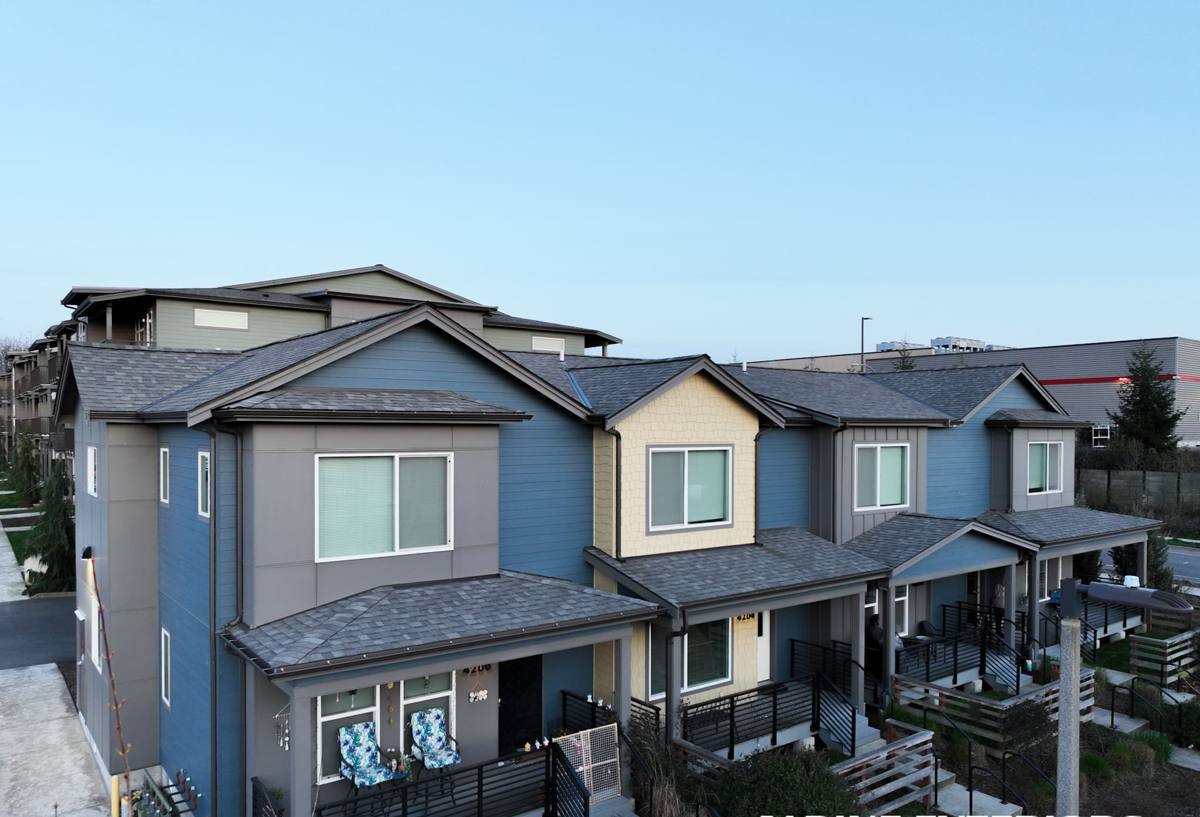
Board and batten has become one of the most requested siding profiles for Bellingham homeowners, and it's easy to see why. The vertical lines read as modern farmhouse, craftsman, or clean contemporary depending on the trim details, and it pairs well with the mix of architecture you see through this part of Whatcom County — from newer builds near the water to older homes getting a full exterior refresh. But board and batten is also a profile that punishes a bad installation faster than most. Get the layout, flashing, and fastening wrong and you're not just looking at a cosmetic problem in five years — you're looking at moisture getting behind the cladding in a climate that doesn't forgive that mistake.
We install board and batten exclusively in James Hardie fiber cement, and this page walks through what that actually means for a Bellingham home: the climate factors driving the decisions, what a correct install involves, and how our process is built around this specific area.
Why Bellingham's Climate Is a Real Factor, Not a Talking Point
Bellingham sits close enough to Bellingham Bay and the broader Salish Sea that salt-laden air is a genuine consideration for exterior materials, not a theoretical one. Add in the region's long stretch of driving rain through fall, winter, and spring, plus the extended moss and algae season that comes with all that moisture and shade from mature tree cover, and you've got three separate stressors working on a home's siding at once.
What each of these actually does to siding
- Salt air: accelerates corrosion on fasteners, flashing, and any exposed metal trim; also degrades some paint and coating systems faster than inland exposure.
- Driving rain: wind-driven moisture doesn't just hit siding, it pushes water sideways and upward at laps, joints, and penetrations — the exact spots where a marginal install fails first.
- Extended moss/algae season: constant low-level moisture on north-facing and shaded walls feeds organic growth that holds water against the surface longer, which matters most for materials that swell, rot, or delaminate when saturated.
None of this makes siding impossible to get right in Bellingham. It just means the margin for error on flashing details and material choice is smaller here than it would be in a drier climate.
Why Board & Batten Specifically Needs Careful Detailing
The board and batten profile has more vertical seams per square foot than lap siding, and every one of those seams is a place where water can find its way behind the cladding if it isn't flashed and fastened correctly. On a home exposed to driving rain off the bay, that's not a minor detail — it's the difference between a wall assembly that sheds water for decades and one that's quietly rotting the sheathing behind it.
The details that matter most
- Proper weather-resistive barrier and rainscreen gap behind the siding, so any water that does get past the cladding can drain and dry instead of sitting against the wall.
- Correct batten spacing and fastening pattern per the manufacturer's engineering — not "close enough," since board and batten relies on consistent reveal and fastener placement to perform.
- Properly lapped and sealed flashing at every horizontal transition: window and door heads, roof-to-wall intersections, and the base of the wall where splash-back and standing moisture are most likely.
- Factory-primed or factory-finished edges (ColorPlus) so field-cut ends aren't left exposed to raw absorption at the exact joints most vulnerable to driving rain.
Why We Only Install James Hardie for This Profile
Board and batten is available in several materials, and we've made a deliberate call to install it only in Hardie fiber cement. The reasoning isn't about brand loyalty — it's about how each material actually behaves once it's on a wall in this climate.
| Factor | What it means for board & batten in Bellingham |
|---|---|
| Moisture exposure at seams | Fiber cement doesn't swell, rot, or delaminate at cut edges and joints the way wood-based or engineered-wood products can when driving rain gets past a flashing detail. |
| Salt air / coastal exposure | Hardie's ColorPlus factory finish is engineered to hold up under UV and coastal air conditions better than field-applied paint on site-primed boards. |
| Moss and algae exposure | Non-combustible fiber cement doesn't provide the organic material that some coatings and substrates do, which slows biological growth compared to less moisture-resistant claddings. |
| Long-term stability | Fiber cement holds its dimension in wet-dry cycles, which keeps batten reveals and joints tight over time instead of gapping or cupping. |
| Warranty structure | Hardie's transferable warranty is backed by a large, established manufacturer with a long track record in wet coastal climates like ours. |
Other materials — vinyl, engineered wood, primed spruce, cedar — all have legitimate uses and real strengths elsewhere. We simply won't put them behind a board and batten profile on a home that has to survive Whatcom County winters for the next 30-plus years. Fiber cement is the one material in that lineup that we're confident holds its shape, finish, and water resistance at every one of those vertical seams.
What a Correct Board & Batten Install Looks Like, Step by Step
1. Assessment of the existing wall assembly
Before any siding goes up, we look at what's behind the current cladding — sheathing condition, existing moisture damage, and whether the home has adequate drainage behind the wall. On older Bellingham homes especially, this step catches problems that would otherwise get sealed behind new siding.
2. Weather barrier and rainscreen
We install a proper weather-resistive barrier with a drainage gap behind the Hardie boards. This is non-negotiable in a climate with this much driving rain — it gives incidental moisture a way to drain and the wall a way to dry.
3. Layout and batten spacing
Board width and batten spacing get planned out before install so reveals are consistent across the whole elevation, including around windows, doors, and corners — this is where board and batten separates a clean job from an amateur one.
4. Fastening and flashing
Fasteners follow Hardie's specification for this region's exposure category, and every horizontal transition gets flashed and lapped correctly, shingle-fashion, so gravity and wind-driven rain are both accounted for.
5. Finish and detailing
ColorPlus prefinished boards mean fewer field-painted cut edges exposed to the elements, and any necessary field touch-up is done with matched coating at the specific points where boards were trimmed.
Signs Your Bellingham Home's Current Board & Batten Needs Attention
- Visible gapping or cupping at battens, especially on walls facing prevailing wind and rain
- Persistent moss or algae streaking that returns quickly after cleaning, particularly on shaded or north-facing walls
- Soft spots, staining, or bubbling paint near window heads, corners, or the base of the wall
- Fastener corrosion or streaking, common where salt air has been working on exposed metal for years
- Visible daylight or drafts at seams, a sign the underlying flashing or barrier has failed
Any of these on their own might just need monitoring. Several at once, especially near the base of the wall or around openings, usually means moisture has already gotten behind the cladding.
Why Hiring a Crew That Works Bellingham Already Matters
Board and batten installation isn't uniform across climates. A crew that mostly works drier inland regions can do a technically fine install that still isn't matched to what a coastal Whatcom County wall actually faces — the rainscreen detailing, the fastener spec for salt exposure, the flashing sequence for wind-driven rain. We work this area regularly, which means we're not guessing at exposure categories or treating this like a one-size-fits-all install. It also means we know which parts of a home tend to take the worst of the weather here and we plan the layout and flashing around that from the start, not as an afterthought.
Cost Factors for Board & Batten in This Area
| Factor | Why it affects cost |
|---|---|
| Wall condition underneath | Sheathing repair or moisture remediation found during tear-off adds labor and material before new siding can go on. |
| Home size and elevation complexity | More corners, dormers, and window/door openings mean more flashing detail and cut work. |
| Board width and batten spacing chosen | Wider reveals or custom spacing can change material quantities and layout labor. |
| Existing siding removal | Full tear-off versus working with an already-prepared wall changes the scope significantly. |
| Trim and accessory detailing | Corner treatments, window casing style, and fascia work add to the overall scope. |
We don't quote from a distance — every estimate is based on an actual look at your walls, your exposure, and what's currently behind your siding.
If you're considering board and batten for a home in the Bellingham area, we're happy to come take a look and walk you through exactly what your walls need. There's no pressure and no obligation — just a straight assessment from a crew that installs this profile, in this material, in this climate, every week. Fill out the form below to schedule your free estimate.