 Birch Bay Siding
 Composite Decking for Terrell Creek's Marine Climate
Terrell Creek sits close enough to the Salish Sea that homes here deal with a different set of conditions than decks built inland. Salt-laden air off Birch Bay, long stretches of driving rain through fall and winter, and a moss season that can run half the year all work against a deck that isn't built or maintained correctly. If you're planning a new deck or replacing a tired one, the material and the installation details matter more here than they would in a drier part of Whatcom County.
Composite decking has become the default choice for a lot of homeowners in this area, and for good reason. It doesn't need annual staining, it resists the moisture cycling that splits and cups wood boards, and it holds up to the kind of weather Terrell Creek sees every winter. But composite is not a "set it and forget it" product, and not every composite install is done the same way. This page covers what actually matters for a deck in this specific location.
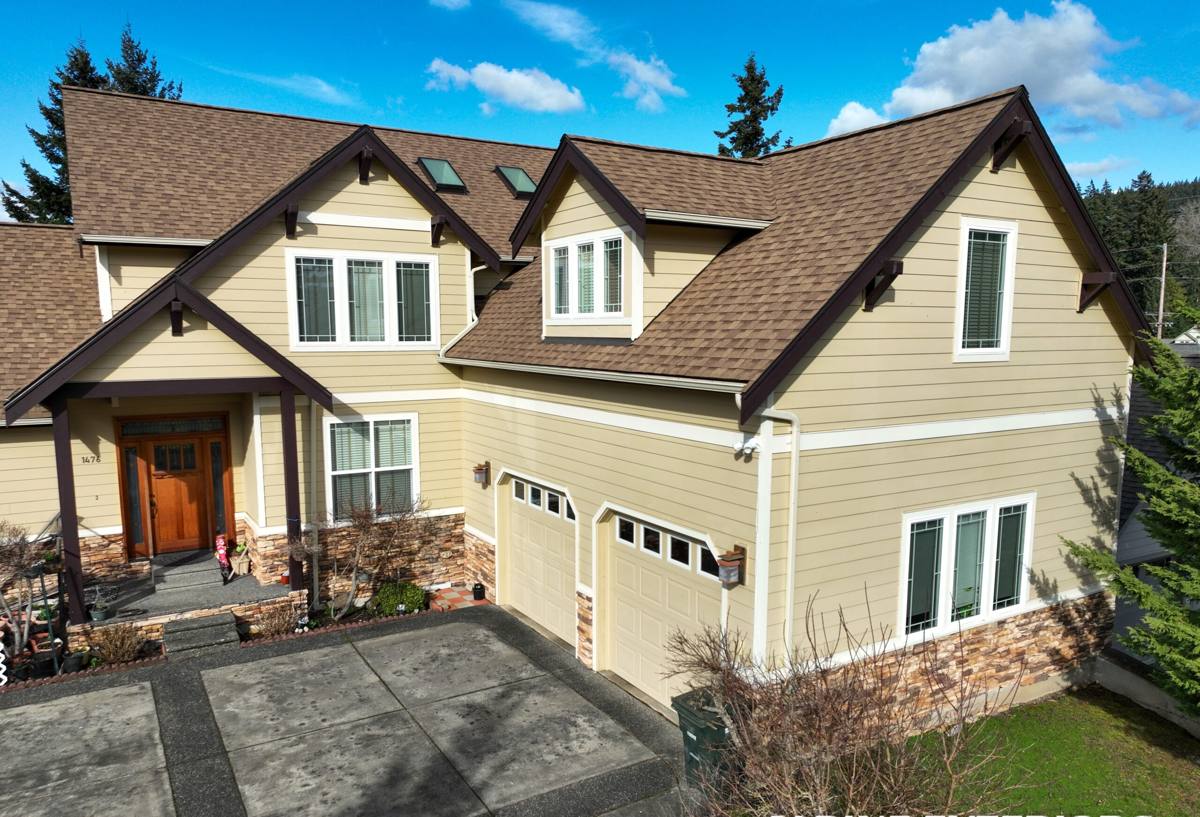
What Salt Air, Rain, and Moss Do to a Deck Over Time
Salt Air and Metal Fatigue
Proximity to the bay means airborne salt settles on everything outdoors, including the fasteners, brackets, and hardware holding a deck together. Standard hot-dip galvanized hardware can start showing surface corrosion within a few years in a marine-influenced environment, and once fasteners start to degrade, the connection between boards and framing weakens even if the decking on top still looks fine. This is one of the most overlooked failure points on decks near Birch Bay.
Driving Rain and Trapped Moisture
Wind-driven rain off the water doesn't just fall straight down — it gets pushed sideways into railings, against house walls, and up under board edges. Decks that don't have proper drainage gaps, flashing, and airflow underneath end up holding moisture long after the rain stops. That trapped moisture is what causes rot in framing, staining on boards, and the slow breakdown of ledger connections where the deck meets the house.
Moss, Algae, and Slippery Surfaces
Whatcom County's wet season gives moss and algae months of ideal growing conditions. On a deck, that shows up as green or black film on boards, especially in shaded corners or spots that don't get much sun or airflow. Beyond looking bad, a mossy deck surface gets genuinely slick, which is a real safety issue on stairs and near entry doors.
Why Composite Decking Makes Sense in This Area
Wood decking can absolutely be done well, and some homeowners still prefer the look and feel of real cedar or fir. But given what this climate does to a deck year over year, composite has some clear practical advantages for Terrell Creek properties specifically.
| Factor | Wood Decking | Composite Decking |
|---|---|---|
| Moisture absorption | Absorbs and releases moisture, leading to swelling, cupping, and cracking | Minimal water absorption; dimensionally stable through wet/dry cycles |
| Moss and algae resistance | Porous surface holds moisture, feeds growth | Denser surface sheds moisture faster, slower to develop growth |
| Maintenance | Annual or biannual staining/sealing needed | Periodic washing; no staining or sealing required |
| Splintering/graying | Common as UV and moisture break down fibers | Color-stable surface, no splintering |
| Upfront cost | Generally lower material cost | Higher material cost, offset by lower upkeep over time |
| Lifespan in marine air | Shorter without diligent, consistent maintenance | Longer with correct install and basic seasonal cleaning |
The honest trade-off is upfront cost. Composite material runs more than dimensional lumber, and that's a real factor in the decision. But for a deck exposed to salt air and near-constant winter moisture, the reduced maintenance burden and the material's resistance to rot and moss growth often make it the more practical long-term choice.
What a Correct Composite Deck Installation Involves
Composite boards are only as good as what's underneath them. A lot of the decks we get called out to repair look fine on the surface but were built with shortcuts in the framing, fastening, or drainage that only show up years later.
Substructure and Framing
Pressure-treated framing rated for ground contact where applicable, proper joist spacing for the specific composite product (composite often requires tighter spacing than wood), and joist tape or flashing over the tops of joists to keep moisture from wicking into the framing lumber. Skipping joist protection is one of the most common corner-cutting moves we see on older decks in this area.
Fasteners and Hardware
In a marine-air environment, hardware quality is not the place to save money. Stainless steel or coated fasteners rated for coastal exposure resist the corrosion that standard hardware develops within a handful of seasons. This includes joist hangers, structural screws, and any brackets used for railings or stairs.
Drainage and Airflow
Correct board spacing, a slight slope away from the house for water runoff, and enough clearance underneath the deck for air to actually move are what keep moisture from pooling. Ledger board flashing where the deck attaches to the house is critical — this is a common leak point that leads to hidden rot behind the siding if it's not detailed correctly.
Choosing the Right Composite Board for a Terrell Creek Property
Not all composite decking is built the same, and the right pick depends on the specifics of the property — how much sun exposure the deck gets, how close it sits to the water, and how shaded or exposed the yard is.
Capped vs. Uncapped Composite
Capped composite boards have a protective outer shell bonded around the core, which gives significantly better resistance to moisture intrusion, staining, and fading than uncapped or first-generation composite products. For a deck exposed to driving rain and salt air, capped composite is the more durable choice and what we recommend for most installs in this area.
Color and Heat Considerations
Darker composite colors absorb more heat on sunny days and can show water spotting or mineral deposits from rain more visibly than mid-tone colors. Lighter and mid-tone boards tend to hide the kind of weathering that comes from a wet, salty climate a bit better over time.
Grooved vs. Grooved-Edge Boards for Drainage
Board profile affects how well water sheds off the surface. In a high-rainfall area, a profile that drains cleanly rather than pooling water in surface grooves helps reduce the conditions moss needs to take hold.
Our Process, Start to Finish
- On-site assessment. We look at the existing structure (if there is one), sun and shade patterns, drainage direction, and proximity to salt air or standing moisture.
- Material selection. We walk through composite options suited to the specific exposure your property gets, not a one-size-fits-all recommendation.
- Framing and structural work. Any needed repairs to ledger boards, joists, or footings happen before a single composite board goes down.
- Installation. Correct fastener spacing, joist protection, and drainage detailing throughout — not just a good-looking surface.
- Final walkthrough. We go over basic care so the deck holds up the way it's supposed to.
Maintaining a Composite Deck in a Moss-Prone, Salty Climate
Composite decking cuts out staining and sealing, but "low maintenance" doesn't mean "no maintenance," especially this close to the water. A little seasonal attention goes a long way toward keeping a deck looking and performing the way it should.
- Rinse the deck surface periodically to clear salt residue, pollen, and organic debris before it builds up
- Sweep leaves and needles out of corners and against railings where moisture collects and moss gets a foothold
- Use a soft-bristle brush and mild soap on any green or black spots as soon as they appear, rather than letting growth establish
- Check that gaps between boards stay clear of debris so water can drain through instead of pooling
- Inspect railing posts and stair connections once a year for any looseness, which can signal hardware corrosion underneath
- Keep gutters and downspouts near the deck clear so runoff isn't dumping extra water onto the deck surface
Cost Factors for a Terrell Creek Composite Deck
Every deck project is different, and giving a number without seeing the site wouldn't be honest. But the main factors that move the price up or down are consistent:
| Factor | How It Affects Cost |
|---|---|
| Deck size and shape | Larger footprints and complex angles increase material and labor |
| Height and access | Elevated decks need more substructure, railings, and often stairs |
| Existing structure condition | Reusing sound framing costs less than a full tear-off and rebuild |
| Composite tier chosen | Capped, premium composite lines cost more than entry-level composite |
| Railing and stair details | Custom railing systems add cost beyond the deck surface itself |
| Site access | Difficult access for equipment or material delivery can add labor time |
We'll walk the site, talk through what you actually need, and give you a written number before any work starts — not a ballpark that changes once the job is underway.
Why Hiring a Crew That Knows Terrell Creek Matters
A deck built with generic assumptions — standard hardware, standard spacing, no real thought to drainage — might hold up fine in a drier inland climate. Near Birch Bay, those same shortcuts show up as corroded hardware, moss-covered boards, and soft framing within a few years. Crews who regularly work this stretch of Whatcom County know which details actually matter here: the hardware grade, the joist protection, the drainage slope, the board profile. That local familiarity is the difference between a deck that needs attention every season and one that just quietly holds up.
If you're weighing a new composite deck or replacing an aging one on your Terrell Creek property, we're happy to take a look and walk you through your options. There's no pressure and no cost to get an honest assessment — just fill out the form below to request a free estimate.