 Birch Bay Siding
 Board & Batten in a Salt Air, High-Rain Neighborhood
Blaine sits close enough to the water that homes here take a different kind of weathering than siding fifteen miles inland. Salt-laden air, wind-driven rain off the Strait, and a long wet season that keeps moss and algae active for much of the year all work on a home's exterior at the same time. Board and batten siding is a popular choice for homes in this stretch of Whatcom County because of its clean vertical lines and the way it reads on the coastal, craftsman, and modern farmhouse styles common in the area — but the look only holds up if the material and the installation underneath it are built for this specific climate, not just for the photo.
We get calls in Blaine from homeowners who installed board and batten a few years back and are already seeing dark streaking at the seams, soft spots at the base of the boards, or battens that have started to cup and pull away from their fasteners. Almost every one of those problems traces back to the same two things: a product that wasn't rated for constant moisture exposure, or an installation that skipped the details that matter most in a wet, salty environment. This page covers what a correct board and batten job looks like for a Blaine home, and why we only do it in James Hardie fiber cement.
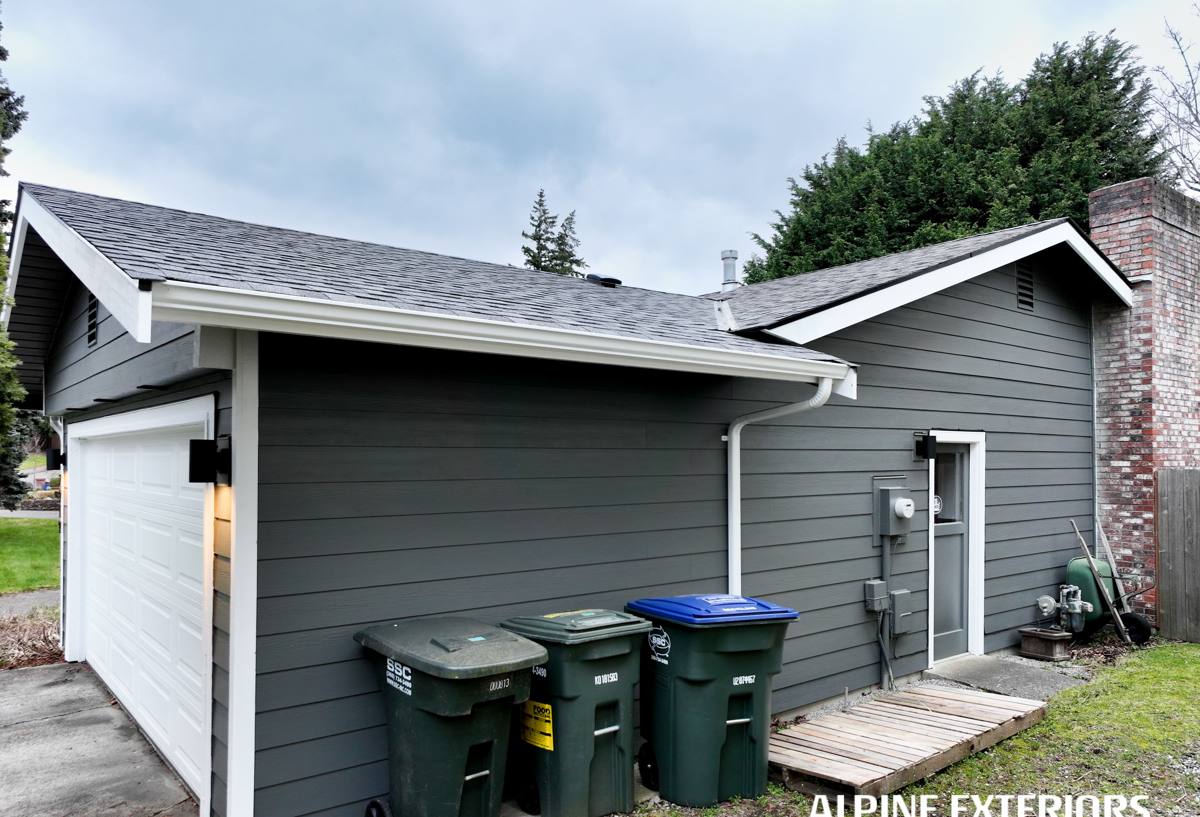
What Local Homes Actually Need From This Siding
Moisture Cycling, Not Just Rainfall
Blaine doesn't just get a lot of rain — it gets rain that comes and goes in cycles, with fog and marine moisture keeping the exterior of a home damp even between storms. Board and batten has more vertical seams per square foot than lap siding, and every one of those seams is a place water can find its way behind the cladding if the assembly isn't built to shed and dry properly. A siding system here needs to handle repeated wet-dry cycling for years without swelling, delaminating, or holding water against the wall.
Moss and Algae Pressure
The long damp season in this part of Whatcom County keeps north-facing and shaded elevations green longer than homeowners further inland ever have to deal with. Untreated or lightly coated wood-look products pick up moss and organic staining fast, and once it's established it's a recurring maintenance job, not a one-time cleaning. A factory-cured, non-wood surface with a real acrylic topcoat handles that pressure far better than a field-finished or bare product ever will.
Salt Air on Fasteners and Trim
Proximity to the water means salt in the air, and salt is hard on fasteners, flashing, and any metal component in the wall assembly. Corrosion-resistant fastening and properly detailed flashing aren't optional upgrades on a Blaine job — they're the baseline for a siding job that's supposed to last decades instead of one decade.
What a Correct Board & Batten Installation Involves
Board and batten looks simple from the street — vertical panels with battens covering the seams — but the assembly behind that look is doing a lot of work. Getting it right in a high-moisture coastal setting means paying attention to layers most homeowners never see.
The Rainscreen Gap Matters More Here Than Inland
A drainage gap between the water-resistive barrier and the back of the siding lets any moisture that does get past the cladding drain out and lets the wall assembly breathe and dry. On a home exposed to driving, wind-pushed rain off the water, skipping this gap or installing furring incorrectly is one of the most common reasons we see trapped moisture and rot at the base of walls in older coastal installs.
Flashing and Water-Resistive Barrier Detailing
Every window, door, and penetration needs flashing that directs water out and away from the wall, integrated correctly with the WRB underneath. Board and batten's vertical seams also need proper joint treatment where panels meet — caulk alone is not a water management strategy, it's a maintenance item that will eventually fail.
Fastening and Batten Spacing
Battens need consistent spacing over solid backing, with corrosion-resistant fasteners driven at the manufacturer's specified pattern and depth. Overdriven or underdriven fasteners are a leading cause of cracking and premature wear, and it's one of the fastest things to get wrong when a crew is moving quickly instead of moving correctly.
The James Hardie Board & Batten System
We install James Hardie's fiber cement panel and batten system exclusively, using their HZ5 formulation engineered for the Pacific Northwest's wet, moderate climate zone. It's non-combustible, dimensionally stable, and finished with ColorPlus — a factory-applied, baked-on finish that resists fading and holds up to UV and salt air far better than a field-applied paint job. That factory finish matters more here than it does in a drier climate, because it's the first line of defense against the moss, mildew, and streaking that this region's dampness encourages.
Panels and battens are backed by Hardie's product warranty and a labor warranty from our crew, so the whole assembly — product and installation — is covered, not just the material. That combination is the reason we standardized on this system rather than offering several competing products: we'd rather stand behind one system we know performs here than sell whatever a homeowner asks for and hope it holds up.
Board & Batten vs. Other Siding Options for a Blaine Home
Homeowners comparing profiles and materials for a Blaine project are usually weighing board and batten's look against lap siding, and fiber cement against wood, engineered wood, or vinyl. Here's how they stack up against this specific climate.
| Option | Moisture Performance Here | Moss/Algae Resistance | Long-Term Maintenance |
|---|---|---|---|
| James Hardie fiber cement board & batten | Strong — non-combustible, engineered for wet climates | High with ColorPlus finish | Occasional wash; no refinishing |
| Cedar board & batten | Moderate — needs consistent sealing/staining | Low without regular treatment | Recoating and repair on a recurring cycle |
| Engineered wood (LP-type) board & batten | Moderate — vulnerable at cut edges and seams if not sealed correctly | Moderate | Edge and seam inspection matters |
| Vinyl board & batten | Sheds water but can trap moisture behind panels; can warp/fade | Moderate | Low, but limited repair options if damaged |
Every product on that list can be installed to some standard. Our decision to install only Hardie comes down to which one holds its finish, its shape, and its water management performance in this exact climate with the least homeowner upkeep over the years we'd want it to last.
Mistakes We See on Existing Blaine Installs
A lot of the board and batten work we get called out to inspect wasn't done badly on purpose — it was done fast, or by a crew more familiar with drier inland conditions. The most common issues we find:
- Battens fastened directly over siding with no drainage gap, trapping moisture against the wall
- Caulk used as the primary seal at panel joints instead of proper lap and flashing detail
- Wood or lightly coated engineered battens installed without a maintenance plan, now showing moss and soft spots
- Inconsistent fastener spacing or fasteners driven through battens at the wrong depth
- Missing or poorly integrated flashing above windows and at wall-to-roof transitions
Any one of these can shorten a siding job's life by years in a place that gets this much wind-driven rain. A correct install checklist looks more like this:
- Water-resistive barrier installed and inspected before any siding goes up
- Rainscreen/drainage gap built in behind the cladding
- Flashing detailed at every window, door, and penetration
- Battens spaced and fastened to manufacturer specification with corrosion-resistant fasteners
- Factory-finished panels and battens, not field-painted substitutes
Our Process on a Blaine Board & Batten Project
We start with an on-site assessment of the existing siding and wall assembly — if there's an existing installation, we're checking for trapped moisture and soft sheathing before we ever talk about the new siding going up. From there we walk through panel and batten layout with you, since board and batten reads differently depending on batten spacing and reveal, and that's a decision worth getting right before installation day.
Tear-off and disposal of old material comes next, followed by a WRB and sheathing inspection — this is the point where hidden problems, if there are any, get caught and addressed rather than covered up. We build in proper drainage and flashing, install the Hardie panel and batten system to specification, and finish with trim and detailing at corners, windows, and transitions. Every job gets a final walkthrough with the homeowner before we consider it done.
Why a Crew That Already Works Blaine Matters
Siding installation isn't one-size-fits-all across Whatcom County. A crew that works Blaine and the rest of the Birch Bay area regularly already knows how exposed a given elevation is likely to be, how much drainage detail a specific wall assembly needs, and where moss pressure tends to concentrate on homes in this stretch of coastline. That local pattern recognition shows up in fewer callbacks and fewer surprises once the old siding comes off.
It also matters for scheduling and weather judgment — knowing when a stretch of dry days is reliable enough to plan a tear-off, and when it isn't, is a local skill as much as it's a construction one. A crew unfamiliar with this coastline is guessing at both the wall assembly and the weather window; a crew that works here routinely isn't.
What Drives the Cost of a Board & Batten Project
Board and batten pricing depends on more than square footage. The table below covers the factors that typically move a Blaine estimate up or down.
| Factor | Why It Matters |
|---|---|
| Existing siding removal | Tear-off, disposal, and any sheathing repair add labor before new siding starts |
| Home size and wall complexity | More corners, gables, and dormers mean more trim and cutting |
| Batten spacing and reveal choice | Wider or narrower spacing changes material quantities and labor time |
| Full board & batten vs. accent application | Full-elevation installs cost more than partial or accent-wall applications |
| Underlying moisture damage | Rot or damaged sheathing found during tear-off needs repair before siding goes on |
We won't quote a firm number without seeing the home, but we'll always walk you through which of these factors apply to your project and why, before any work starts.
If you're weighing board and batten for a home in Blaine or elsewhere around Birch Bay, we're happy to take a look and give you a straight, no-pressure estimate — just fill out the form below to get started.