 Birch Bay Siding
 California Creek sits in that stretch of Whatcom County where Birch Bay's marine air meets low-lying, tree-shaded lots along the creek corridor. It's a beautiful place to own a home, and it's also a tough place to own siding. Salt-laden air off the bay, wind-driven rain that comes in sideways off the water, and long stretches of gray, damp weather that keep moss and algae growing on north-facing walls for months at a time all work against whatever material is on your exterior. If you're looking into siding replacement for a California Creek property, the climate here should shape almost every decision you make — from the product you choose to how the crew details the water management behind it.
Why California Creek Siding Wears Differently Than Inland Homes
Homes a few miles inland in Whatcom County deal with rain and cold, but they don't deal with the combination California Creek properties face. Being close to Birch Bay means airborne salt settles on siding, trim, and fasteners year-round, which accelerates corrosion on anything not built to handle it. Add in the creek's shaded, low-lying terrain, and you get siding that stays wet longer after every storm — perfect conditions for moss, algae, and mildew to take hold, especially on the shady side of a house or under overhangs.
Wind-driven rain is the other piece. Storms coming off the water don't just fall straight down — they push moisture sideways into laps, seams, and trim joints. Siding that isn't installed with the right clearances, flashing, and water-resistive barrier behind it will eventually let that moisture find its way to the sheathing, even if the surface looks fine from the driveway.
What This Means for Aging Siding
On a lot of older California Creek homes, we see the same pattern: paint that's failed years before it should have, soft or delaminating panels near ground level and under windows, moss buildup that never fully goes away even after a wash, and caulking that's cracked or pulled away from trim. None of these are cosmetic issues alone — they're signs that moisture has been getting behind the cladding for a while.
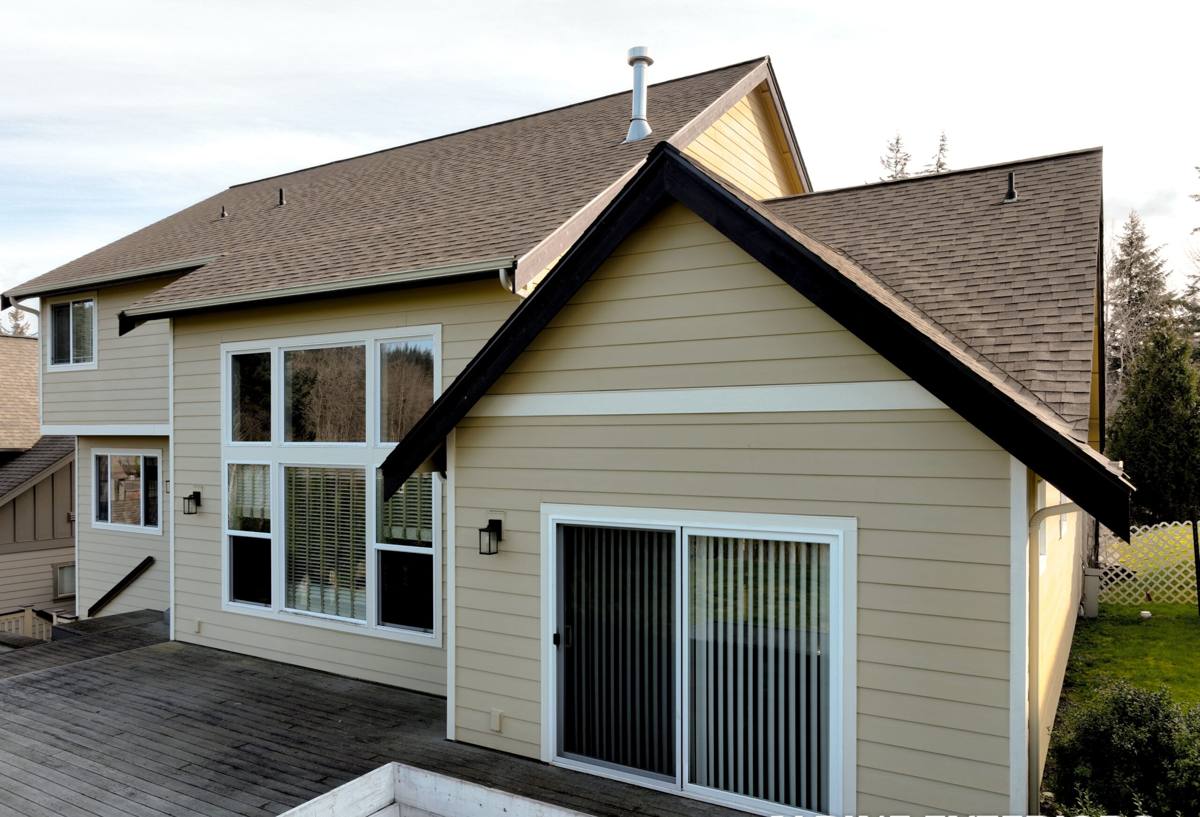
What a Correct Siding Replacement Actually Involves
Replacing siding well isn't just pulling off the old material and nailing up new panels. In a climate like this, most of the value is in the parts you don't see once the job is done.
- Full tear-off, not overlay. Installing new siding over old material traps moisture and hides existing damage — not something we'll do on a California Creek home.
- Sheathing inspection. Once the old siding is off, we check the wall sheathing for soft spots, rot, or staining, especially around windows, doors, and any low-slope trim.
- Water-resistive barrier. A new, continuous weather barrier goes on before anything else, lapped correctly so water sheds outward at every seam.
- Flashing at every penetration. Windows, doors, vents, and hose bibs all need proper flashing details — this is where wind-driven rain finds its way in if it's skipped or rushed.
- Correct fastening and clearances. Fiber cement siding has manufacturer-specified nailing patterns, gaps at butt joints, and ground clearance requirements. Skipping these voids warranty coverage and shortens the life of the job.
- Finish and caulking. Factory-finished panels reduce field painting, but joints, trim, and penetrations still need the right sealant, applied correctly.
Why We Install Only James Hardie Fiber Cement
We standardized on James Hardie siding for every home we work on, including California Creek, and we don't install vinyl, LP SmartSide, or other fiber cement brands. That's not a marketing position — it's a practical one, based on what holds up in this specific climate.
James Hardie's HZ product line is engineered for regions like ours, where moisture exposure is constant rather than occasional. It's non-combustible fiber cement, which matters for long-term durability, not just fire resistance — it doesn't absorb and swell with water the way engineered wood products can, and it doesn't become brittle or distort the way vinyl can under UV exposure and temperature swings. The ColorPlus factory finish is baked on under controlled conditions, which holds color and resists the kind of fading and chalking that salt air and UV exposure cause faster near the water. It also carries a strong, transferable warranty — meaningful protection for a product that's supposed to last decades on a house exposed to what California Creek weather delivers.
We won't pretend other products don't have their place elsewhere. But for homes in this specific corner of Whatcom County — salt air, driving rain, extended damp seasons — we've made the call that Hardie fiber cement, installed to spec, is the material that holds up without becoming a recurring maintenance project for the homeowner.
Our Process on a California Creek Job
1. On-Site Assessment
We walk the property, look at current siding condition, check trim and window flashing, and look for signs of moisture intrusion — especially on shaded or bay-facing walls where damage tends to show up first.
2. Scope and Estimate
You get a clear, written scope: what's being removed, what's being replaced, which Hardie product and profile fits the house, and what the water management details will look like.
3. Tear-Off and Sheathing Repair
Old siding comes off, sheathing gets inspected, and any damaged sections are repaired or replaced before anything new goes up — no covering up a problem that will resurface in a few years.
4. Weather Barrier, Flashing, and Install
New barrier, correct flashing at every penetration, and Hardie siding installed to manufacturer nailing and clearance specs. This is the stage where a rushed job and a correct one look identical from the street but behave very differently in year six.
5. Final Detailing and Walkthrough
Trim, caulking, and touch-up finish work, followed by a walkthrough so you know what was done, what the warranty covers, and what little maintenance the new siding actually needs.
Cost Factors for Siding Replacement Near Birch Bay
Every home is different, but these are the variables that most affect scope and cost on a California Creek project:
| Factor | Why It Matters |
|---|---|
| Extent of hidden moisture damage | Sheathing repair adds cost but is not optional if rot is found — skipping it just delays and worsens the problem |
| Home size and wall complexity | More corners, gables, and trim details mean more flashing work and labor time |
| Siding profile and accessories | Lap width, trim style, and factory-finish color selections affect material cost |
| Access and site conditions | Tree cover, slope, and tight lot lines common along the creek can affect staging and crew time |
| Existing paint or caulk removal | Failed prior coatings sometimes need extra prep before new trim and flashing go in |
Why a Crew That Already Works California Creek Matters
Siding installation isn't one-size-fits-all across Whatcom County. A crew that regularly works Birch Bay and the California Creek area already knows how the wind comes off the water, which walls take the worst of the wind-driven rain, and how much moss and algae buildup to expect on shaded sides of a home. That local pattern recognition shows up in small decisions — where to add extra flashing attention, how much drainage clearance to build in, which details matter most on a bay-facing wall versus a sheltered one. It's the difference between a generic install and one built for this specific stretch of coastline.
Signs Your California Creek Home May Need Siding Replacement
- Persistent moss or algae growth that returns quickly after cleaning
- Paint that's peeling, bubbling, or failing years ahead of schedule
- Soft, spongy, or visibly warped panels, especially near the ground or under windows
- Cracked, gapped, or missing caulking at trim and window edges
- Visible staining or discoloration that doesn't wash off
- Rising energy bills that may point to compromised wall insulation from moisture intrusion
Maintenance After a Hardie Siding Install
One reason we standardized on James Hardie is that it asks very little of homeowners once it's installed correctly. A yearly rinse to keep salt residue and organic growth from building up, an occasional visual check of caulking at trim and penetrations, and prompt attention if you ever notice a soft spot or gap are really all that's needed. Compare that to the repainting and moisture-related repairs that other siding materials often demand in this climate, and the lower long-term maintenance burden becomes one of the more practical arguments for Hardie on a California Creek home.
If your California Creek home is showing signs of siding wear, or you're just planning ahead, we're happy to take a look and give you a straightforward, no-pressure estimate. There's a form below — reach out and we'll get a time on the calendar.