 Birch Bay Siding
 Window Installation in California Creek: Built for Whatcom County's Marine Climate
California Creek sits in the rural, semi-agricultural stretch of Whatcom County near Birch Bay, close enough to the Salish Sea to feel the marine climate that defines this whole corner of the state. Homes here deal with salt-laden air carried in on winter storms, long stretches of wind-driven rain, and a moss and mildew season that can run most of the year on shaded walls and north-facing trim. That combination puts real, sustained stress on window systems, because a window opening is where a home's exterior wall has the most seams, the most moving parts, and the most opportunities for water to work its way in.
We handle siding, roofing, windows, and decks for homes throughout this part of Whatcom County, and on window installation specifically, we treat the flashing and integration work as at least as important as the window unit itself. A high-end window installed with careless flashing will still leak in this climate. A modest, well-chosen window installed correctly — tied properly into the surrounding wall and siding — will usually outperform it for decades.
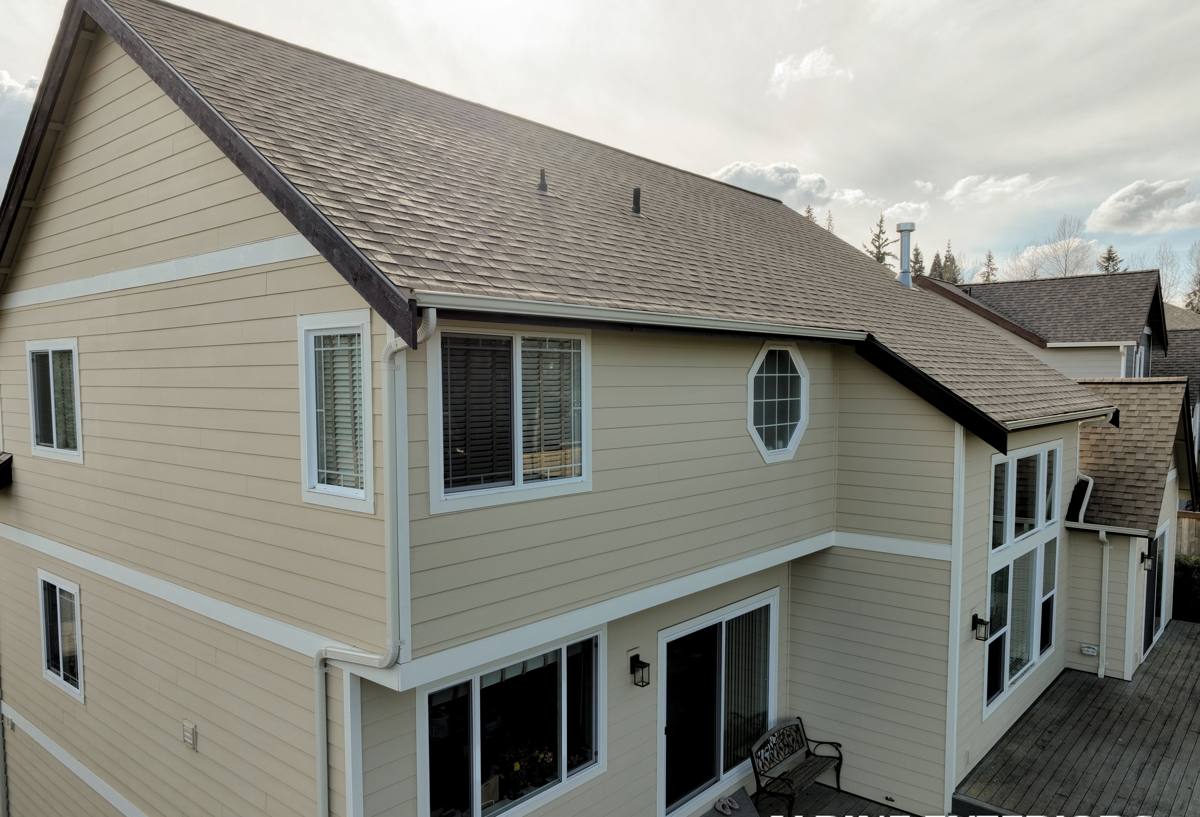
What California Creek's Climate Demands From a Window Installation
Wind-Driven Rain
The open, low-lying terrain around California Creek doesn't offer much of a wind break, and storms moving through this part of Whatcom County push rain sideways into wall assemblies instead of straight down. For windows, that means water gets tested at seams and transitions that a calmer, more sheltered climate would rarely stress. A window's real performance in this kind of exposure comes down to how well the flashing laps and seals into the surrounding wall — not the glass or frame alone.
Marine Air and Corrosion
Even set back from open water, California Creek gets enough marine air moving through to accelerate corrosion on lower-grade fasteners, hinges, and window hardware over years of exposure. Hardware that would last decades in a dry inland climate can start binding, pitting, or failing years earlier out here, which is one reason hardware grade matters as much as frame material when a window is being installed new.
Moss, Mildew, and Prolonged Moisture
Mild temperatures and near-constant dampness through fall, winter, and spring give moss and mildew a long growing season across Whatcom County, and window sills, trim, and the framing around older openings are common places it takes hold. Anywhere water lingers instead of draining away becomes a growth surface eventually. Shaded elevations and windows tucked under deep eaves or tree cover tend to need attention first.
Condensation From Interior-Exterior Temperature Swings
The gap between heated interiors and cold, wet exteriors through a typical Whatcom County winter creates real condensation pressure on glass and frames. A properly installed, well-glazed window handles that pressure without much drama. An older or poorly sealed window shows it constantly, with fogging, sweating sills, or moisture trapped between panes.
What a Correct Window Installation Actually Involves
Installing a window is often talked about like it's mostly a product decision, but the product is only part of the equation. The rough opening has to be prepped correctly, the flashing has to integrate with the existing weather-resistive barrier and siding, and every seam has to be sealed with materials rated for sustained moisture — not just caulked over and called finished.
Rough Opening Preparation
Before a new window ever goes in, the rough opening needs to be checked for square, level, and plumb, and for any existing water damage or rot in the surrounding framing. Setting a new window into a compromised opening just locks a problem behind new trim — it doesn't fix it.
Flashing Integration
This is the detail that determines whether a window installation holds up for one wet winter or several decades. Flashing has to lap correctly with the house wrap or weather barrier above and below the opening, direct water out and away from the framing, and tie cleanly into the surrounding siding. This is standard practice on every window we install, not an upgrade homeowners have to specifically ask for.
Sealing and Insulation
Gaps between the window frame and rough opening need to be sealed and insulated correctly — not overpacked with expanding foam, which can bow a frame, and not left loose enough to draft. Getting this right affects both energy performance and how the window operates over time.
New Construction vs. Replacement Installation
Window installation looks different depending on whether it's going into new framing or replacing an existing window in an established wall. Both require the same attention to flashing and sealing, but the starting conditions and what's achievable differ.
| Factor | New Construction Installation | Replacement Installation |
|---|---|---|
| Access to framing | Full access before siding goes on | Limited to existing opening unless siding is removed |
| Flashing detail | Built in from scratch, easiest to get right | Must integrate with existing siding and barrier |
| Sizing flexibility | Opening can be framed to the window | Window typically sized to the existing opening |
| Hidden damage risk | Low — everything is visible during framing | Higher — rot or water damage can be hidden until removal |
| Typical timeline | Coordinated with the broader build schedule | Usually a single day per window once materials arrive |
Choosing Window Products for This Climate
We install vinyl and fiberglass window systems suited to the wet, mild Pacific Northwest climate, and we walk homeowners through honest trade-offs rather than pushing a single brand as the only right answer. What matters most for a California Creek home is a well-engineered frame, glazing that performs for both energy efficiency and condensation resistance, and hardware rated to hold up under sustained marine air — not a name on the label.
- Frame material: Vinyl and fiberglass both resist rot in a way uncladded wood-frame windows don't, which matters given how much moisture this area sees year-round.
- Glazing package: Double or triple-pane options with low-E coatings help with energy performance and reduce interior condensation during cold, damp stretches.
- Hardware grade: Corrosion-resistant hardware holds up longer against marine-influenced air than standard-grade hardware.
- Warranty structure: A manufacturer warranty only covers the product — we stand behind our installation work separately, since installation quality is what actually determines long-term performance.
Installation Mistakes That Cause Problems Later
On repair calls throughout this part of Whatcom County, the most common source of window water damage isn't a failed window unit — it's flashing that was never lapped correctly, or caulk used as a substitute for flashing instead of a supplement to it. Caulk alone breaks down and cracks over time; it was never meant to be the sole barrier against wind-driven rain. Other recurring issues include foam insulation packed tightly enough to bow a frame out of square, and new windows installed into openings with existing rot that was never addressed first.
Why a Local California Creek Crew Matters
A contractor who works this part of Whatcom County regularly already understands how wind-driven rain and marine air behave here compared to a drier, more sheltered climate. That shows up in decisions that don't get discussed on a sales visit — how much lap a flashing detail actually gets, whether caulk is treated as adequate sealing on its own, which hardware grade gets specified for a given opening. Those decisions are what determine whether a window installation holds up for one wet season or several decades, and they're easier to get right consistently when a crew has done this work up and down the same stretch of coastline repeatedly.
A Checklist Before Hiring for Window Installation
- Ask specifically how flashing will integrate with the existing siding, not just which window brand is being sold
- Confirm current Washington contractor licensing and active liability insurance
- Get a written scope that separates the manufacturer's product warranty from the installer's workmanship warranty
- Ask whether the rough opening will be inspected for hidden rot or damage before the new window goes in
- Ask about lead times, since custom-sized windows for this region can take several weeks to arrive after ordering
Our Process
We start with an on-site look at the openings being addressed, checking existing framing condition, how current flashing ties into the siding, and what sizing or configuration makes sense for the replacement or new installation. From there we give a straightforward scope of work in writing before any ordering or installation begins. Flashing, sealing, and drainage detailing are handled as standard practice on every window we install, not offered as an optional upgrade.
If you're planning window installation for a California Creek property — new construction, a full replacement, or just a few problem windows — we're happy to take a look and give an honest assessment. Reach out below for a free, no-pressure estimate.