 Birch Bay Siding
 Roofing on the Cherry Point Shoreline
Cherry Point sits right on the water north of Birch Bay, and that location shapes everything about how a roof ages out here. Homes on this stretch of Whatcom County coastline take a steady diet of salt-laden air off the Strait of Georgia, wind-driven rain that doesn't fall straight down, and a wet season that stretches long enough for moss to get a real foothold on anything that stays shaded and damp. An asphalt shingle roof that's installed correctly for this environment will handle all of that for decades. One that's installed the way you'd install it in a dry inland town will show problems years before it should.
We work on roofs throughout Birch Bay and the surrounding Cherry Point area regularly, so we're not guessing at what this climate does to a roof system. We're describing what we actually see when we're up on ladders out here.
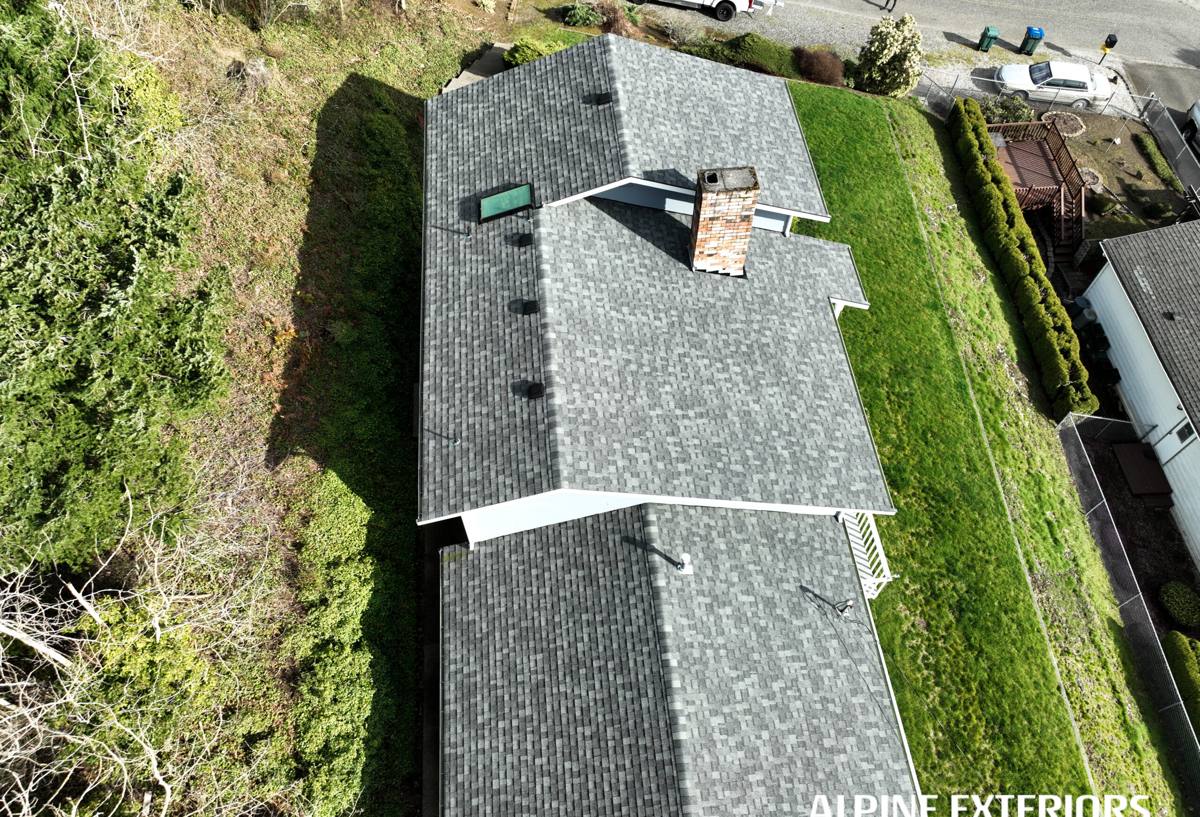
What Cherry Point's Climate Actually Does to a Roof
Salt Air and Metal Fasteners
Proximity to saltwater accelerates corrosion on anything metal — nail heads, flashing, drip edge, vent stacks. Standard electro-galvanized fasteners can start showing rust streaks on shingles well before the shingles themselves are due for replacement. The fix isn't complicated, but it does mean choosing corrosion-resistant fasteners and flashing materials up front rather than using whatever's standard inland.
Wind-Driven, Sideways Rain
Storms coming off the water don't just drop rain straight down — they push it sideways and up under shingle tabs, at ridge caps, and around any penetration in the roof. This is why sealing strips, proper nail placement, and correctly lapped flashing matter more here than on a roof in a more sheltered location. A roof that would perform fine in calmer conditions can leak here if those details are cut short.
A Long Moss Season
Western Whatcom County's wet, mild winters and shaded, north-facing slopes give moss a long window to establish itself. Moss holds moisture against the shingle surface, works its way under tabs as it grows, and can lift shingle edges enough to let water in — even before the roof looks obviously bad from the ground. Roofs with tree cover or north-facing slopes near Cherry Point are especially prone to it.
Temperature Swings and Granule Loss
Asphalt shingles rely on their granule coating to block UV and shed water. Repeated wet-dry and freeze-adjacent cycles through the fall and winter gradually wear that coating down. Once granules are gone in a spot, that patch of shingle ages faster than the rest of the roof, which is part of why a roof out here can develop a few visibly worn areas well ahead of the rest of the field.
What a Correct Asphalt Shingle Job Looks Like Here
A shingle roof is a system, not just a layer of shingles. Every layer underneath the visible surface is doing work, and skipping or under-speccing any one of them is where premature leaks and warranty headaches come from.
- Deck inspection and repair — any soft, delaminated, or water-stained sheathing gets replaced before anything new goes down, not covered up.
- Ice and water shield at vulnerable areas — eaves, valleys, and roof-to-wall transitions get a self-adhering waterproof membrane, not just felt, because these are the spots where driven rain and ice dams do the most damage.
- Synthetic underlayment across the field — a second line of defense that holds up better than old-style felt in a consistently damp climate.
- Corrosion-resistant fasteners and flashing — chosen specifically because of the salt air, not the standard inland spec.
- Properly lapped step and counter-flashing at every wall intersection, chimney, and skylight — this is where the majority of real-world leaks originate, far more often than in the open field of shingles.
- Balanced ridge and soffit ventilation — keeps the attic dry and temperature-stable, which protects the deck from the inside and helps the shingles themselves last their full service life.
- Manufacturer-spec nailing pattern — correct nail count and placement per shingle, which is also what keeps a wind or algae-resistance warranty valid.
Choosing the Right Shingle for This Environment
Not every asphalt shingle product is built the same way, and in a coastal, moss-prone climate those differences matter more than they would somewhere drier.
| Shingle Type | Typical Lifespan Here | Best Fit For |
|---|---|---|
| 3-tab (economy) | 15–20 years | Budget-driven projects, rental properties, less UV/moss exposure |
| Architectural / dimensional | 25–30+ years | Most Cherry Point homes — better wind rating, more granule mass |
| Algae-resistant (copper-infused granules) | 25–30+ years, less staining | Shaded lots, north-facing slopes, homes with existing moss history |
| Impact-rated / premium | 30+ years | Homeowners prioritizing longevity and storm resilience over upfront cost |
For most homes in this specific pocket of Whatcom County, we lean toward architectural shingles with algae-resistant granules as the sensible baseline — the moss and moisture exposure here usually justifies the modest upcharge over standard shingles, and the difference shows up as fewer callbacks and cleaner-looking roofs years down the road.
Our Process for Cherry Point Roofing Projects
1. On-Site Inspection
We get on the roof, not just the ground. We check the deck condition, existing flashing, ventilation, and look for the specific wear patterns this climate produces — moss buildup, granule loss, and corrosion at fasteners and flashing.
2. Honest Scope and Estimate
We tell you what actually needs to happen — full replacement, partial repair, or targeted maintenance — and explain why, in plain terms. We're not going to sell a full tear-off when a repair will genuinely hold up, and we're not going to patch something that's past the point of a patch being a good use of your money.
3. Material Selection
We walk through shingle options with the specific exposure of your roof in mind — sun, shade, tree cover, and how close you are to the water — rather than defaulting to one product for every house.
4. Installation
Tear-off, deck repair as needed, underlayment, flashing, shingles, and ventilation — installed to manufacturer spec so your warranty is actually valid, with the coastal-specific details (fasteners, flashing laps, ice and water shield placement) built in rather than treated as optional extras.
5. Final Walkthrough
We go over the completed roof with you, including ventilation and any maintenance recommendations specific to your lot — tree cover, shade patterns, and anything that affects how the roof will age.
Why a Crew That Already Works Cherry Point Matters
A roofing crew that mostly works drier, inland areas will still build a technically sound roof — but they're calibrated for a different set of problems. They may not default to corrosion-resistant fasteners, may under-spec the waterproof membrane at eaves and valleys, or may not think to flag a shaded north slope as a future moss risk. None of that is negligence — it's just not what their usual jobs require them to think about.
Working this area regularly means we're calibrated for what actually causes failures here: salt exposure, driven rain at penetrations, and moss taking hold on shaded slopes. That shapes material choices and installation details on every Cherry Point job, not just the ones where a problem has already shown up.
Maintenance That Extends Roof Life Here
Even a well-installed roof benefits from periodic attention in this climate. A few habits make a real difference over the life of the roof:
- Have moss removed properly (not pressure-washed, which can strip granules) as soon as it appears, rather than letting it spread through a full wet season.
- Keep gutters and valleys clear so wind-driven rain has a clear path off the roof instead of pooling or backing up under shingles.
- Trim back overhanging branches to reduce the shade and debris that feed moss growth.
- Have flashing and fasteners checked periodically for early corrosion, especially on roofs older than 10–15 years.
- Address small leaks or lifted shingles quickly — in this climate, a small gap has more opportunities to let water in than it would somewhere drier.
Signs Your Cherry Point Roof Needs Attention
A few warning signs are worth acting on before they become a full leak:
- Granules collecting in gutters or at downspout outlets
- Dark streaking or green-black staining, especially on shaded slopes
- Shingle tabs that look lifted, curled, or cupped
- Rust staining around nail heads, vents, or flashing
- Any daylight or water staining visible from inside the attic
Get a Straightforward Estimate
If your roof is showing wear, due for replacement, or you just want an honest read on its condition, we're glad to take a look. We'll give you a clear, no-pressure estimate based on what your roof actually needs — use the form below to get started.