 Birch Bay Siding
 Building a Deck That Actually Holds Up in Cherry Point
Cherry Point sits right up against the marine air coming off the Strait of Georgia, and that changes what a deck needs to survive here versus a deck built twenty miles inland. Salt-laden air corrodes hardware faster, driving rain off the water finds every gap in flashing and fastening, and the shaded, damp stretches of the year turn any north-facing or tree-covered deck surface into a moss farm if it's not built and maintained with that in mind. We've built and repaired decks throughout the Birch Bay and Cherry Point area long enough to know which shortcuts fail first out here, and we build around them from day one.
This page focuses specifically on deck building for Cherry Point properties — what the climate demands, what a correct build looks like, and how we approach the job from first estimate to final walk-through.
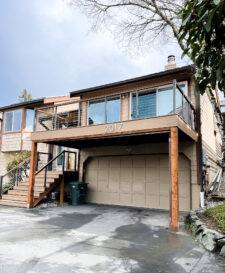
What Cherry Point's Climate Asks of a Deck
Salt Air and Corrosion
Homes near the water deal with airborne salt that settles on every exposed surface, including deck hardware. Standard zinc-coated screws and brackets that hold up fine inland can start rusting within a couple seasons out here, and once a fastener corrodes it weakens the connection it's holding — usually long before the problem is visible from the surface.
Driving Rain
Wind off the water frequently pushes rain sideways rather than straight down, which means water gets driven into places a calm-weather deck wouldn't have to deal with: ledger connections, board end-grain, post bases, and any gap where flashing was skipped or done wrong. A deck built for a drier, more sheltered lot doesn't always account for that lateral water load.
Moss and Algae
Whatcom County's long wet season, combined with shade from trees or the north side of a house, gives moss and algae months to establish themselves on any decking surface that holds moisture. Beyond looking bad, a mossy deck surface gets slick and starts to trap water against the board itself, which accelerates rot in wood decking and staining in composite.
Choosing Decking Material for This Area
There's no single "correct" decking material for Cherry Point — it depends on budget, how much upkeep you want to do, and how exposed the deck is to wind and moisture. Here's how the common options actually perform in this specific climate:
| Material | Salt Air / Moisture Behavior | Maintenance Needed | Typical Lifespan Here |
|---|---|---|---|
| Pressure-treated lumber | Handles moisture well if properly sealed and fastened with the right hardware; end cuts need re-treatment | Re-seal or stain every 1-2 years; regular moss removal | 15-20 years with upkeep |
| Cedar | Naturally rot- and insect-resistant, but softer surface holds moss if not cleaned; salt air greys it faster | Annual cleaning and periodic oil/sealant | 15-25 years with consistent care |
| Composite decking | Doesn't absorb moisture into the board itself; some surface textures resist algae better than others | Occasional washing; no staining or sealing | 25-30+ years, warranty-backed |
| Tropical hardwood | Very dense, naturally moisture-resistant, but requires careful, corrosion-rated fastening | Periodic oiling to maintain color; low rot maintenance | 25+ years |
We're honest with clients about trade-offs rather than pushing one product. Composite costs more up front but removes the moss-and-reseal cycle almost entirely, which matters a lot on a shaded or heavily shaded Cherry Point lot. Wood costs less initially but only performs as well as the maintenance schedule behind it — skip a couple of seasons of cleaning and sealing here, and moss and moisture will find the gaps fast.
Framing and Structural Decisions That Matter Out Here
Footings
Footing depth and design need to account for local soil and frost conditions, and that's something we confirm on site rather than assume — soil composition varies even within a small area like Cherry Point, from sandier bluff-adjacent lots to heavier clay further inland. We size and place footings to the actual conditions of your lot, not a generic spec.
Ledger Board Flashing
The ledger board — where the deck attaches to the house — is the single most common point of failure we see on older decks in this area, because it's the connection most exposed to driven rain and the hardest to inspect once it's covered. A correct ledger installation uses proper flashing layered to shed water away from the house band board, not caulk alone. Caulk fails; flashing done right doesn't need to rely on it.
Fastener and Hardware Grade
In a salt-air environment, we use stainless steel or hot-dip galvanized fasteners and structural hardware rather than standard coated screws, especially anywhere the connection is load-bearing or hard to access later. It costs more per fastener, but replacing corroded hardware two seasons in costs far more than doing it right the first time.
Railings and Hardware Choices
Railing systems face the same corrosion pressure as the deck frame, often more so since they're fully exposed to wind-driven rain and salt air with no roof overhang for protection. We match railing hardware — brackets, post connectors, cable or baluster fittings — to the same corrosion-resistant standard as the structural fasteners, and we check that any manufacturer-rated system is actually rated for coastal or marine-exposure use, not just general exterior use. Not every railing product sold as "outdoor rated" is built for salt air specifically, and that distinction matters this close to the water.
Our Deck Building Process
- On-site assessment. We look at your specific lot — sun and shade exposure, prevailing wind direction, soil, and how close you are to the water — before recommending materials or layout.
- Design and material selection. We walk through the trade-offs (cost, maintenance, lifespan) for your situation instead of defaulting to one product line.
- Permitting. We handle the permit application and coordinate any required inspections with Whatcom County.
- Footings and framing. Built to the actual soil and load conditions on your lot, with corrosion-rated hardware throughout.
- Ledger and flashing work. Done as a layered system, not a single caulk bead, since this is the connection most exposed to driving rain.
- Decking, railing, and finish work. Installed with attention to drainage and airflow underneath the boards, which slows moss establishment.
- Final walk-through. We go over maintenance expectations for your specific material choice so there are no surprises in year two or three.
Permits and Local Code Considerations
Deck construction in unincorporated Whatcom County, which includes Cherry Point, generally requires a building permit once a deck exceeds a certain height or size — the exact thresholds and setback requirements depend on your specific property and zoning. We handle the permit process as part of the build rather than leaving it to the homeowner, and we won't cut corners on inspections to speed things up. A permitted deck also matters if you ever sell the property — an unpermitted structure can complicate a sale or refinance.
Maintaining a Deck in a Moss-Prone, Salt-Air Environment
Every deck out here needs some seasonal attention, but the schedule and tasks depend on material and exposure. A basic annual routine that applies to most decks in this area:
- Clear leaves, needles, and debris from between boards before they trap moisture through winter
- Rinse and scrub moss and algae off the surface at least once a year, more often on shaded sections
- Check fastener heads and hardware for early rust or corrosion, especially near the ledger and post bases
- Reseal or restain wood decking on the schedule appropriate to that product — don't wait for visible graying to act
- Keep gutters and downspouts near the deck clear so runoff isn't dumping extra water onto the structure
- Confirm drainage under the deck isn't pooling, which accelerates rot in framing you can't easily see
Skipping this maintenance doesn't just shorten the deck's lifespan cosmetically — moss and standing moisture work their way into fastener connections and framing over time, which is where the real structural cost shows up.
Why Hire a Crew That Already Works Cherry Point
A deck builder who mostly works drier, more sheltered areas will often spec hardware, flashing, and materials that are perfectly fine in those conditions but undersized for what Cherry Point's wind, salt air, and rain actually do to a structure over time. We build decks throughout the Birch Bay area, including Cherry Point, and we spec every build — fasteners, flashing, footing design, decking material — for the conditions this specific stretch of Whatcom County coastline puts on a structure, not a generic regional average.
If you're planning a new deck or need an honest look at whether an existing one is holding up the way it should, we're happy to come take a look. Reach out for a free, no-pressure estimate using the form below.