 Birch Bay Siding
 Storm Damage Roof Repair for Cherry Point Homes
Cherry Point sits on an exposed stretch of Whatcom County shoreline north of Birch Bay, right where wind off the Strait of Georgia meets whatever weather is rolling through from the water. Roofs out here take a different kind of beating than roofs ten miles inland. Salt-laden air accelerates corrosion on fasteners and flashing, driving rain finds its way under marginal shingle laps, and a long, wet moss season keeps roof surfaces damp for weeks at a time. When a windstorm or heavy rain event causes damage, the repair has to account for all of that — not just patch the visible hole and move on.
This page covers what storm damage roof repair actually involves for a Cherry Point home, what we look for during an inspection, and why a repair done without local knowledge of this coastline often fails early.
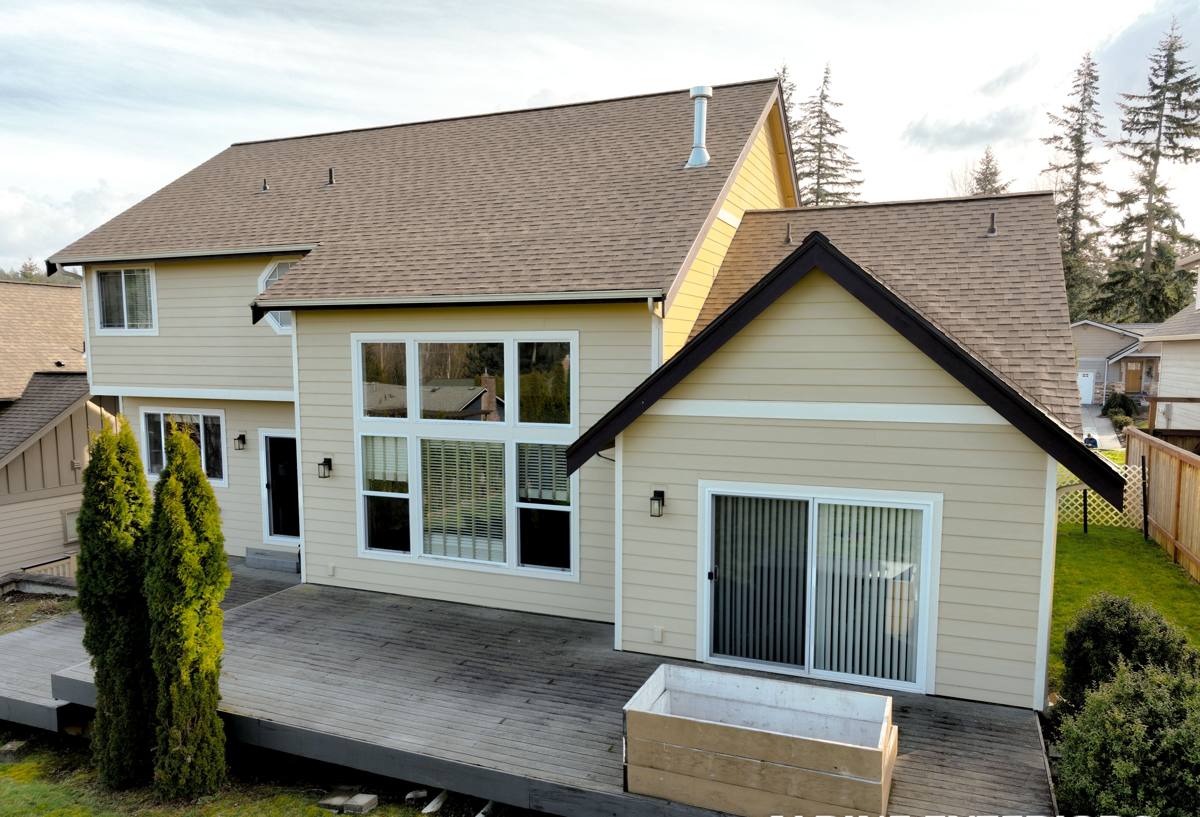
What Cherry Point's Climate Does to a Roof
Salt Air and Wind Exposure
Homes close to the water deal with airborne salt that settles on roofing metal, fasteners, and flashing year-round. Over time this speeds up corrosion on anything that isn't rated for coastal exposure — exposed nail heads, cheap flashing, and unprotected metal edges rust faster here than they would a few miles inland. Add in the wind gusts that come off open water during winter storms, and you get uplift forces that work shingle tabs loose, especially on roofs where the original installation used minimal fastener counts or the wrong nailing pattern.
Moss and Prolonged Moisture
Whatcom County's wet season stretches long, and shaded or north-facing roof slopes in Cherry Point can stay damp for much of it. Moss doesn't just look bad — it holds moisture against the shingle surface, works its way under tabs and edges, and gradually lifts material that would otherwise shed water cleanly. A roof that's already carrying a moss load going into a storm is more vulnerable to wind and water intrusion than a clean one, because the moss has already compromised the seal.
Signs Your Roof Has Storm Damage
Not all storm damage is obvious from the ground. Some of it shows up as a water stain weeks later, long after the wind event that caused it. Here's what we tell Cherry Point homeowners to watch for after any significant wind or rain event:
- Shingles that are visibly lifted, curled, cracked, or missing entirely
- Granules collecting in gutters or at downspout outlets after a storm
- New or worsening water stains on ceilings or in the attic
- Bent, creased, or missing flashing around chimneys, vents, or roof-to-wall transitions
- Soft spots or sagging when walking a roof deck (a sign of moisture already in the sheathing)
- Debris damage — branches, gravel from roofing, or dented vents and caps
- Daylight visible through the roof deck from inside the attic
If you see any of these, the roof needs a closer look before the next storm, not after.
What a Correct Storm Damage Repair Involves
A Real Inspection First
A correct repair starts with getting on the roof, not just looking from the driveway. We check the full field of shingles, all flashing points, vents, valleys, and the attic side of the deck for moisture. Storm damage is often worse — or milder — than it looks from below, and a repair scoped from a ground-level guess tends to miss something.
Matching the Repair to the Damage
Isolated wind damage to a section of shingles usually calls for a targeted repair: removing and replacing the damaged material, re-securing lifted tabs, and resealing. But if the underlying decking has taken on water, or if the damaged area is large enough that patched-in shingles won't blend or seal properly with the surrounding roof, a larger section replacement is the honest answer. We tell you which situation you're in and why, rather than defaulting to the cheapest option that won't hold.
Flashing and Fastening Done for the Coast
Given the salt exposure at Cherry Point, we don't cut corners on flashing and fasteners during a repair. That means corrosion-resistant materials at chimneys, vents, and wall transitions, and a fastening pattern that accounts for the wind this area actually sees — not just the manufacturer's minimum spec for a sheltered inland lot.
Checking for What Caused It
Sometimes storm damage exposes a pre-existing weak point — an old repair, a poorly flashed penetration, or a section of roof already softened by trapped moisture. Part of doing this correctly is telling you if the storm just found a problem that was already there, so you're not paying to patch the same spot again next winter.
Repair vs. Replacement: What Drives the Decision
Homeowners often ask whether a storm-damaged roof needs a full replacement or can be repaired. The honest answer depends on a few factors, laid out below.
| Factor | Favors Repair | Favors Replacement |
|---|---|---|
| Extent of damage | Isolated to one section or slope | Widespread across multiple slopes |
| Roof age | Under roughly 10-12 years old | Nearing or past expected service life |
| Decking condition | Dry, solid sheathing | Soft, delaminated, or water-stained decking |
| Shingle availability | Matching shingles still obtainable | Discontinued or badly weathered, won't blend |
| Moss/algae history | Minimal, easily cleaned | Heavy, recurring, already lifting material |
| Insurance scope | Adjuster approves targeted repair | Adjuster approves full slope or roof |
We walk you through where your roof falls on each of these before recommending a direction — never the reverse.
Our Storm Damage Repair Process
- Inspection and documentation. We assess the roof, photograph the damage, and note anything relevant for an insurance claim.
- Temporary protection if needed. If there's active leaking or an open section, we get it weatherproofed quickly so water damage doesn't spread while repairs are scheduled.
- Written scope and estimate. You get a clear explanation of what's damaged, what needs to happen, and why — in plain language, not a vague line item.
- Repair work. Damaged materials are removed, decking is checked and replaced where needed, and new shingles, flashing, and fasteners go in to match the rest of the roof and hold up to local conditions.
- Final check. We verify the repair sheds water properly and blends with the surrounding roof before we call the job done.
Why a Crew That Already Works Cherry Point Matters
A roof repair contractor who mostly works inland, sheltered neighborhoods can still do competent work — but they may not think about salt exposure on fasteners, the wind loading this shoreline sees, or how aggressively moss regrows on shaded coastal roofs here. We work throughout Birch Bay and the surrounding Whatcom County coastline, so those aren't unusual conditions to us — they're what we plan for on every repair. That shows up in the materials we spec and the details we don't skip, like flashing at transitions that a less careful repair would leave exposed.
It also matters for response time. Storm damage doesn't wait for a convenient week, and a contractor already familiar with the area can typically get eyes on a damaged roof faster than one coming from farther afield.
Working With Your Insurance Claim
Most storm damage repairs at Cherry Point homes go through homeowners insurance. We're not a public adjuster and won't claim to be, but we can document the damage clearly, provide a written estimate that matches what an adjuster needs to see, and explain in plain terms what's storm-related damage versus pre-existing wear — insurers distinguish between the two, and a vague estimate can slow a claim down or get parts of it denied. If your policy requires photos, a scope of work, or a follow-up inspection after temporary repairs, we can provide what's needed.
Reducing Future Storm Damage
A repair is a good time to address the conditions that made the damage worse than it needed to be. A few things worth considering while the roof is already being worked on:
- Moss removal and treatment on shaded slopes, especially north-facing sections
- Upgrading flashing at chimneys or vents that were already marginal before the storm
- Checking attic ventilation, since poor airflow keeps decking damp longer after any leak
- Confirming gutters and downspouts are clear so wind-driven rain has somewhere to go
- A fastening upgrade in wind-exposed areas if the original installation was under-nailed
None of these are required to fix storm damage, but skipping them on a roof that's already shown a weakness usually means dealing with the same problem again during the next windstorm.
Get a Straight Answer on Your Roof
If a recent storm has left you with missing shingles, a leak, or just a roof you're not sure about anymore, we're happy to take a look. We'll tell you honestly whether it's a repair or something bigger, and what it'll take to get it done right for a Cherry Point roof. Reach out using the form below for a free, no-pressure estimate.