 Birch Bay Siding
 Composite Decking for Lummi Island's Marine Climate
Lummi Island sits close enough to the water that every deck built here has to deal with salt-laden air, long stretches of driving rain, and a moss season that seems to start earlier and last longer each year. A deck that would hold up fine twenty miles inland can start showing problems within a couple of seasons out here if it wasn't built with this specific environment in mind. Composite decking, installed correctly, is one of the better answers to that problem — but "correctly" is doing a lot of work in that sentence, and it's where a lot of decks in this area go wrong.
This page covers what composite decking actually needs to hold up on Lummi Island, what a proper installation looks like, and how our process works for homeowners in this part of Whatcom County.
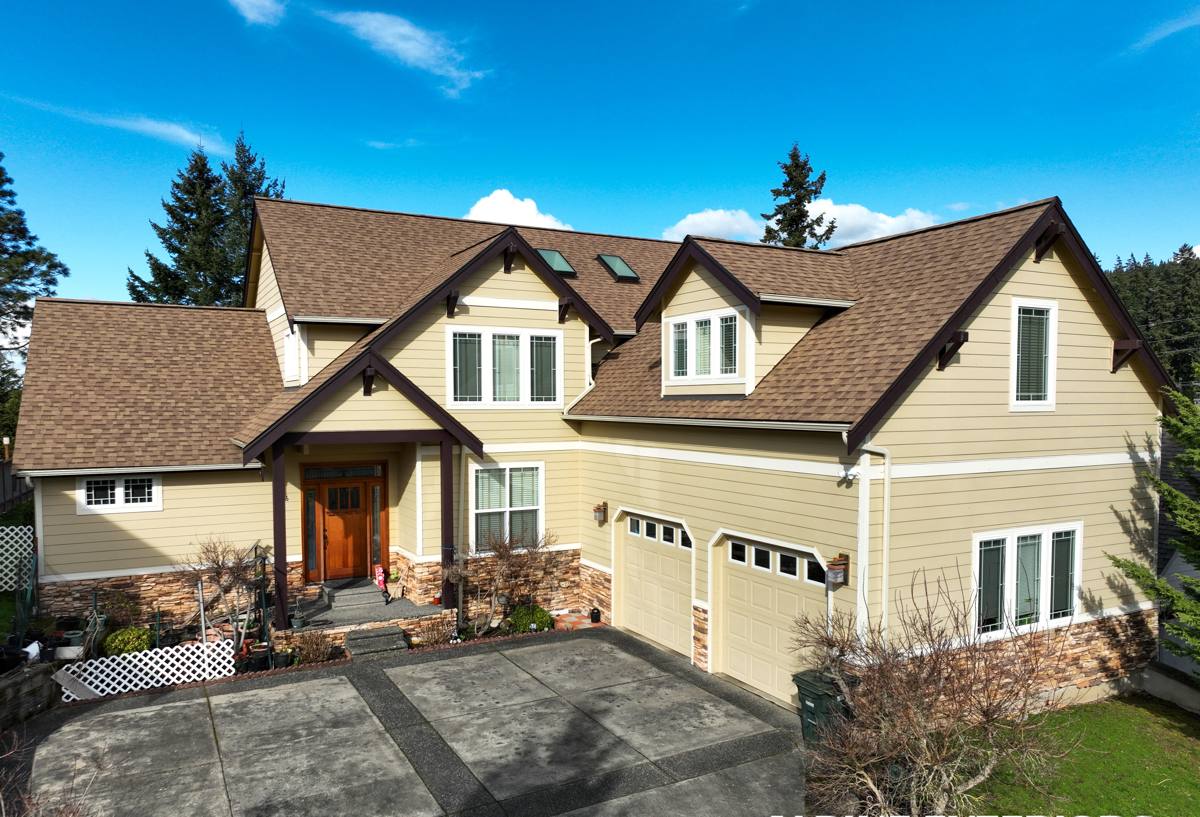
What the Local Climate Does to a Deck
Whatcom County's coastal edge, and Lummi Island in particular, has a few climate factors that matter more here than in most of the county:
Salt Air and Metal Fasteners
Salt spray carried off the water accelerates corrosion on any exposed metal — screws, joist hangers, brackets. Standard hardware store fasteners can start rusting and staining a deck's surface faster near the shoreline than they would even a few miles inland. This is a hardware selection issue as much as a decking material issue.
Driving Rain and Standing Water
Rain here rarely falls straight down. Wind-driven rain gets pushed sideways under railings, into board gaps, and along ledger boards where the deck meets the house. Any spot where water can collect instead of shed off becomes a long-term problem — rot in wood framing, mold and mildew staining on composite surfaces, and premature wear at fastener points.
Moss and Algae Growth
Consistent moisture plus shade equals moss, and moss holds even more moisture against a deck surface once it takes hold. On a north-facing deck or one shaded by trees, moss and algae growth can start within a single wet season if the boards don't drain and dry properly.
Temperature Swings
It's not extreme cold here, but freeze-thaw cycles still happen through the winter. Water that gets trapped in a poorly built substructure can freeze, expand, and work fasteners loose or crack framing members over a few years.
Why Composite Decking Holds Up Better Here — When It's Done Right
Composite decking doesn't rot the way wood does, doesn't need annual staining or sealing, and resists the kind of splintering and surface decay that salt air and rain accelerate in wood decking. That's the honest case for it in this location. It's not maintenance-free, and it's not immune to moss or mildew staining if the substructure traps moisture — but it removes an entire category of problems that wood decking is exposed to every wet season.
The trade-off is that composite decking is less forgiving of installation mistakes than wood. Wood can be field-fit and adjusted on the fly. Composite has manufacturer-specified fastening patterns, gap tolerances, and ventilation requirements that, if ignored, will cause the exact problems — moisture trapping, staining, board movement — that the material is supposed to avoid.
What a Correct Composite Deck Installation Involves
Substructure First
The framing underneath a composite deck matters as much as the boards on top, arguably more in a wet climate like this one. Joists need proper spacing for the specific composite product being used (composite generally needs tighter joist spacing than wood decking, especially at angles or diagonal patterns), and every joist should be protected with a joist tape or flashing to keep water from soaking into the top of the lumber where fasteners penetrate.
Ledger and House Connection
Where the deck attaches to the house is the single most common failure point on any deck near the water. Proper flashing here — not just caulk — is what keeps wind-driven rain from working its way behind the siding and into the wall framing over time. This connection gets inspected and done right, not covered up and hoped for.
Fastening and Hardware
Given the salt air, we use stainless steel or coated fasteners rated for coastal exposure rather than standard galvanized hardware. The upfront cost difference is small compared to what it costs to fix rust staining or a failed hanger a few years down the road.
Ventilation and Drainage
Composite boards need airflow underneath to dry out properly between rain events. Skirting, if used, should include vents rather than sealing the underside of the deck completely. Board spacing follows the manufacturer's gap specifications — too tight and water sits on the surface; too wide and debris collects between boards.
Picture-Framing and Edge Detailing
Cut ends of composite boards are more vulnerable to moisture absorption than the factory-capped face and edges. Picture-framing (using a perpendicular border board to hide cut ends) isn't just a style choice — it protects the most exposed edges of the deck from the two things that damage composite decking fastest: standing water and direct cut-end exposure.
Composite Board Options and Cost Factors
Not all composite decking is built the same way, and the differences matter more in a wet, salty climate than they would somewhere drier. Here's a general breakdown of what affects cost and performance:
| Factor | What It Affects | Why It Matters on Lummi Island |
|---|---|---|
| Capped vs. uncapped composite | Moisture resistance, staining, price | Fully capped boards resist moss and mildew staining far better in a shaded, damp environment |
| Board profile (grooved vs. solid edge) | Fastening method, water shedding | Grooved boards with hidden fasteners shed water differently than solid-edge, screw-down boards |
| Color and surface texture | Heat absorption, moss visibility | Lighter colors show less moss staining early; darker colors absorb more heat and can accelerate wear at fastener points |
| Railing and fastener hardware | Corrosion resistance | Coastal-rated stainless hardware costs more upfront but avoids rust streaking near salt air |
| Substructure material (treated wood vs. composite/aluminum joists) | Long-term rot resistance, upfront cost | A composite or aluminum substructure removes the wood-rot risk entirely, at a higher material cost |
We'll walk through these trade-offs during the estimate based on your deck's exposure — a deck tucked under tree cover has different priorities than one fully exposed to wind off the water.
Our Process, Start to Finish
1. On-Site Assessment
We look at sun and shade exposure, wind direction, drainage slope, and how the deck ties into the house before recommending a board type or substructure approach. A deck design that ignores these site conditions is guessing.
2. Straightforward Estimate
You get a clear breakdown of material options and what drives the cost difference between them — no pressure to upsell to the most expensive board line if it's not needed for your deck's exposure.
3. Proper Demo and Substructure Work
If we're replacing an existing deck, we check the ledger connection and framing condition before building on top of it. A new composite deck built over a compromised or unflashed substructure just hides the problem instead of fixing it.
4. Installation to Manufacturer Spec
Fastening patterns, gap spacing, and ventilation details follow the manufacturer's installation requirements — this is also what keeps the product warranty valid if you ever need it.
5. Final Walkthrough
We go over basic care specific to your board choice and site conditions before we consider the job done.
Maintaining a Composite Deck in a Wet, Salty Climate
Composite decking cuts down on maintenance significantly compared to wood, but "low maintenance" isn't "no maintenance," especially this close to the water. A simple seasonal routine goes a long way:
- Sweep off leaves, needles, and debris regularly — trapped organic matter is what feeds moss and mildew growth
- Rinse salt residue off the surface periodically, especially after storms with wind off the water
- Wash the deck surface with a composite-safe cleaner once or twice a year to prevent moss and algae buildup before it sets in
- Check that gaps between boards stay clear so water continues draining properly
- Inspect railings and fastener points for early rust staining and address it before it spreads
- Keep nearby vegetation trimmed back to reduce shade and improve airflow across the deck surface
Why a Crew That Already Works Lummi Island Matters
Building a deck here isn't fundamentally different from building one anywhere else in Whatcom County, but the details that separate a deck that lasts from one that doesn't are almost all climate-specific: fastener selection, flashing at the ledger, board gap spacing, and substructure ventilation. A crew that regularly works this stretch of coastline has already made the adjustments needed for salt air and driving rain — it's not a special add-on service, it's just how the job gets done correctly out here. That familiarity also means fewer surprises during the estimate, since we've already seen how sun exposure, wind direction, and shade patterns play out on decks in this specific area.
Get a Straightforward Estimate
If you're considering a new composite deck or replacing an aging one on Lummi Island, we're happy to take a look and walk you through your options honestly — including where you can save money and where it's worth spending more given your deck's exposure. Fill out the form below for a free, no-pressure estimate.