 Birch Bay Siding
 Why Decks Near Point Whitehorn Wear Out Faster Than Inland Decks
If you live out toward Point Whitehorn, you already know your deck doesn't age the same way a deck in Lynden or Ferndale does. The combination of salt-laden air off the Strait of Georgia, near-constant winter rain, and a moss season that can stretch from October well into May puts a different kind of stress on outdoor structures. Wood decking swells, cups, and grays quickly in this environment. Fasteners corrode faster near the water. And any horizontal surface that doesn't shed water and debris well becomes a moss farm within a season or two.
Composite decking was developed largely to solve these exact problems, but only when it's installed correctly for the conditions it's actually facing. A composite deck installed the same way you'd install one in a dry inland climate will still underperform out here. The material matters, but the substructure, spacing, and drainage details matter just as much — arguably more.
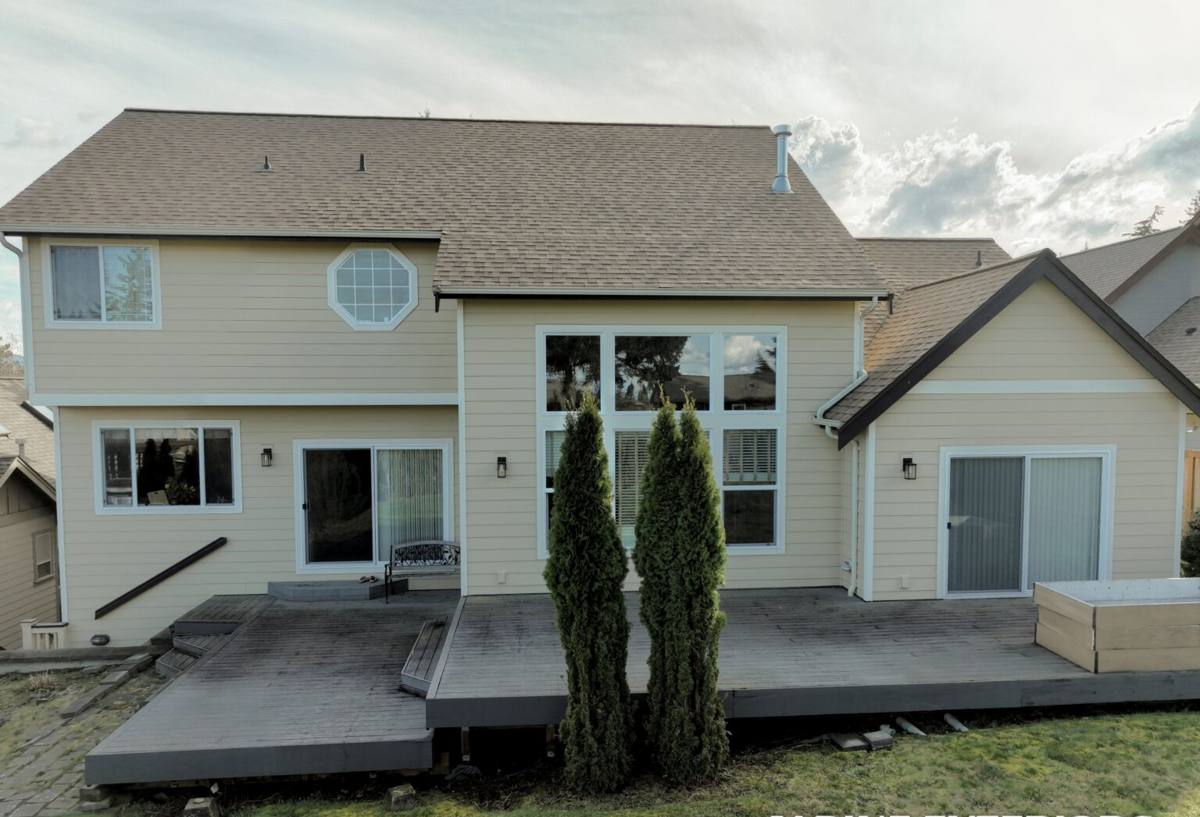
What Point Whitehorn's Climate Actually Does to a Deck
Salt Air
Homes near the water in Whatcom County deal with airborne salt that accelerates corrosion on anything metal — screws, joist hangers, railing brackets, post bases. Over years, cheap or mismatched fasteners rust, stain the decking around them, and eventually weaken. This is one of the most common failure points we find when we're called out to look at an older deck near the shoreline.
Driving Rain
Storms coming off the water don't just fall straight down — wind-driven rain gets pushed sideways into ledger connections, under rail posts, and into any gap that wasn't flashed or sealed properly. A deck built without attention to water management will trap moisture in the framing long after the surface looks dry.
Moss and Organic Buildup
Constant damp shade, common on tree-lined lots around Birch Bay and Point Whitehorn, means moss, algae, and pollen build up on any decking surface that doesn't drain and dry quickly. On solid or poorly-ventilated boards, this buildup holds moisture against the surface, and on wood it becomes a slip hazard and a maintenance headache. Composite boards with the right surface texture and proper board spacing shed this material much better, but they still need airflow underneath to actually dry out between rain events.
What a Correctly Installed Composite Deck Requires Here
Composite boards themselves are largely immune to rot, but the framing underneath them is still real wood (or in some cases treated wood or aluminum), and that framing is what actually fails first in a coastal climate if it's not protected. A correct installation for Point Whitehorn conditions includes:
- Joist tape or a comparable moisture barrier on top of every joist, so the composite board's fastener penetrations don't create a path for water into exposed wood grain
- Stainless steel or coated coastal-grade fasteners and hardware throughout — not standard galvanized, which corrodes faster in salt air
- Proper board gapping for expansion and drainage, following the manufacturer's spec for our temperature swings
- Ledger board flashing that actually directs water away from the house band joist, not just a bead of caulk
- Adequate under-deck ventilation so airflow can dry out the substructure between storms, especially on low-to-grade decks common on sloped Point Whitehorn lots
- Post bases and railing anchors that don't trap standing water against end grain or metal brackets
Skipping any one of these doesn't show up as a problem in year one. It shows up in year five or six, as soft framing under boards that still look fine on top, or as rust streaks bleeding through the decking near fastener lines.
Composite vs. Other Decking Materials for This Climate
| Material | Behavior in Salt Air / Rain | Moss & Algae Resistance | Long-Term Maintenance |
|---|---|---|---|
| Wood (cedar, pressure-treated) | Absorbs moisture, swells and checks over time, fasteners can corrode and stain | Low — porous surface holds moisture and organic growth | Annual staining/sealing, board replacement over time |
| Composite (capped) | Doesn't absorb water into the board; performance depends on substructure protection | Good — textured, capped surfaces shed growth and clean easily | Periodic washing, no staining or sealing required |
| PVC / vinyl decking | Fully water-resistant board, but can be more sensitive to thermal expansion in temperature swings | Good, similar to composite | Low, but installation tolerances are less forgiving |
| Aluminum decking | Excellent water resistance, but can be noisy and cold-surfaced near the water | Good | Very low, higher upfront material cost |
We install composite decking most often out this way because it strikes the best balance for coastal Whatcom County homes: strong moisture and moss resistance, a natural wood-look surface, and manufacturer warranties that account for coastal use — provided the substructure underneath is built the way it needs to be.
Our Process for a Point Whitehorn Composite Deck
1. On-Site Assessment
We look at your existing deck or build site, note grade, drainage direction, sun and shade exposure, and how exposed the location is to wind off the water. A deck tucked behind the house needs different ventilation planning than one facing open water.
2. Substructure Inspection or Build
If we're replacing decking over an existing frame, we check joists, ledger connection, and post bases for rot or corrosion before a single composite board goes down. Framing problems get fixed first — composite boards over compromised framing just hide the problem, they don't solve it.
3. Moisture Management Details
Joist tape, correct ledger flashing, and fastener selection are handled before decking installation, not treated as optional extras.
4. Board Installation
Boards are installed to manufacturer spec for gapping, fastening pattern, and expansion allowance, accounting for our regional temperature range so boards don't buckle or gap excessively season to season.
5. Railing, Fascia, and Trim
We match hardware corrosion resistance to the coastal environment and finish edges so cut ends and fastener points aren't left exposed to weather.
6. Walkthrough
We go over basic care with you before we leave — what to expect from the surface over time, and simple habits that keep moss and algae from taking hold.
Living With a Composite Deck in a Moss-Prone Climate
Composite decking is low-maintenance, not zero-maintenance. In a climate like Birch Bay's, a little seasonal attention goes a long way toward keeping a deck looking and performing the way it should for decades.
- Sweep or blow off leaves and needles regularly in fall — trapped organic debris is the single biggest driver of surface staining and moss growth
- Rinse the deck surface periodically through the wet months, especially in shaded areas that don't get direct sun to help them dry
- Clean gaps between boards occasionally — debris buildup here can slow drainage and trap moisture against the substructure
- Check railing posts and fastener points once a year for early rust staining, which can signal a hardware issue worth addressing early
- Trim back overhanging vegetation where possible to reduce constant shade and debris drop onto the deck surface
Cost Factors for a Point Whitehorn Composite Deck
| Factor | Why It Affects Price |
|---|---|
| Substructure condition | Rotted or corroded framing found during tear-off needs repair or replacement before decking goes down |
| Deck height and grade | Low-to-grade decks near sloped lots need more attention to ventilation and drainage detailing |
| Board and hardware grade | Coastal-grade fasteners and higher-tier composite lines cost more upfront but reduce long-term maintenance |
| Railing style | Composite or metal railing systems vary widely in material and labor cost compared to basic wood rail |
| Site access | Waterfront and wooded lots around Point Whitehorn can add labor time for material staging and equipment access |
We don't quote a job without seeing the site and the existing structure first — anything else is a guess, and coastal decks have too many hidden variables for guesswork to be useful to you.
Why Local Experience in Point Whitehorn Matters
A crew that only builds decks inland doesn't think about salt-air corrosion or moss-season drainage the same way a crew that works Whatcom County's coastline does. We've seen what a few winters of driving rain and salty wind actually do to fasteners, ledger connections, and framing out here, and we build accordingly from the start rather than learning it the hard way on your project. That local pattern recognition is the difference between a deck that needs attention again in five years and one that holds up for the long haul.
Birch Bay Siding Company works throughout Birch Bay and the surrounding Whatcom County coastline, including Point Whitehorn, and we bring that same coastal-conscious approach to every deck we build or replace.
If you're thinking about a new composite deck or replacing an aging one near Point Whitehorn, we're happy to take a look and walk you through what your specific site needs. Use the form below to request a free, no-pressure estimate.