 Birch Bay Siding
 Decks Built for Cottonwood Beach's Waterfront Conditions
Cottonwood Beach sits close enough to the water that every deck we build there has to answer to the same set of conditions: salt-laden air, wind-driven rain that comes in sideways off Birch Bay, and a long stretch of the year where shaded, damp surfaces grow moss faster than most homeowners expect. A deck built to a generic spec sheet doesn't hold up out here the way it would in a drier inland neighborhood. The framing, fasteners, drainage details, and even the decking material itself all need to be chosen with this specific stretch of Whatcom County coastline in mind.
This page covers what actually goes into a custom deck that's meant to last in Cottonwood Beach — not a generic overview of decking options, but the specific decisions that matter for a waterfront or near-waterfront lot in this part of Birch Bay.
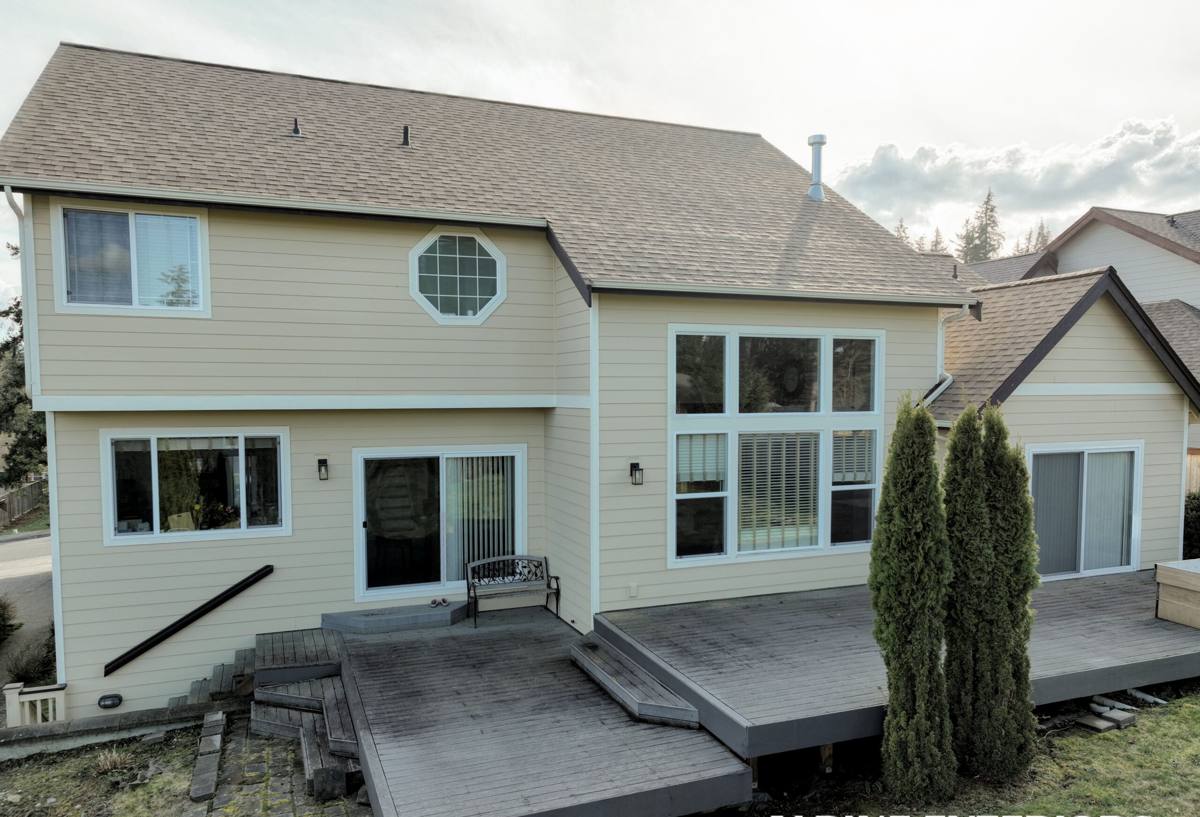
What Birch Bay's Climate Actually Does to a Deck
Three things wear on a deck here more than almost anywhere else in the region, and they compound each other.
Salt Air and Metal Fatigue
Airborne salt accelerates corrosion on anything metal — screws, joist hangers, bolts, railing hardware. On a deck a few blocks inland, standard coated fasteners might be fine for decades. Close to Birch Bay, that same hardware can start showing rust streaks and pitting years earlier. This is the single most common reason we see older decks in this area fail structurally before the visible decking boards look worn out at all.
Driving Rain and Water Intrusion
Storms off the bay tend to push rain horizontally, not just straight down. That matters at every seam, gap, and ledger connection. Flashing details and fastener placement that would be adequate in a calmer inland yard aren't always enough here — wind-driven rain finds its way behind railings, under ledger boards, and into end grain that isn't sealed.
Moss, Algae, and a Long Damp Season
Shaded or north-facing sections of a deck in this area can stay damp for weeks at a stretch during the wetter months, which is exactly what moss and algae need to take hold. Beyond looking bad, a mossy deck surface gets genuinely slick and dangerous, and moss holds moisture against the decking material longer than bare boards would, which shortens its life.
Choosing Decking Material for a Salt-Air, High-Moisture Lot
There's no single "best" decking material for every home — it depends on budget, how the space is used, and how much upkeep a homeowner actually wants to do. But some materials handle Cottonwood Beach's conditions with a lot less maintenance than others.
| Material | Moisture Behavior | Maintenance in This Climate | Typical Lifespan Here |
|---|---|---|---|
| Pressure-treated lumber | Absorbs and releases moisture readily; prone to cupping and checking if not sealed regularly | Needs cleaning and sealing roughly every 1–2 years to hold up against driving rain and salt spray | 10–15 years with consistent upkeep |
| Cedar | Naturally more rot- and insect-resistant than PT lumber, but still absorbs moisture and grays without treatment | Regular cleaning and periodic oiling or sealing; moss control on shaded sections | 15–20 years with good care |
| Composite (capped) | Doesn't absorb water into the core the way wood does; resists rot | Occasional washing to prevent surface algae buildup; no sealing or staining required | 25–30 years, often carrying a manufacturer warranty |
| PVC/vinyl decking | Fully moisture-resistant; unaffected by salt spray | Lowest maintenance of the group; periodic cleaning only | 25–30+ years |
We don't push every client toward composite or PVC — a lot of homeowners want the real look and feel of wood, and cedar in particular has held up well for decades of Pacific Northwest homes when it's maintained. What we do push for is being honest about the maintenance commitment each material requires once salt air and moss season are part of the equation, so the choice matches what the homeowner is actually willing to keep up with.
What's Under the Boards Matters More Than the Boards
A beautiful deck surface on a poorly built substructure is a short-term result. The framing underneath is where longevity is actually decided, and it's also where corners get cut on lower-quality builds because nobody sees it once the decking goes down.
- Ledger board attached to the house with proper flashing and a capillary break, not just caulk, so wind-driven rain can't track behind the siding
- Joist spacing sized for the decking material chosen — composite and PVC often need tighter spacing than solid wood
- Joist tape or comparable protection on top of the framing to keep standing water from sitting directly on cut lumber
- Footings set to the correct depth for this area's soil and frost conditions, especially important on sloped or sandy waterfront lots
- Beams sized for the actual span and load, not just "close enough"
On a Cottonwood Beach lot specifically, we also pay close attention to how close the deck sits to grade and how water drains away from the footings — sandy or loose soil near the water can shift over time if drainage isn't planned for from the start.
Fasteners, Flashing, and Hardware — the Parts That Fail First
In a marine-influenced climate like this one, hardware choice isn't a minor detail — it's often the difference between a deck that's still solid in twenty years and one that needs structural repair in ten. We use fasteners and structural hardware rated for corrosion resistance appropriate to the exposure: coated deck screws for general use, and stainless steel where hardware sits closest to the elements or is hardest to inspect and replace later, such as ledger bolts and railing post connections.
Flashing gets the same level of attention. Every point where the deck meets the house, where a post meets a footing, or where a rail meets the decking surface is a potential entry point for water. Getting these details right the first time matters more here than in a drier climate, because driving rain will find any gap that's left.
Design Choices That Make Sense for Cottonwood Beach Homes
Beyond materials and structure, a few design decisions come up often on decks in this specific area:
Wind Exposure and Railings
Many homeowners here want an open view toward the bay, which pushes toward cable or glass railing systems. Those look great and preserve sightlines, but they need to be engineered for the wind loads this location actually sees — not just installed to a generic railing spec.
Elevation and Grading
Waterfront and near-waterfront lots in Birch Bay often have some grade change between the house and the yard. How high the deck sits, where stairs land, and how the area underneath drains all affect both how the space gets used and how long the structure lasts.
Under-Deck Drainage
For elevated decks, an under-deck drainage system can turn the space underneath into usable dry storage or a covered patio instead of a perpetually damp, moss-prone area — a genuinely useful upgrade in a climate that stays wet for a good part of the year.
Permits and Site Factors Specific to This Location
Whatcom County requires permits for most new deck construction and significant deck rebuilds, and lots near the water in Birch Bay can also fall under shoreline setback considerations depending on proximity to the water. We handle the permit process as part of the job rather than leaving it to the homeowner, and we check setback and site-specific requirements before design work is finalized, not after materials are already ordered.
What Drives the Cost of a Custom Deck Here
| Factor | Why It Affects Cost |
|---|---|
| Size and shape | More square footage and multi-level or curved designs require more material and labor |
| Decking material | Composite and PVC cost more upfront than wood but reduce long-term maintenance costs |
| Height off grade | Taller decks need more substantial framing, stairs, and railings, and often more site work |
| Hardware and fastener grade | Stainless and marine-grade hardware costs more than standard coated fasteners but lasts longer in salt air |
| Site access and soil conditions | Waterfront lots with limited equipment access or loose soil can add time for footings and material handling |
| Permit and engineering needs | Setback reviews or engineered railing systems can add time and cost to the front end of a project |
Exact pricing depends on the specifics of the lot and the choices made above, which is why we walk every site in person before giving a number rather than quoting off a phone call.
Our Process, From First Visit to Final Walkthrough
- Site visit and measurement — we look at grade, drainage, sun and shade exposure, and existing structure before talking materials
- Design and material discussion — honest tradeoffs on wood versus composite versus PVC based on the homeowner's budget and maintenance preferences
- Permit filing — handled by us, including any setback or site-specific review Whatcom County requires
- Demolition of the old deck, if applicable, with attention to what the removal reveals about the existing ledger and framing condition
- Framing — footings, beams, joists, ledger flashing, and joist protection installed to spec before any decking goes down
- Decking, railing, and stairs installation
- Final walkthrough — we go over the finished deck together, including a plain-language rundown of what maintenance the chosen material will need going forward
Maintenance Checklist for a Coastal Deck
Whatever material a deck is built from, a few habits go a long way in this climate:
- Rinse salt spray and debris off the deck surface periodically, especially after storms
- Sweep leaves and organic debris out of corners and against the house before they trap moisture
- Clean moss and algae with a deck-safe cleaner rather than a high-pressure washer, which can damage wood fibers or composite surfaces
- Inspect visible fasteners and railing hardware annually for rust or corrosion
- Reseal or oil wood decking on the schedule appropriate to the product — don't wait until it's visibly gray and dry
- Check ledger flashing and the area where the deck meets the house for signs of water staining
- Keep nearby vegetation trimmed back so shaded sections get more airflow and dry out faster after rain
Why a Crew That Already Works Cottonwood Beach Matters
Deck construction here isn't fundamentally different from anywhere else in the Pacific Northwest, but the details that separate a deck that lasts from one that needs early repairs are specific to this location — the fastener grade for salt exposure, the flashing approach for driving rain, the moss-prone spots that need better airflow or drainage, and the local permit and setback process for waterfront-adjacent lots. A crew that's already built and maintained decks in this neighborhood has already worked through those specifics, rather than treating them as an afterthought partway through the job.
If you're planning a new deck or replacing an aging one in Cottonwood Beach, we're glad to walk the site with you and talk through what makes sense for your home. Use the form below to request a free, no-pressure estimate.