 Birch Bay Siding
 Windows on the Water Side of Birch Bay Take More Abuse
Cottonwood Beach sits close enough to the water that its homes deal with a different set of conditions than a house a few miles inland in Whatcom County. Salt-laden air moves off Birch Bay and settles on everything it touches, including window frames, hardware, and glazing seals. Add in driving rain that comes in sideways during winter storms and a moss season that stretches for months in our wet, shaded climate, and windows here are working harder than the ones in a typical suburban development. Frames corrode faster. Seals fail sooner. Wood rots where it wouldn't in a drier part of the state.
None of that means Cottonwood Beach homes need exotic products. It means the installation has to be done correctly the first time, with materials chosen for this specific environment, because a mediocre window job here shows its weaknesses years before it would somewhere drier.
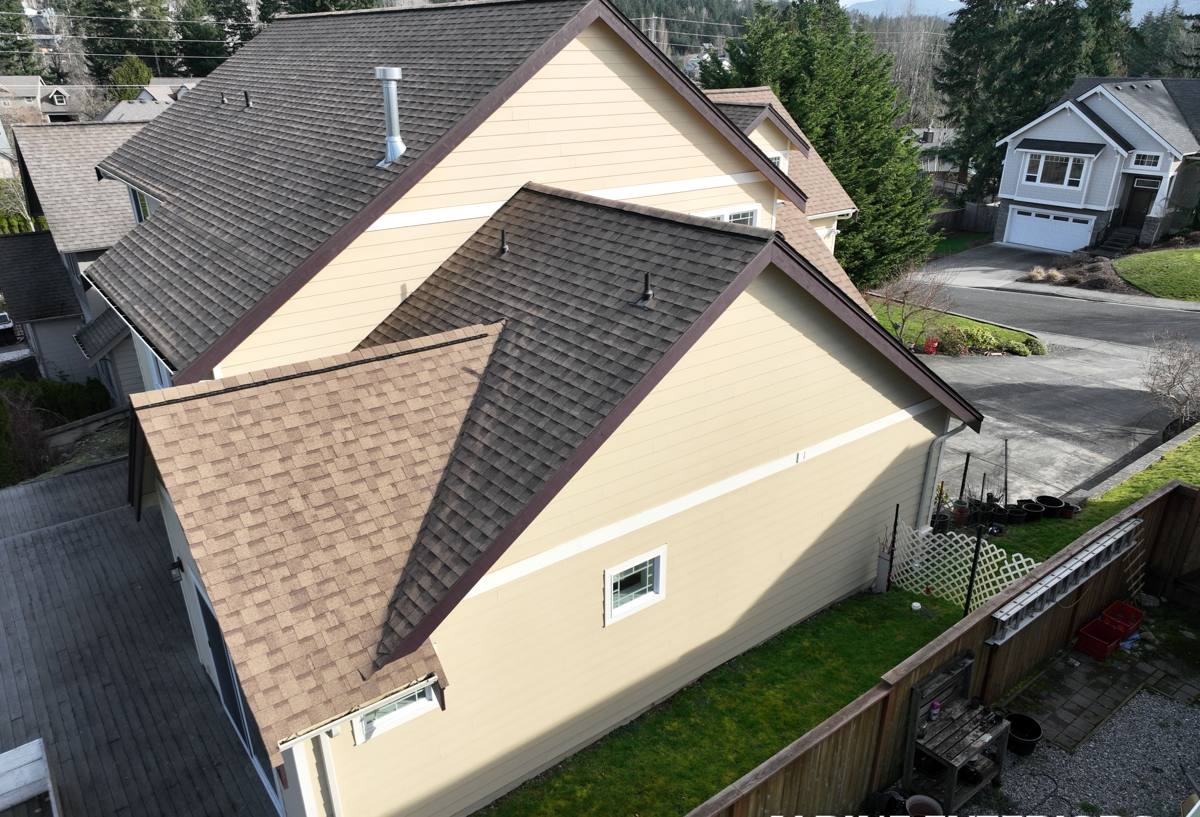
How Salt Air, Rain, and Moss Actually Damage Windows
Salt Air
Airborne salt is corrosive to untreated metal components — hinges, cranks, screws, and some aluminum cladding — and it accelerates the breakdown of certain finishes. Windows that aren't rated or coated for coastal exposure can show pitting, discoloration, and stiff or failing hardware well ahead of their expected lifespan.
Driving Rain
Wind-driven rain doesn't just fall on a window, it gets pushed into every gap in the flashing and sealant. A window that's caulked well but flashed poorly will still leak, because water finds the path behind the trim and into the wall cavity, not just the visible seams. This is the single most common cause of hidden rot we find behind old window openings in this area.
Moss and Sustained Moisture
Whatcom County's long wet season keeps north-facing and shaded walls damp for extended stretches. Moss and algae hold moisture against wood trim and sills, which speeds up decay wherever there's already a small gap or a failed seal for water to enter. A window that would last decades in a dry climate can develop soft, rotting sill wood in a fraction of that time if moisture keeps getting behind the trim.
Signs Your Cottonwood Beach Windows Are Losing the Fight
- Fogging or a hazy film between the panes of a double-pane window, meaning the seal has failed and the gas fill is gone
- Stiff, corroded, or hard-to-turn cranks and locks
- Soft or spongy wood at the sill or bottom corners of the frame
- Visible gaps, cracked caulk, or peeling paint around the window trim
- Drafts or a noticeable temperature difference near the window on windy days
- Water staining on interior drywall or trim below or beside the window
- Difficulty opening or closing the window smoothly
Any one of these on its own might just mean a repair. Several together, especially on the sides of the house facing the water or prevailing wind, usually mean the windows are due for replacement.
What a Correct Window Installation Actually Involves
The window unit itself is only part of the job. In a coastal, high-rainfall setting like Cottonwood Beach, the installation details matter as much as the product:
Flashing and Water Management
Proper flashing directs any water that gets past the exterior finish back out of the wall, not into it. This includes sill pan flashing at the bottom of the opening, house wrap integration, and a shingle-style lap where each layer overlaps the one below it so water always sheds downward and outward.
Sealing
Sealant is the last line of defense, not the first. We use it to back up correct flashing, not substitute for it. Interior air sealing (foam or backer rod and caulk between the frame and the rough opening) also matters for both draft control and preventing condensation inside the wall cavity.
Level, Plumb, and Square
A window that's out of square binds, doesn't lock tightly, and stresses the seals over time, which shortens its life regardless of how good the unit is. Getting this right at installation is what lets the window operate smoothly for the long haul.
Trim and Finish Work
Exterior trim needs to be sealed and finished in a way that sheds water and doesn't trap moisture against the wood, especially on shaded or north-facing walls where moss and mildew take hold fastest.
Choosing the Right Window for This Environment
There's no single "best" window material for every home — it depends on your home's style, budget, and how exposed it is to wind and salt air. Here's how the common options hold up in a Cottonwood Beach setting:
| Material | Coastal Performance | Maintenance | Typical Trade-Offs |
|---|---|---|---|
| Vinyl | Good — won't rust or rot, holds up well to salt air | Low — occasional cleaning | Fewer color/finish options; frame flexes more in very large sizes |
| Fiberglass | Very good — dimensionally stable, resists corrosion | Low | Higher upfront cost than vinyl |
| Aluminum-clad wood | Fair to good, depends heavily on cladding quality and installation | Moderate — interior wood may need attention over time | Attractive interior wood look, but more installation-sensitive in wet climates |
| Bare wood | Poor without diligent upkeep | High — regular painting/sealing required | Classic look, but the most exposed to rot risk here |
Hardware matters as much as frame material. On homes close to the water, we steer clients toward corrosion-resistant hardware finishes and stainless fasteners rather than standard-grade options that were never rated for salt exposure. This is a judgment call based on decades of watching what fails first on this coastline, not a knock on any particular brand.
Full-Frame Replacement vs. Insert (Pocket) Replacement
There are two basic approaches to replacing an existing window, and which one makes sense depends on the condition of what's already there:
Insert Replacement
A new window is fitted into the existing frame, which stays in place. This is faster and less invasive, and it works well when the existing frame and surrounding wall are still solid and dry.
Full-Frame Replacement
The old frame is removed down to the rough opening, exposing the wall for inspection. This is the right call whenever there's evidence of water intrusion, soft wood, or rot around the current window — which we see often on Cottonwood Beach homes with older wood-frame windows that have taken years of driving rain. It costs more and takes longer, but it's the only way to actually fix hidden moisture damage instead of sealing a new window over a problem that's still there.
We'll tell you honestly which approach your home needs after a look at the existing openings — not just quote the cheaper option by default.
Our Installation Process
- On-site assessment — we inspect existing windows, framing, and any signs of water intrusion before recommending a scope of work
- Product selection — we go over material, glazing, and hardware options suited to your home's exposure and your budget
- Removal — old units come out carefully, and we check the rough opening and surrounding framing for hidden rot or moisture
- Flashing and prep — sill pans and flashing are installed or repaired before the new window goes in
- Installation — the new window is set level, plumb, and square, then sealed and insulated around the frame
- Exterior trim and finish — trim is sealed and finished to shed water and resist moss and mildew growth
- Final check — every window is tested for smooth operation and a tight seal before we consider the job done
Why Local Experience in Cottonwood Beach Matters
A crew that only occasionally works this close to the water can miss the details that matter here — flashing details for wind-driven rain, hardware choices that hold up to salt air, and trim finishing that resists Whatcom County's long moss season. We work on homes throughout the Birch Bay area regularly enough to know which failure patterns show up first on this stretch of coastline, and we build the installation to address them from the start rather than reacting to callbacks later.
That also means we're familiar with the kind of homes common to this neighborhood — from older beach cottages to newer builds — and can talk through what makes sense for your specific house rather than a one-size-fits-all recommendation.
Keeping New Windows Performing Long-Term
Even a correctly installed window benefits from basic upkeep in this climate:
- Rinse salt residue off frames and glass periodically, especially on wind-exposed sides of the house
- Check and clear weep holes so water can drain out rather than pool in the frame
- Keep gutters and downspouts clear so runoff doesn't wash directly down over window trim
- Trim back vegetation that keeps a window shaded and damp, which encourages moss and mildew
- Lubricate hardware periodically to prevent salt-related stiffness or corrosion
- Inspect exterior caulking annually and touch up any cracked or separated sections before winter storms
These are small tasks, but they're the difference between a window that looks and performs well for its full lifespan and one that starts showing coastal wear well ahead of schedule.
If your Cottonwood Beach home has windows showing their age, or you're planning a replacement project and want a straight answer about what your home actually needs, we're glad to take a look. Fill out the form below for a free, no-pressure estimate.