 Birch Bay Siding
 Windows Take a Different Beating on Cottonwood Beach
Cottonwood Beach sits close enough to the water that its homes deal with a different set of stresses than houses even a mile or two inland in Birch Bay. Salt-laden air corrodes hardware and finishes faster. Wind-driven rain off the water pushes moisture sideways into gaps that would stay dry on a more sheltered lot. And Whatcom County's long, damp shoulder seasons keep frames and sills wet for weeks at a stretch, which is exactly the environment moss, mildew, and slow wood rot need to get established. None of that means your windows are doomed — it means the replacement has to be specified and installed with that exposure in mind, not treated like a generic swap.
We've worked enough houses along this stretch of shoreline to know that the same window model that performs fine three miles inland can underperform right at Cottonwood Beach if the flashing, sealant, and hardware choices don't account for salt and wind-driven rain. This page covers what that means in practice — for your home specifically, not siding or roofing, just windows, done right for where you live.
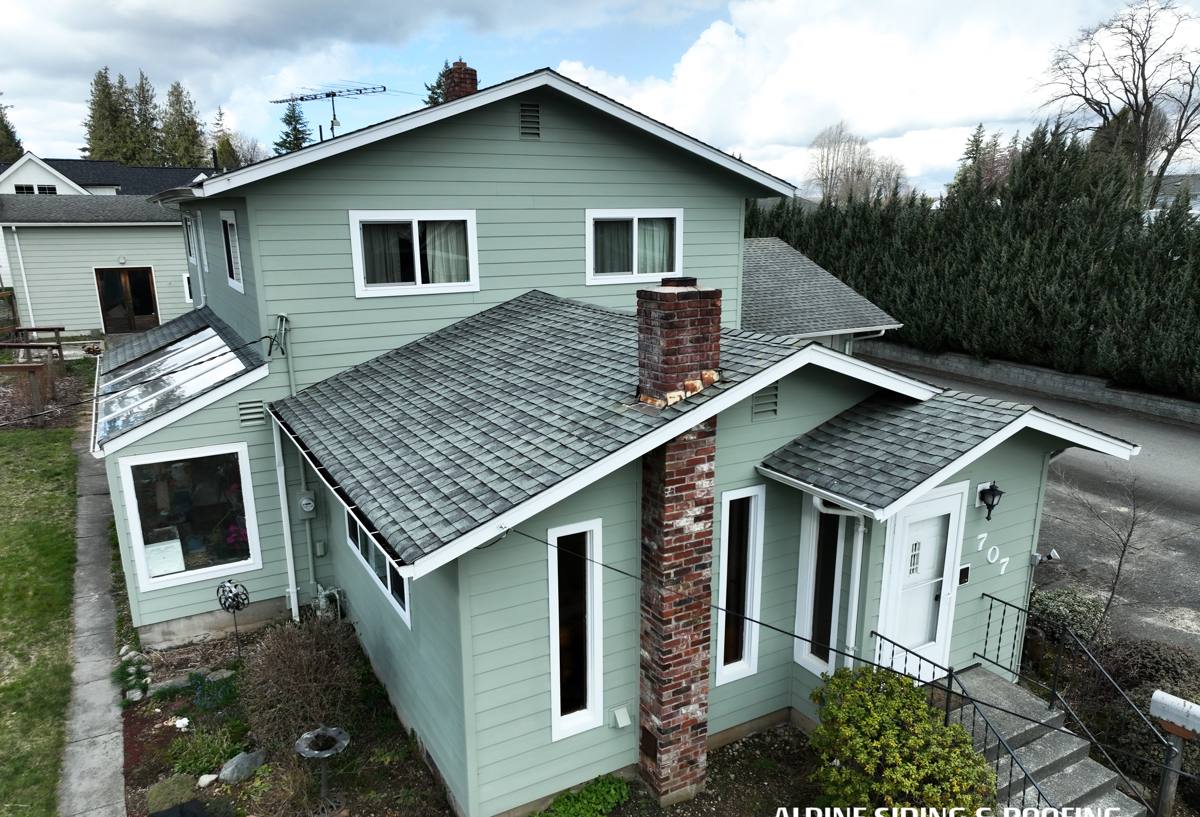
What Salt Air and Coastal Rain Actually Do to Windows
Hardware and Metal Components
Salt in the air accelerates corrosion on anything metal — window locks, hinges, screen frames, and especially older aluminum sash tracks. Once hardware starts to pit or seize, the window stops sealing tightly even if the glass and frame look fine, which quietly increases drafts and moisture intrusion.
Driving Rain and Water Intrusion
Wind off the water doesn't just drop rain straight down — it drives it sideways and upward under the bottom edge of poorly flashed windows. Over time this shows up as staining below the sill, soft trim, or bubbling paint on interior walls near a window that "looks" fine from outside.
Moss, Mildew, and Prolonged Dampness
Whatcom County's moss season runs long — shaded, north-facing, and waterside exposures barely dry out between fall and spring. Moss and algae holding moisture against wood trim or vinyl seams keeps that area wet far longer than a sunnier wall, which is one of the more common reasons we find hidden rot at window corners that otherwise look presentable.
Signs a Cottonwood Beach Home Needs Window Replacement, Not Just Repair
- Persistent fogging or moisture between the panes of double-pane glass — the seal has failed and can't be restored
- Sills or lower corners that feel soft, spongy, or show paint bubbling when pressed
- Windows that are noticeably harder to open, close, or lock than they used to be
- Visible corrosion or chalky white buildup on aluminum frames or hardware
- Drafts you can feel near the frame even when the window is fully latched
- Moss or dark staining collecting in the corners of the frame or on the trim below the sill
- Noticeably higher heating bills without any other explanation
Any one of these on its own might be repairable. Several together, especially on windows over 15-20 years old, usually means replacement is the more cost-effective long-term move.
What a Correct Installation Involves Near the Water
The window unit itself matters, but most coastal window failures we see trace back to installation details, not product defects. A correct install for a Cottonwood Beach exposure includes:
- Full removal and inspection of the old window opening down to the framing, checking for hidden rot or water damage before anything new goes in
- Corrected flashing that directs water down and out, layered correctly with the house wrap so water can never get behind the new window even under sideways-driven rain
- A continuous moisture barrier around the rough opening, with particular attention to the sill pan — this is the single most common weak point in coastal window failures
- Marine-grade or corrosion-resistant fasteners and hardware where salt exposure is a factor, rather than standard fasteners that will rust prematurely
- Proper shimming and squaring so the sash operates smoothly and the seal compresses evenly on all four sides
- Sealants rated for the exposure — a quality exterior sealant applied correctly at every joint, not just a bead around the trim
- Interior and exterior trim finished and sealed so no exposed wood or gap is left for moisture to enter
Skip any one of these steps and the window can look perfect for a year or two while water quietly gets behind it. That's the trap with coastal installs — the failures are usually invisible until they're expensive.
Choosing the Right Window Frame Material for This Exposure
Frame material matters more here than it would on a sheltered inland lot. Here's how the common options hold up against salt air, wind-driven rain, and a long moss season:
| Frame Material | Coastal Salt Air Performance | Maintenance | Notes |
|---|---|---|---|
| Vinyl | Good — won't corrode or rust | Low; occasional rinsing | Reliable, budget-friendly choice for most Cottonwood Beach homes; verify UV and impact rating |
| Fiberglass | Very good — highly stable, resists corrosion and warping | Low | Higher upfront cost; holds paint and seals well over time in wet climates |
| Wood-clad | Fair — cladding protects the exterior, but any breach exposes wood to rot | Moderate to high | We're careful about where we recommend this near the water; sealant maintenance is non-negotiable |
| Aluminum (bare) | Poor to fair — prone to pitting and corrosion in salt air unless heavily coated | Moderate | We generally steer clients away from uncoated aluminum for direct waterfront exposure |
There's no single "best" answer for every home — a shaded, wind-exposed lot right along the water warrants a different recommendation than a home a few streets back with more tree cover. We'll walk your specific exposure with you before recommending a material, rather than defaulting to one product line for every house.
How Our Window Replacement Process Works
1. On-Site Assessment
We look at each window's exposure individually — direction it faces, how much wind-driven rain it takes, whether moss or shade is keeping it damp — and check the condition of the surrounding framing, not just the glass.
2. Straightforward Recommendation
You get a written scope covering frame material, glass package, and installation approach, with the reasoning explained in plain terms — not a sales pitch for the most expensive option.
3. Careful Removal and Prep
Old windows come out cleanly, and any hidden rot or water damage found in the opening gets flagged and addressed before the new window goes in, not covered over.
4. Installation to Coastal Standards
Flashing, sill pans, sealants, and hardware are all specified for a salt-air, high-moisture exposure — the steps outlined above aren't upsells, they're the baseline for how we install near the water.
5. Cleanup and Walkthrough
We walk every window with you, confirm smooth operation and a tight seal, and leave the site clean.
What Affects the Cost of Window Replacement Here
| Factor | Why It Matters |
|---|---|
| Frame material | Vinyl generally costs less upfront; fiberglass and wood-clad cost more but may perform better in this exposure |
| Glass package | Double vs. triple pane, low-E coatings, and gas fill affect both price and long-term energy performance |
| Condition of the existing opening | Hidden rot or framing damage found during removal adds repair work before the new window can go in |
| Number and size of windows | Larger openings and specialty shapes cost more than standard sizes |
| Access and exposure | Upper-story or hard-to-reach windows on wind-exposed walls can add labor time |
| Trim and finish work | Matching existing interior trim or repainting exterior trim adds to the scope |
We give honest, itemized numbers up front rather than a vague range — you'll know what you're paying for and why before any work starts.
Why It Matters to Hire a Crew That Already Works Cottonwood Beach
A contractor who mostly installs windows on sheltered, inland lots doesn't necessarily think about sill pan flashing or corrosion-resistant hardware as a default — because most of their jobs don't demand it. Crews who regularly work Cottonwood Beach and the rest of the Birch Bay waterfront see the failure patterns specific to this exposure often enough that accounting for them becomes standard practice, not an afterthought.
There's also a practical side: familiarity with how homes in this part of Whatcom County are built, what permitting looks like locally, and how quickly weather can turn on a job site here all reduce the chances of delays or surprises mid-project.
Questions Worth Asking Before You Hire
- Will you inspect the framing for hidden rot before installing the new window, not just after issues appear?
- What flashing and sealant approach do you use specifically for wind-driven rain exposure?
- Are the fasteners and hardware rated for salt-air environments?
- What's covered under warranty — the product, the installation labor, or both?
- Can you provide a written, itemized scope before work begins?
- Do you have experience with waterfront or near-waterfront homes in this area specifically?
A contractor who answers these clearly and specifically, without vague reassurances, is a good sign you're dealing with a crew that understands the exposure your home actually faces.
Let's Take a Look at Your Windows
If your windows are fogging, sticking, drafty, or just showing their age, it's worth getting a straightforward, on-site look before deciding what to do. We'll walk your home, check the exposure your windows actually deal with, and give you a clear, no-pressure estimate — use the form below to get started.