 Birch Bay Siding
 Windows Built for Terrell Creek's Climate, Not Just the Catalog
Terrell Creek sits close enough to Birch Bay and the Salish Sea that homes here take on the same weather load as the waterfront, even when the water isn't in view: salt-laden air, wind-driven rain off the strait, and long stretches of grey, damp weather that keep moss and mildew going most of the year. Add in the tree cover and low-lying, shaded lots common through this part of Whatcom County, and you get a microclimate that is genuinely harder on windows than a typical inland neighborhood.
Custom windows for this area aren't about upgrading style — they're about matching the window assembly, the flashing detail, and the frame material to conditions that will find every weak point in a window over time. That's the lens we bring to every Terrell Creek project, whether it's one failed window or a full-house replacement.
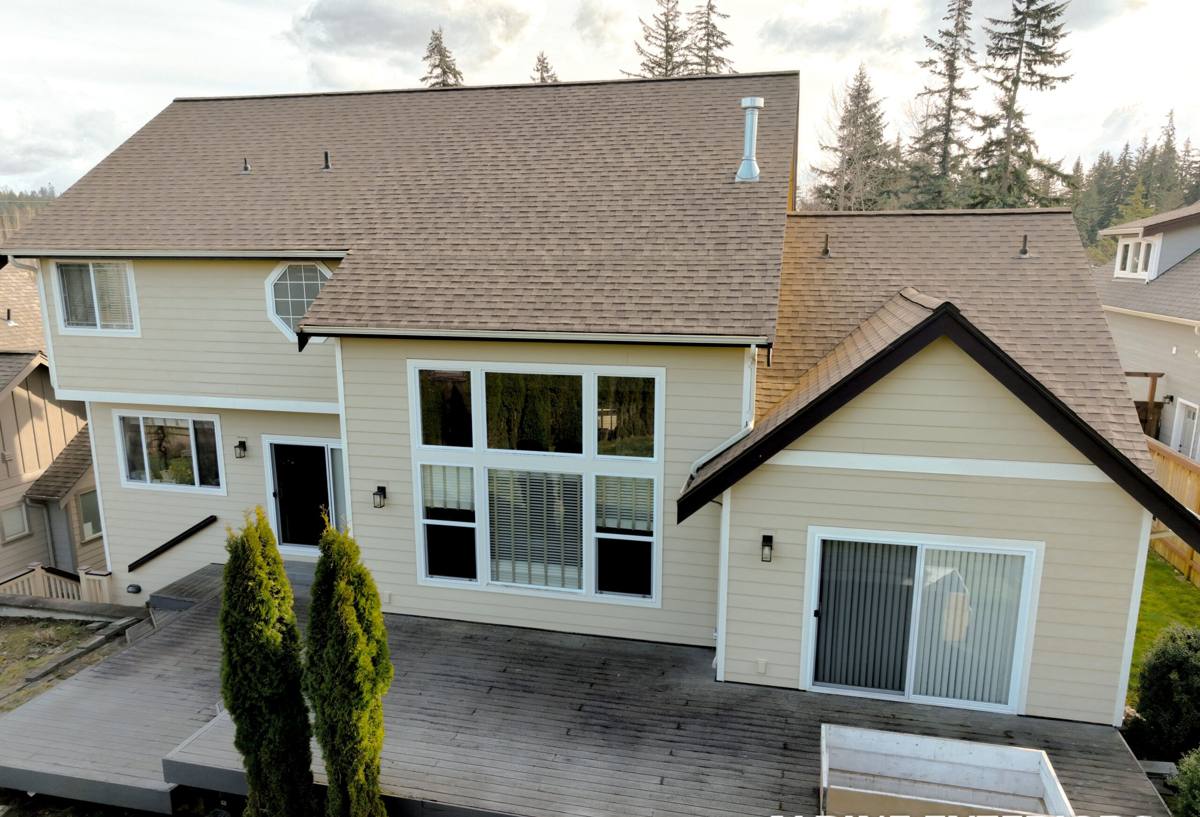
What This Climate Actually Does to a Window
Salt Air
Salt in the air settles on hardware, screens, and exposed fasteners. Over years, it accelerates corrosion on anything that isn't rated for coastal exposure — hinges seize, locks get stiff, and unprotected metal components pit and discolor faster than the rest of the window ages.
Driving Rain
Storms coming off the water don't fall straight down — they get pushed sideways into the wall. That means the window's weatherproofing (the flashing, the sill pan, the sealant joints) is doing as much work as the glass itself. A window that's watertight in a calm rain can still leak in a wind-driven one if it was installed without the right detailing.
Long Moss Season
Shaded, damp lots stay wet longer after every rain. That extended dampness is what feeds moss and algae growth on siding, trim, and window sills — and where moss and mildew take hold on wood components, moisture gets trapped against the frame instead of shedding away. It's less a window problem than a wood-rot and finish problem, but it starts right at the window.
Warning Signs Worth Acting On
- Fogging or a milky haze between the panes of double-glazed glass (a sign the seal has failed)
- Windows that stick, bind, or won't latch cleanly — often swelling from trapped moisture
- Soft or spongy wood at the sill, jamb, or exterior trim
- Corroded, discolored, or seized hardware on windows facing the prevailing weather
- Moss, algae, or black streaking building up below or around the frame
- A cold draft at the window edge even when it's latched shut
- Condensation forming on the inside of the glass regularly, not just on the coldest mornings
What "Custom" Means on a Real Terrell Creek Home
Most homes in this area weren't built to a single standard floor plan, and a lot of the older housing stock has openings that don't match today's factory window sizes exactly. "Custom" work covers several situations we see regularly:
- Replacing a window in an older home where the rough opening is a non-standard size and a stock window won't fit without reframing
- Matching sightlines and grid patterns across a house where windows were added or replaced piecemeal over the years
- Larger openings — picture windows, bay or bow configurations — that need structural and flashing details a standard slider or double-hung doesn't require
- Shaped or specialty openings (arched, angled gable-end windows) that have to be built or ordered to the exact geometry
- New construction or additions where we're sizing openings from scratch to fit the home's layout and the site's exposure
In every case, the goal is the same: a window that fits the opening precisely, seals correctly, and holds up to the specific exposure of that wall — south side, water side, shaded side, whichever applies.
Frame Material: What Actually Holds Up Here
The frame material matters more in a salt-air, high-moisture climate than it would somewhere dry and inland. Here's how the common options compare for this specific setting:
| Material | Salt Air / Moisture Behavior | Maintenance | Best Fit |
|---|---|---|---|
| Vinyl | Doesn't rust or corrode; won't rot; can fade or become brittle over many years of UV and weather exposure | Low — occasional cleaning | Most homes; strong value on exposed or water-side walls |
| Fiberglass | Very stable in temperature swings and moisture; resists corrosion and holds paint well | Low to moderate | Larger custom openings, high-exposure walls |
| Wood (unclad) | Handsome, but the most vulnerable to rot and moss/mildew staining in a damp, shaded climate | High — regular painting/sealing | Interior-facing sightlines only, where exterior exposure is minimal |
| Aluminum-clad wood | Exterior face resists weather well; wood core still needs sound detailing to stay dry | Moderate | Homes wanting a wood interior look with better exterior durability |
We don't push one material for every job. We look at which wall the window sits on, how much shade and moisture that wall sees, and what the homeowner wants to maintain long-term, then recommend accordingly — and we're upfront when a material choice will mean more upkeep down the road rather than less.
Glass and Sealing Details That Matter in a Coastal, Rain-Heavy Setting
The glass package and the installation detailing do more for comfort and durability here than they would in a drier climate:
- Dual-pane, low-E glass is the baseline for this area — it cuts down condensation on cold, damp mornings and helps with the temperature swings between a warm house and a cold, wet exterior wall.
- Argon or krypton gas fill between panes adds a modest but real improvement in insulation, which also reduces the interior condensation that can drip onto sills and start wood damage.
- Sill pan flashing is non-negotiable on any wall that takes direct weather. It gives wind-driven rain a way out if it ever gets past the outer seal, instead of letting it sit against the framing.
- Corrosion-resistant hardware (stainless or coated fasteners and hinges) is worth specifying on any window facing the water or open wind, since standard hardware is exactly what salt air degrades first.
- Proper sealant joints around the frame, not just caulk smeared over gaps, are what actually keep driving rain from tracking behind the trim.
How We Approach a Terrell Creek Window Project
1. On-Site Assessment
We look at each opening individually — its exposure, its current condition, any signs of rot or past water intrusion — rather than quoting a blanket price for "the house." A window on a sheltered, tree-covered wall doesn't need the same detailing as one facing open wind.
2. Measuring and Ordering
For custom or non-standard openings, we take precise field measurements before anything is ordered. This is where most window problems start on older homes — a window built to the wrong dimension either gets forced into place (bad seal) or leaves gaps that get shimmed and caulked (also a bad seal).
3. Removal and Opening Prep
Once the old window is out, we check the framing underneath for hidden rot or moisture damage before anything new goes in. Installing a new window over a compromised opening just hides the problem for a few more years.
4. Installation and Flashing
This is the step that determines whether a window performs for twenty years or leaks in five. Proper flashing sequencing — so water is always directed outward and downward, never trapped behind a layer — matters more here than the window brand itself.
5. Finish and Walkthrough
We finish trim and sealant work to shed water rather than trap it, and walk the homeowner through operation, locking hardware, and basic care specific to the window they now have.
Cost Factors for Custom Window Projects
Every project is different, but these are the main variables that move the price on custom window work in this area:
| Factor | Why It Affects Cost |
|---|---|
| Opening size and shape | Non-standard or large openings (bays, picture windows) cost more to build, ship, and install than stock sizes |
| Frame material | Vinyl is typically the most economical; fiberglass and clad-wood options run higher |
| Number of openings | Whole-house replacements have better per-window pricing than one-off replacements |
| Condition of existing framing | Rot or water damage found during removal adds repair work before the new window goes in |
| Glass package | Upgraded low-E coatings and gas fills add cost but pay back in comfort and reduced condensation |
| Access and site conditions | Second-story, tight, or heavily landscaped access can add labor time |
We give straightforward, itemized quotes so you can see what's driving the number, and we'll tell you honestly if a cheaper option is a false economy for a particular wall or exposure.
Why a Crew That Already Works This Area Is Worth It
Window work in a place like Terrell Creek isn't the same trade as window work in a dry inland subdivision. A crew that already works Birch Bay and the surrounding Whatcom County coastline knows which walls take the worst of the weather, what corrosion and rot actually look like at this stage versus that stage, and which details are worth insisting on even when they add a little time to the install. That's the difference between a window that looks right on installation day and one that's still performing correctly in fifteen years of salt air, driving rain, and moss season.
We also know that a rushed or improperly flashed window doesn't fail right away — it fails quietly, over a few winters, and by the time it shows up as a soft sill or a stained wall, the damage has already spread past the window itself. Getting the installation right the first time avoids that entirely.
If you're dealing with a failing window, planning a full replacement, or just want an honest read on what your current windows can handle, we're happy to take a look. Reach out for a free, no-pressure estimate — we'll assess your home's actual exposure and give you options that fit both your budget and this climate.