 Birch Bay Siding
 Deck Repair Built for Nooksack's Coastal Climate
Nooksack sits inland from the water, but it still falls within the reach of Whatcom County's marine air, long wet winters, and heavy shade in a lot of yards. That combination is hard on outdoor structures. Salt-tinged moisture in the air corrodes fasteners faster than dry-climate hardware ratings assume, driving rain finds its way into every joint and seam that isn't properly flashed, and a moss season that can stretch from fall through spring keeps wood surfaces damp far longer than most manufacturers' warranties account for. A deck that would last decades in a dry, sunny region can develop real structural problems here in half that time if it wasn't built or maintained with this climate in mind.
We repair decks in Nooksack and the surrounding Birch Bay area regularly, so we're not guessing at what fails first. We're looking at the same ledger boards, joist hangers, and railing posts we saw fail on the last job down the road, and we know which repairs actually hold up out here versus which ones just look fine for a season.
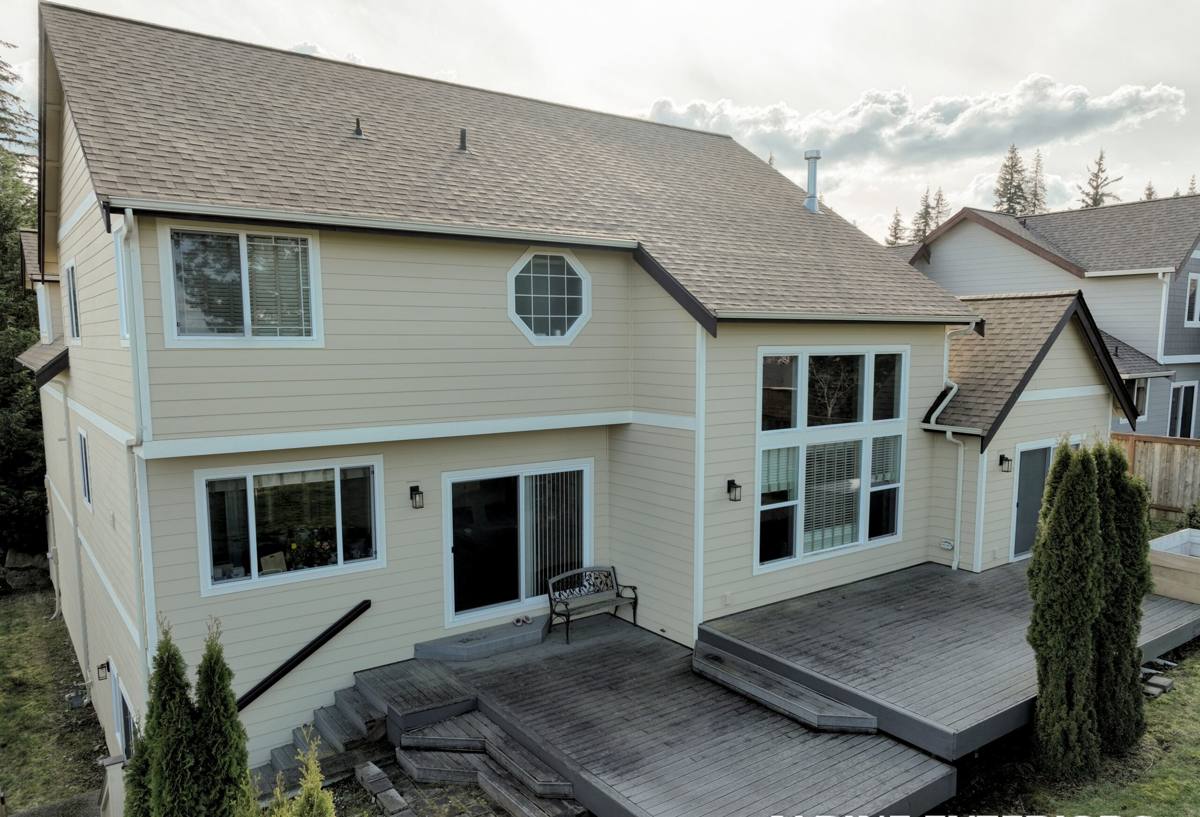
Why Local Decks Fail Faster Than the National Averages Suggest
Salt Air and Metal Fatigue
Even away from direct shoreline exposure, airborne salt travels with coastal weather systems and settles on exposed metal. Standard zinc-coated fasteners and hardware corrode faster under this kind of exposure than they would inland. Once a nail or screw starts rusting, it loses grip strength long before it looks obviously bad — which means a deck board can seem solid right up until it isn't.
Driving Rain and Hidden Moisture
Wind-driven rain doesn't just fall straight down here — it gets pushed sideways into ledger connections, under railing caps, and behind fascia boards. Water that gets past a gap or a failed seal often doesn't drain back out. It sits against wood framing, and that's where rot starts — usually out of sight, well before it shows up as a soft spot on the surface.
Moss, Algae, and Extended Dampness
Shade, moisture, and mild temperatures are exactly what moss and algae need to take hold, and a lot of Nooksack properties have at least one deck area that rarely sees direct sun. Beyond the slip hazard, a mossy surface holds water against the decking material for much longer stretches than a dry, sun-exposed board would, accelerating wood decay and breaking down composite surfaces over time.
Signs Your Deck Needs Repair Now
Some deck problems are cosmetic. Others are structural and shouldn't wait. Here's what we look for, and what you can check yourself before calling anyone:
- Soft, spongy, or bouncy spots when you walk across the deck
- Boards that have visibly cupped, split, or pulled away from fasteners
- Rust streaks below screws, nails, or metal connectors
- Gaps or separation where the deck framing meets the house (the ledger board)
- Railings or posts that wobble or flex under hand pressure
- Persistent moss or algae in the same spots year after year, even after cleaning
- Visible daylight or gaps between joists and beams
- Stair stringers that feel uneven or creak under weight
Any one of these by itself might be minor. Several together, especially near the ledger or support posts, usually means the framing needs a closer look, not just a surface fix.
What a Correct Deck Repair Actually Involves
A lot of deck "repairs" amount to swapping a rotten board for a new one and calling it done. That fixes what you can see, but if the underlying cause — usually moisture intrusion or fastener failure — isn't addressed, the same spot fails again within a couple of seasons. A repair that actually holds up in this climate involves a few things done in order:
1. Full Structural Check First
Before replacing anything on the surface, we check the framing underneath: joists, beams, posts, and especially the ledger board where the deck attaches to the house. This is the single most common source of hidden rot on older decks, because it's rarely visible without pulling a board or two.
2. Fix the Water Path, Not Just the Symptom
If a board rotted because water was pooling or draining wrong, replacing the board without correcting the drainage or flashing just resets the clock on the same failure. Proper flashing at the ledger, correct board spacing for drainage, and sealed end cuts all matter more here than in a drier climate.
3. Match or Upgrade Hardware
Given the corrosion factors we mentioned, repairs should use stainless steel or heavy hot-dip galvanized fasteners and connectors rated for exterior, coastal-adjacent exposure — not whatever standard-grade hardware happens to be on the shelf. This is a small cost difference that has a large effect on how long the repair lasts.
4. Address Moss and Surface Prep Properly
Any repaired or replaced section needs the same moss and algae treatment as the rest of the deck, and surfaces should be properly cleaned and dried before any sealant or stain is applied. Sealing over damp or moss-affected wood traps moisture in rather than keeping it out.
Repair Approach by Decking Material
What a repair looks like depends heavily on what the deck is built from. Here's how the common materials we see in this area tend to hold up and what repair usually involves for each:
| Material | Common Failure Point Locally | Typical Repair Approach |
|---|---|---|
| Pressure-treated wood | Rot at ledger, fastener corrosion, surface splintering from repeated wet/dry cycles | Sister or replace affected framing, re-fasten with corrosion-resistant hardware, treat and reseal |
| Cedar or other untreated wood | Surface graying, moss growth, softening in shaded areas | Board replacement in affected zones, moss treatment, protective finish reapplication |
| Composite decking | Surface delamination or fading at seams, moisture trapped under boards if drainage gaps are blocked | Board or section replacement, correcting ventilation/drainage gaps, hardware inspection |
| Older or DIY-built decks | Undersized framing, missing or failed flashing, inconsistent fastener types | Structural evaluation first — repair scope often expands once framing is exposed |
We'll be direct with you about which category your deck falls into once we've had a look, and what that means for the repair.
Our Deck Repair Process in Nooksack
We keep this straightforward because deck repair doesn't need to be complicated to be done right:
- On-site inspection. We walk the full deck, check the framing where accessible, and look at ledger, posts, railings, and stairs — not just the obviously damaged spot.
- Honest diagnosis. We tell you what's actually wrong, what's causing it, and whether it's a targeted repair or something more extensive. If a section is beyond reasonable repair, we'll say so rather than patch it.
- Written estimate. You get a clear scope and price before any work starts — no surprise add-ons once we're into it.
- Repair work. We address the structural cause first, then the visible damage, using hardware and materials suited to this area's moisture and salt exposure.
- Cleanup and walkthrough. We clear debris and walk the finished repair with you so you know exactly what was done and what to keep an eye on going forward.
Repair or Replace? Cost Factors to Weigh
Not every damaged deck needs to be torn out. But it's not always obvious which way to go, either. These are the factors that actually drive that decision:
| Factor | Leans Toward Repair | Leans Toward Replacement |
|---|---|---|
| Extent of framing damage | Isolated to one or two joists/boards | Widespread rot across multiple framing members |
| Age of the deck | Under 15-20 years, generally sound structure | Original construction is old, undersized, or non-compliant with current framing practices |
| Ledger board condition | Solid, properly flashed | Rotted, poorly flashed, or improperly attached |
| Your plans for the space | Happy with current size/layout | Wanting a different footprint, railing style, or added features |
| Budget timing | Want to extend usable life now | Prefer to invest once rather than repair repeatedly |
We'll walk you through where your deck lands on this before recommending either path — our goal is the right call for your situation, not the bigger invoice.
Keeping Moss and Slip Hazards Under Control
Given how long the moss season runs here, a repaired deck still needs some upkeep to stay ahead of the same conditions that caused the damage in the first place. A few things go a long way between repairs:
- Sweep off standing debris and organic matter regularly, especially in shaded corners
- Rinse moss and algae growth off before it builds up a thick layer
- Keep gutters and downspouts clear so runoff isn't dumping extra water onto the deck
- Check fastener heads periodically for early rust spotting
- Reapply sealant or finish on the schedule recommended for the material, not just when it looks worn
None of this is complicated, but skipping it is exactly how a deck ends up needing repair again sooner than it should.
Why a Crew That Already Works Nooksack Matters
Deck repair done by someone unfamiliar with this specific climate often misses the real cause of the damage — they fix what's visible and move on, without accounting for how salt air, driving rain, and extended moss season interact with the materials involved. We work throughout Birch Bay and the surrounding Whatcom County communities, including Nooksack, and we see the same failure patterns repeat from property to property. That means when we're on your deck, we're not troubleshooting from scratch — we already know where to check first and what tends to actually cause the problem, not just where it shows up.
We also stand behind our repair work with the same materials and methods regardless of the job size, because a quick patch that fails in two years costs everyone more time and money than doing it right the first time.
Get a Free, No-Pressure Estimate
If your deck in Nooksack has soft spots, rust stains, persistent moss, or just doesn't feel as solid as it used to, we're happy to take a look and give you a straight answer on what it needs. Use the form below to request a free estimate — there's no obligation and no pressure, just an honest assessment from a crew that knows this area's decks.