 Birch Bay Siding
 Windows Work Harder in This Part of Whatcom County
Homes in the Nooksack area near Birch Bay deal with a specific combination of weather that most window manufacturers never test for in their showroom brochures: salt-laden air off the water, wind-driven rain that hits window walls sideways rather than straight down, and a moss season that can stretch for most of the year in the shaded, damp corners of a property. None of that is dramatic on its own, but stacked together over a few winters, it's exactly the kind of slow, cumulative exposure that finds every weak point in a window unit — the seal, the frame corner, the flashing detail behind the trim.
Energy efficiency in this environment isn't just about a lower heating bill, though that matters too. It's about whether the window assembly keeps doing its job — sealing out moisture and holding its shape — after five, ten, or twenty years of this specific climate. A window that's efficient on day one but fails at the seal by year eight isn't actually efficient. It's a slow leak waiting to happen.
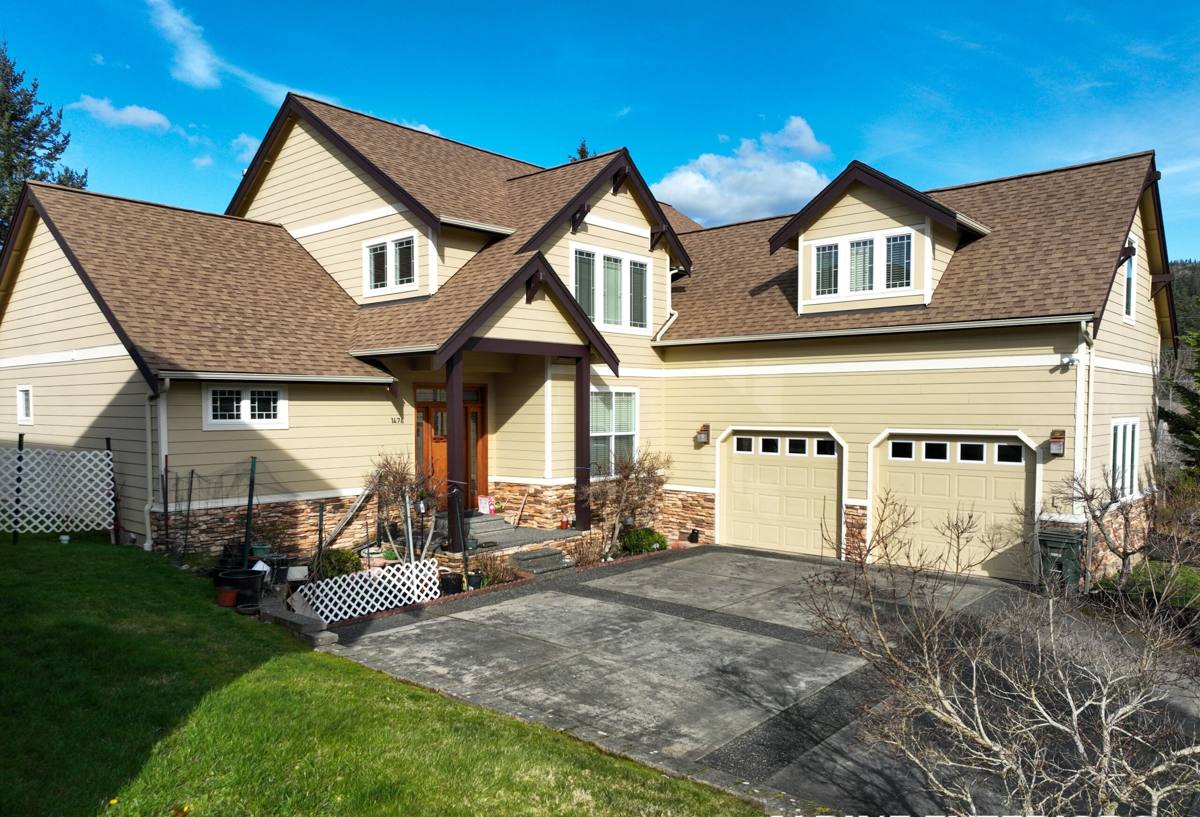
What "Energy-Efficient" Actually Means for a Nooksack Home
The phrase gets used loosely in advertising, so it's worth being specific about what actually changes performance in this climate.
Glass Package and Gas Fill
Double-pane glass with a low-E coating and an inert gas fill (typically argon) is the baseline for new installations in this region. The low-E coating reflects radiant heat back into the room in winter and blocks solar heat gain in summer, while the gas fill slows conductive heat transfer between panes. For homes with more direct west or south exposure, a slightly different low-E coating can be selected to balance winter heat retention against summer glare and heat buildup.
Frame Material Trade-Offs
Frame choice matters more here than in drier inland climates because the frame is what takes the brunt of salt exposure and standing moisture at the sill. Vinyl frames resist corrosion well and don't need repainting, but lower-grade vinyl can become brittle with UV and temperature swings over many years. Fiberglass frames hold paint and shape well under thermal cycling and generally shrug off salt air, at a higher upfront cost. Wood and wood-clad frames offer a traditional look but require a genuinely disciplined maintenance schedule in a salt-air, high-moss environment — we're upfront with homeowners that this is a real ongoing commitment, not a one-time decision, and we frame that as a trade-off to weigh rather than a reason to avoid wood outright.
Installation Quality Over Spec Sheet
A high-efficiency window installed with a poor flashing detail will underperform a mid-grade window installed correctly. In this climate, the installation — not just the product — is where energy efficiency and moisture protection are actually won or lost.
The Climate Factors We Design Around
Three regional conditions shape nearly every decision on a Nooksack-area window project:
- Salt air: accelerates corrosion of hardware, fasteners, and lower-grade metal components, and can degrade certain sealants faster than inland installations.
- Driving rain: wind off the water pushes rain sideways into wall assemblies, meaning flashing and sill pan details have to actively shed water outward rather than just sit passively under the window.
- Extended moss season: shaded, north-facing, and tree-lined elevations stay damp for long stretches, which keeps trim and sill wood wet longer and creates ideal conditions for moss and mildew to take hold around window perimeters if sealing isn't done correctly.
These aren't abstract concerns — they're the reason a window package that performs well in a drier or more sheltered part of the county can still underperform on a property closer to the water or tucked under heavy tree cover.
Signs Your Current Windows Are Costing You Money
Homeowners often live with underperforming windows for years because the signs are subtle rather than dramatic. Worth checking for:
- Noticeable draft or cold spot near the window frame, especially in wind
- Condensation forming between panes (a sign the seal has failed)
- Difficulty opening, closing, or locking — often a sign the frame has shifted or swollen
- Visible gaps, cracking, or soft spots in the exterior trim around the window
- Moss, black staining, or persistent moisture at the sill or lower corners
- Rooms near windows that feel noticeably colder or hotter than the rest of the house
- A heating system that runs longer or more often without a clear reason
Any one of these on its own might not mean much. Two or three together, especially on the same window, usually mean the unit is past the point where sealant or hardware repair will fix it for good.
What a Correct Installation Actually Involves
Removal and Inspection
Once the old window is out, we inspect the surrounding framing and sheathing for hidden moisture damage or soft wood before anything new goes in. In this climate, it's common to find some degree of moisture staining behind older units, even when the interior showed no obvious signs. Catching that now is far cheaper than dealing with rot later.
Flashing and Weatherproofing
This is the step that determines whether a window stays dry for the next twenty years or starts leaking in five. A proper installation uses a sloped sill pan to direct any water that gets past the window back outside, along with correctly layered flashing tape integrated with the house wrap so water is always directed downward and outward, never trapped behind the siding.
Sealing and Finish Work
Interior and exterior sealant, insulation around the frame gap, and trim work are finished last. We use sealants and materials rated for coastal and marine-adjacent exposure rather than standard-grade products, since standard sealant tends to break down faster under this region's combination of salt air and UV exposure.
Our Process, Start to Finish
- On-site assessment: we look at each window's exposure, existing condition, and framing before recommending anything — not every window on a house needs the same solution.
- Product and package recommendation: based on exposure (salt air, direct wind-driven rain, shaded/moss-prone) we recommend frame material and glass package suited to that specific elevation.
- Written estimate: a clear scope covering removal, disposal, flashing method, materials, and finish work, with no vague allowances.
- Installation: old units removed, framing inspected and repaired if needed, new units installed with proper flashing and sealing.
- Final walkthrough: we check operation, seals, and finish work with you before considering the job done.
Cost Factors to Expect
Every project is different, but the variables that most often move the price are consistent. This isn't a quote — it's a guide to what to ask about when comparing bids.
| Factor | Why It Affects Cost |
|---|---|
| Frame material (vinyl, fiberglass, wood-clad) | Fiberglass and wood-clad cost more upfront but differ in long-term maintenance and salt-air durability |
| Window size and count | Larger openings and whole-house replacements have different labor and material scaling than a single-window swap |
| Existing framing condition | Hidden moisture damage found during removal adds repair scope before the new window can go in |
| Access and elevation height | Second-story or hard-to-reach windows require more setup time and equipment |
| Trim and exterior finish work | Matching existing trim profiles or repainting affected siding adds finish labor |
| Glass package upgrades | Specialized low-E coatings or tinting for high-sun elevations cost more than standard glass |
As a rough guide, homeowners in this region typically see per-window installed costs ranging from the low thousands into the mid-thousands depending on the factors above — full-house replacements scale accordingly. We break these down line by line in every estimate so there are no surprises.
Why Hiring a Crew That Already Works This Area Matters
Window installation isn't one-size-fits-all across Whatcom County. A crew that mostly works drier, more sheltered inland properties may not default to the sill pan and flashing details that a Nooksack-area home genuinely needs given its exposure to salt air and driving rain. Local experience means we already know which elevations on a given property tend to take the worst weather, what moss buildup around a sill usually indicates underneath, and which materials hold up honestly in this specific environment rather than just on a spec sheet. That's the difference between a window that looks right at handoff and one that's still performing correctly a decade later.
Maintenance That Actually Matters Here
Even a well-installed window benefits from a bit of seasonal attention in this climate:
- Rinse salt residue off frames and glass periodically, especially on wind-exposed elevations
- Keep weep holes at the base of the frame clear so water can drain out as designed
- Check and clean moss or debris buildup on sills and surrounding trim before it holds moisture against the frame
- Inspect exterior caulking annually and touch up before small gaps become water pathways
- Operate locks and hardware a few times a year to catch early signs of corrosion or stiffness
None of this is heavy lifting, but skipping it in a salt-air, moss-prone climate is how a good installation slowly turns into a maintenance problem.
If your windows are drafty, fogging, sticking, or just old enough that you're wondering whether it's time, we're happy to take a look and give you a straightforward, no-pressure estimate — including which windows on your property actually need attention and which can wait. Use the form below to get started.