 Birch Bay Siding
 Why Ferndale Homes Wear Out Their Siding Faster Than You'd Expect
Ferndale sits close enough to the water and the marine air moving up from Birch Bay and the Strait that siding here takes a different kind of beating than siding fifty miles inland. It's not one dramatic storm that does the damage — it's the accumulation. Salt-laden air corrodes fasteners and finishes over years. Driving rain, pushed sideways by wind off the water, finds every gap in flashing and every hairline crack in old paint. And Whatcom County's long, damp shoulder seasons keep siding wet for days at a stretch, which is exactly the environment moss, algae, and rot fungi need to get established.
We replace siding in Ferndale on a regular basis, and the pattern is consistent: homes with the wrong siding for this climate, or siding that was installed without real attention to water management, start failing 10 to 15 years before they should. Homes with the right material installed correctly go the distance. This page is about what "correct" actually means for a Ferndale siding replacement.
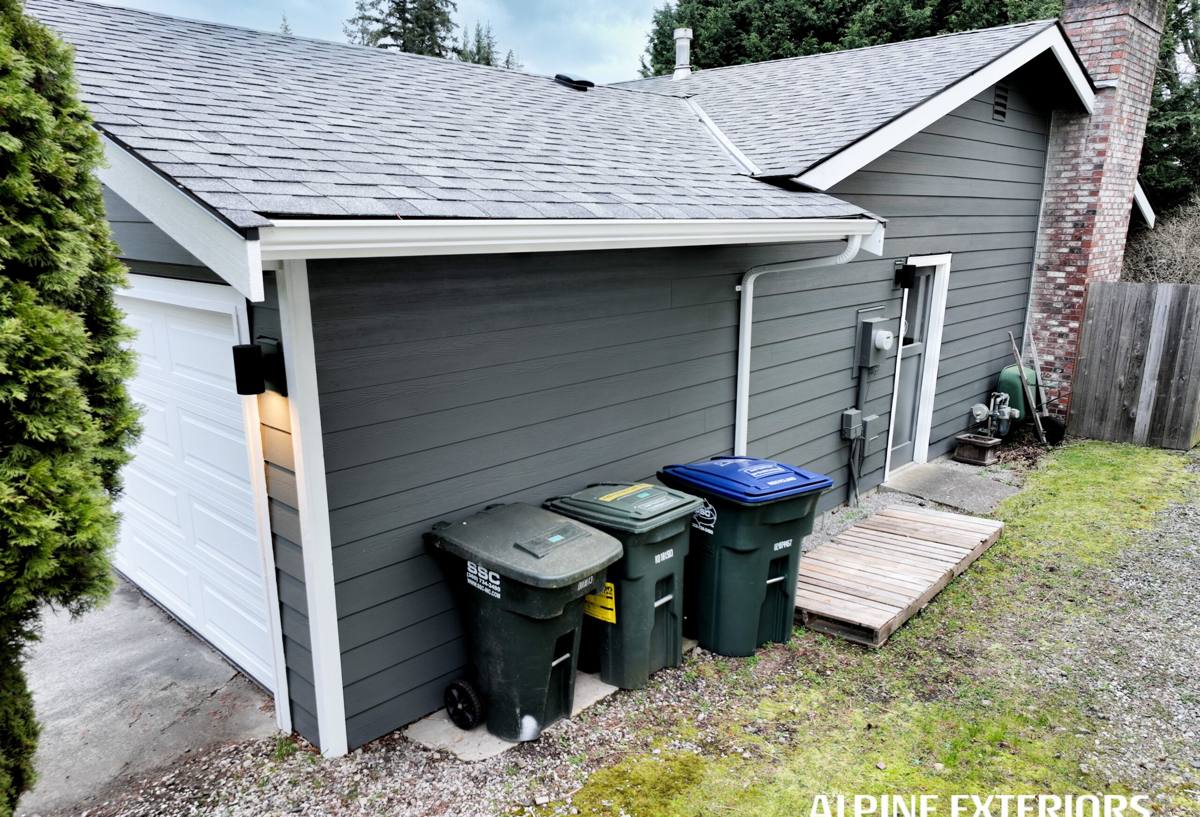
What This Climate Actually Does to Siding
Salt Air and Coastal Corrosion
Ferndale isn't oceanfront, but it's close enough to the Strait of Georgia and Birch Bay that salt-bearing air reaches homes here, especially on windier days. Salt accelerates corrosion in exposed fasteners, cheap flashing, and unprotected metal trim. It also breaks down certain paint and coating systems faster than a factory-cured finish, which is one reason field-painted siding tends to chalk and fade unevenly in this area within just a few years.
Driving Rain and Wind-Driven Water
Rain in Whatcom County rarely just falls straight down. Wind off the water pushes it sideways into wall assemblies, which means every seam, joint, and penetration point is a potential entry spot. Siding that depends on paint alone to stay watertight, rather than on correct lap, flashing, and gap details underneath, is the siding that lets water in first.
Moss, Algae, and the Long Wet Season
Ferndale's tree cover and marine humidity mean north- and west-facing walls, and anything shaded by landscaping, can stay damp for extended stretches in fall, winter, and spring. That's prime territory for moss and algae growth on siding surfaces, and for moisture to work its way into any material that isn't dimensionally stable or properly sealed at the edges.
What a Correct Siding Replacement Involves
Replacing siding isn't just pulling off old boards and nailing up new ones. In this climate especially, the work that happens before the new siding goes on matters as much as the siding itself.
- Full removal of old siding and inspection of the sheathing underneath for rot, soft spots, or hidden water damage
- Repair or replacement of any compromised sheathing, framing, or structural wood before covering it back up
- Installation of a correct water-resistive barrier (house wrap) with proper laps and sealed penetrations
- Flashing at every window, door, deck ledger, and roofline intersection — not just caulk
- Correct fastening pattern and spacing per manufacturer specification, not "close enough"
- Proper starter strips, corner details, and butt joint placement so water sheds outward instead of pooling
- Ventilation gap behind the siding where the assembly calls for it, so moisture that does get in can dry out
Skip any one of these steps and you can end up with brand-new siding hiding a wet wall — a problem that doesn't show up on the surface until the damage is already expensive.
Why We Install Only James Hardie Fiber Cement
We've made a deliberate decision not to install vinyl, LP SmartSide, primed wood, or other fiber cement brands. That's not a marketing position — it's a reflection of what actually holds up in Whatcom County's coastal-influenced climate over decades, not just years.
Non-Combustible and Dimensionally Stable
James Hardie fiber cement is non-combustible and doesn't expand, contract, or absorb moisture the way engineered wood products can. In a climate where siding stays damp for extended periods, that dimensional stability matters — it's part of why joints stay tight and paint lines stay straight for years longer than with wood-based alternatives.
ColorPlus Factory Finish
Rather than relying on field-applied paint, which is exactly the layer that salt air and UV exposure attack first, Hardie's ColorPlus finish is baked on at the factory under controlled conditions. It resists fading, chipping, and the chalky look that field-painted siding develops in coastal-influenced air, and it comes backed by its own finish warranty separate from the substrate.
Climate-Engineered HZ Product Lines
Hardie builds region-specific formulations — HZ5 for cold, wet climates like ours — engineered around moisture and freeze-thaw behavior rather than a one-size-fits-all product. For a Ferndale home dealing with driving rain and a long moss season, that regional engineering is a real, practical difference, not a marketing detail.
A Warranty Built for This Kind of Use
Hardie's transferable limited warranty is structured around real-world performance, which matters when a product is going to spend decades exposed to salt air and wind-driven rain. A strong warranty on paper is only worth something if the product and the installation both hold up long enough to need it — and that's the standard we hold every Ferndale job to.
Comparing Siding Options for a Coastal-Influenced Ferndale Home
| Factor | Vinyl Siding | Engineered Wood (LP SmartSide) | James Hardie Fiber Cement |
|---|---|---|---|
| Moisture behavior | Can warp or buckle; seams are vulnerable | Can swell or delaminate if water gets past the finish | Dimensionally stable, doesn't absorb water like wood |
| Salt air / coastal exposure | Finish can chalk and fade faster near water | Coating breakdown exposes wood substrate to moisture | Factory finish resists fading and chalking |
| Fire resistance | Combustible, can melt or deform under heat | Combustible wood-based product | Non-combustible |
| Long-term maintenance | Low upfront cost, but cracks and fades over time | Requires diligent caulk and paint upkeep | Low maintenance when installed and finished correctly |
| Typical lifespan when installed to spec | 15-25 years in this climate | 15-25 years, heavily dependent on moisture management | 30-50+ years |
Our Process for a Ferndale Siding Replacement
1. On-Site Assessment
We walk the home, look at drainage patterns, shade and moisture exposure on each elevation, and the condition of the existing siding and trim. Coastal-influenced homes often show different wear on the water-facing side versus the sheltered side, and that shapes how we plan flashing and detailing.
2. Written Scope and Product Selection
You get a clear scope of work, the specific Hardie products and profiles recommended for your home, and a realistic cost range before any work starts. No pressure, no upsell games.
3. Tear-Off and Sheathing Inspection
Old siding comes off, and we inspect the sheathing and framing underneath before anything new goes up. If there's hidden rot or water damage — which isn't rare on older Ferndale homes — we address it before covering it back up.
4. Water Management Installation
House wrap, flashing, and all the water-directing details go in first, correctly lapped and sealed, before the first piece of Hardie siding is fastened.
5. Hardie Installation to Manufacturer Spec
Fastening pattern, gapping, corner and joint treatment, and clearances all follow Hardie's published installation requirements — the details that actually determine whether the siding performs for decades or needs early repair.
6. Final Walkthrough
We walk the finished job with you, point out what was done and why, and make sure you know what little maintenance the siding does need going forward.
Cost Factors for Ferndale Siding Replacement
Every home is different, but the same variables tend to drive cost on Ferndale jobs:
| Factor | Why It Matters |
|---|---|
| Home size and number of stories | More surface area and access complexity increase labor time |
| Existing sheathing condition | Hidden rot found during tear-off adds repair scope |
| Trim, corner, and detail complexity | Dormers, bay windows, and multiple rooflines add flashing work |
| Siding profile chosen | Lap width, shingle-style, and panel options carry different material costs |
| Site access and exposure | Homes closer to water or on steep lots can require more setup and protection |
We won't quote a number here that doesn't apply to your specific home — but we will always give you a clear, itemized estimate before any work begins.
Why a Crew That Already Works Ferndale Matters
Siding installation isn't just about following a manufacturer's manual — it's about applying that manual correctly to the specific conditions a house faces. A crew that regularly works Ferndale and the surrounding Whatcom County coastline already knows which elevations tend to take the worst of the driving rain, where moss establishes fastest, and how salt air changes the maintenance conversation compared to an inland job. That local pattern recognition shows up in better flashing decisions, smarter product placement, and fewer callbacks down the road.
If your Ferndale home's siding is showing fading, gaps, soft spots, or moss buildup that keeps coming back no matter how often it's cleaned, it's worth having someone look at what's underneath before it becomes a bigger repair. We'd be glad to walk your home, answer your questions honestly, and put together a clear, no-pressure estimate — just fill out the form below to get started.