 Birch Bay Siding
 Why Bellingham Homes Need Siding Built for This Climate
Homes in and around Bellingham deal with a combination of stressors that a lot of siding products simply aren't built to handle over the long haul. You've got marine air pushing in off the Salish Sea carrying salt that accelerates corrosion and finish breakdown, long stretches of driving rain that finds every gap and seam, and a moss and mildew season that can run most of the year in shaded, north-facing spots. Add in the freeze-thaw cycles Whatcom County gets in winter, and you have an exterior envelope that's under near-constant pressure.
Siding that isn't engineered for this environment shows it fast — swelling seams, peeling paint, soft spots at the bottom courses, and green-black staining that keeps coming back no matter how many times it's washed. That's the backdrop for every recommendation we make on this page: James Hardie fiber cement, installed correctly, holds up to this specific climate better than the alternatives we get asked about most often.
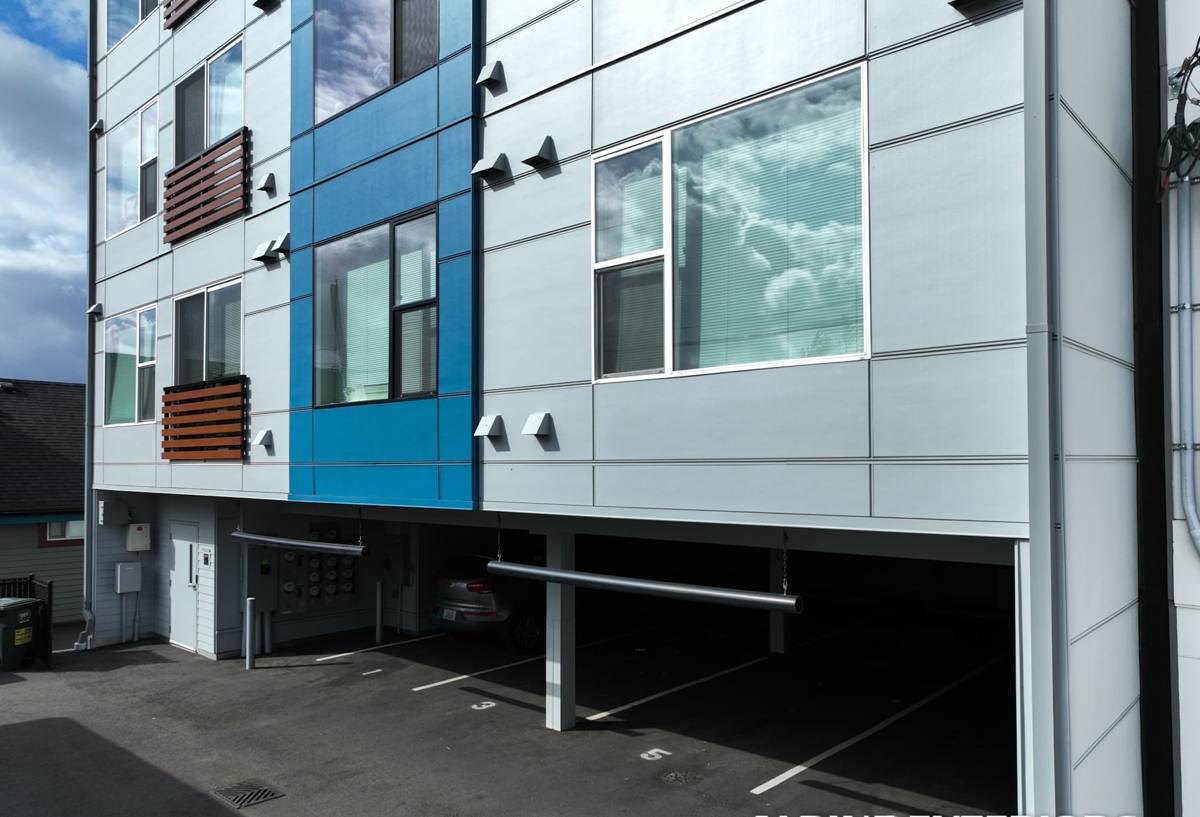
What "Correct" Actually Means for a Bellingham Installation
James Hardie makes a good product. But a good product installed wrong still fails wrong. In a climate like Bellingham's, the installation details matter as much as the material choice — arguably more, since moisture intrusion is the single biggest threat to any siding system here.
The Details That Separate a Correct Job From a Problem Job
- Weather-resistive barrier and flashing sequence: Water management has to be layered correctly — house wrap, flashing, and siding all working together so any water that gets behind the cladding has a way out, not a place to sit.
- Proper clearances: Hardie's own installation instructions specify minimum gaps from grade, roofing, decks, and other transitions. Skipping these is one of the most common shortcuts we see, and it's exactly what invites rot and wicking in a wet climate.
- Fastener pattern and type: Correct fastener spacing, embedment, and corrosion-resistant fasteners matter more here than in a dry climate — the wrong fastener in salt-influenced air corrodes faster and can void warranty coverage.
- Caulking and sealant at penetrations: Every window, vent, and fixture penetration is a potential entry point. Correct sealant use, not over-reliance on caulk to do a flashing's job, is part of doing it right.
- Field-cut edges sealed and primed: Any cut edge that isn't factory-finished needs to be sealed before installation, or that edge becomes the weak point in an otherwise sound system.
None of this is exotic. It's disciplined, unglamorous installation work — but in a climate that punishes shortcuts, it's the difference between siding that looks good at year one and siding that still looks good at year twenty.
Why James Hardie Specifically Suits This Region
We install James Hardie exclusively, and the reasons matter more in a place like Bellingham than they might somewhere drier and milder.
Non-Combustible, Weather-Engineered Material
Fiber cement doesn't rot, doesn't feed moss and mildew the way wood-based products can, and doesn't swell or delaminate the way engineered wood siding can when it takes on repeated moisture. That matters in a region where a north-facing wall can stay damp for weeks at a stretch during the wet season.
HZ5 Engineering for the Pacific Northwest
James Hardie engineers its HZ product line by climate zone specifically because siding performance isn't uniform across the country. The formulation used in HZ5 regions accounts for freeze-thaw cycling and moisture exposure patterns typical of the Pacific Northwest, rather than using a one-size-fits-all formula.
ColorPlus Factory Finish
A factory-baked finish holds color and resists fading and moisture intrusion at the surface far better than field-applied paint. In a climate where repainting siding every few years is a real and recurring cost, a finish warrantied at the factory level is a meaningful long-term advantage.
Our Process for a Bellingham-Area James Hardie Installation
- On-site assessment: We walk the exterior, check current siding condition, look at moisture exposure patterns specific to the lot (tree cover, sun exposure, drainage), and note any sheathing or trim issues that need addressing before new siding goes on.
- Removal and inspection: Once old siding is off, we inspect the sheathing and weather barrier underneath. This is the point where hidden moisture damage, if any exists, gets found and dealt with — not covered over.
- Weather barrier and flashing correction: We install or correct the water-resistive barrier and flashing details before a single piece of Hardie goes up. This step gets skipped more often than homeowners realize, and it's the one that determines whether the siding performs for decades or fails early.
- Installation to manufacturer spec: Proper clearances, fastener pattern, and joint treatment, following James Hardie's published installation requirements — not shortcuts that happen to look fine on installation day.
- Final detailing: Trim, caulking at penetrations, and a final walkthrough so you know exactly what was done and why.
James Hardie vs. Other Products Homeowners Ask About
We get asked to compare Hardie against several alternatives regularly. Here's an honest look at how they stack up specifically for a wet, salt-air, moss-prone climate like Bellingham's.
| Product | Moisture Behavior in This Climate | Maintenance Burden | Why We Don't Install It |
|---|---|---|---|
| Vinyl Siding | Doesn't rot, but can warp and gap over time, creating water paths behind panels | Low, but limited lifespan and fading in UV/salt exposure | Doesn't match fiber cement's durability, fire resistance, or resale positioning |
| LP SmartSide (engineered wood) | Wood-based core is more vulnerable to swelling and edge damage when moisture gets in | Moderate — edge sealing and paint maintenance required | Long-term moisture performance in a wet marine climate doesn't match fiber cement |
| Cedar | Natural material, absorbs and releases moisture constantly; prone to moss/mildew without regular treatment | High — regular staining, sealing, and moss treatment | Ongoing upkeep burden is significant in a climate this wet |
| James Hardie Fiber Cement | Engineered for moisture resistance, doesn't feed rot or moss the way wood-based products can | Low — factory finish reduces repainting cycles | This is what we install |
This isn't about any of these products being poorly made — it's about which one holds up best, with the least recurring cost and effort, in this specific climate. That's why we standardized on one product and install it correctly rather than offering several and hoping one works out.
Cost Factors for a Bellingham James Hardie Project
Every home is different, so we don't publish blanket pricing — but these are the factors that actually move the number on a real estimate.
- Siding profile and line: Lap siding, shingle-style panels, and board-and-batten all price differently based on material use and labor complexity.
- Removal and sheathing condition: If old siding removal reveals sheathing damage or rot, that repair work is additional but necessary — covering it over would just move the problem down the road.
- House complexity: Number of corners, window and door openings, roof lines, and dormers all affect labor time.
- Color and finish selection: ColorPlus factory finishes versus field-painted options can affect material cost and long-term maintenance savings.
- Access and site conditions: Lot slope, tree cover, and staging space affect how efficiently a crew can work.
What to Check Before Hiring Anyone for This Work
Bellingham has plenty of siding options, and not every crew that says they "install Hardie" treats the manufacturer's requirements as non-negotiable. Before hiring, a homeowner should be comfortable asking:
- Are you following James Hardie's published installation instructions, including clearances and fastener specs, or working from general siding experience?
- Will you inspect the sheathing and weather barrier before installing new siding, not just cover what's already there?
- What's your plan for flashing at windows, doors, and roof transitions specifically?
- Who is responsible if a manufacturer warranty claim comes up — how is the installation documented?
- Do you have experience with this specific climate's demands, not just siding installation in general?
A crew that's worked Whatcom County's coastal conditions already knows where water tends to find its way in on this kind of terrain, and builds the installation around that from the start rather than learning it on your house.
Signs Your Current Siding Is Losing the Battle
If you're weighing whether it's time to replace, these are the signs worth taking seriously rather than patching around:
- Soft or spongy spots, especially near the bottom courses or around window sills
- Persistent moss or dark staining that returns quickly after cleaning
- Visible warping, cupping, or gaps at seams
- Paint that's peeling or bubbling rather than just fading
- Rising energy bills that suggest the wall assembly isn't performing the way it should
Catching these early usually means a more contained project. Waiting until sheathing damage sets in turns a siding job into a structural repair job.
If you're in the Bellingham area and want a straight answer on what your home actually needs, we're happy to take a look. Reach out for a free, no-pressure estimate — we'll walk the exterior with you, explain what we see, and give you a clear picture of the work involved before anything is decided.