 Birch Bay Siding
 Windows Built for Lummi Island's Weather, Not Just the Opening
Lummi Island sits out in the water, which means its homes take a harder hit from the weather than houses further inland. Salt-laden air moves off the water and settles on everything, driving rain comes in sideways during winter storms, and the damp, shaded stretches of the island grow moss on anything that holds moisture. A window that works fine in a dry inland neighborhood can fail years early out here if it wasn't chosen and installed with this specific environment in mind.
Custom windows aren't just about matching an odd-shaped opening or getting a particular look. On Lummi Island, "custom" also means picking materials, seals, and flashing details that are matched to salt exposure and wind-driven rain — and installing them in a way that keeps water out for the long haul, not just until the first bad winter.
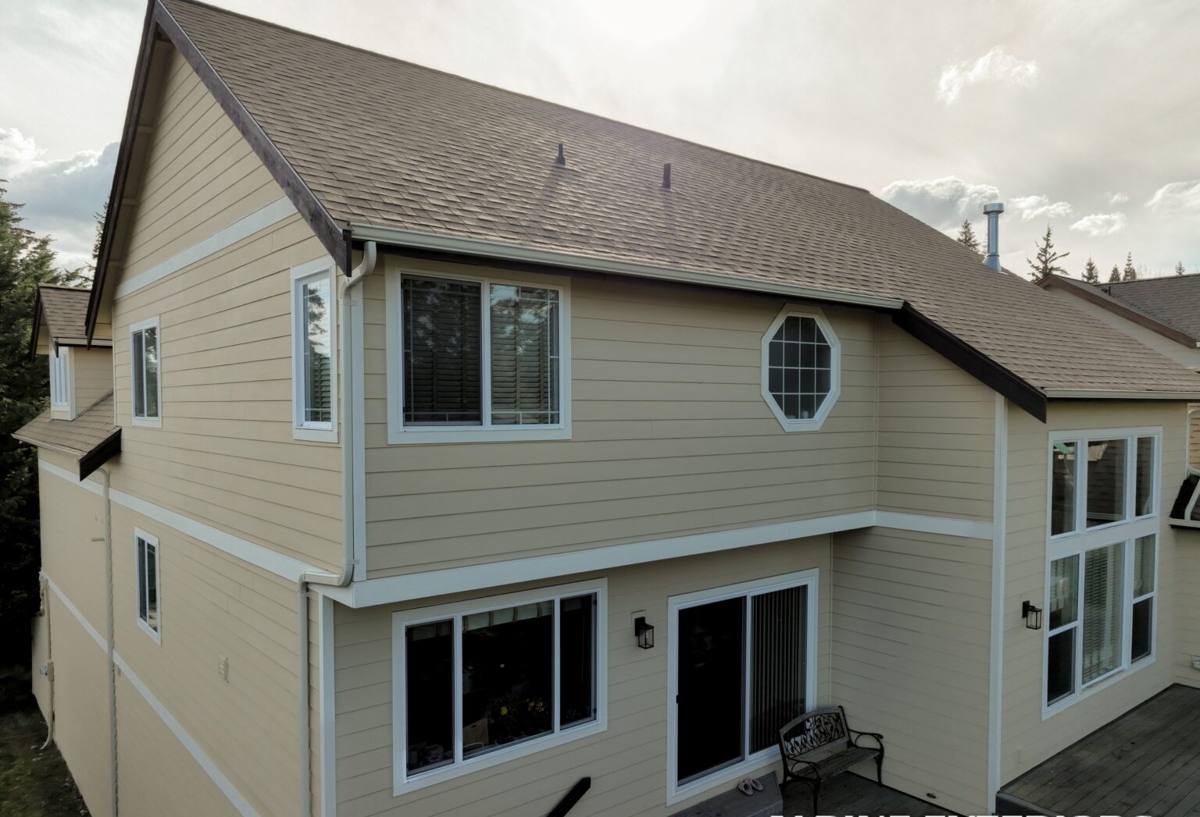
What Salt Air, Rain, and Moss Actually Do to Windows
Salt Air
Salt in the air is corrosive. Over years, it attacks exposed metal hardware, aluminum components, and lower-grade fasteners, leading to pitting, discoloration, and hardware that gets stiff or seizes. It also breaks down cheaper sealants and finishes faster than they'd wear in a drier, inland climate.
Driving Rain
Whatcom County storms don't just drop rain straight down — wind pushes it sideways into wall assemblies and window openings. If flashing, sill pans, or sealant details aren't done correctly, water finds its way behind the trim and into the wall framing, where it can sit unnoticed for a long time.
Moss and Persistent Moisture
Shaded exposures and the long damp season here let moss and algae take hold on sills, trim, and anywhere water tends to linger instead of draining and drying. Moss holds moisture against wood and painted surfaces, which accelerates rot and paint failure if window details weren't built to shed water cleanly.
Choosing the Right Window Materials for This Climate
There's no single "best" window material for every home — it depends on your home's exposure, your maintenance appetite, and your budget. Here's how the common options actually perform in a salt-air, high-rain environment like Lummi Island.
| Material | Salt Air Behavior | Moisture Behavior | Maintenance |
|---|---|---|---|
| Vinyl | Doesn't corrode; color and frame are stable in salt exposure | Won't rot; drainage details still matter | Low — occasional cleaning |
| Fiberglass | Very stable, resists pitting and corrosion well | Dimensionally stable in wet-dry cycles | Low |
| Wood (clad or unclad) | Exterior cladding needed to protect from salt and moisture | Vulnerable to rot if seals or paint fail | Higher — periodic inspection and refinishing |
| Aluminum | Prone to corrosion and pitting in salt air over time | Conducts cold, can contribute to condensation | Moderate — hardware and finish need attention |
For most Lummi Island homes, we steer clients toward vinyl or fiberglass frames precisely because they don't give salt air and moisture anything to attack. Wood-clad windows can still be the right call on some homes — especially where matching an existing architectural style matters — but we're upfront that they ask more of the homeowner in terms of upkeep out here.
Glass Packages That Actually Matter Here
Beyond the frame, the glass unit itself affects how a window handles this climate:
- Low-E coatings reduce heat loss and help manage interior condensation during cold, damp stretches — condensation left sitting on glass and sills is one of the quieter contributors to sill rot and mold.
- Argon-filled double or triple pane units improve insulation, which keeps interior glass surfaces warmer and less prone to condensation buildup.
- Warm-edge spacer systems hold up better over time than older metal spacers, which can fail faster under repeated temperature swings and contribute to seal failure and fogging between panes.
We don't push the most expensive glass package on every job. The right spec depends on the window's exposure — a window on the windward, rain-facing side of the house may justify a different spec than one tucked under an eave on a protected wall.
What a Correct Custom Window Installation Involves
The window unit itself is often not where installations fail — the flashing, sealing, and integration with the wall assembly is. On Lummi Island, we treat this as the part of the job that actually determines whether the window lasts.
- Opening assessment. We check the existing framing, sill condition, and any signs of past water intrusion before anything is ordered.
- Sill pan flashing. A properly sloped, sealed sill pan gives any water that does get past the window a way out instead of a place to collect.
- Weather-resistive barrier integration. Flashing tape and house wrap need to be layered correctly — like shingles — so water sheds outward at every seam, not into the wall.
- Correct fastening and shimming. Windows need to be plumb, level, and square, with fasteners placed so the frame isn't stressed or bowed, which can break the factory seal over time.
- Exterior sealant and trim. Sealant beads and trim details are placed to shed wind-driven rain, not just look finished.
- Interior air sealing. A tight interior seal prevents warm, moist indoor air from reaching cold glass and condensing.
Skip or rush any one of these steps and you can end up with a window that looks fine from the curb but is quietly letting moisture into the wall behind it.
How Our Process Works for Lummi Island Projects
Working on Lummi Island takes a bit more planning than a mainland Whatcom County job, and we build that into how we schedule and run the work rather than treating it as an afterthought.
Assessment and Measurement
We start with an on-site visit to measure openings, check existing flashing and sill condition, and talk through material options based on that specific wall's sun and wind exposure.
Material Ordering and Scheduling
Because getting materials and crews to and from the island takes coordination, we plan deliveries and crew days to minimize return trips and keep the project moving efficiently once we start.
Installation
We remove old units carefully to inspect the framing underneath before the new window ever goes in — this is often where we catch hidden moisture damage from a prior install that skipped proper flashing.
Final Check and Walkthrough
Once installed, we test operation, check seals, and walk the exterior trim and flashing with the homeowner before calling the job done.
Common Problems We See on Lummi Island Homes
- Corroded or seized hardware on older aluminum-frame windows exposed to years of salt air.
- Fogged or failed glass seals from older insulated glass units breaking down under repeated damp-cold cycles.
- Soft or rotted sills where moss and standing moisture sat against wood trim for extended periods without proper drainage.
- Water staining on interior walls below windows, usually tracing back to missing or poorly lapped flashing rather than the window unit itself.
- Painted wood trim failing early on the shaded, moss-prone sides of the house.
What Affects the Cost of a Custom Window Project
| Factor | Why It Matters |
|---|---|
| Frame material | Vinyl and fiberglass generally cost less upfront than clad wood; wood typically costs more and adds long-term maintenance |
| Glass package | Upgraded Low-E coatings and gas fills add cost but reduce condensation and heat loss |
| Opening condition | Hidden rot or damaged framing found during removal adds repair work before the new window goes in |
| Custom sizing or shapes | Non-standard openings or specialty shapes cost more than stock sizes |
| Number of openings | Doing multiple windows in one project typically reduces the per-window cost of mobilization and setup |
| Access and logistics | Island scheduling and material transport are factored into project planning |
We give straightforward, itemized estimates so you can see what's driving the number — not a single lump figure with no explanation.
Maintaining Your Windows Between Visits
A well-installed window in this climate still needs some basic upkeep to reach its full lifespan:
- Rinse salt residue off frames and glass periodically, especially on wind-facing walls
- Keep sills and tracks clear of moss, leaves, and debris so water can drain freely
- Check exterior caulk lines annually and have any cracking or gaps resealed before winter
- Operate hardware a few times a season so mechanisms don't seize from disuse and salt exposure
- Watch for soft spots in wood trim or sills and address them early, before rot spreads
Why Hiring a Crew That Already Works Lummi Island Matters
A contractor who mostly works dry, inland jobs may not think twice about flashing details or frame material choices that matter a great deal out here. Crews familiar with Lummi Island and the broader Whatcom County coastline know which details actually hold up against salt air and driving rain, because we've seen what happens when they're skipped — and we plan logistics for island access into the schedule from the start instead of it becoming a surprise mid-project. That local knowledge is the difference between a window installation that looks right on day one and one that's still performing correctly ten winters from now.
If you're weighing a window replacement or planning new construction on Lummi Island, we're happy to take a look and walk you through your options. Reach out for a free, no-pressure estimate using the form below.