 Birch Bay Siding
 Why Lummi Island Siding Wears Differently
A home on Lummi Island takes a different kind of beating than one a few miles inland. Sitting out in the salt-laden air of the Salish Sea, exposed to driving rain off the water and shaded by evergreens for long stretches of the year, island siding deals with a combination of moisture and organic growth that most mainland Whatcom County homes never see at the same intensity. Salt air accelerates corrosion on fasteners and trim, wind-driven rain finds every gap in flashing and caulking, and a long moss season means constant biological growth working its way into seams and butt joints.
We work on siding up and down the Birch Bay area and out to Lummi Island regularly, and the repair calls we get from island homes tend to follow a pattern: moisture damage at the lowest courses, deteriorated caulking at trim and window returns, and moss or algae staining that's more than cosmetic — it's often sitting on top of a moisture problem that's already started underneath.
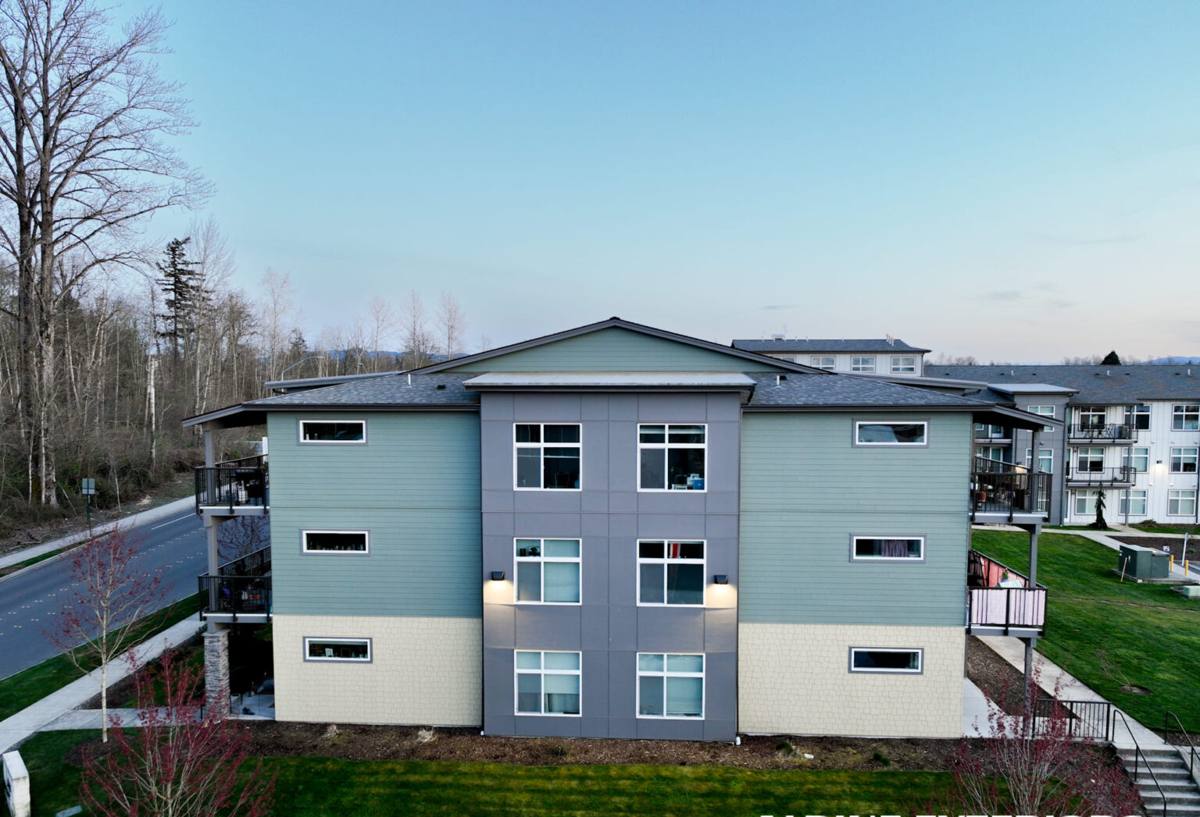
Signs Your Siding Needs Repair Now
Catching damage early is the difference between a patch job and a much bigger bill. On island homes especially, moisture problems move faster than homeowners expect because the material rarely gets a chance to fully dry out between storms.
- Soft, spongy, or bulging sections of siding, especially near the ground or under windows
- Visible cracking or splitting at butt joints and corners
- Paint that's peeling, bubbling, or chalking unevenly in patches
- Persistent moss or dark green/black staining that comes back within weeks of cleaning
- Gaps or separation at trim boards, window casings, or where siding meets the foundation
- Rust streaks below fasteners or corner flashing
- A musty smell near exterior walls inside the house
Any one of these on its own might be minor. Two or three showing up in the same area usually means water has been getting behind the siding for a while.
Why Moss Season Matters More Than It Looks
Moss itself doesn't destroy siding, but it holds moisture against the surface far longer than open air would. On a shaded, north-facing wall on Lummi Island, a mossy patch can stay damp for days after a storm passes. That extended dampness is what breaks down caulking, softens lower-quality substrates, and gives rot a foothold at seams and fastener points. Cleaning moss without addressing why it keeps coming back — usually a drainage or airflow issue — just means you'll be back to square one in a season or two.
What a Correct Repair Actually Involves
A siding repair that actually holds up isn't just about matching color and nailing on a new piece. On homes exposed to the kind of weather Lummi Island gets, a repair that skips steps tends to fail again within a year or two, usually in the same spot.
Diagnosing the Real Cause
Before any board comes off, we look at why that section failed. Was it a flashing detail, a caulk joint that opened up, poor drainage at grade, or just age? Replacing damaged siding without fixing the underlying cause means the new material fails the same way, on the same timeline.
Checking the Water-Resistive Barrier
Once siding is pulled back, the house wrap or weather barrier underneath needs to be inspected. If it's torn, improperly lapped, or missing at the repair area, patching it correctly matters more than the visible siding does — this is the layer actually keeping bulk water out of the wall assembly.
Matching Material and Fastening Properly
Repairs should use the correct replacement material, fastened per manufacturer spec — not just whatever's on the truck. Over- or under-driven fasteners, wrong nail types, or skipped clearances at the bottom edge are common shortcuts that show up as problems again within a couple of wet seasons.
Sealing and Finishing
Caulking at butt joints, trim returns, and penetrations needs to be done with a product rated for exterior movement and UV exposure, and painted or color-matched correctly if factory finish touch-up is needed. A repair that looks fine but skips proper sealant work is a repair that's going to leak again.
Common Failure Points We See on Lummi Island Homes
Certain areas fail more often than others, and it's rarely random.
Low Courses and Grade-Level Siding
Splashback from rain, plus siding installed too close to grade, means the bottom few courses take the most sustained moisture exposure on any home. This is the single most common repair call we get.
West- and South-Facing Walls
These take the brunt of driving rain coming off the water. Caulk joints and trim on these elevations tend to open up faster than on sheltered sides of the house.
Shaded, North-Facing Sections
Less sun exposure means slower drying and heavier moss growth, which is where long-term moisture damage tends to hide longest before it's noticed.
Repair or Replace? How We Decide
Not every damaged section needs a full re-side, and not every home is a good candidate for spot repair. We walk through a few honest questions with every homeowner before recommending either path.
| Factor | Repair Usually Makes Sense | Replacement Usually Makes Sense |
|---|---|---|
| Extent of damage | Isolated to one or two elevations or sections | Recurring failures across multiple walls |
| Underlying material | Sound James Hardie or comparable fiber cement | Aging cedar, spruce, or degraded original siding |
| Water barrier condition | Intact, just needs local patching | Compromised or missing in multiple areas |
| Age of existing siding | Under 10-15 years, otherwise in good shape | Original siding well past typical service life |
| Color/finish match | Close match achievable | Discontinued color or heavy fading throughout |
If a home has one problem area and everything else is sound, spot repair with proper material and detailing is the right call — there's no reason to re-side a whole house over a localized issue. If the damage is a symptom of something systemic, we'll say so rather than patch around it.
Our Process for Lummi Island Jobs
Scheduling Around the Ferry
Working on the island means planning trips efficiently — loading the right materials and tools before crossing so a repair doesn't stall out waiting on a second run. We build that into scheduling up front so island jobs move at the same pace as anything on the mainland.
On-Site Assessment
We start every repair with a walk-around of the whole exterior, not just the spot that was called in about. Given how island weather exposure tends to create the same problem in more than one place, it's worth checking before we're back on the ferry.
Material Matching and Sourcing
For homes already sided in James Hardie products, we match the specific plank profile and ColorPlus finish where possible so repairs blend in rather than standing out as a patch.
Why James Hardie Repairs Hold Up Better Here
We install and repair James Hardie fiber cement exclusively, and in a climate like this, that standard matters as much for repairs as it does for full installs. Hardie's HZ5 product line is engineered for the kind of wind-driven rain and moisture exposure that Whatcom County's coastal areas see regularly, and the factory-applied ColorPlus finish resists the fading and moisture intrusion at the paint layer that plagues field-painted materials. Non-combustible fiber cement also doesn't feed the kind of organic growth that softer wood-based sidings can host over a long moss season. When we repair a Hardie wall, we're working with a material built for this exposure — not fighting against one.
Why a Crew That Already Works Lummi Island Matters
Repair quality depends on correctly diagnosing what's actually happening behind the siding, and that comes from having seen the same failure patterns repeatedly in this specific environment. A crew unfamiliar with island exposure might replace a damaged board and call it done, missing that the real issue is a drainage detail that will just fail again next winter. Familiarity with how Whatcom County's marine climate behaves on Lummi Island specifically — not siding repair in general — is what keeps a fix from being temporary.
Maintenance That Extends Time Between Repairs
A few habits meaningfully slow down how often repairs are needed on an exposed island home: keeping gutters clear so water doesn't sheet down the siding face, trimming back vegetation that holds moisture against walls, rinsing moss and algae off before it becomes established, and having caulk joints checked every couple of years rather than waiting for a visible gap. None of this replaces a proper repair when damage has already set in, but it buys real time between service calls.
If you're seeing any of the warning signs above on a Lummi Island home, we're happy to take a look and give you a straightforward assessment — no pressure, no upsell, just an honest read on what needs fixing and what can wait. Reach out for a free estimate using the form below.