 Birch Bay Siding
 Board & Batten Siding Built for Lynden's Climate
Lynden homeowners live with a different set of weather demands than folks further inland. Whatcom County sits at the crossroads of marine air pushing in off the water and the wetter, cooler microclimate that settles into the valley through fall and winter. That combination means siding here works harder than siding in drier parts of the state. Board and batten is one of the most requested looks for farmhouse-style and modern homes in this area, and when it's installed with the right materials and the right technique, it holds that look for decades. Installed wrong, it's one of the first siding styles to show trouble.
We install board and batten siding for Lynden homeowners as one piece of our broader Birch Bay-area service territory, and we do it with James Hardie fiber cement exclusively. This page walks through what board and batten actually needs to survive here, what a correct installation looks like, and how our process works from first call to final walkthrough.
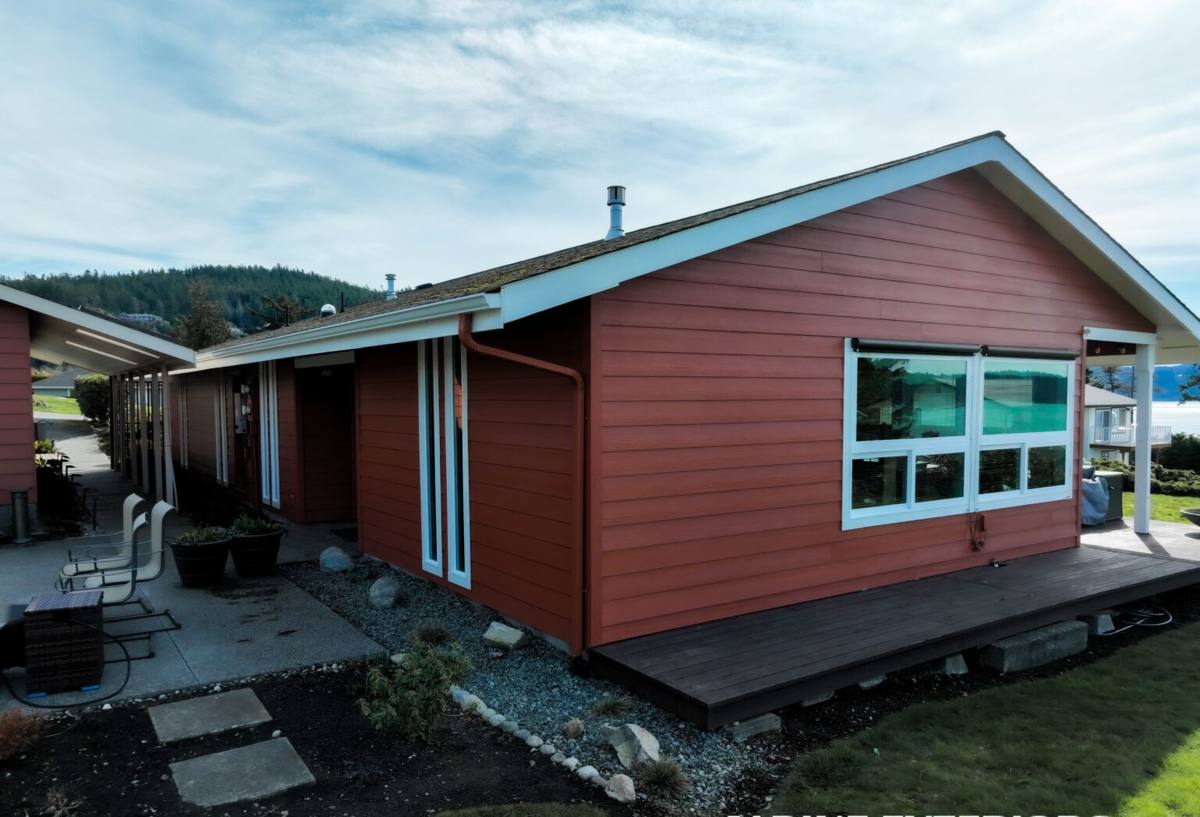
Why Board & Batten Takes More Punishment Here Than It Looks Like It Should
Board and batten's vertical board-and-strip design is popular because it reads clean and modern, but the same design that makes it attractive also creates more seams, more fastener points, and more edges than a standard lap profile. Every one of those seams is a place water can find its way behind the cladding if the install isn't tight. In a region with salt air drifting in off the water, driving rain during winter storms, and a long moss season that keeps north-facing walls damp for months at a time, those weak points get tested constantly.
Salt Air
Airborne salt accelerates corrosion on fasteners, flashing, and any metal trim components. Untreated or low-grade fasteners can start failing years before the siding itself would otherwise need attention, and a corroded fastener head is a leak point waiting to happen.
Driving Rain
Wind-driven rain doesn't just fall straight down — it gets pushed sideways into board and batten seams and behind battens that aren't fastened or flashed correctly. A wall that would stay dry in calm rain can take on real moisture during a Whatcom County storm if the water-resistive barrier and flashing details underneath weren't done right.
Moss Season
Whatcom County's damp stretches, especially on shaded or north-facing walls, let moss and algae take hold on siding that doesn't have a durable factory finish or proper drainage behind it. Moss holds moisture against the wall longer than the surrounding air would on its own, which compounds the exposure problem instead of just being a cosmetic nuisance.
What Correct Board & Batten Installation Actually Involves
A good-looking board and batten wall and a correctly built one aren't always the same thing from the curb. Here's what separates a job that lasts from one that doesn't:
- Water-resistive barrier first. A continuous, properly lapped weather barrier goes on before any siding, giving the wall a drainage plane behind the cladding.
- Rainscreen gap where called for. A small air gap behind the battens lets any moisture that does get past the surface drain and dry out instead of sitting against the sheathing.
- Correct fastener spacing and type. James Hardie specifies fastener size, spacing, and penetration depth for board and batten applications — corrosion-resistant fasteners matter even more with salt air in the mix.
- Batten placement over structural framing or proper blocking. Battens need something solid to bite into, not just the field board, or they work loose over time.
- Flashing at every horizontal interruption. Windows, doors, roof lines, and any trim transition need flashing detailed to shed water outward, not into the wall assembly.
- Factory-primed and factory-finished material. Field-primed cut edges get sealed; ColorPlus finished boards resist the fading and moisture uptake that unfinished or job-site-primed products are more prone to.
Why We Only Install James Hardie for This Application
Board and batten is available in vinyl, engineered wood, and other fiber cement brands, and we understand why homeowners see those options and wonder if they're a shortcut to the same look for less money. We don't install them, and here's the honest reasoning:
| Material | Where it falls short for Lynden's climate |
|---|---|
| Vinyl board & batten | Can warp or become brittle with temperature swings, and seams are more prone to working loose under wind-driven rain over time |
| Engineered wood | More sensitive to sustained moisture exposure at cut edges and seams if caulking and paint maintenance lapse, which is a real risk given how long this area stays damp |
| Other fiber cement brands | Similar base material, but without Hardie's regional-specific HZ engineering or the same factory finish warranty structure we stand behind |
| James Hardie fiber cement | Non-combustible, engineered moisture resistance, factory-applied ColorPlus finish, strong transferable warranty |
James Hardie's HZ5 product line is engineered specifically for climates like ours — freeze-thaw cycles, sustained damp weather, and coastal exposure. The ColorPlus finish is baked on at the factory under controlled conditions, which gives it more consistent coverage and better fade and moisture resistance than field-applied paint, and it carries its own finish warranty separate from the substrate warranty. For a style like board and batten, where seam count and fastener count are naturally higher than a lap profile, starting with the most stable base material available matters more, not less.
Our Process for a Lynden Board & Batten Project
- On-site assessment. We walk the exterior, check the current siding and sheathing condition, and look at sun exposure, shaded walls, and drainage patterns specific to the property.
- Design and layout. Board width, batten spacing, and reveal are set to match the home's proportions — board and batten reads differently on a single-story ranch than a two-story farmhouse elevation.
- Tear-off and sheathing check. Old siding comes off and we inspect the sheathing underneath for any hidden moisture damage before anything new goes on.
- Weather barrier and rainscreen installation. This is the layer that does the real long-term work, and it's the layer that's invisible once the project is done.
- Hardie board and batten installation. Installed to manufacturer fastener and flashing specifications, with attention to every window, door, and trim transition.
- Final inspection and walkthrough. We check seams, caulking, and flashing details before calling the job finished, and walk the homeowner through what was done.
Maintenance in a Whatcom County Environment
Board and batten done right isn't maintenance-free, but it's low-maintenance compared to alternatives that need more frequent attention in this climate. A rinse-down once or twice a year knocks back the early stages of moss and algae growth before it takes hold, especially on shaded or north-facing walls. Keeping gutters clear and directing downspout discharge away from the foundation reduces the amount of splash-back moisture that hits the lower courses of siding. Caulking at trim joints should be checked periodically, since even the best sealant has a service life. None of this is unusual upkeep — it's the same kind of attention any exterior surface needs in a marine climate, and it's a lot less than what vinyl or engineered wood typically ask for over the same span of years.
Why Local Experience Matters for This Style
Board and batten isn't a forgiving style to get wrong. Because it has more vertical seams and more fastener points than lap siding, small installation mistakes show up faster and cause more damage when they do. A crew that already works Whatcom County knows how far to push fastener spacing given the wind exposure on a given lot, where flashing details need extra attention on north-facing walls that stay damp longest, and how local moss and algae patterns should factor into gap and drainage decisions. That's knowledge that comes from working this specific coastline and valley combination repeatedly, not from a general siding install checklist.
What to Check Before You Hire
- Do they install to James Hardie's published fastener and flashing specifications, not just "however it's always been done"?
- Will they show you the water-resistive barrier and rainscreen details before they're covered up?
- Do they carry manufacturer certification or documented Hardie installation experience?
- Can they explain how their approach changes for a shaded, moss-prone wall versus a sun-exposed one?
- Are their warranty terms — both labor and material — written down, not just spoken?
If you're weighing board and batten siding for a home in the Lynden area, we're happy to walk the property, talk through the design and layout options, and give you a straightforward, no-pressure estimate. Use the form below to get started.