 Birch Bay Siding
 Marietta's Roofs Work Harder Than Most
If you own a home in Marietta, you already know your roof isn't dealing with the same conditions as a house twenty miles inland. Being this close to the water in Birch Bay means salt-laden air settling on every exposed surface, wind-driven rain that gets pushed sideways into laps and flashings instead of just falling straight down, and a moss season that runs longer here than in drier parts of Whatcom County. A roof that would hold up fine in Bellingham's higher, drier neighborhoods can wear out early in Marietta if it wasn't built with these specifics in mind.
A new roof installation here isn't just about swapping old shingles for new ones. It's about choosing materials, fasteners, and details that are matched to a marine climate — so you're not back on the phone with a contractor in seven years instead of twenty-five.
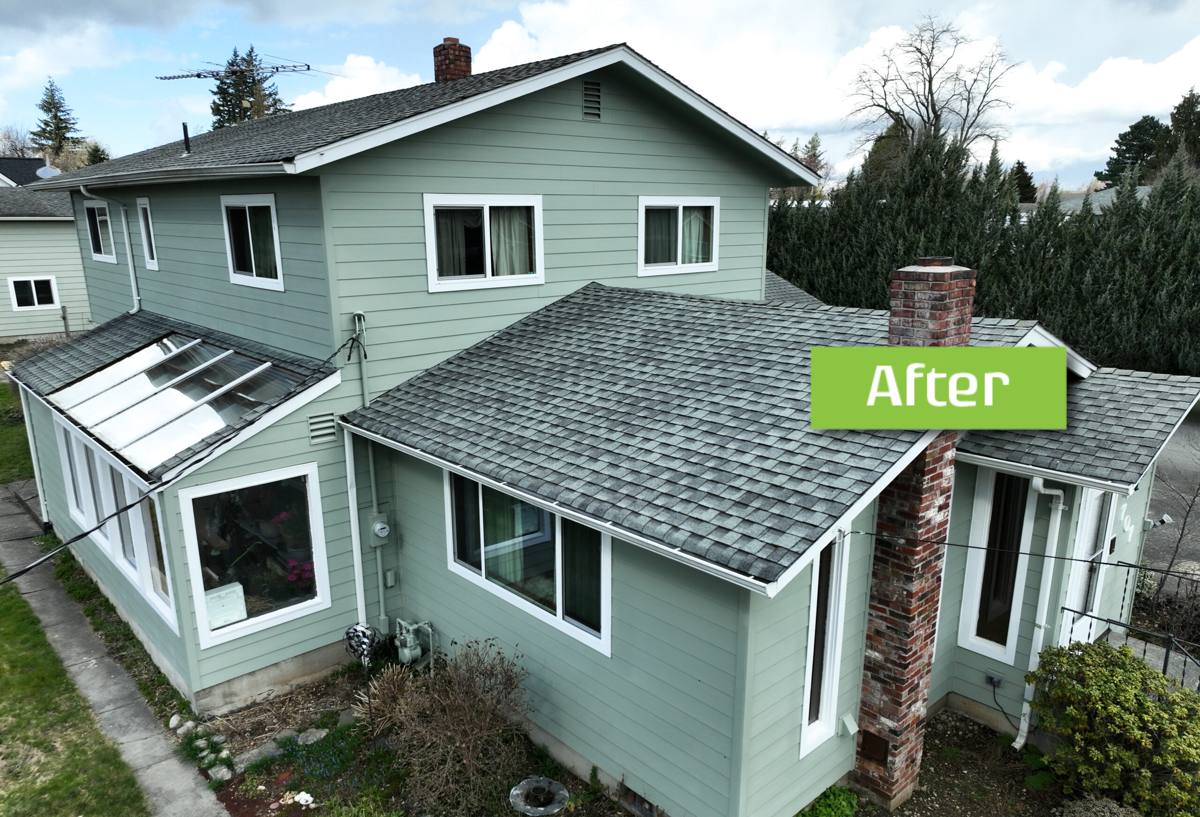
Signs a Marietta Roof Needs Replacing, Not Patching
Homeowners often wait too long because a roof that looks fine from the ground can already be failing underneath. In this climate, moisture problems tend to hide until they've done real damage to the decking or framing below. Before recommending a full replacement, we look for patterns like these:
- Granule loss heavy enough that you're finding grit in the gutters every time it rains
- Moss or algae streaking that keeps coming back within months of cleaning, especially on shaded or north-facing slopes
- Shingles that are cupping, curling, or cracking — common once asphalt roofing gets past 15-18 years in a wet coastal climate
- Soft or spongy decking felt underfoot in the attic, or daylight visible through the roof boards
- Rust streaking or corrosion around flashing, vents, or fasteners — accelerated by salt air exposure
- Interior water stains that show up after wind-driven rain events, even if the roof "looks" intact
- Repeated repairs to the same section of roof over the past couple of years
One or two of these on their own might just mean a repair. Several together, especially combined with a roof that's already near the end of its expected service life, usually mean it's time to talk about full replacement instead of another patch.
Choosing a Roofing System Built for This Climate
There's no single "best" roofing material for every home — it depends on your budget, your roof's exposure, and how much long-term maintenance you're willing to take on. Here's how the common options actually perform under Birch Bay conditions:
| Material | Typical Lifespan Here | Moss/Algae Resistance | Salt Air Durability | Maintenance Load |
|---|---|---|---|---|
| Architectural asphalt shingle | 20-30 years | Good with proper ventilation; algae-resistant granules help | Good, if flashing and fasteners are corrosion-rated | Low to moderate |
| Standing seam metal | 40-60+ years | Excellent — sheds moss and debris better than any shingle | Excellent when using marine-grade or coated fasteners | Low |
| 3-tab asphalt shingle | 15-20 years | Fair — thinner profile holds less debris but wears faster overall | Fair — budget fasteners are more exposure-sensitive | Moderate |
| Cedar shake | 20-30 years with upkeep | Poor without regular treatment — moss and rot risk is real in this climate | Fair — needs consistent maintenance to hold up near salt air | High |
For most Marietta homes, we steer people toward architectural asphalt shingle or standing seam metal. Both handle driving rain well when installed correctly, and both take corrosion-resistant fasteners without a fight. Cedar can still work on the right home, but we're upfront that it demands ongoing maintenance to avoid the moss and moisture problems this climate is quick to create — that's a maintenance conversation, not a knock on the material itself.
Color and Surface Considerations
Darker roof surfaces show algae streaking more visibly, while lighter and mid-tone colors with algae-resistant granules tend to hide the early stages of growth longer. It's a minor factor compared to ventilation and material choice, but worth knowing before you pick a color off a sample chip.
What a Correct Installation Actually Involves
A roof is only as good as what's underneath it. Shingles or metal panels get the attention, but the layers below them are what actually keep water out over the long run.
Tear-Off and Deck Inspection
We remove the old roofing down to the deck rather than layering over it. That's the only way to actually see the plywood or plank decking underneath — and in a wet climate, hidden rot from old leaks is common enough that skipping this step just buries a problem instead of fixing it. Any soft or damaged decking gets replaced before anything new goes down.
Underlayment and Moisture Protection
Synthetic underlayment goes down across the full deck as the primary water-resistant barrier, with self-adhering ice-and-water shield membrane at the vulnerable spots — eaves, valleys, and around penetrations — where wind-driven rain is most likely to find a way in. This is one of the details that separates a roof built for a marine climate from a generic install.
Flashing at Every Transition
Chimneys, skylights, sidewalls, and valleys are where most roof leaks actually start, not in the open field of shingles. Correctly formed and properly lapped flashing at each of these transitions matters more here than almost anywhere else, because sideways-driven rain will find any gap that a purely vertical rainstorm never would.
Ventilation That Fights Moss and Trapped Moisture
Balanced intake and exhaust ventilation — soffit vents paired with ridge or roof vents — keeps the underside of the deck dry and keeps attic humidity from condensing on cold surfaces. Poor ventilation is a major contributor to premature moss growth and shortened shingle life in this climate, and it's one of the most common shortcuts we see on older installations.
Fasteners and Metal Components That Won't Corrode Early
Salt air is genuinely hard on standard fasteners and flashing over time. We use corrosion-resistant fastener and flashing specifications appropriate for a coastal environment rather than the minimum-grade hardware that's fine forty miles inland but shows rust streaking on a Marietta roof within a few seasons. It costs a little more upfront and pays for itself by not needing early spot repairs.
Moss Prevention Built In, Not Bolted On
Moss control shouldn't be an afterthought you add later — it should be part of the installation. Proper deck ventilation, adequate roof slope drainage, and zinc or copper strips near the ridge on shaded slopes all reduce how aggressively moss and algae take hold. Trees close to the roofline also matter: even the best-installed roof will moss up faster under heavy overhanging canopy, so trimming back branches that shade a roof section is a simple step that extends its life.
Our Installation Process
- On-site inspection — we assess the current roof, decking condition, ventilation, and any problem areas before quoting anything
- Written estimate — material options, scope of work, and pricing laid out clearly, no pressure to decide on the spot
- Scheduling — timing set around weather windows, since a dry installation window matters more here than in drier climates
- Tear-off and deck repair — old roofing removed, decking inspected and replaced where needed
- Underlayment, flashing, and ventilation installed — the moisture-management layers that do the real work
- Roofing material installation — shingles or metal panels installed to manufacturer spec
- Cleanup and magnetic sweep — job site and yard cleared of debris and stray fasteners
- Final walkthrough — we go over the finished roof with you before calling the job done
Permits and Wind Exposure in Whatcom County
Roof replacement in Whatcom County typically requires a permit, and code compliance covers things like underlayment type, fastening schedule, and ventilation requirements — we handle that process as part of the job. Homes closer to open water, including much of Marietta, also see higher sustained wind exposure than more sheltered inland lots, which is factored into fastening patterns and material selection rather than treated as an afterthought.
Why a Crew That Knows Marietta Matters
A roofing crew that mostly works drier, more sheltered areas can still do competent work — but they're less likely to instinctively reach for corrosion-rated fasteners, oversize the ice-and-water shield at valleys, or flag a shaded, moss-prone slope before it becomes a problem. Working regularly in Birch Bay and the surrounding Whatcom County coastline means those decisions aren't guesswork; they're just how we build a roof out here. That familiarity shows up years later, not on installation day.
If your Marietta home needs a new roof, we're happy to take a look and walk you through honest options for your specific house — no pressure, no pushy sales pitch. Reach out using the form below to schedule a free estimate.