 Birch Bay Siding
 Why Semiahmoo's Waterfront Exposure Is Different
Semiahmoo sits right on the water in the Birch Bay area of Whatcom County, and that location changes what a roof has to deal with compared to a home a few miles inland. Salt-laden air moves off the bay and settles on every exposed surface, wind-driven rain gets pushed sideways under laps and around fasteners instead of just running downhill, and the shaded, damp conditions common to this stretch of coastline keep moss and algae active for most of the year, not just the wet months. A roof here isn't just shedding water in a storm and drying out between rains like it might in a drier climate — it's staying damp longer, getting hit with salt air constantly, and fighting biological growth almost year-round.
That combination is hard on roofing materials that depend on a granule surface or an organic mat to hold up. It's also hard on any metal component — fasteners, flashing, trim — that isn't specified correctly for a marine environment. A roof that would perform fine in a drier, inland part of Whatcom County can wear noticeably faster on a waterfront lot in Semiahmoo.
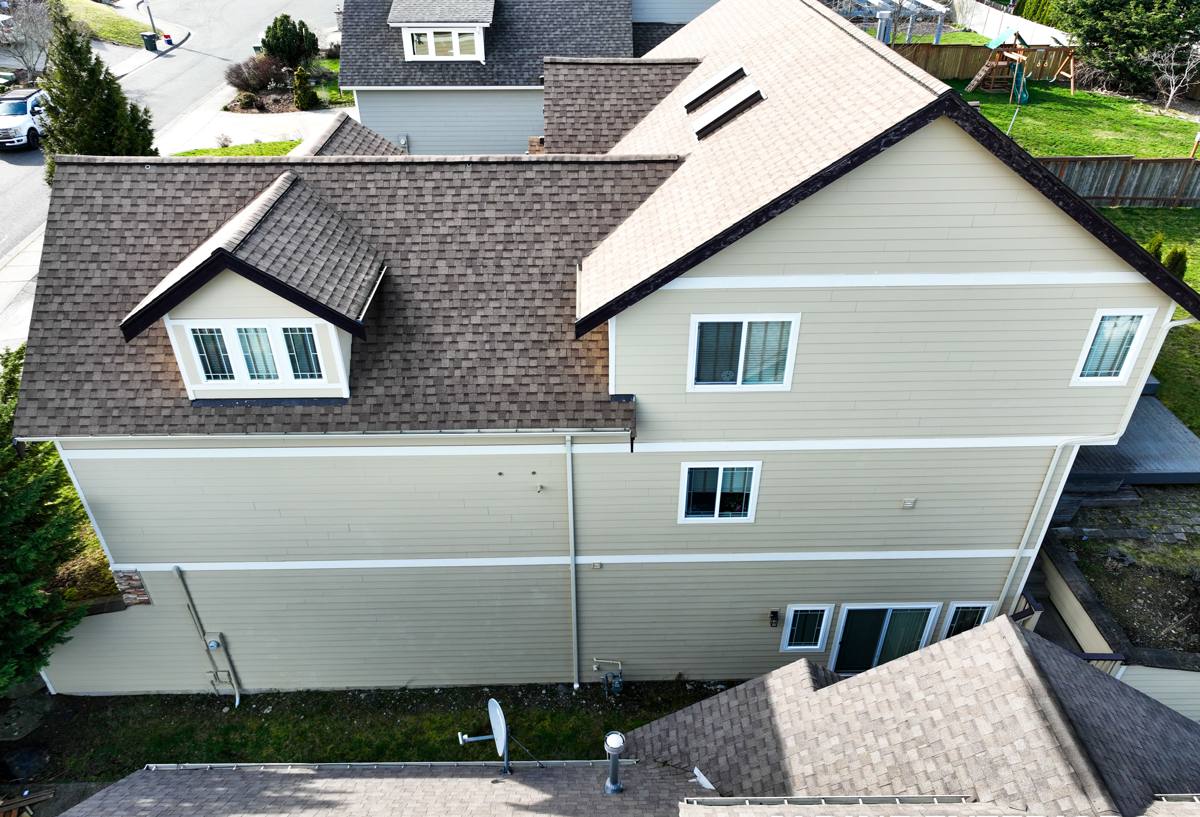
Why Metal Roofing Fits Homes Near the Bay
Metal roofing handles this kind of exposure better than most alternatives, for a few concrete reasons. It sheds water fast and doesn't have a granule or felt surface for moss and algae to root into the way asphalt shingles do. Properly installed panels with correct overlap and sealed seams resist wind-driven rain far better than a shingle roof with marginal underlayment. And a quality metal roof simply lasts longer, which matters a lot in a spot where roof work means dealing with wind exposure, wet scaffolding conditions, and a short list of dry-weather install windows through the year.
None of that makes metal roofing maintenance-free. It still needs the right material, the right fasteners, and the right detailing at every penetration and transition. Cutting corners on any of those shows up faster here than it would somewhere with a milder, drier climate.
What Metal Roofing Doesn't Solve By Itself
Metal won't stop moss from growing in a valley or at a low-slope junction where debris collects and stays wet, and it won't compensate for poor ventilation or missing flashing. It reduces the biological growth problem significantly, it doesn't eliminate the need for periodic upkeep on a shaded, waterfront roof.
Panel Types We Install
There isn't one "correct" metal roofing product for every Semiahmoo home — the right choice depends on roof pitch, budget, and how the house looks. Here's how the main options compare for this kind of coastal exposure:
| Panel Type | Best For | Trade-offs |
|---|---|---|
| Standing seam | Homes wanting maximum water-tightness and a clean, modern line | Highest material and labor cost; concealed fasteners reduce long-term maintenance |
| Exposed-fastener panel | Budget-conscious projects, outbuildings, simpler rooflines | Lower upfront cost; fasteners need periodic inspection since they're exposed to weather |
| Metal shingle or shake profile | Homes wanting a traditional look with metal's durability | More seams and detail work than standing seam; good match for varied rooflines |
For a waterfront property in Semiahmoo, we lean toward standing seam or a well-detailed shingle profile on the primary roof, since concealed or minimized fastener exposure matters more here than it would inland. Exposed-fastener panels still have a place on secondary structures or lower-visibility roof sections where the cost savings make sense.
Material and Finish Choices
Steel (typically Galvalume-coated) and aluminum are the two materials we work with most. Aluminum has a natural advantage in a marine environment because it doesn't rust the way steel can if a coating is ever compromised; steel with a quality factory finish still performs well and costs less, which is why it remains the more common choice. On top of either substrate, a PVDF-type (Kynar) finish holds color and chalk resistance longer under UV and salt exposure than a basic painted finish — it's the standard we recommend for anything facing the water.
Fasteners matter as much as the panel. We specify fasteners rated for the panel metal and the exposure, not just whatever is cheapest, because mismatched metals in a salt-air environment can set up galvanic corrosion at every screw head. That's a detail that's easy to skip and expensive to fix later.
What a Correct Installation Involves
A metal roof is only as good as what's underneath it and how the details are handled. On a Semiahmoo home, we treat the following as non-negotiable:
- A synthetic underlayment rated for the exposure, with ice-and-water shield at eaves, valleys, and other vulnerable transitions
- Correct panel overlap and seam direction relative to prevailing wind and rain
- Fasteners matched to the panel material, spaced and torqued to manufacturer specification — not overdriven, which crushes the gasket and invites leaks
- Properly formed and sealed flashing at every penetration: chimneys, vents, skylights, and wall transitions
- Adequate ridge and soffit ventilation so moisture doesn't get trapped against the underside of the deck
- Clean panel cuts and edge treatment, since a raw cut edge on steel is where corrosion starts first
Skipping any one of these doesn't necessarily show up in year one. It shows up in year five or ten, usually as a leak that traces back to a detail that should have taken an extra twenty minutes to do right.
Moss, Algae, and a Waterfront Microclimate
Moss needs shade and sustained moisture to establish, and a lot of Semiahmoo's tree cover and marine humidity provide both for a large part of the year. Metal's smooth, non-porous surface gives moss a much harder time rooting compared to asphalt shingle granules, but it doesn't make a roof immune. Valleys, low-slope sections, and areas where leaves and needles collect can still hold enough organic debris and moisture to get growth started, especially where two roof planes meet at a shallow angle.
The practical response isn't chemical treatments or aggressive pressure washing — that can damage finishes and void warranties. It's keeping debris cleared from valleys and gutters, making sure water has a clear path off the roof, and catching small growth patches before they spread. A roof that drains cleanly and stays free of trapped debris will stay cleaner far longer than one that doesn't, regardless of material.
Signs Your Current Roof Needs Attention
Whether you have an existing metal roof or you're weighing whether to move off asphalt, these are the signs worth acting on before they become a bigger repair:
- Rust streaking or discoloration at cut edges, fasteners, or flashing seams
- Moss or algae established in valleys or shaded roof sections
- Fasteners backing out, loose, or showing gaps at the washer
- Panels or shingles lifting at edges after wind events
- Granule loss, curling, or bare patches on an aging asphalt roof
- Water stains on interior ceilings near chimneys, skylights, or exterior walls
- Visible daylight or gaps at ridge, valley, or penetration flashing from the attic
Any one of these on its own might not mean an urgent problem, but on a roof exposed to constant salt air and rain, they tend to compound faster than homeowners expect.
Our Process, Start to Finish
We start with an on-site inspection of the existing roof, deck condition, ventilation, and any trouble spots specific to how your house sits relative to wind and water exposure. From there we walk through panel and finish options that fit the home and the budget, measure and plan the layout including valleys and penetrations, and schedule the work around a dry-weather window — timing matters more here than in a drier climate. Installation includes deck inspection and repair where needed, correct underlayment, panel installation with proper fastening and flashing, and a final walk-through with you before we consider the job done. We clean up job-site debris, including stray fasteners and cut-offs, since those are a real hazard on a metal roof job if left behind.
What Drives the Cost
Metal roofing costs more upfront than asphalt in most cases, but the gap narrows when you factor in how much less often it needs replacement. The bigger cost swings on any individual job come down to a handful of factors:
| Factor | Impact on Cost |
|---|---|
| Panel type (exposed-fastener vs. standing seam) | Standing seam runs higher due to material and labor complexity |
| Roof pitch and complexity (valleys, dormers, penetrations) | More cuts and flashing detail means more labor |
| Tear-off vs. overlay | Tear-off adds cost but lets us verify and repair the deck underneath |
| Access and site conditions | Steep sites or limited equipment access add time |
| Current deck condition | Rot or damage found during tear-off requires repair before install |
We give you a firm, itemized quote after the on-site inspection, not a ballpark over the phone, because the factors above vary too much house to house to estimate honestly without seeing the roof.
Why a Crew That Already Works Semiahmoo Matters
A roofing crew that hasn't worked on the water before will often spec the same materials and details they'd use on an inland job, because that's what they know. That approach tends to under-spec fastener and flashing choices for a marine environment, which is exactly where problems show up first. Working in Semiahmoo and the broader Birch Bay area regularly means we've seen how wind orientation off the bay affects panel and seam direction, where moss tends to establish first on local rooflines, and what flashing details actually hold up under this specific combination of salt air and driving rain. Some waterfront communities in this area also have design or association guidelines worth checking before you commit to a panel style or color — it's worth confirming early rather than after materials are ordered.
If you're weighing a metal roof for a home in Semiahmoo or elsewhere around Birch Bay, we're happy to walk the roof with you, talk through what actually makes sense for your house, and put together a clear, no-pressure estimate. There's a form below — reach out and we'll get a time on the calendar.