 Birch Bay Siding
 Building New in California Creek? The Windows Have to Match the Location
California Creek sits close enough to the water that the same salt air, driving rain, and long moss season that shape every exterior decision in Birch Bay apply just as much to a brand-new build as they do to a 40-year-old remodel. New-construction windows are a one-shot opportunity: the rough openings are open, the weather-resistive barrier is exposed, and the flashing details get set before siding, trim, or paint ever go on. Get it right during framing and the windows perform for decades. Get it wrong and the mistakes get buried behind finished walls, where they quietly cause rot, mold, and callbacks long after the crew has moved on.
We install new-construction windows on homes throughout Birch Bay and the surrounding Whatcom County shoreline, including California Creek, and we build every install around the specific conditions this stretch of coastline throws at a house.
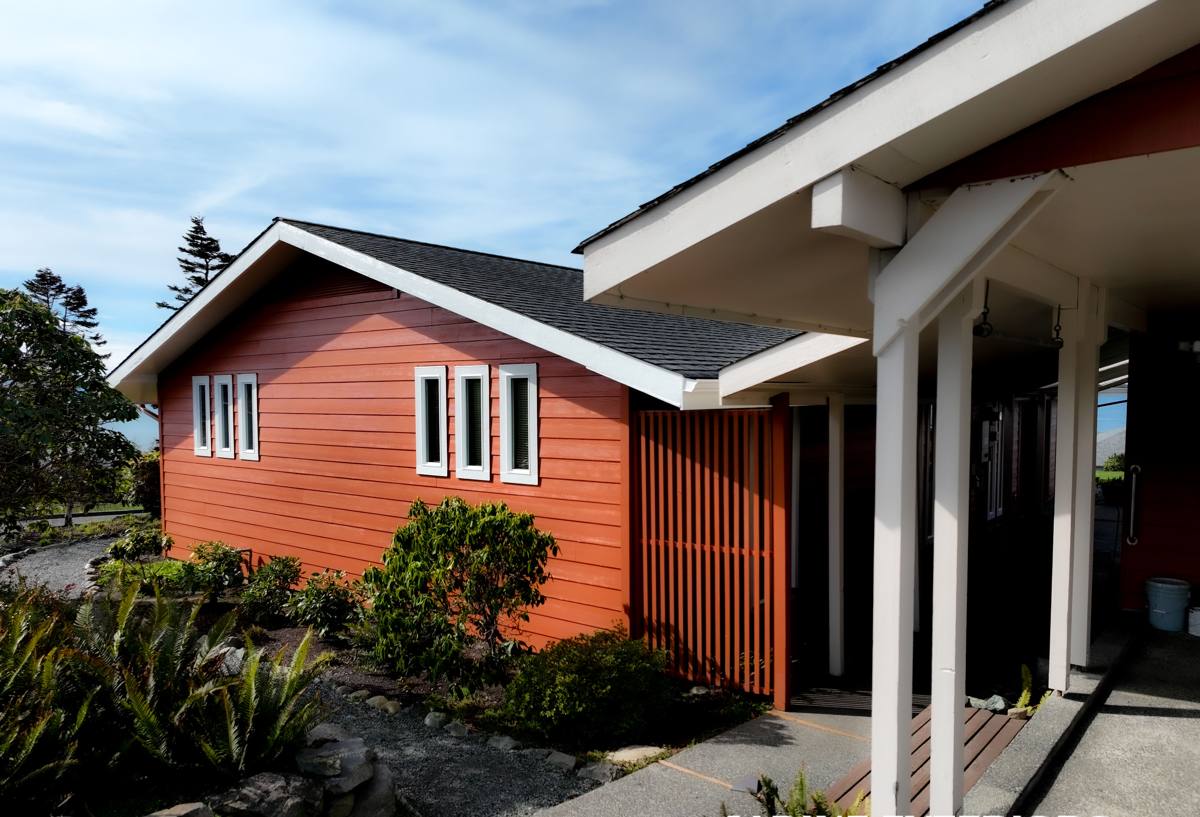
What California Creek Homes Actually Need From Their Windows
Salt Air and Hardware Corrosion
Proximity to Birch Bay's marine air means airborne salt settles on every exterior surface, including window frames, hardware, and fasteners. Standard-grade screws, hinges, and cranks that would hold up fine inland can start corroding within a few seasons here. New-construction windows give us the chance to spec corrosion-resistant hardware and fastening systems from day one, rather than retrofitting after pitting and staining show up.
Driving Rain and Wind-Driven Water
Storms off the Strait of Georgia don't just bring rain straight down — they push it sideways into wall assemblies. A new-construction window opening is the moment to build in proper water management: correctly lapped flashing, a sloped sill pan, and a weather-resistive barrier that's integrated with the window flange rather than just taped over it. This is the single biggest factor in whether a window leaks during its first real coastal storm or stays dry for 30 years.
Moss, Mildew, and Prolonged Dampness
Whatcom County's long wet season keeps exterior surfaces damp for months at a time, and that moisture doesn't just grow moss on roofs — it promotes mildew growth around window perimeters where caulk lines and trim boards trap water against wood or fiber-cement siding. Getting the drainage plane and sill flashing right during new construction keeps water moving out and away, instead of sitting against the window frame.
What a Correct New-Construction Window Install Actually Involves
"New construction window" refers to a specific window type — one with a nailing flange designed to be installed into an open rough opening before siding goes on, as opposed to a "replacement" window that fits into an existing frame. Installing it correctly is a sequence, and skipping a step is how coastal homes end up with hidden water damage.
- Rough opening check — confirming the opening is square, level, and sized correctly before the window ever gets set.
- Sill pan flashing — a sloped, sealed pan under the window that directs any intruded water back outside instead of into the wall cavity.
- Weather-resistive barrier integration — the house wrap or building paper is lapped and taped in the correct shingle-style order around the window flange, so water sheds down and over each layer.
- Setting and fastening the window — shimmed plumb and square, fastened per the manufacturer's schedule so the frame isn't racked or bowed.
- Flashing tape at the flange — sides first, then top, sealing the flange to the wall in the correct order so no seam faces uphill into the weather.
- Interior air sealing — a bead of low-expansion foam or sealant around the interior gap to stop drafts and moisture-laden air from reaching the wall cavity.
- Final inspection — checking operation, seals, and flashing laps before siding crews close the wall up.
Every one of these steps matters everywhere, but on a California Creek build, the flashing and sill-pan details carry more weight than they would on a home further inland, simply because wind-driven rain tests them harder and more often.
Choosing Window Materials and Glass for This Location
Framing material affects how a window handles salt air, moisture, and temperature swings over its lifespan. There's no single "best" choice for every project — it depends on budget, architectural style, and how much upkeep the homeowner wants to take on.
| Frame Material | Coastal Air Performance | Maintenance | Typical Fit |
|---|---|---|---|
| Vinyl | Good — won't corrode or rust, but check hardware quality | Low — no painting, occasional cleaning | Budget-conscious new builds |
| Fiberglass | Very good — stable in temperature swings, resists moisture absorption | Low to moderate | Mid-to-upper range new construction |
| Wood (clad exterior) | Moderate — exterior cladding protects wood, but any breach invites rot | Higher — sealant and cladding joints need periodic checks | Traditional or high-end architectural styles |
| Aluminum | Fair — prone to corrosion near salt air unless properly coated | Moderate | Modern designs, less common in direct coastal exposure |
Glass packages matter too. Dual-pane, low-E glass is standard for new construction in this climate — it cuts down on condensation between panes, which becomes a real nuisance during Birch Bay's damp winters, and it helps manage heat loss during the wind events that come off the water. Argon-filled units add a modest efficiency bump but aren't strictly necessary on every elevation of a home.
How We Approach a New-Construction Window Job in California Creek
Working With Builders and Homeowners
Most new-construction window jobs come to us through a general contractor or a homeowner managing their own build. Either way, we start by reviewing the plans and window schedule, confirming rough opening sizes match what's ordered, and flagging any elevations that will take heavier weather exposure — typically west- and southwest-facing walls that catch the prevailing storm direction off the water.
Sequencing With the Rest of the Build
Window installation has to be timed correctly with the weather-resistive barrier and siding trades. We coordinate directly with the framing and siding crews so the flashing sequence isn't interrupted or done out of order — a common source of leaks on new builds is a siding crew covering flashing before it's been properly lapped and inspected.
Documentation and Walkthrough
Before any wall gets closed up, we walk the homeowner or GC through each opening, confirming flashing, operation, and seal quality. This is the last point where a problem is cheap and easy to fix — after siding goes on, correcting a flashing error means removing finished exterior work.
What This Costs and What Drives the Price
New-construction window pricing depends on the number of openings, sizes, glass packages, and frame material, so a firm number only comes from a walkthrough of the actual plans. In general terms, a full-home window package for a new build in this area runs from a modest mid-range budget for standard vinyl units up to a considerably higher figure for larger openings, premium fiberglass, or wood-clad windows. The table below outlines the factors that move the number most.
| Cost Factor | Why It Matters |
|---|---|
| Number and size of openings | More glass and larger units mean more material and labor per house |
| Frame material | Vinyl is typically the most economical; fiberglass and wood-clad cost more upfront |
| Glass package | Low-E, argon fill, and tempered safety glass (required near doors and low sills) add cost |
| Wall exposure | West/southwest elevations facing prevailing storms may warrant upgraded flashing details |
| Site access and timing | Coordinating around other trades on an active build site affects scheduling and labor |
Why Hiring a Crew That Already Works California Creek Matters
A window that's correctly rated and correctly installed inland can still fail here if the crew installing it doesn't account for wind-driven rain and salt exposure. Flashing sequences that would pass inspection in a drier, calmer climate sometimes aren't tight enough for what this stretch of Whatcom County coastline sees over a winter. Crews who work Birch Bay and California Creek regularly know which elevations need extra attention, which hardware holds up, and how the moss and moisture cycle here actually behaves over a full year, not just during a dry install day.
That local pattern recognition is hard to get from a crew that mostly works inland developments and treats every coastal job as an exception rather than the norm.
Pre-Install Checklist for Homeowners and Builders
- Confirm rough opening sizes match the ordered window units before delivery
- Verify sill pan flashing is specified for every opening, not just ground-floor windows
- Ask which elevations are getting extra flashing attention for wind-driven rain exposure
- Confirm hardware (hinges, cranks, locks) is rated for coastal/marine air exposure
- Check that weather-resistive barrier integration is sequenced before siding installation begins
- Request a walkthrough of flashing details before the wall is closed up
- Confirm glass package (low-E, tempered where required) matches the window schedule
Get a Straightforward Look at Your Project
If you're building new in California Creek and want windows installed with this coastline's weather actually in mind, we're happy to walk through your plans and give you a straightforward estimate — no pressure, no upsell. Use the form below to get started.